
What Are the Calories in Chicken Breast? Quick Guide
A skinless, cooked chicken breast usually contains about 165 calories per 100 grams. The exact number changes with portion size, whether the skin is left on, and how you cook it.
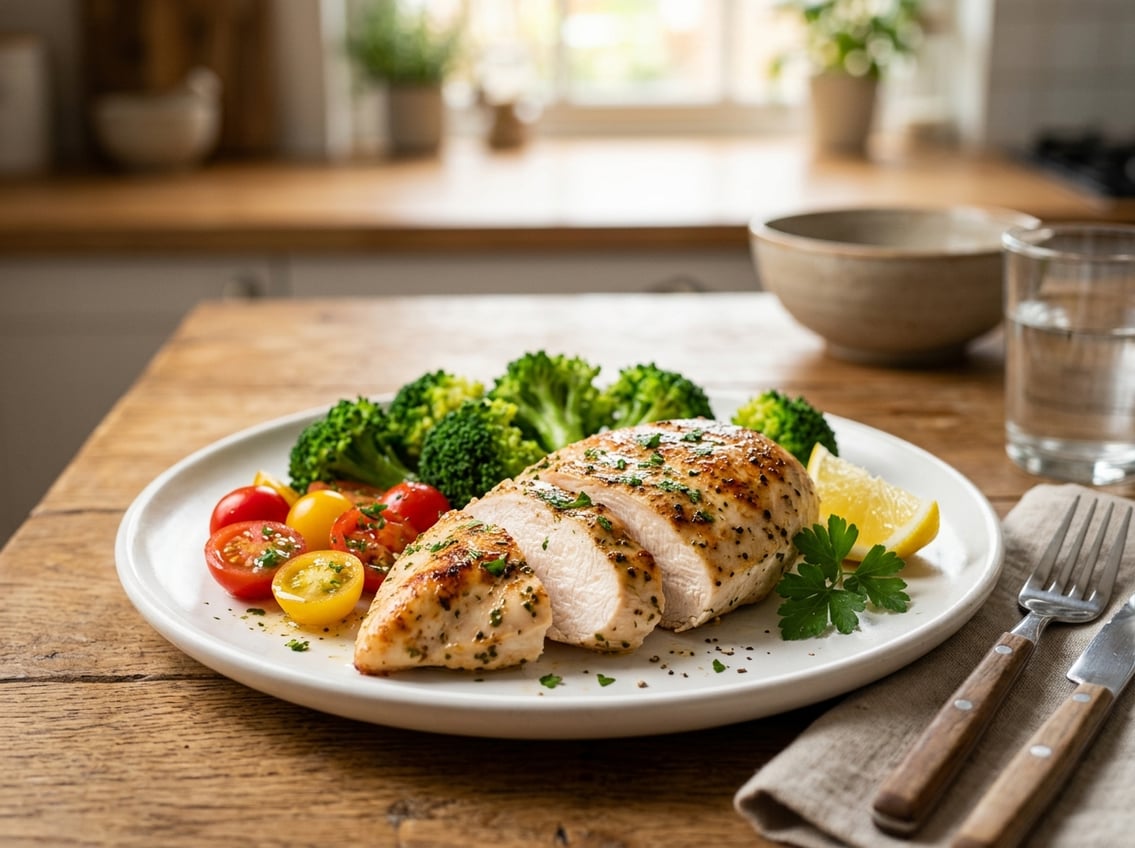
Chicken breast is popular because it gives you a lot of protein for relatively few calories. If you want a high protein, lean protein food that fits many meal plans, chicken breast is one of the most practical choices.
A few small changes, like adding oil, skin, breading, or sauce, can raise the chicken breast calories much faster than many people expect.
Calories and Macros Per Serving
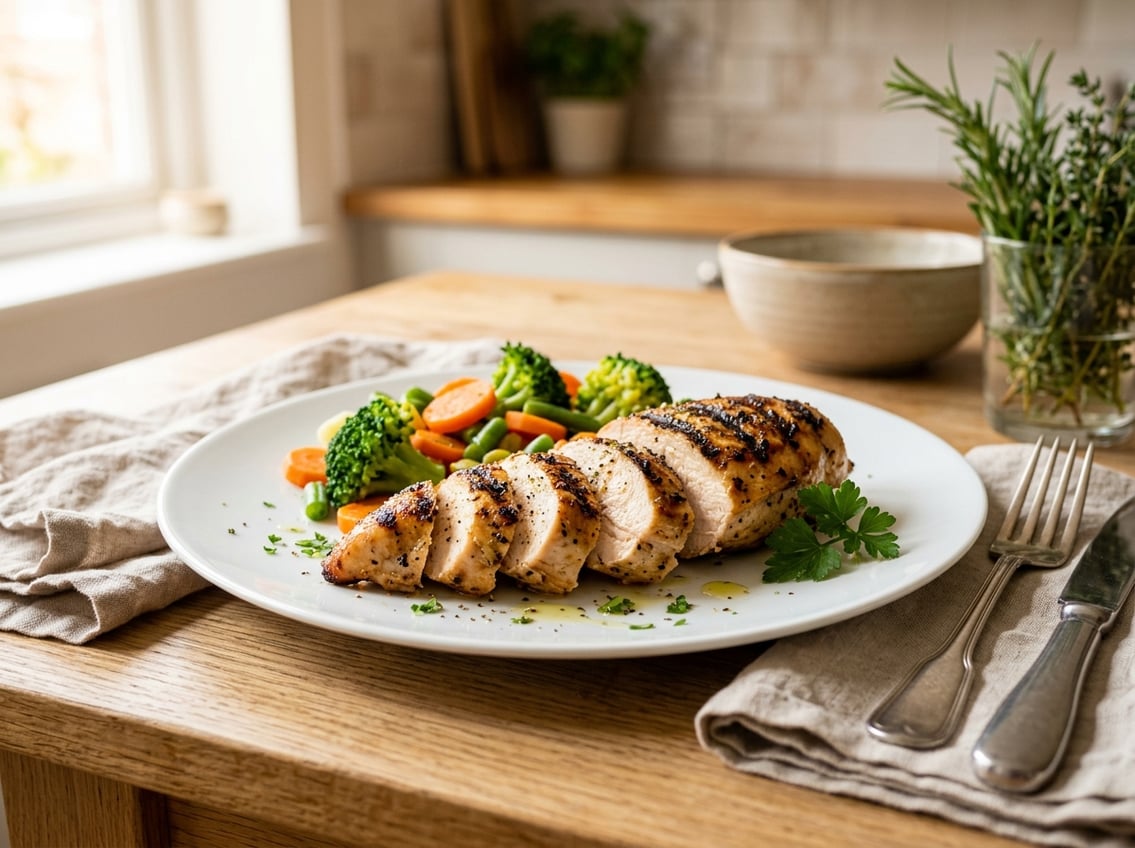
A skinless chicken breast gives you a strong protein return for the calories. According to Verywell Fit’s chicken breast nutrition facts, a 3-ounce cooked serving is lean, low in carbs, and rich in protein.
Typical Calories in a 100-Gram Cooked Portion
A cooked, skinless chicken breast usually has about 165 calories per 100 grams. This is a useful baseline when you are tracking calories in chicken breast or building meals by weight.
That amount provides close to 31 grams of protein. The exact number can shift a little with brand, cut size, and cooking method.
Protein, Fat, and Zero-Carb Breakdown
A typical 100-gram cooked portion gives you roughly:
- Protein: about 31 grams
- Fat: about 3 to 4 grams
- Carbs: 0 grams
Most calories in chicken breast come from protein, with a small amount from fat and no carbohydrates unless you add breading or sweet sauces.
How Portion Size Changes the Numbers
Portion size matters more than many people expect. A small 3-ounce serving is not the same as a large grocery-store breast, which can weigh much more after cooking.
If you double the weight, you nearly double the calories in chicken. Weighing the cooked portion gives you the most accurate count for chicken breast calories.
What Changes the Final Calorie Count
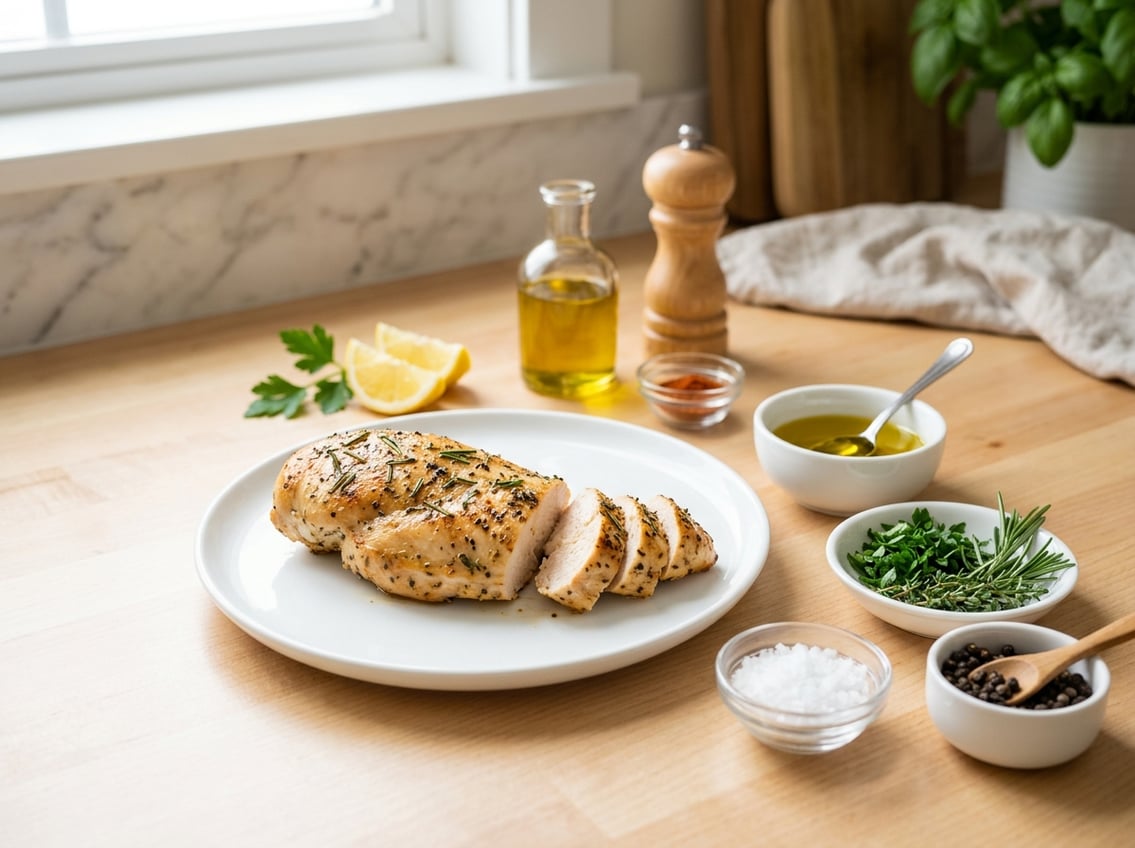
The skin, the cooking weight, and anything added during preparation affect the final calorie count. These changes can move chicken breast calories from very lean to much richer.
Skinless vs Skin-On Portions
Skinless chicken breast stays much lower in fat and calories than chicken breast with skin. Verywell Fit notes that a 3-ounce skin-on roasted, broiled, or baked serving has about 166 calories, 6.6 grams of fat, and 25 grams of protein, which is higher in fat than the skinless version.
Skin adds flavor and moisture, but it also adds calories. If you are counting calories in chicken breast, removing the skin is one of the easiest ways to keep the number lower.
Raw vs Cooked Weight Differences
Raw chicken breast contains more water than cooked chicken breast. As the meat cooks, water leaves the meat, so the same piece weighs less after cooking.
100 grams raw is not equal to 100 grams cooked in terms of calories in chicken breast. For accurate tracking, use the label or choose one method, raw or cooked, and stay consistent.
Added Oil, Breading, Sauces, and Marinades
Oil, breading, creamy sauces, and sugary marinades can change chicken breast calories quickly. Even a light coating of oil adds extra fat, and frying adds much more.
Breaded or fried chicken breast moves far away from the lean profile of plain chicken breast. If you want to keep calories low, use dry seasoning, citrus, herbs, or a small amount of sauce.
How Cooking Method Affects Nutrition
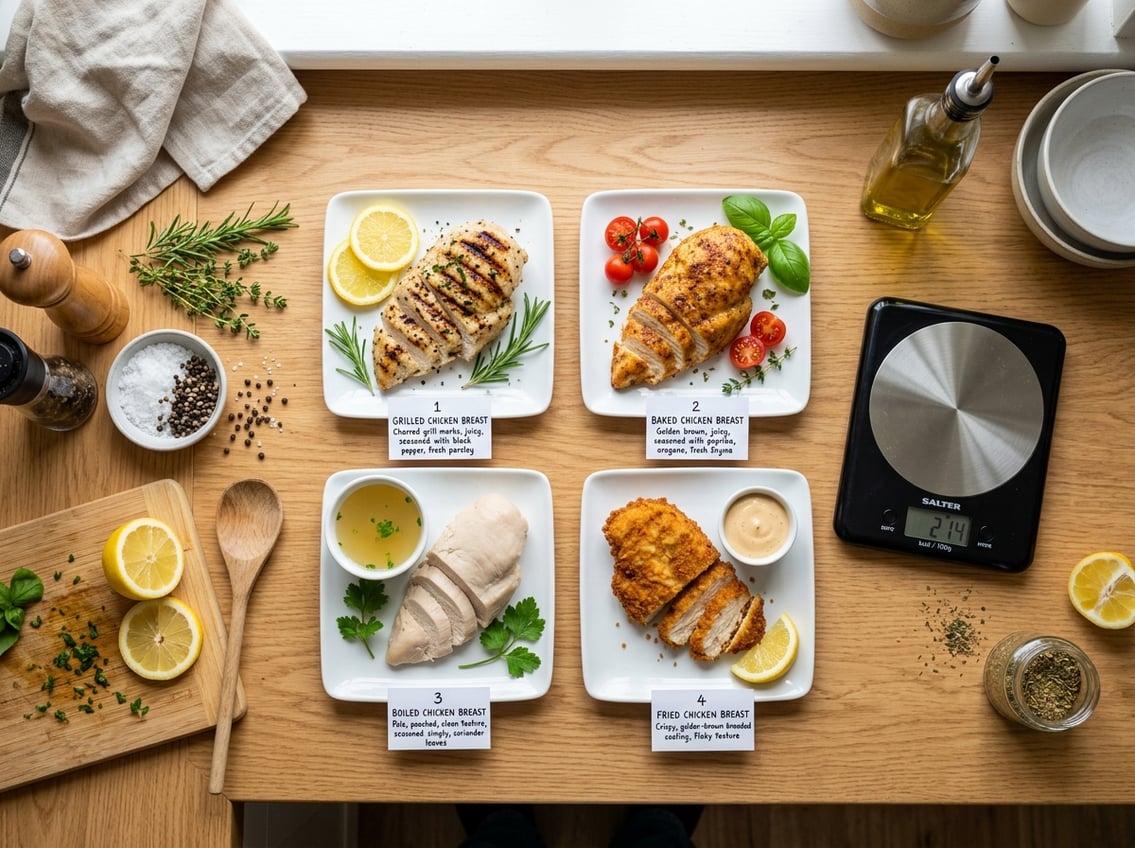
Cooking method changes both taste and nutrition. Grilling, baking, and poaching keep chicken breast closer to its lean protein profile, while frying can raise calories fast.
Grilled Chicken Breast vs Baked Chicken Breast
Grilled chicken breast and baked chicken breast are both solid choices when you want lean protein. They usually stay close to the natural chicken breast nutrition facts, as long as you do not use a lot of oil or butter.
For a meal like grilled chicken in a chicken caesar salad, the chicken itself can stay fairly light even when the full salad has more calories from dressing and cheese.
When Fried Options Raise Calories Fast
Frying chicken breast usually adds more fat during cooking. Batter, oil, and coatings all increase the calorie count, which makes fried chicken breast much less lean than grilled or baked versions.
That difference matters if you use chicken as a calorie-controlled protein. A fried piece can carry far more calories than a plain cooked breast of the same size.
Simple Ways to Keep It Lighter
You can keep chicken breast lighter with a few habits:
- Choose grilled, baked, roasted, or air-fried methods.
- Use herbs, garlic, lemon, pepper, and spices instead of heavy sauces.
- Measure oil instead of pouring it freely.
- Skip breading when you want lower chicken breast calories.
These choices keep chicken breast nutrition closer to its natural high protein, low-carb profile.
Nutrients Beyond Calories
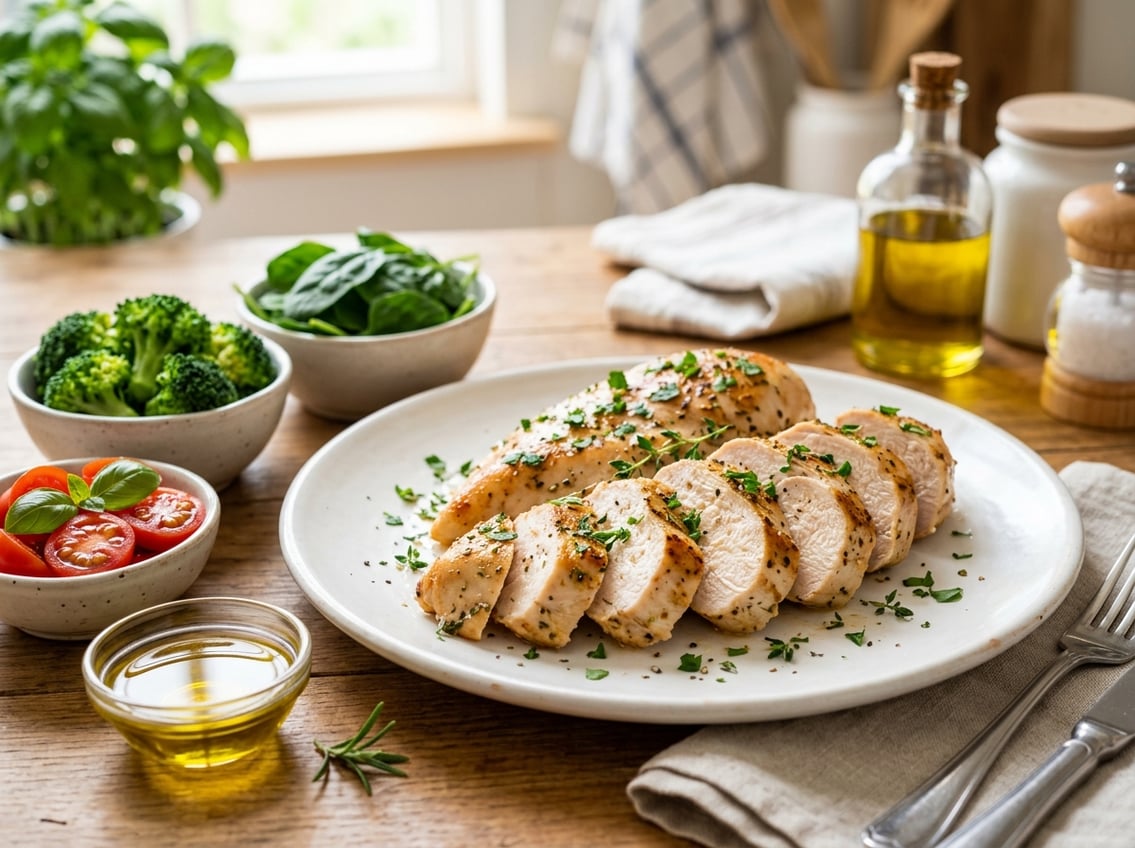
Chicken breast gives you more than protein and low calories. It also provides B vitamins, minerals, and amino acids that support daily nutrition.
Why Chicken Breast Is a Lean Protein Staple
Chicken breast is a classic lean protein because it gives you a lot of protein with very little fat. That makes it useful when you want to support muscle repair, stay full, or keep meals balanced.
The protein in chicken breast is also a complete protein, which means it contains all nine essential amino acids.
Key Micronutrients Like Niacin, Vitamin B6, and Phosphorus
Chicken breast is a good source of niacin, vitamin B6, and phosphorus. These nutrients help your body use energy, support nerve function, and maintain healthy cells.
According to Verywell Fit’s chicken breast nutrition facts, chicken breast is also a very good source of selenium.
Tryptophan and Other Nutrition Highlights
Chicken breast contains tryptophan, an amino acid that helps your body produce serotonin and melatonin.
Chicken breast also provides an easy way to add protein to meals without adding many carbs.
This ingredient fits many eating styles and offers flexible meal options.


