
When Do You Know Chicken Breast Is Cooked? Clear Signs
When do you know chicken breast is cooked? The safest answer is when the thickest part reaches 165°F on a food thermometer.
That single check gives you the clearest sign that your chicken is done and safe to eat.
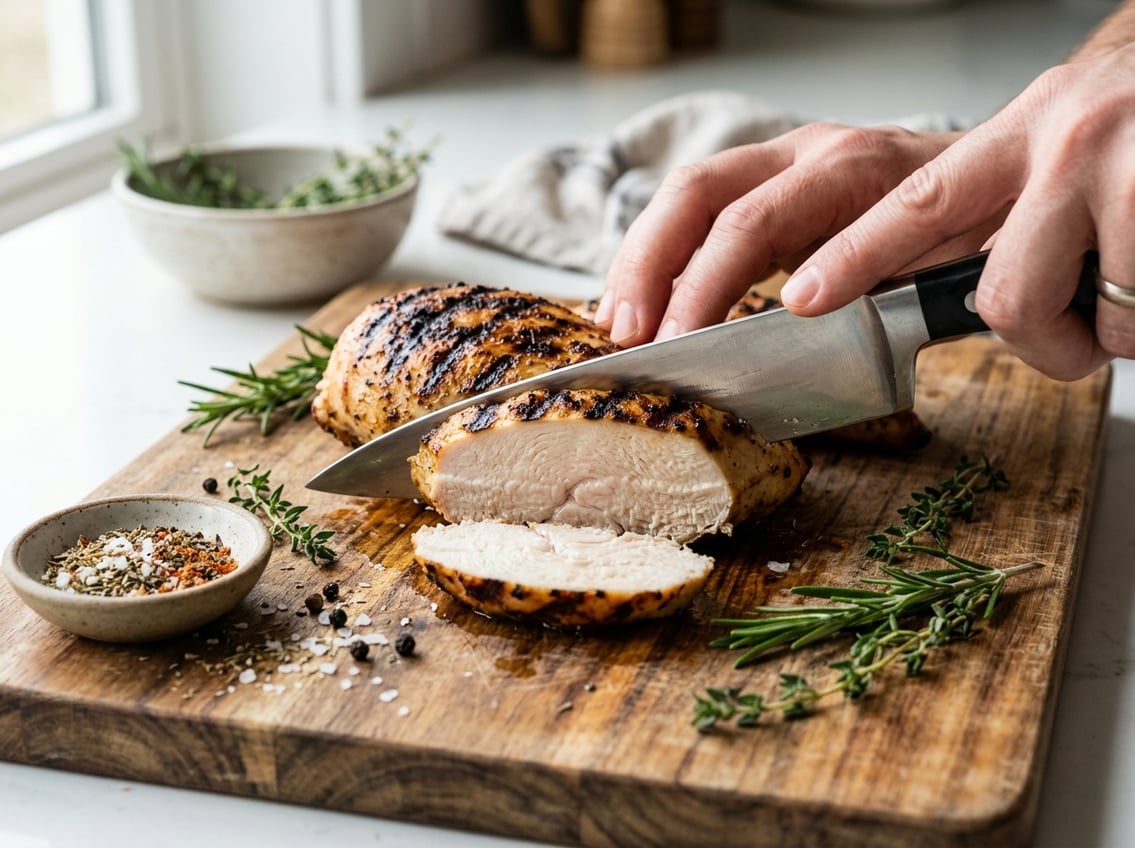
You can also use color, juices, and texture as backup signs, especially when you cook chicken breasts on the stove, in the oven, or on the grill.
These clues help you avoid dry meat, but they should not replace temperature.
Check Doneness by Temperature First
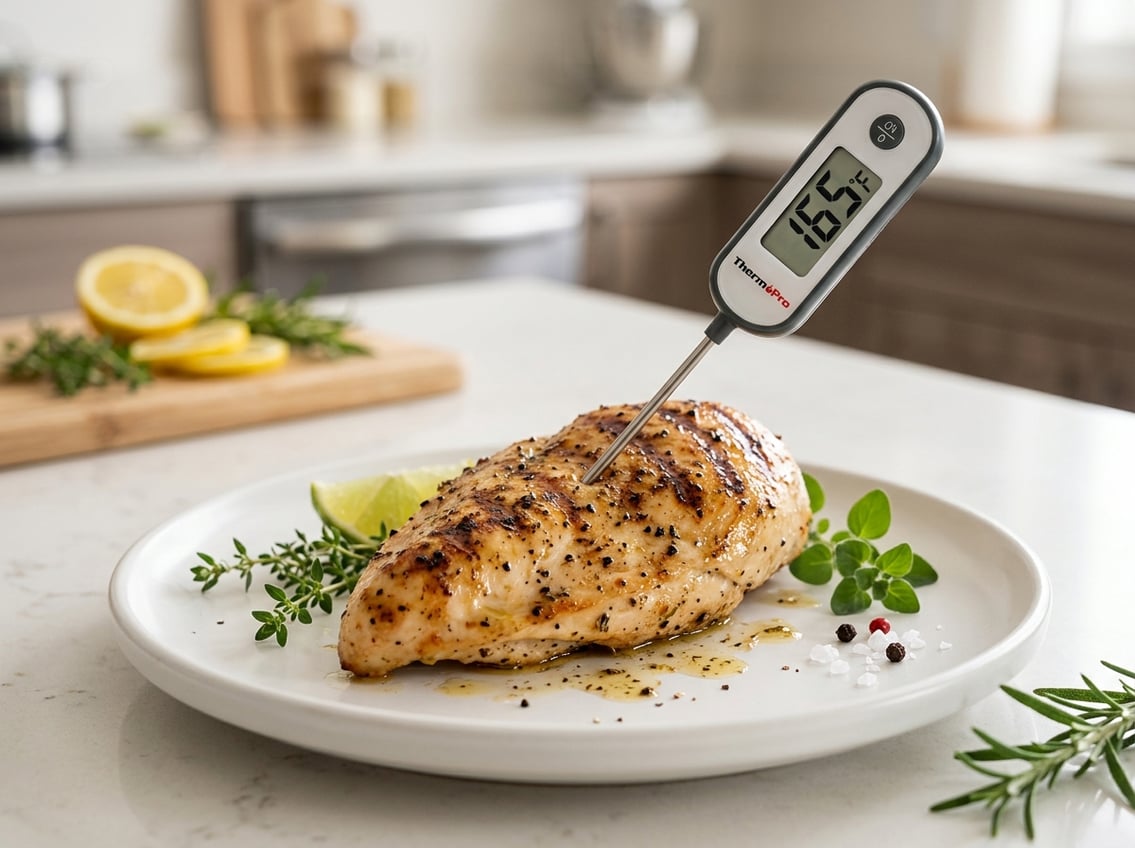
A food thermometer gives you the most accurate way to know whether chicken breast is cooked.
It removes guesswork and helps you avoid serving chicken that is still unsafe in the middle.
Use a Food Thermometer the Right Way
Insert the probe into the thickest part of the breast, since that area finishes last.
Keep the tip away from bone, fat, and the pan, because those spots can give a false reading.
Wait until the number stops rising.
If you are checking several pieces, test each one, since breasts can cook at different speeds.
For a broader safety guide, USDA-style advice and home-cooking references such as proper chicken doneness with a meat thermometer point to the same basic method.
Measure the thickest point and confirm the final temperature.
Where to Measure in Thick and Thin Breasts
For a thick breast, measure at the center of the thickest part.
If one end is much thinner, do not test there first, because it may read done before the center is ready.
For thin cutlets or pounded chicken, slide the thermometer into the deepest spot without pushing through the meat.
Thin pieces cook fast, so a small miss can make a big difference.
Why 165°F Is the Key Safety Threshold
Chicken breast is safe to eat at 165°F, or 74°C.
That temperature kills harmful bacteria that can cause illness.
Some chicken may stay a little pink near the bone or in the center even after it reaches a safe temperature.
That is why temperature matters more than color alone.
Use Visual and Texture Clues as Backup
Visual signs help you confirm what the thermometer tells you.
They are useful when you check whether the meat is ready to rest, slice, or serve.
What Clear Juices and White Meat Really Mean
Cooked chicken breast usually turns opaque white and the juices often run clear when you cut into the thickest part.
That is a good sign, especially when paired with a safe temperature.
These clues are not perfect.
A breast can look white on the outside and still be undercooked in the center, especially if the heat was too high.
How Firmness Changes as Chicken Finishes Cooking
Raw chicken breast feels soft and loose.
As it finishes cooking, it becomes firmer and springs back when pressed.
If it still feels very squishy in the center, it needs more time.
If it feels tight and hard, it may already be overcooked.
Why Color Alone Can Mislead You
Color can fool you because chicken may stay slightly pink near the bone or around certain parts of the meat.
A breast can also look fully white before it reaches 165°F.
That is why you should treat color as a clue, not a decision.
The thermometer gives the final answer.
Adjust for Different Cooking Situations
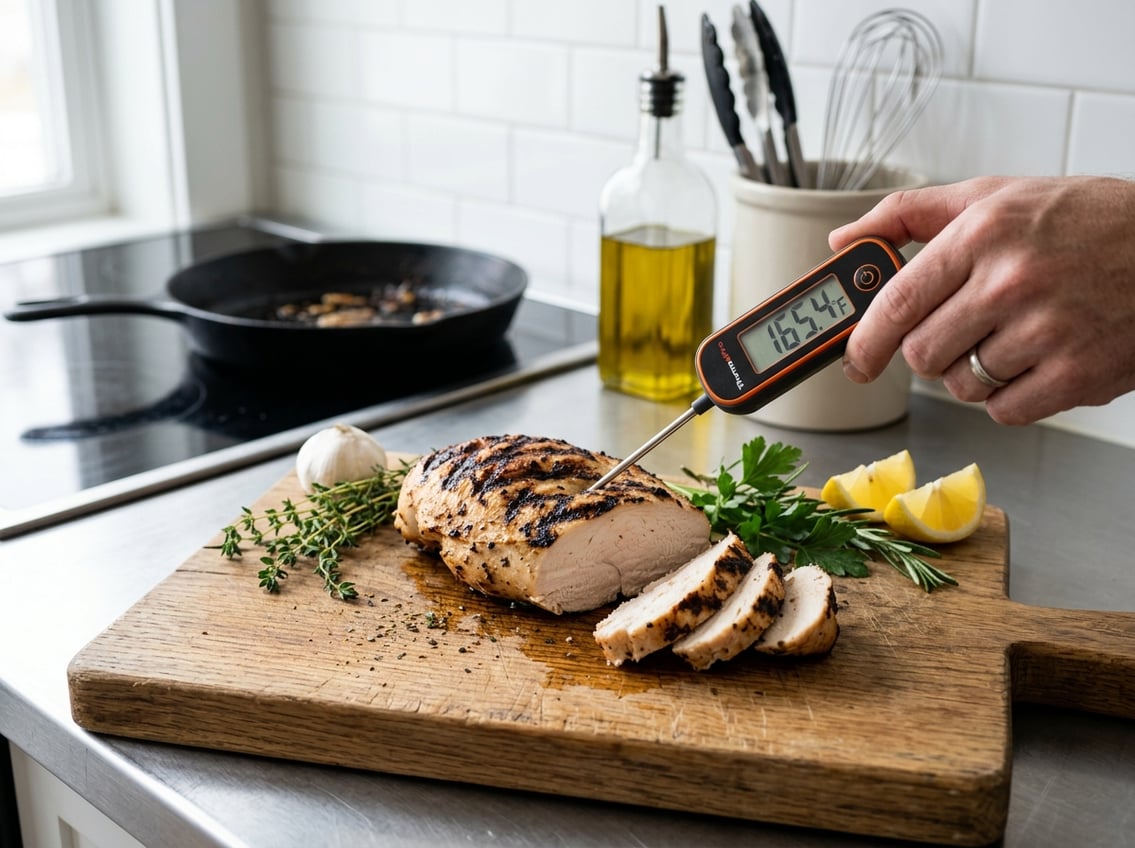
Cooking method changes how fast chicken breast browns, firms up, and reaches a safe temperature.
High heat can make the outside look finished before the inside is ready, so you need to check more carefully.
Pan-Seared, Baked, and Grilled Breast Differences
Pan-seared chicken often gets a deep golden crust fast.
Grilled chicken can char on the outside before the center catches up.
Baked chicken usually cooks more evenly, especially at moderate oven temperatures.
No matter which method you use, check the thickest part with a thermometer near the end of cooking.
The best methods in how to know when chicken breast is cooked all come back to the same rule.
Use temperature first and visual cues second.
How to Cook Chicken Breast From Frozen Safely
You can cook chicken breast from frozen, but it takes longer and needs careful temperature checks.
The outside may brown before the middle is fully cooked, which makes a thermometer even more important.
Do not rely on the surface alone.
Keep cooking until the center reaches 165°F.
Common Reasons the Outside Looks Done Too Soon
The outside can look finished too early when the heat is too high, the breast is uneven in thickness, or the pan is overcrowded.
Small breasts also cook faster on the outside than large ones.
If this happens, lower the heat and keep checking the middle.
Resting the meat for a few minutes after cooking also helps the juices settle.
Handle Chicken Safely Before and After Cooking
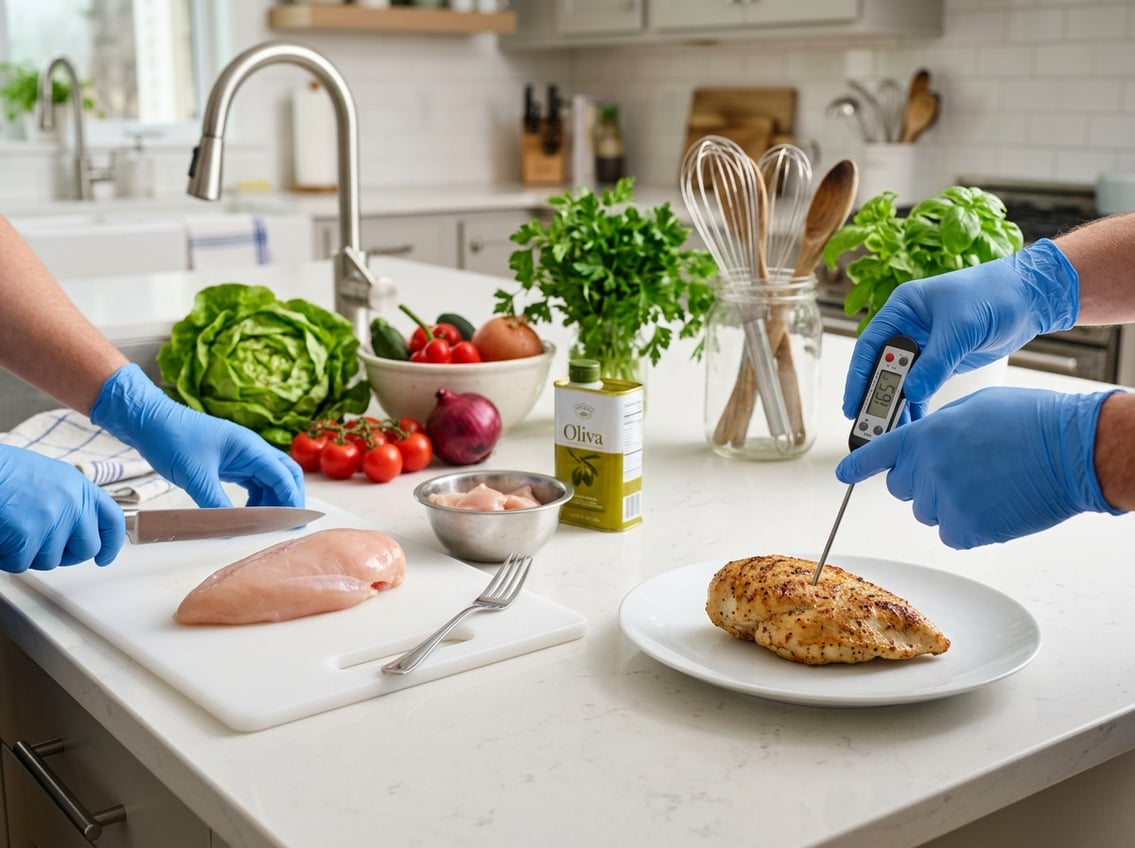
Safe cooking starts before the chicken hits the pan and continues after it comes off the heat.
Clean habits matter as much as temperature.
Prevent Cross-Contamination in the Kitchen
Keep raw chicken away from ready-to-eat foods, cutting boards, utensils, and countertops.
Wash your hands with soap after touching raw meat, and clean any surfaces that come in contact with it.
Use separate tools if possible.
That helps prevent bacteria from spreading to salads, fruit, and cooked food.
Why Salmonella and Campylobacter Matter
Raw poultry can carry harmful bacteria such as Salmonella and Campylobacter.
These germs can cause food poisoning if chicken is undercooked or handled carelessly.
That is why the 165°F target matters so much.
It is your safest way to know the chicken breast is cooked through.
Storing Cooked Chicken Breast the Right Way
Let cooked chicken cool a bit. Store it in shallow containers in the refrigerator.
Keep it covered. Eat it within a few days for the best safety and quality.
Reheat leftovers until they are steaming hot. If the chicken smells off, feels slimy, or sat too long at room temperature, throw it out.


