
Why Does Chicken Breast Shrink When Cooked? Explained
Chicken breast shrinks when cooked because heat pushes out moisture and tightens the meat’s proteins. Since chicken breast is very lean, it has less fat to buffer that change, so it often ends up smaller and drier after cooking.
If you want a plumper result, cook just until the breast reaches a safe internal temperature and stop there. That single habit does more to reduce chicken breast shrink than almost anything else.
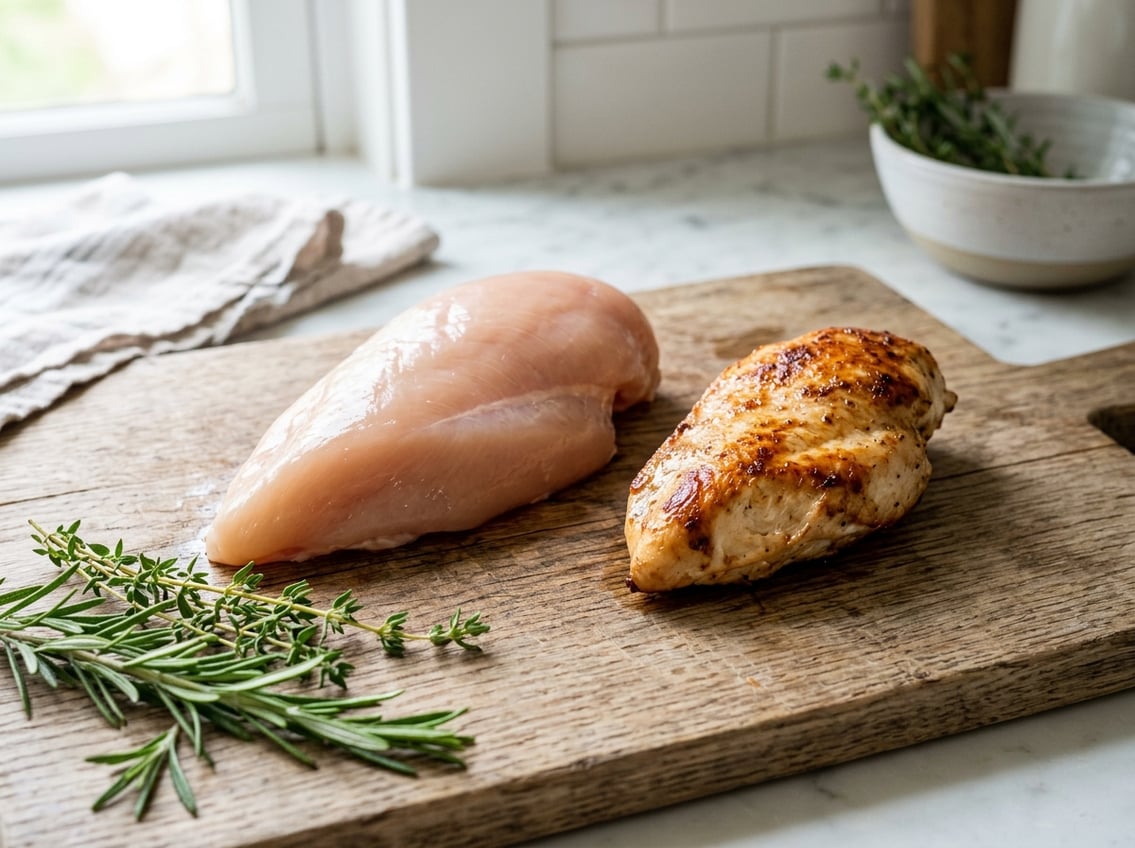
The change starts the moment heat reaches the meat. Water leaves the surface, proteins tighten, and the breast contracts as it cooks.
This is why shrinkage is so noticeable with chicken breast.
What Physically Happens as Chicken Breast Cooks
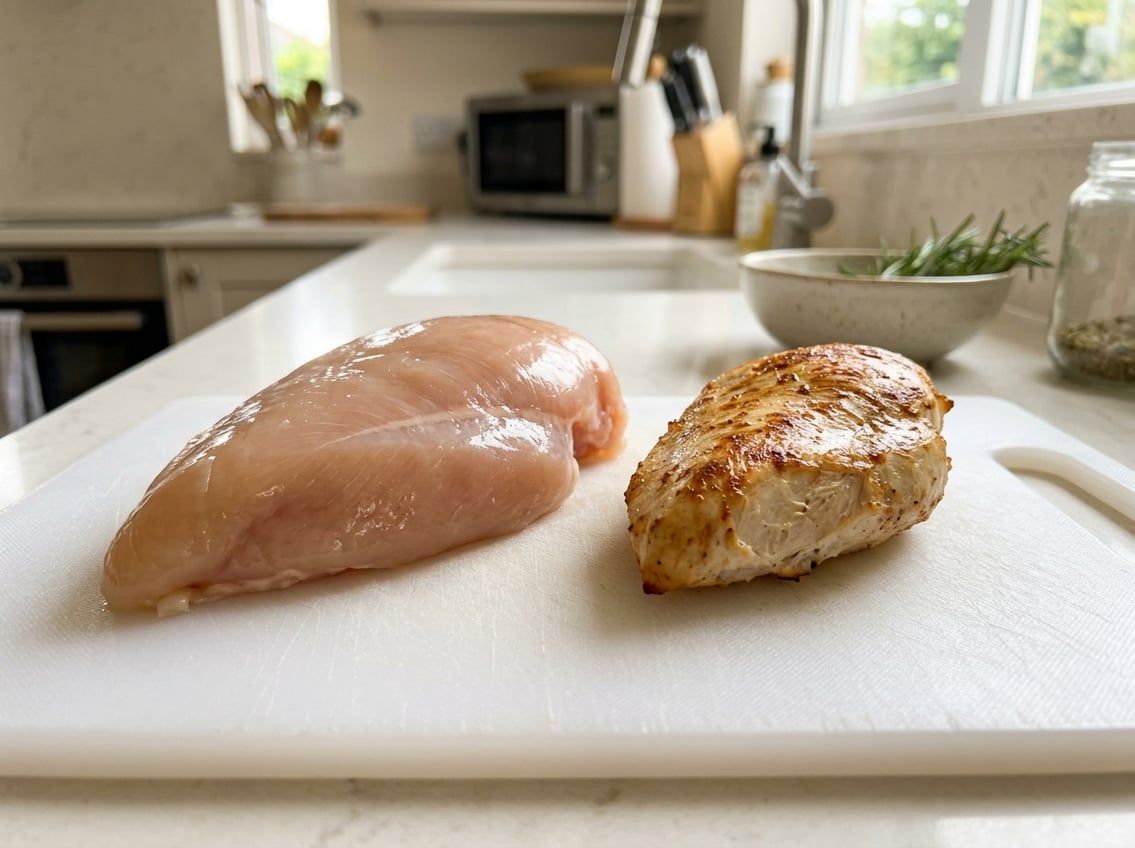
Chicken breast changes in two main ways during cooking. It loses moisture and its proteins tighten.
Those changes reduce size, weight, and tenderness at the same time. The amount of shrinkage depends on heat level, cooking time, and how much water the meat held before cooking.
Less moisture retention usually means more visible shrinking.
Moisture Loss and Evaporation
Chicken breast is mostly water, so moisture loss is a major reason it shrinks. As the surface heats up, water turns to steam and escapes, which reduces both weight and volume.
Chicken breast can lose a meaningful amount of weight during cooking because of this moisture loss, especially at higher heat, as explained in their shrinkage guide.
Surface drying often starts before the center is fully cooked. Thin pieces can shrink fast, especially in hot pans or ovens.
Protein Denaturation and Protein Contraction
Heat changes the structure of muscle proteins, a process called protein denaturation. As the proteins unfold and tighten, they squeeze out more liquid, which adds to protein contraction and visible shrinkage.
Chicken that is cooked too long often looks smaller and feels firmer. Once the proteins tighten past a certain point, the meat loses more juiciness.
Why Lean Breast Meat Shrinks More Than Other Cuts
Chicken breast is much leaner than thighs or drumsticks, so it has less fat and connective tissue to protect moisture. Fat helps slow drying, and connective tissue can help some cuts stay tender through longer cooking.
Breast meat also has a mild, tight texture that changes quickly with heat. Juicy chicken breast needs more careful timing than darker cuts.
How Much Size and Weight Loss to Expect
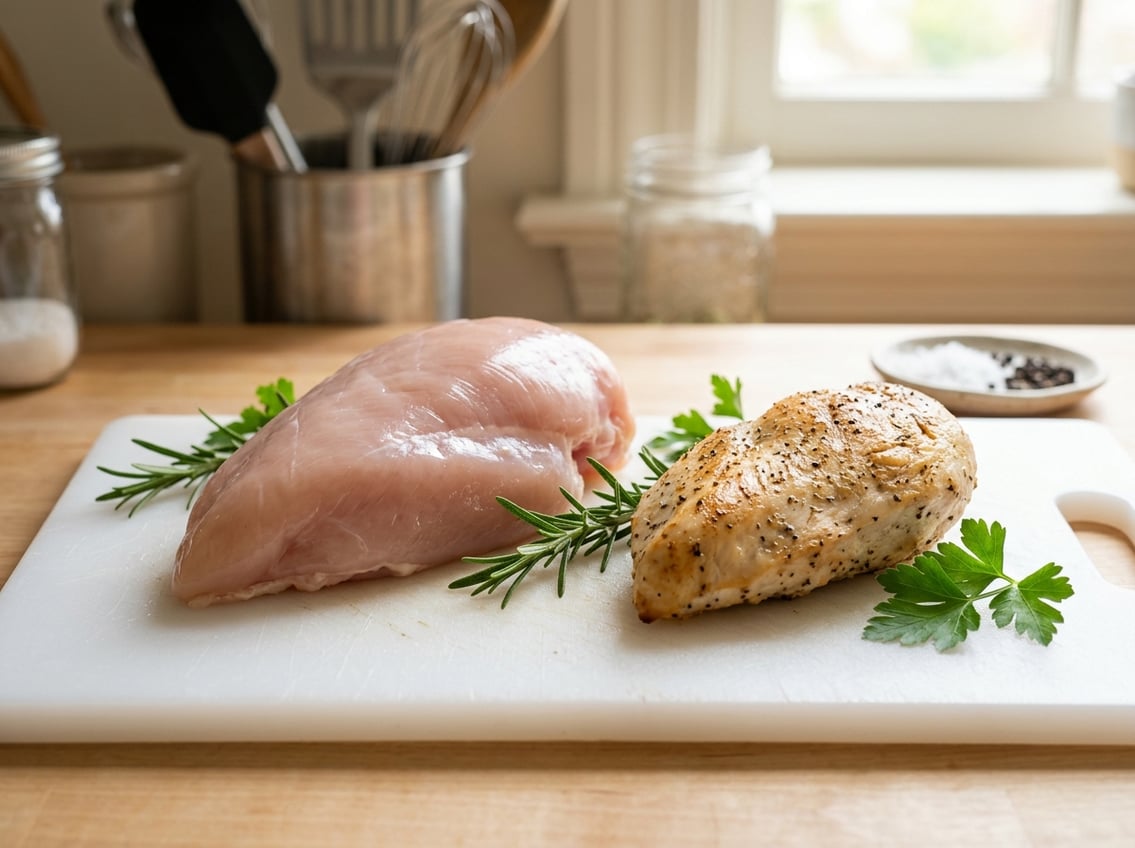
Chicken shrinkage is normal, and the amount can vary from one batch to another. You can expect a fairly consistent range when you cook similar pieces the same way.
Portion planning often goes wrong because raw chicken looks much larger than the cooked result. That matters when you are serving family meals, meal prep, or recipe portions.
Typical Chicken Shrinkage Ranges
A cooked chicken breast often loses about 15% to 30% of its raw weight. The exact shrink depends on heat, time, and size.
The Cooking Update analysis gives a similar range and shows that higher-heat methods tend to shrink more than gentler ones.
For example, 8 ounces raw may cook down to around 5.5 to 6.8 ounces. Thinner or overcooked pieces can shrink even more.
Why Portion Planning Often Goes Wrong
Raw chicken can look large enough for one plate, then seem much smaller after cooking. That can leave you short on servings, especially if you are feeding several people.
If you need a set number of cooked portions, plan with cooked yield in mind, not raw size alone. This is especially useful for salads, sandwiches, and meal prep.
How Quality and Processing Change the Outcome
The quality of chicken can change shrinkage. Some chicken contains added solution or is pre-treated, which can affect moisture retention during cooking.
Frozen chicken shrink can also be more noticeable if the meat was poorly wrapped or thawed too quickly.
If you cook chicken in broth or stock, the final texture can stay more moist because the liquid environment limits evaporation. Dry heat usually causes more shrinkage than liquid-based cooking.
Which Cooking Choices Increase or Reduce Shrinkage
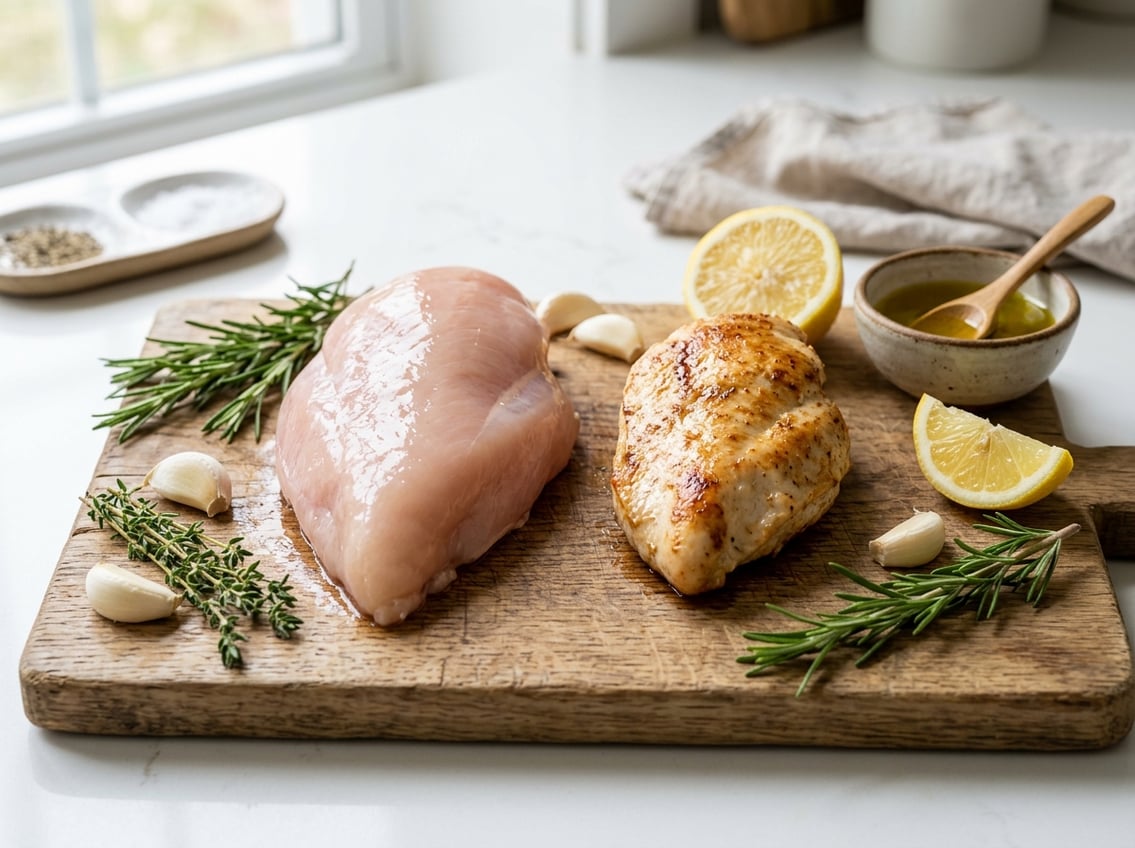
Cooking methods affect how fast moisture leaves the meat. High heat usually causes faster shrinkage, while gentler methods give you more time to stop at the right point.
When you cook chicken breast, the key is not just the method, but how hot the heat gets and how long the meat stays there. To avoid overcooking, you need more control than guesswork.
High-Heat vs Low-Heat Cooking Methods
High-heat cooking methods, such as grilling and intense oven roasting, tend to increase shrinkage because water evaporates quickly. Low-heat methods usually give you better moisture retention and a softer texture.
High heat can work well if you shorten the cooking time and use a thermometer.
Pan-Frying, Slow Cooking, and Braising Compared
Pan-frying can create good browning, but it can also dry the outside if the heat is too high. Slow cooking gives the meat more time in moist heat, so it often minimizes shrinkage.
Braising sits between those approaches because the meat cooks with some liquid and some steam. For chicken breast, that often means less shrinkage than dry, high-heat cooking.
Why Overcooking Makes Shrinkage Worse
As cooking continues past the safe point, more water escapes and the proteins tighten further. That makes the breast smaller, firmer, and less juicy.
If you want to minimize shrinkage, stop cooking as soon as the center reaches a safe temperature. Extra minutes matter more than many home cooks expect.
How to Keep Chicken Breast Plumper and Juicier
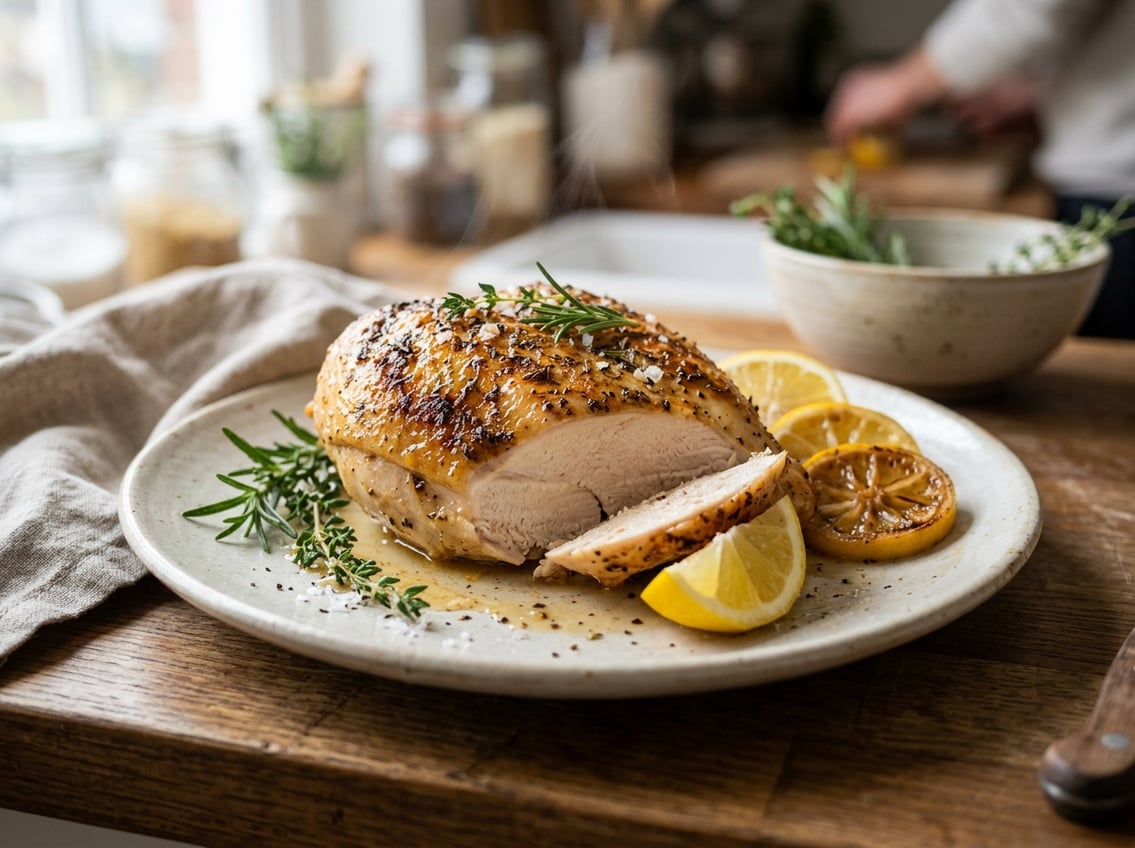
You can prevent chicken from shrinking as much by controlling heat, adding moisture before cooking, and handling the meat correctly after it comes off the stove or out of the oven. Small steps add up.
The goal is better moisture retention and a better final texture.
Use a Meat Thermometer for Better Control
A meat thermometer is the most reliable way to cook chicken breast without drying it out. Cook until the thickest part reaches 165°F, then remove it from the heat.
That simple tool helps you avoid the main cause of excess shrinkage, which is overcooking. It also gives you more consistent results from batch to batch.
Prep Steps That Improve Moisture Retention
Brining is one of the easiest ways to improve moisture retention before cooking. Salt helps the meat hold onto water, which can lead to juicier chicken and less visible shrinkage.
You can also use even-sized pieces so the breast cooks at the same rate. That reduces the chance that one end dries out while the thicker part finishes.
Resting, Slicing, and Pan Sauces for Better Results
Let the chicken rest for a few minutes after cooking so the juices settle back into the meat.
If you cut it too soon, more liquid runs out and the breast can seem drier.
Slice against the grain for a softer bite.
Pan sauces add moisture back to the plate and make lean chicken breast feel less dry.


