
Are Chicken Breast and Tenderloins the Same Thing? Key Differences
Are chicken breast and tenderloins the same thing? Not exactly.
They come from the same area of the bird, both count as white meat, and both are lean, easy-to-use cuts, yet they are different pieces of muscle with different sizes, textures, and cooking needs.
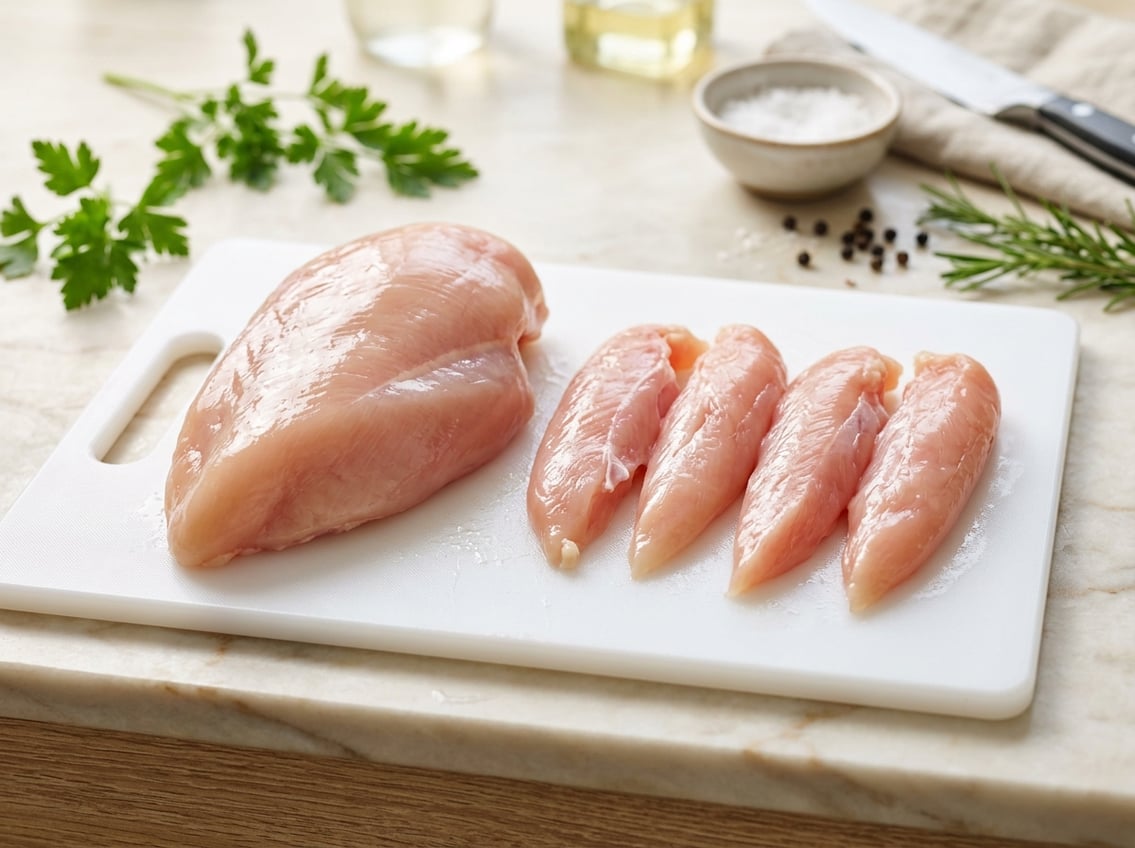
Chicken breast and tenderloins are not the same cut, and the difference affects how you cook them, how juicy they stay, and what recipes they fit best.
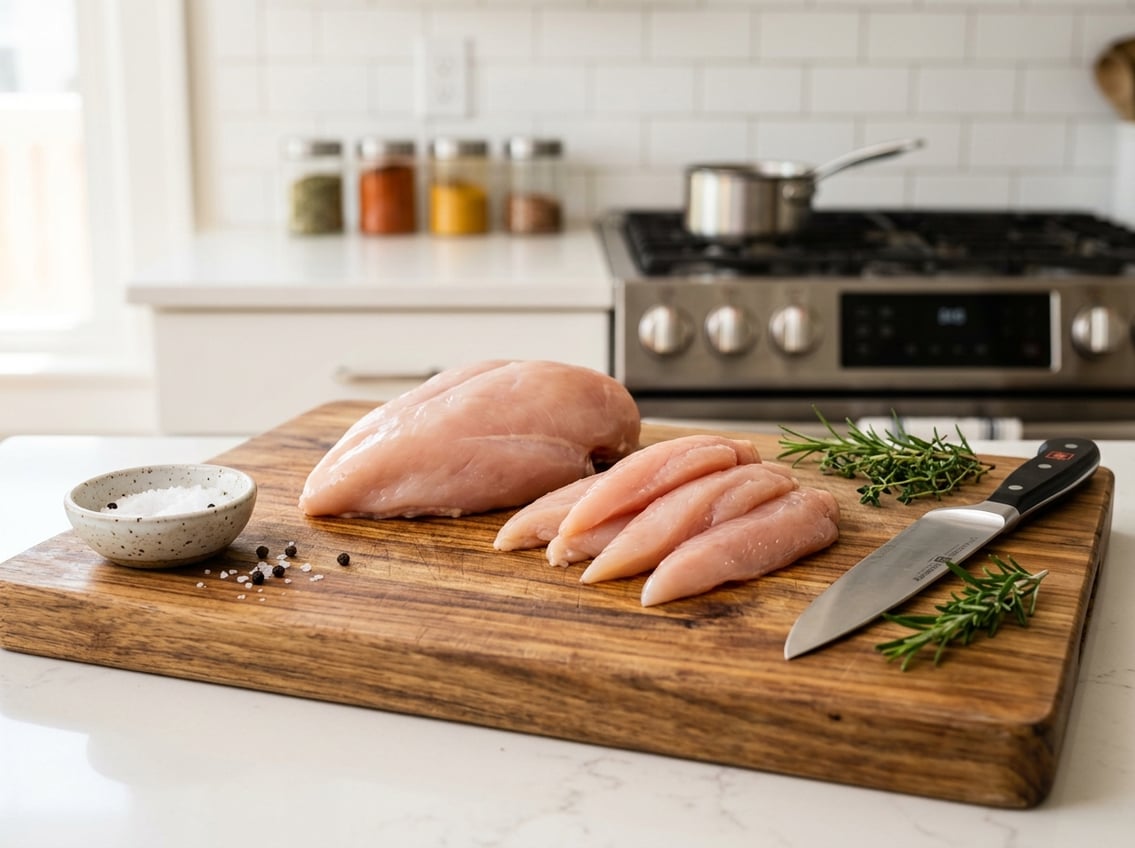
Both are sold as boneless, skinless white meat in many U.S. grocery stores. Tenderloins are the smaller, more delicate strips found under the breast, while the breast is the larger main muscle on the chest.
What Each Cut Actually Is
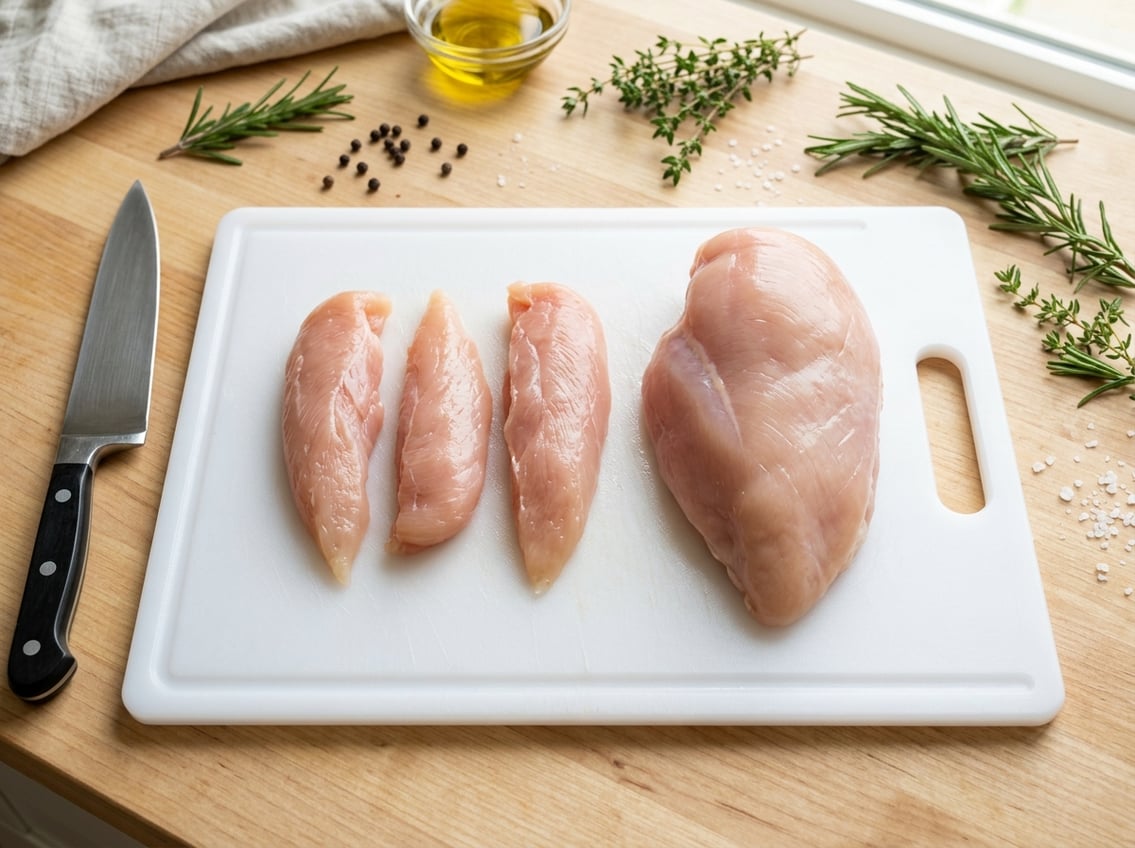
Chicken breasts and chicken tenderloins are related, not identical. Both are white meat cuts and appear in recipes that call for quick, lean protein.
The breast is the large main cut most people picture when they think of chicken. The tenderloin is the smaller strip attached beneath it, which is why stores often sell it separately or use it in products labeled chicken tenders.
Where Chicken Breast Comes From
The breast comes from the pectoralis major, the large chest muscle on the bird. It is the biggest boneless cut on a chicken and usually appears as a thick, broad piece of meat.
Because it is larger, you can use it for slices, cutlets, or a full piece for baking or grilling.
Where Chicken Tenderloin Comes From
The tenderloin comes from the pectoralis minor, the smaller muscle tucked under the breast. Many people find it hard to spot until the breast is removed.
Chicken tenderloins are the thin, narrow strips of white meat attached to the underside of the breast. They are naturally smaller and softer, so they cook faster and often feel more delicate.
Pectoralis Major vs. Pectoralis Minor
The pectoralis major does more work, so the breast can be firmer than the tenderloin. The pectoralis minor does less work, which gives tenderloins their softer texture.
That difference matters when you cook chicken strips or chicken tenders at home. Tenderloins can dry out more quickly if you overcook them, while breast meat can handle a wider range of prep styles.
How to Tell Tenderloins From Breast Strips
Tenderloins are long, narrow, and usually have a small white tendon line running through them. Breast strips are cut from a larger breast and often look flatter, wider, and more uniform.
If a package says chicken tenders, check the label carefully. According to Springer Mountain Farms, tenders usually refer to the tenderloin or similarly shaped pieces, while strips are sliced chicken breast.
The Differences That Matter in the Kitchen
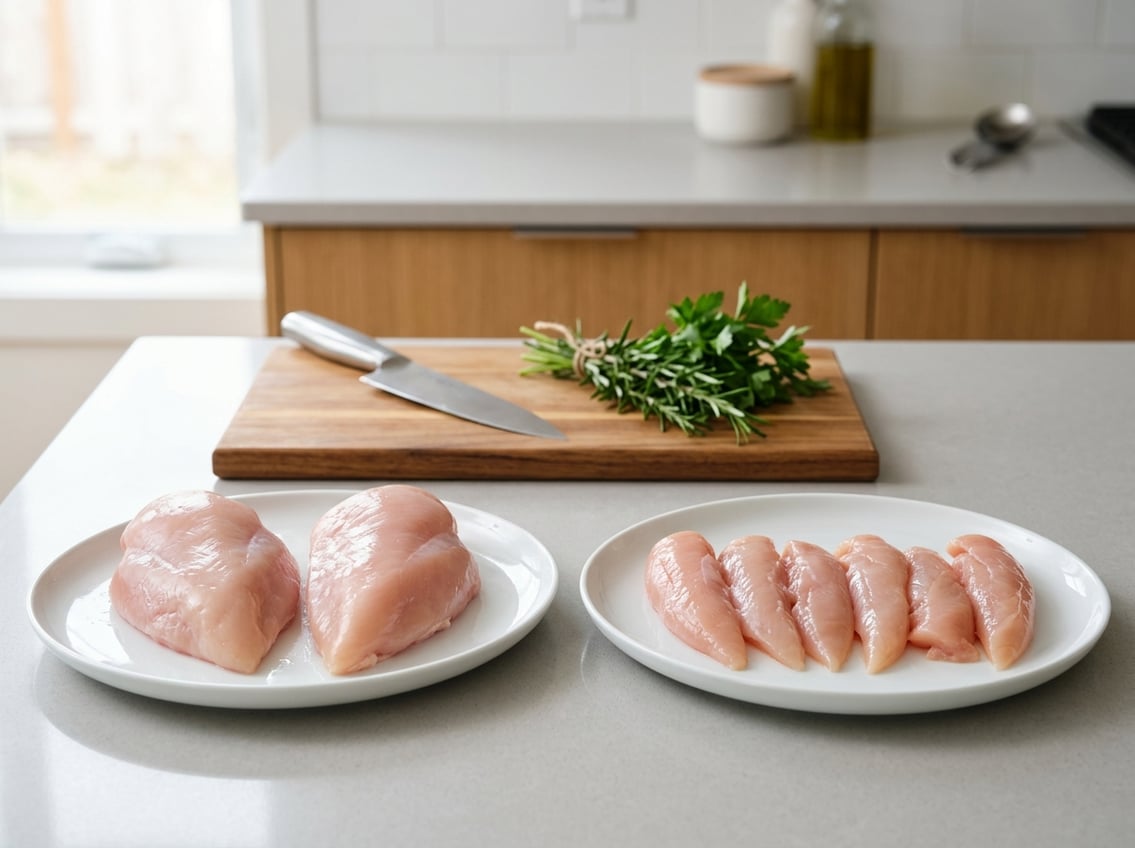
The main kitchen differences come down to size, texture, and cooking speed. Those factors decide whether one cut works better for baking, grilling, frying, or a quick stovetop meal.
You can swap them in some recipes, yet the result may change. A smaller cut needs less time, and a thicker cut needs more careful cooking to stay juicy.
Size and Texture
Chicken breast is larger and thicker, so it gives you more meat per piece. Chicken tenderloins are smaller and more delicate, which makes them feel softer when cooked well.
That texture difference helps explain why people often prefer tenderloins for quick meals and chicken breasts for meals that need slices or larger portions.
Cooking Time and Moisture Retention
Tenderloins cook faster than breasts, so they are useful when you want dinner on the table quickly. They are also easier to dry out if they stay on the heat too long.
Chicken breast gives you more flexibility with heat and time, especially if you use simple seasoning or marinate the chicken before cooking. If you cook chicken tenderloins, keep a close eye on them and stop when they reach 165°F.
When One Can Replace the Other
You can use tenderloins instead of breast in many recipes, especially for stir-fries, salads, and skillet meals. You can also use breast instead of tenderloins when you want larger pieces or need to slice the chicken after cooking, as noted by Chef’s Resource.
The swap is less exact in recipes that depend on shape and size. If a recipe is meant for chicken fingers, chicken strips, or baked chicken tenders, tenderloins usually fit better.
How Labels Like Tenders, Fingers, and Cutlets Cause Confusion
Package labels often blur the difference. Chicken tenders may mean tenderloins, while chicken fingers and chicken strips often refer to breaded or sliced pieces rather than a specific cut.
A chicken cutlet is usually a thin piece of breast that has been sliced or pounded flat. A chicken cutlet is not the same as a tenderloin, even if they can both cook quickly and look similar on the plate.
Nutrition, Protein, and Health Considerations
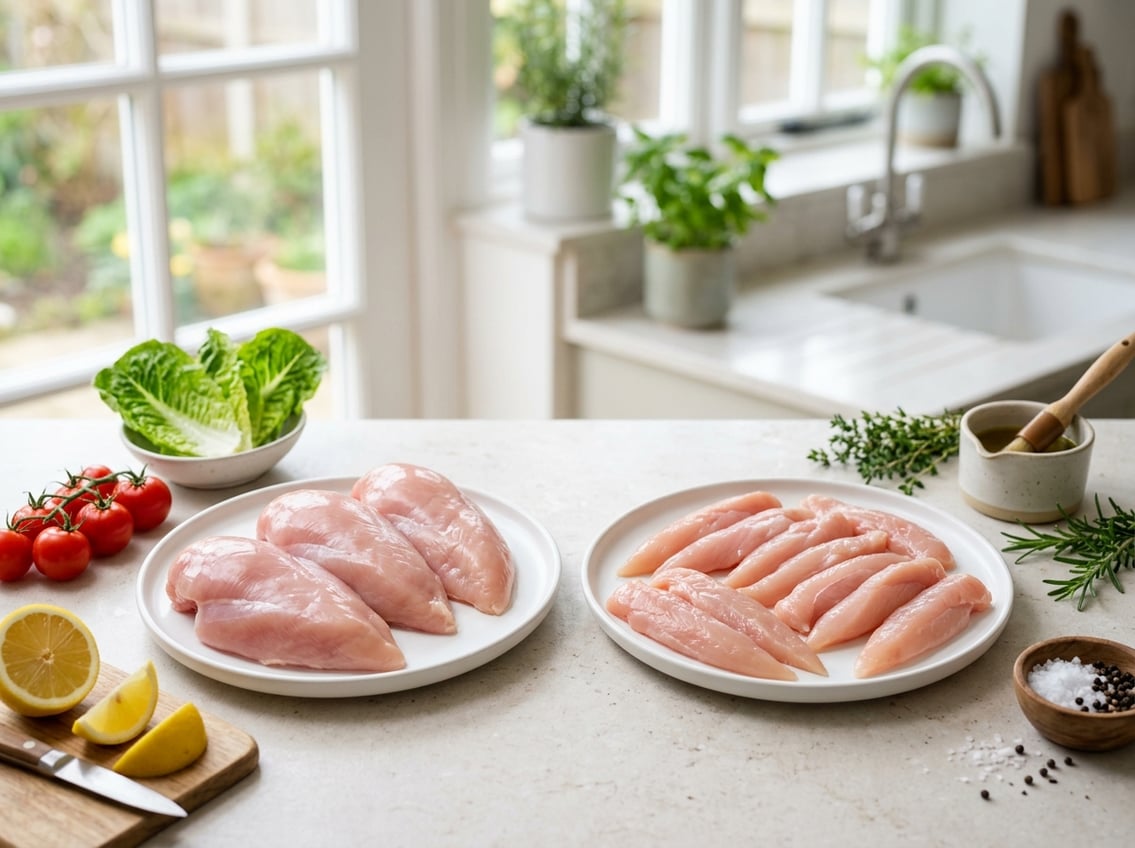
Both cuts are lean protein options and fit many healthy eating plans. Chicken breast is usually a bit higher in protein and lower in sodium, while tenderloin can be slightly lower in calories.
The exact numbers vary by brand and preparation, especially if the meat is processed or seasoned. Plain, unbreaded white meat gives you the cleanest comparison.
Lean Protein and Protein Content
Chicken breast and chicken tenderloin are both strong choices when you want lean protein. In a 100-gram serving, the breast usually has more protein than the tenderloin, according to The Kitchen Community.
Breast is a good pick when you want more protein in fewer bites. Tenderloins still provide plenty of protein, especially for lighter meals or smaller portions.
Calories, Fat, and Nutritional Comparison
Chicken tenderloin usually has slightly fewer calories than chicken breast. The same source reports about 165 calories and 31 grams of protein for chicken breast, compared with 144 calories and 26 grams of protein for tenderloin in a 100-gram serving.
Both are low in fat compared with many other meats. If you want the leanest option, breast often has a small edge, while tenderloin gives you a slightly softer bite.
Vitamins and Minerals
Both cuts provide vitamins and minerals like vitamin B6, potassium, magnesium, iron, zinc, and vitamin D. Chicken breast usually has a little more of these nutrients than tenderloin.
That difference is small in day-to-day meals, but it can matter if you rely on chicken as a regular protein.
Sodium Content and What It Means
Plain chicken breast tends to have less sodium than tenderloin. The same comparison lists about 74 mg of sodium for breast and 109 mg for tenderloin per 100 grams.
That matters most if you watch your salt intake or eat chicken often. Processed versions, like breaded tenders or pre-marinated strips, can contain much more sodium than plain raw cuts.
Best Uses for Chicken Breast and Tenderloins
Your best choice depends on the recipe. Chicken breast works well when you need a larger cut, while tenderloins shine in fast-cooking meals.
Simple seasoning, olive oil, paprika, and marinating chicken can help both cuts stay flavorful and juicy.
Best Dishes for Chicken Breast
Chicken breast fits well in chicken parmesan, stuffed chicken, baked chicken, and grilled chicken breast recipes. It also works when you want to slice the meat for sandwiches, salads, or pasta.
Because it is thick and versatile, breast handles a wider range of cooking methods than tenderloin.
Best Dishes for Tenderloins
Tenderloins work well in stir-fried chicken, baked chicken tenders, and quick skillet meals. They also fit recipes that cook fast and need even browning in a short time.
If you want a fast weeknight dinner, tenderloins are easy to season and cook. They are also a good fit for kids’ meals, wraps, and dishes where smaller pieces are useful.
Baked, Grilled, and Stir-Fried Options
Baked chicken breast gives you a simple, hands-off option for meal prep. Grilled chicken is a strong choice for both cuts, though chicken breast needs more attention to avoid drying out.
Tenderloins are especially useful for stir-fried chicken because they cook quickly and stay tender when you use high heat for a short time. According to The Kitchen Community, both cuts can be baked, grilled, fried, poached, or steamed with good results.
Seasoning and Marinade Ideas
Simple seasoning works well on both cuts. Use salt, pepper, garlic powder, and paprika.
Olive oil helps the outside brown. It also keeps the meat from sticking.
You can marinate chicken to add extra flavor and moisture. Try a short marinade with lemon, herbs, oil, or a mild spice blend.


