
Can I Defrost Chicken Breast in the Microwave? Safe Steps
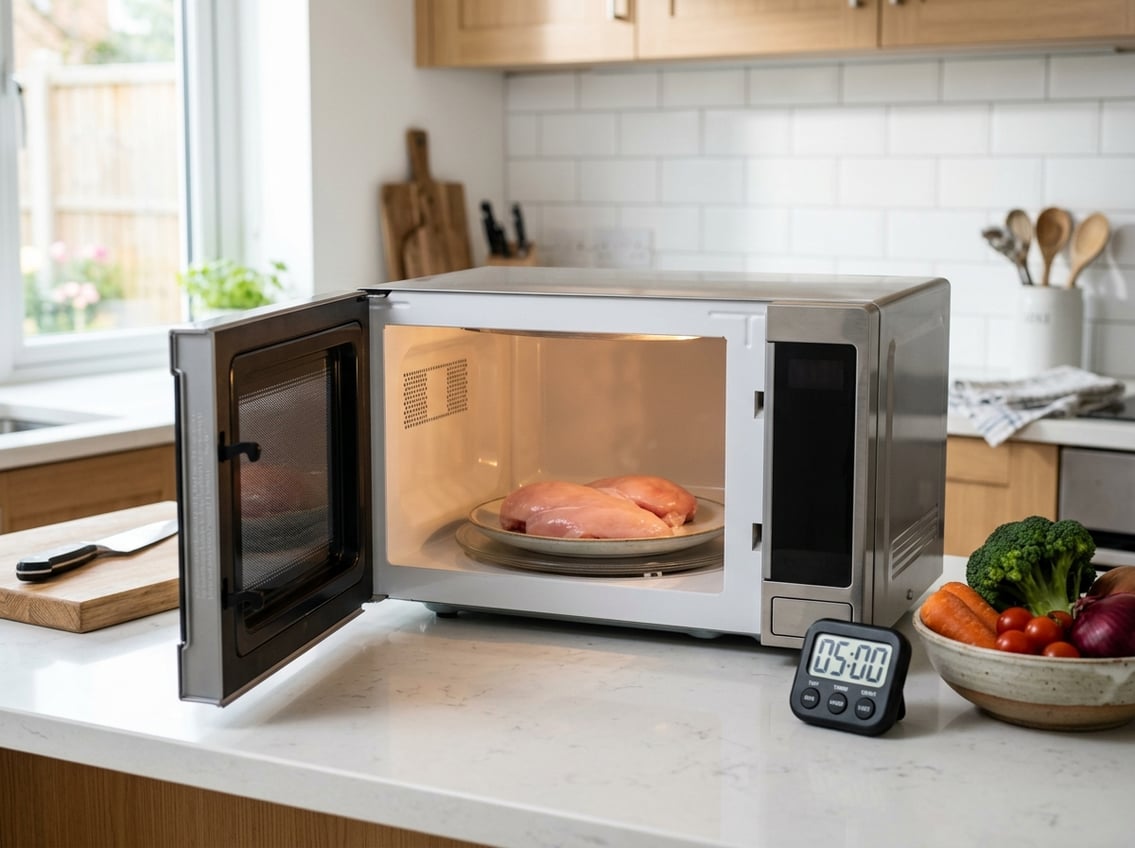
Can you defrost chicken breast in the microwave? Yes, you can. This method is one of the fastest safe ways to thaw chicken when you need to cook it right away.
The key is to use low power, watch it closely, and cook it immediately after thawing so the edges do not warm into the food safety danger zone.
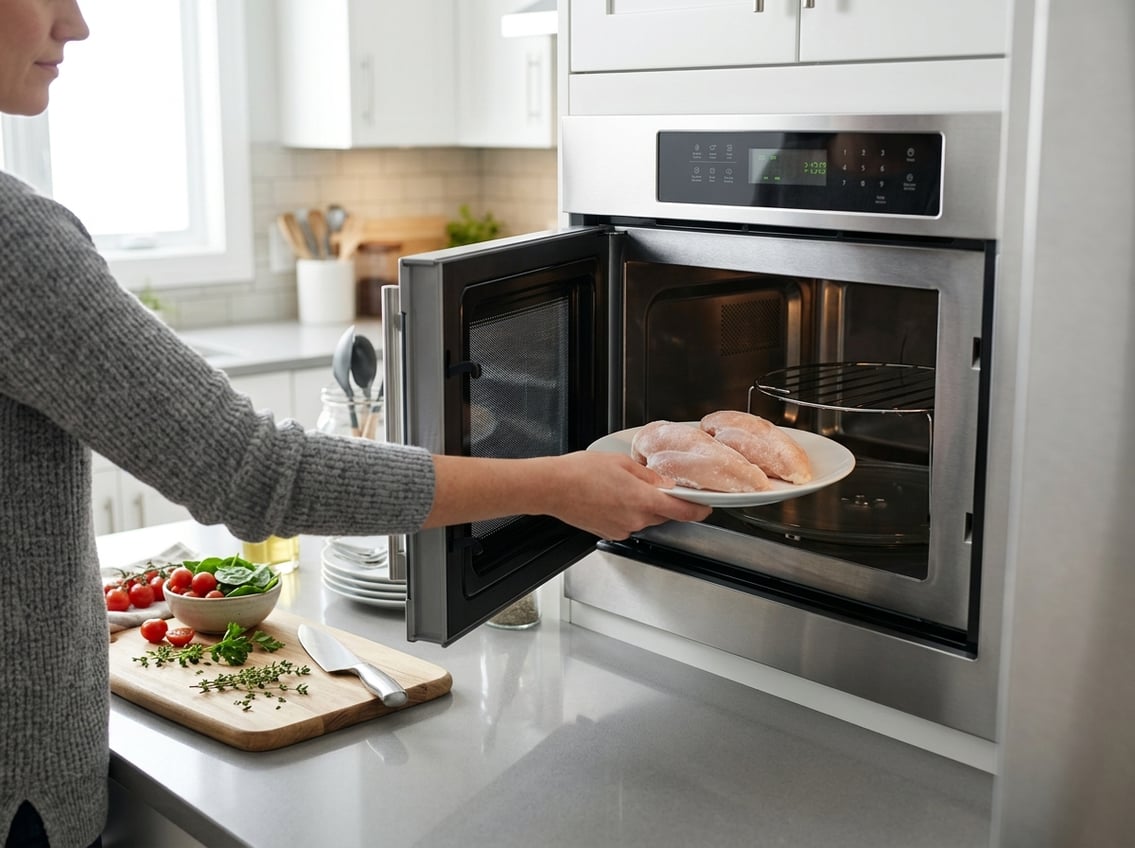
Microwave defrosting works best for boneless chicken breast portions because they are thin and thaw more evenly than larger cuts.
Handle the chicken carefully, since uneven heating can start cooking the outside before the center is thawed.
If you need a quick answer, the microwave is a practical option for defrosting chicken in a hurry.
It is not the best choice for texture, but it can be safe when you follow the right steps.
When Microwave Thawing Is Safe
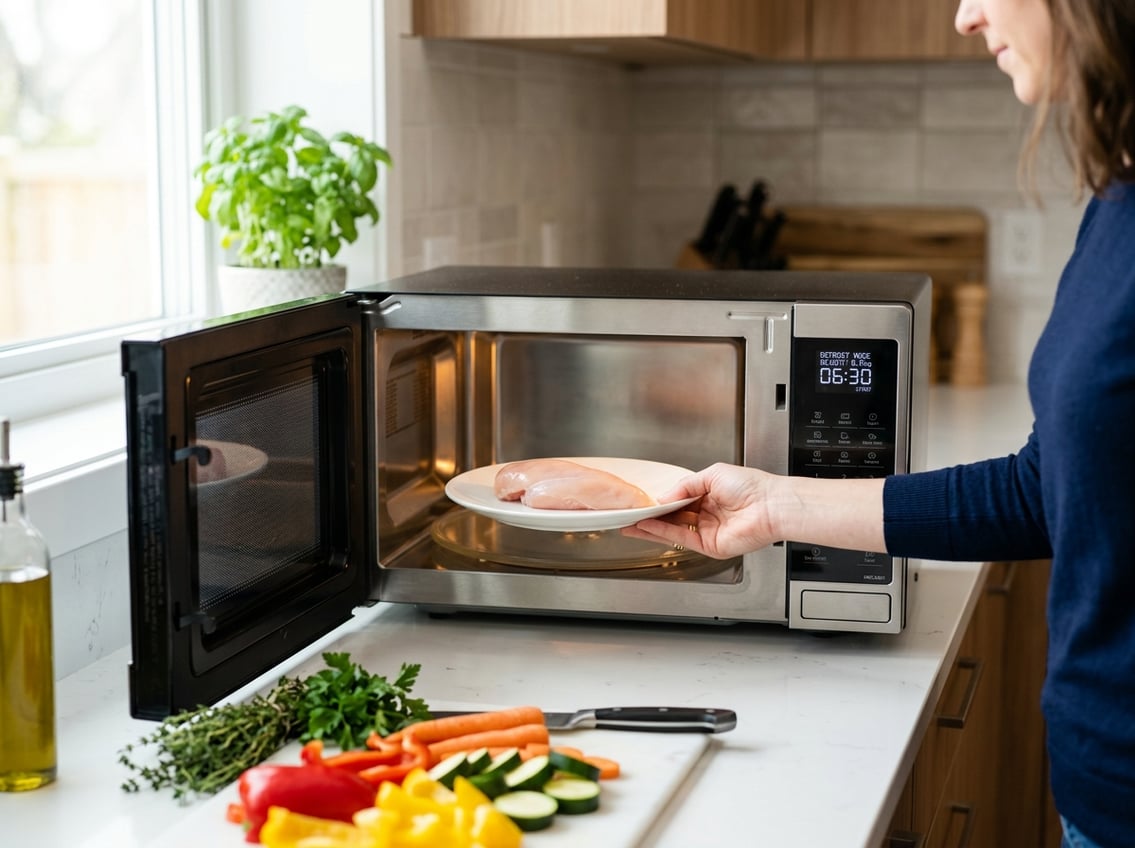
Microwave thawing is safest when you plan to cook the chicken immediately after it finishes thawing.
It works well for single chicken breasts and smaller portions when speed matters more than perfect texture.
As Martha Stewart’s guide to defrosting chicken safely notes, the microwave is one of the three accepted thawing methods.
The Short Answer for Chicken Breast
You can defrost chicken breast in the microwave if you use the defrost setting or low power and keep checking the meat.
The chicken should stay cold in the center and should not begin to cook on the outside.
If it does, stop the cycle and let it rest for a minute or two before continuing.
Why Chicken Breast Thaws Better Than Larger Cuts
Chicken breast is thinner than a whole bird or large bone-in pieces, so it thaws more evenly.
Boneless pieces also heat faster, which makes them easier to manage on low power.
Why You Must Cook It Immediately
Microwave thawing can warm parts of the meat before the center is fully thawed.
That creates a surface where bacteria can grow if you leave it sitting out.
Once the chicken is thawed, cook it right away to reduce that risk.
How to Thaw It Without Starting to Cook It
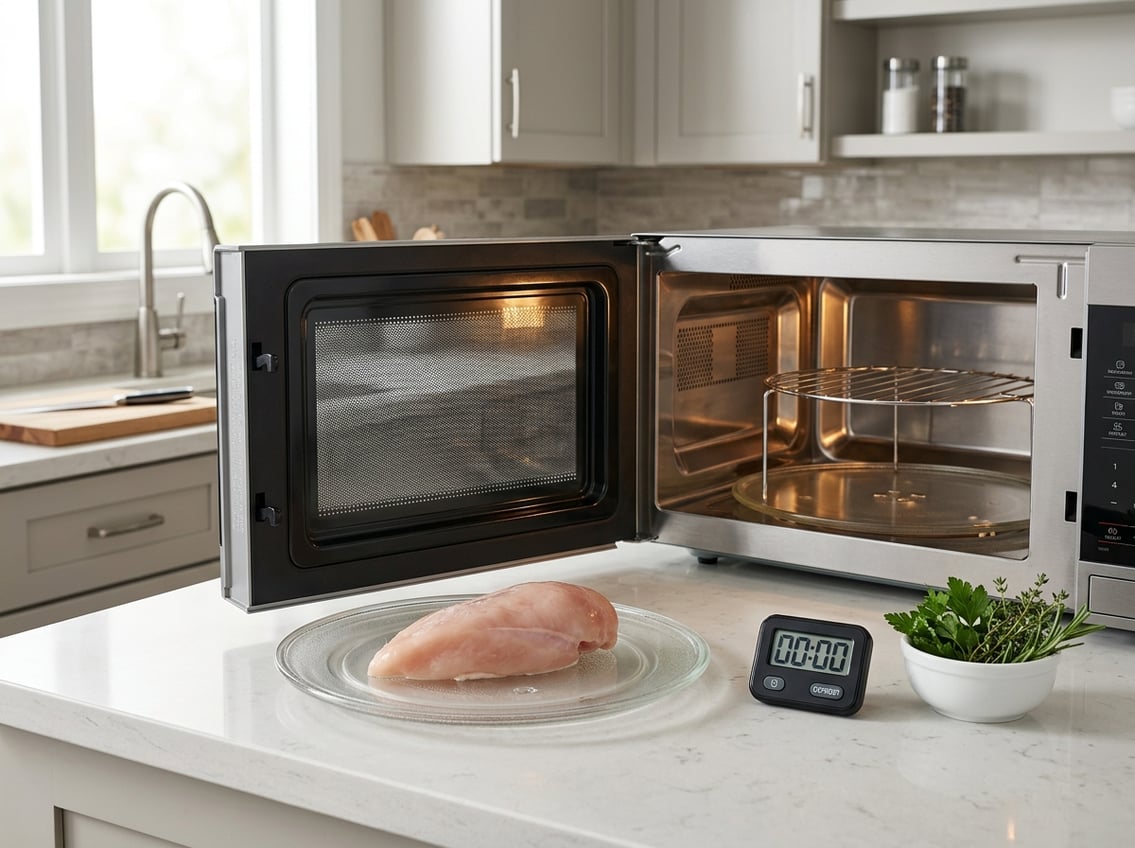
The goal is to thaw the chicken evenly while keeping the outside from cooking.
You get the best results by removing packaging, using low power, and checking often.
That approach matches the practical advice in quick microwave defrosting guides for chicken breast.
Remove Packaging and Use a Microwave-Safe Dish
Remove the chicken from any foam tray, plastic wrap, or non-microwave-safe packaging.
Place it on a microwave-safe plate or shallow dish that can catch any liquid.
This helps prevent contamination and keeps the microwave clean.
Use the Defrost Setting or Low Power
Use your microwave’s defrost function if it has one.
If not, set the power to about 30% to 50% to thaw the chicken without cooking the edges.
Higher power usually makes the outside tough before the center thaws.
Flip, Separate, and Check Frequently
Stop the microwave every 1 to 2 minutes to check progress.
Flip the breast over, separate pieces that are sticking together, and rotate the plate if your microwave heats unevenly.
Frequent checking is important because chicken can shift from frozen to partly cooked fast.
How to Tell the Center Is Fully Thawed
Press the thickest part of the chicken with clean fingers or the back of a utensil.
It should feel soft with no hard ice in the center.
If you cut into it, the middle should no longer look frozen or icy, though it may still be very cold.
Timing, Texture, and Common Mistakes
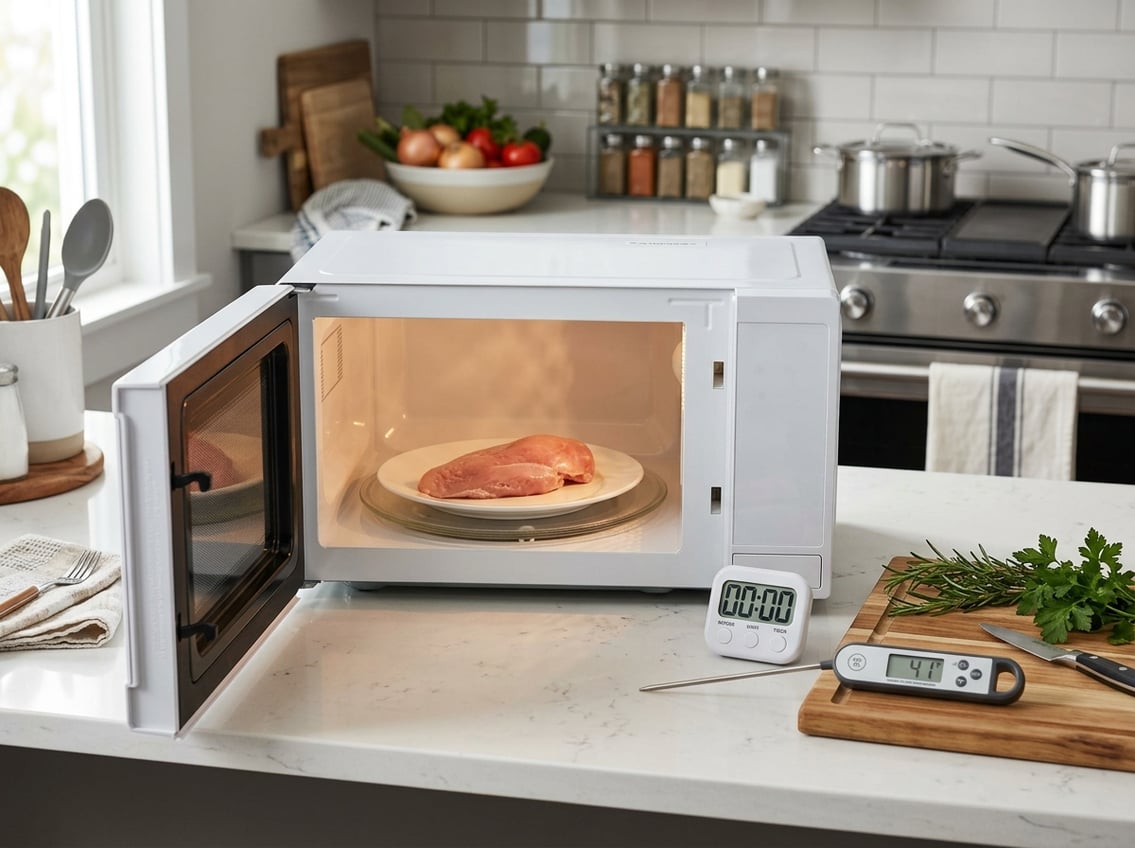
Defrosting times vary by weight, shape, and microwave strength.
Texture changes are common, since microwave thawing can make the surface slightly dry or white in spots if you run it too long.
Food Network’s chicken thawing guidance also notes that microwaves can create hot spots, so close attention matters.
Defrosting Times by Weight and Portion Size
A small boneless chicken breast may thaw in 2 to 4 minutes, while a larger breast can take 4 to 6 minutes.
A pound of chicken breast often takes about 5 to 10 minutes, depending on thickness and wattage.
Start with the shortest time that seems reasonable, then continue in short bursts.
What to Do If the Edges Turn White
White edges mean the chicken has started to cook.
Stop the microwave and let the breast sit for a minute so heat spreads more evenly.
You can still cook it safely, as long as you move straight into cooking after thawing.
How Microwave Wattage Changes Results
A higher-wattage microwave thaws faster and can overcook the edges more easily.
A lower-wattage model may need extra time, yet it often gives you better control.
If your microwave runs hot, use shorter cycles and more frequent checks.
Mistakes That Increase Food Safety Risk
- Leaving the chicken unattended for long stretches
- Using full power instead of defrost or low power
- Thawing in sealed packaging that is not microwave-safe
- Letting the chicken sit on the counter after thawing
- Cooking only part of the chicken and saving the rest for later
When to Use Another Method Instead
The microwave is fast, yet it is not always the best choice.
If you care most about texture or food prep flexibility, the fridge or cold water method may fit better.
USDA-style thawing options, including refrigerator, cold water, and microwave, are also summarized in safe chicken thawing guides.
Fridge vs Cold Water vs Microwave
The refrigerator gives you the best texture and the lowest risk, but it takes the longest.
Cold water is faster than the fridge and often better for texture than the microwave, as long as the chicken stays sealed in a leak-proof bag and you change the water often.
The microwave wins on speed.
Can You Refreeze Chicken Breast After Thawing
Do not refreeze raw chicken breast that you thawed in the microwave unless you cook it first.
The chicken may have already warmed in spots, which lowers quality and raises safety concerns.
If you cook the chicken after thawing, you can freeze the cooked meat later.
Best Option for Meal Prep and Better Texture
If you are meal prepping, thaw the chicken in the refrigerator when you have time. This method gives you better texture and more flexibility for storage.
Use microwave thawing only when you need dinner quickly and are ready to cook right away.


