
Can You Use Chicken Breast Instead of Thighs? Key Adjustments
You can replace chicken thighs with chicken breasts in many recipes if you adjust for the leaner meat. Chicken breasts cook faster and dry out more easily, so use less time, add a bit more fat, and pay closer attention.
Your best results come from shorter cooking, added moisture, and recipes that already use sauce, marinade, or quick heat.
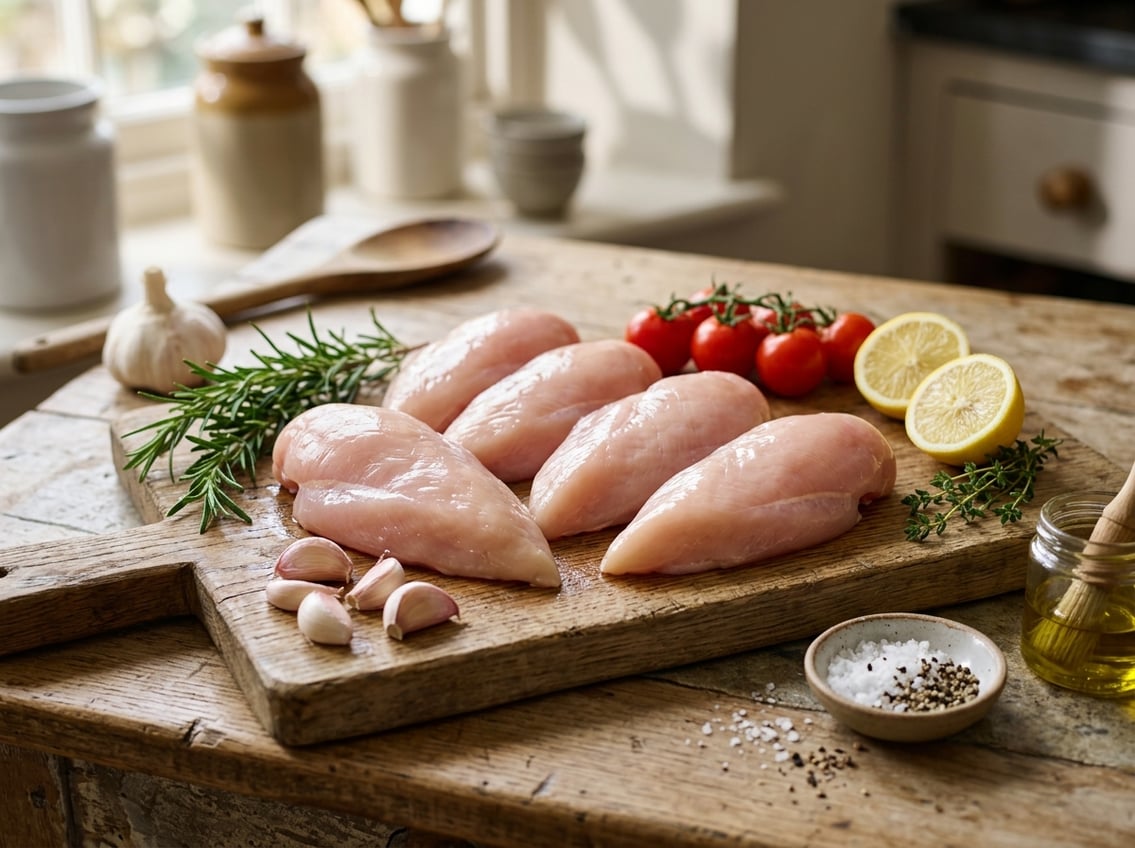
This swap works well in plenty of weeknight meals, from stir-fries to salads. It works less well in slow-cooked dishes where chicken thighs bring more fat, richer flavor, and a softer texture.
When the Swap Works Best
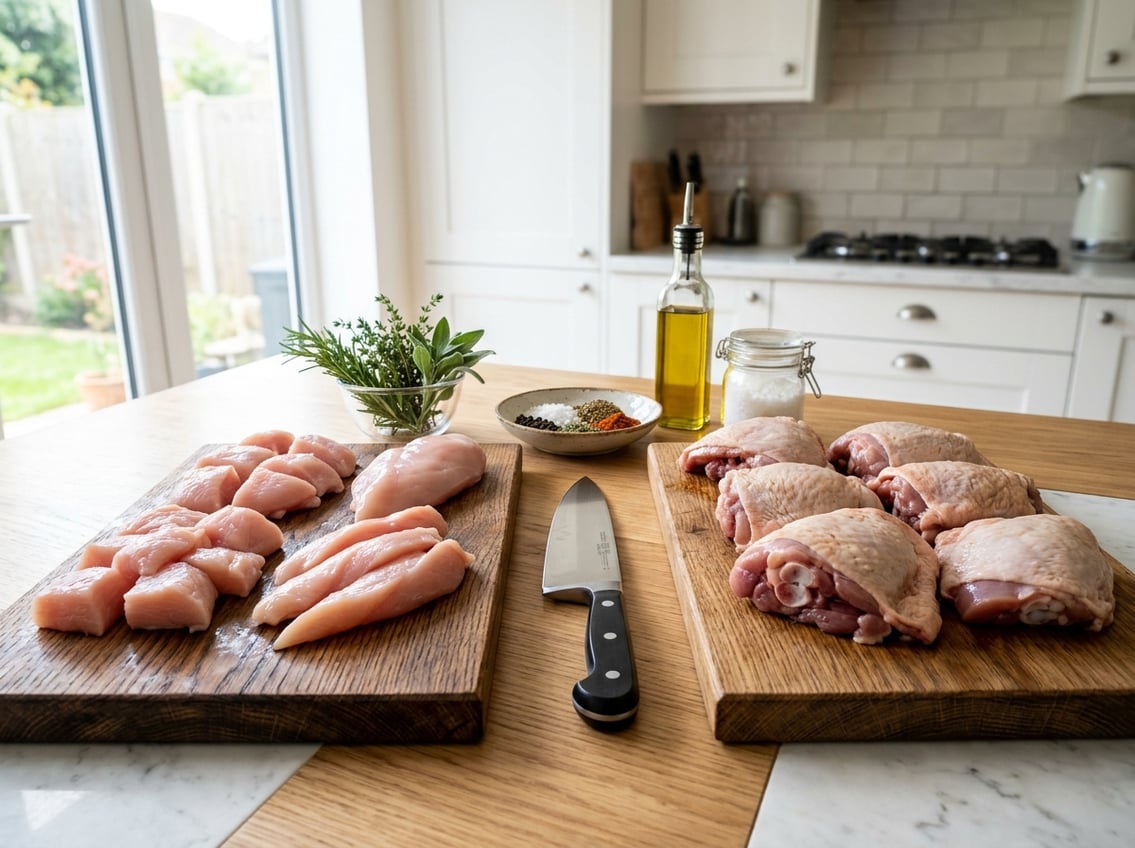
You get the easiest results when the recipe cooks quickly and has enough seasoning, sauce, or oil to support lean meat. The cut matters as much as the method.
Best Fits for Quick-Cooking Dishes
Chicken breasts work well in dishes that use high heat for a short time. Think chicken fajitas, stir-fries, cutlets, sandwiches, and salads.
These recipes usually slice or shred the meat, which helps the breast cook evenly and stay tender. They also rely on bold sauce or seasoning, so the milder flavor of chicken breasts fits naturally.
Recipes That Need Extra Caution
Some chicken cuts need more care when you swap. Slow braises, long roasts, stews, and barbecue-style recipes often depend on the fat and connective tissue in chicken thighs.
If you use chicken breast in these dishes, the meat can turn dry before the rest of the recipe is done. That risk is highest with bone-in, skin-on thighs or any recipe that cooks for a long time.
When Boneless Pieces Are Easiest to Swap
Boneless chicken thighs are the easiest match to replace because the shape and cooking method are already simple. If you use boneless chicken breasts of similar size, you can usually make the swap with small timing changes.
Thin cutlets or sliced breasts are the most flexible choice. They cook evenly and fit better in dishes where the meat is meant to be mixed with vegetables, sauce, or grain bowls.
What to Change in Cooking Time, Fat, and Moisture
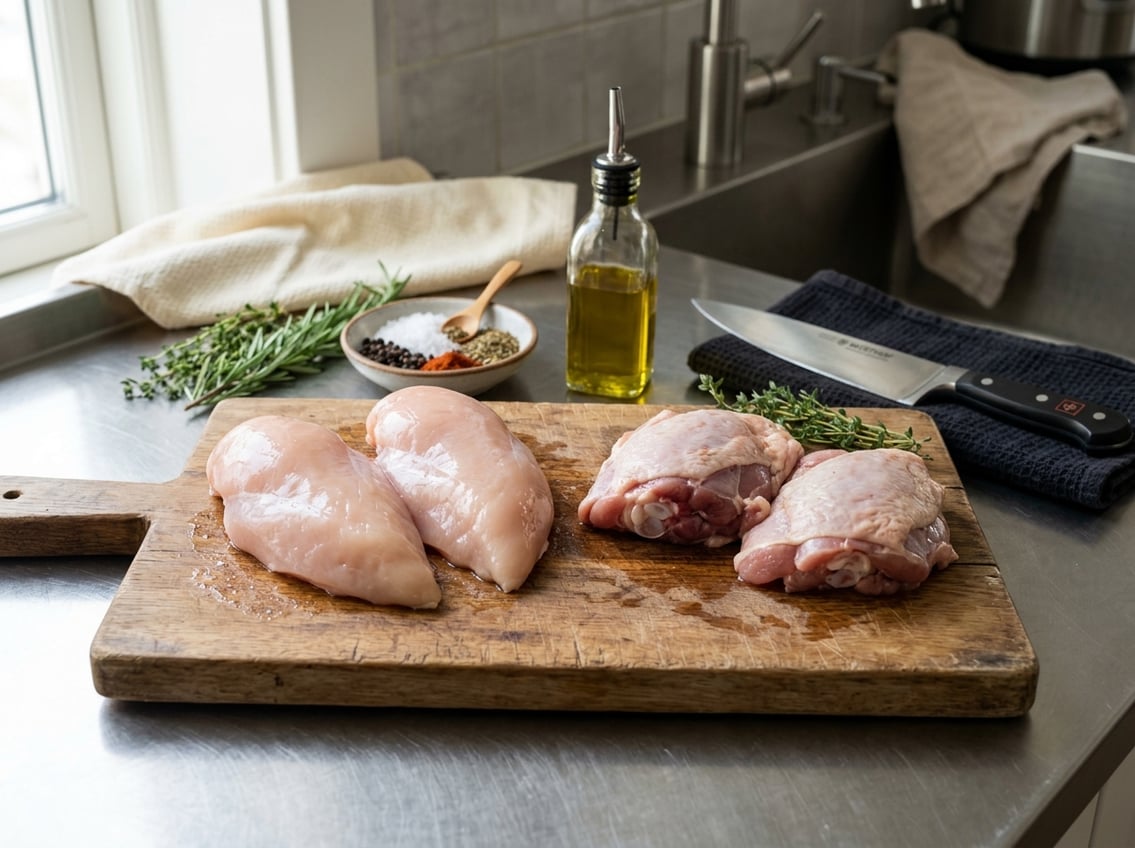
Chicken breasts need a lighter touch than chicken thighs. Use less time, more moisture protection, and a reliable thermometer when cooking chicken breasts.
Shorter Cooking Times for Lean White Meat
Chicken breast is leaner, so it cooks faster than chicken thighs. Thin pieces may finish in minutes, while whole breasts often need only a short oven or pan finish.
For best results, pound breasts to even thickness or slice them into cutlets. That helps them cook at the same rate and lowers the chance of dry edges.
How to Prevent Dryness With Marinades and Added Fat
A little fat goes a long way with chicken breast. Olive oil, butter, yogurt, buttermilk, or a sauce can help keep the meat moist.
A short marinade also helps, especially one with oil, salt, and a mild acid like lemon juice or vinegar. According to Expert Guide and Recipes, adding fat and using brines or marinades can help prevent dry, bland results when you use chicken breast instead of thighs.
Using Temperature Instead of Guesswork
Use an instant-read thermometer and pull chicken breast when it reaches 165°F in the thickest part. That is especially useful when substituting for chicken thighs in mixed dishes, since pan heat and piece size can vary.
A thermometer gives you a much better result than watching the clock.
How the Flavor and Texture Will Change
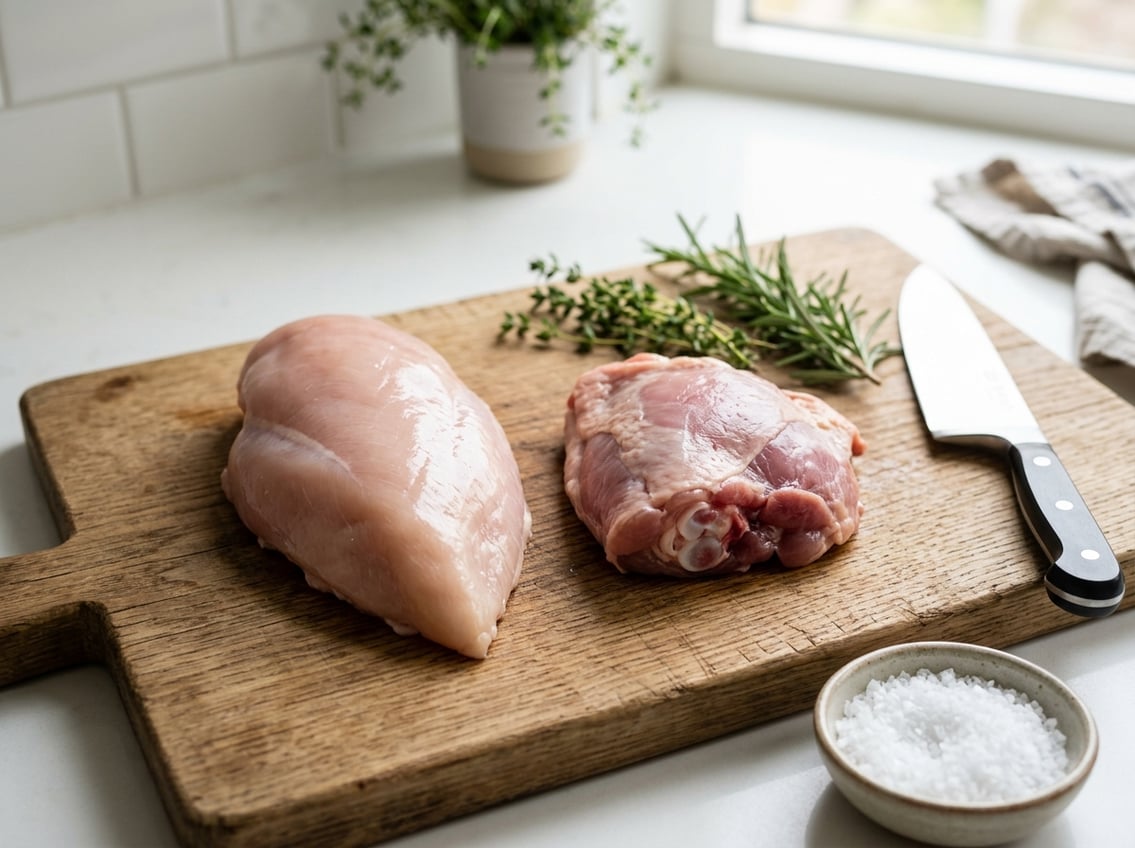
The swap changes more than cook time. Chicken breast tastes lighter and feels firmer, while chicken thighs bring more richness and a softer bite.
Mild Flavor Versus Rich Dark Meat
Chicken breast has a mild flavor that picks up seasoning well. It lets sauces, marinades, and spices take the lead.
Chicken thighs taste deeper and richer because they have more fat and darker meat. That extra fat helps with browning and gives the finished dish a fuller flavor.
Tenderness, Juiciness, and Mouthfeel
Chicken breasts can feel dry if you overcook them even a little. Chicken thighs stay moist more easily because of their fat and connective tissue.
If you want a firmer, cleaner bite, chicken breast may fit better. If you want a softer, juicier texture, thighs still win in most slow-cooked or pan-cooked dishes.
Nutrition and Cost Trade-Offs
Chicken breasts usually give you more protein per calorie and less fat. That makes them a common choice for lighter meals and meal prep.
Chicken thighs usually cost less in many US stores and bring more flavor with less added fat from cooking. If you want a richer result without extra ingredients, thighs often make more sense.
Recipe-by-Recipe Guidance
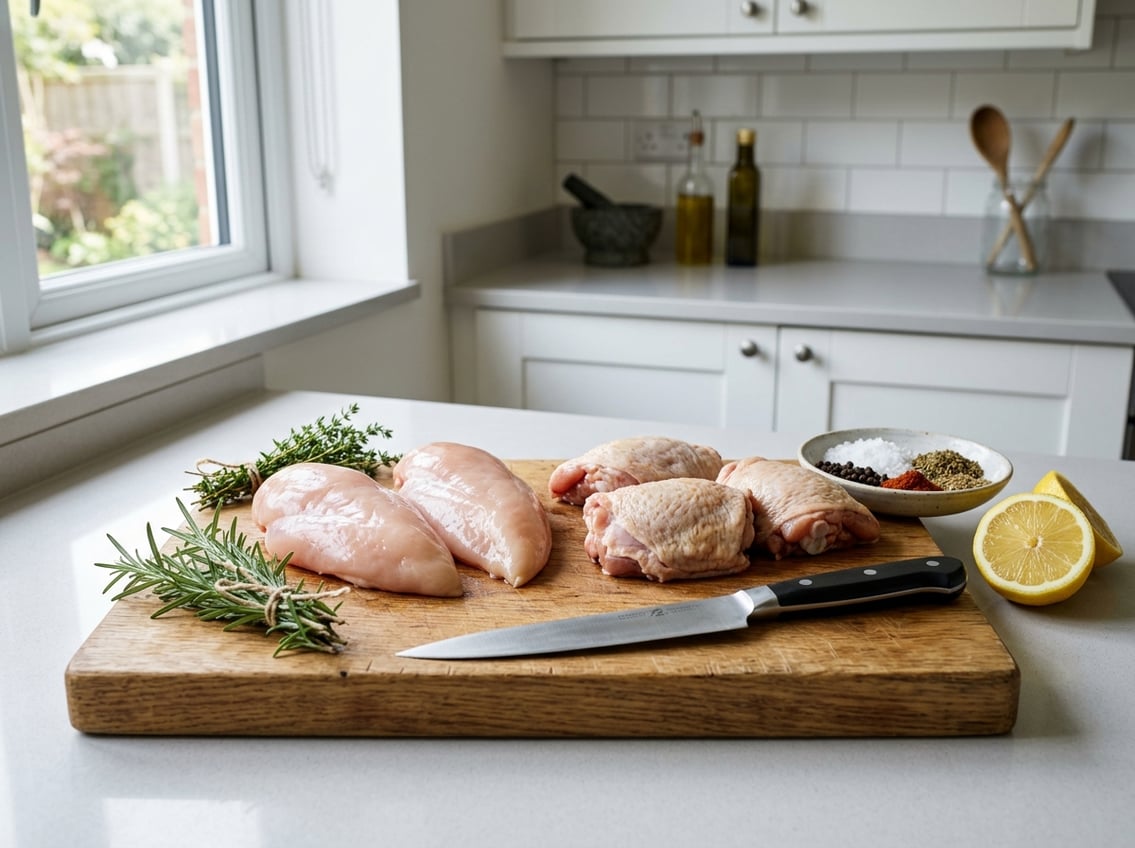
Some recipes adapt very well to chicken breast, while others need tighter control. The best choice depends on how the meat is cut, cooked, and served.
Chicken Fajitas and Stir-Fries
Chicken fajitas are one of the easiest swaps. Slice the breast thin across the grain, cook it quickly over high heat, and keep the vegetables moving so the meat does not overcook.
Stir-fries also work well because the sauce adds moisture. A quick marinade helps even more, especially when you use chicken breasts in a fast skillet meal.
Chicken Parmesan and Breaded Cutlets
Chicken parmesan can work well with breasts, especially if you pound them to an even thickness. A light coating of oil or egg before breading helps seal in moisture.
Breaded cutlets cook faster than thighs, so watch them closely during frying and baking. This matters most when the sauce and cheese go on at the end, since the meat can dry out under extra heat.
Chicken Salad and Other Cold Dishes
Chicken salad works well with chicken breast instead of thighs. Poach the meat gently and shred it.
Mix the chicken with enough dressing to keep it moist. Cold dishes hide the lower fat content well, especially when you use creamy dressing, yogurt, or mayonnaise.
Chicken breast makes a practical choice for lunch prep, wraps, and grain bowls.


