
How Much Chicken Breast Is 30 Grams of Protein?
You may wonder how much chicken breast is 30 grams of protein, especially if you track meals by weight instead of by guesswork.
For most people, the answer is simple: about 3.5 ounces, or 100 grams, of cooked skinless chicken breast usually gives you close to 30 grams of protein.
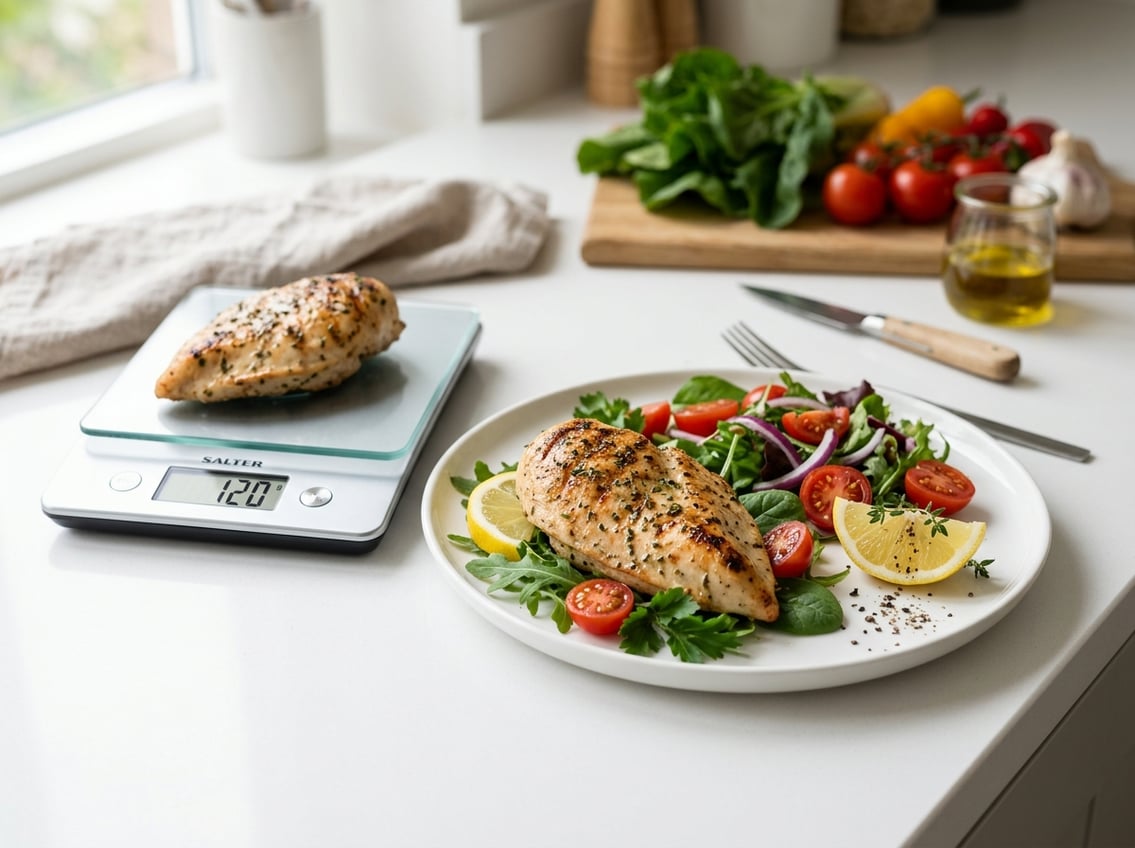
Chicken breast is one of the easiest lean protein foods to portion for lunch, dinner, or meal prep.
The exact number can shift a little depending on whether you weigh it raw or cooked, and how you prepare it.
The Exact Portion to Aim For
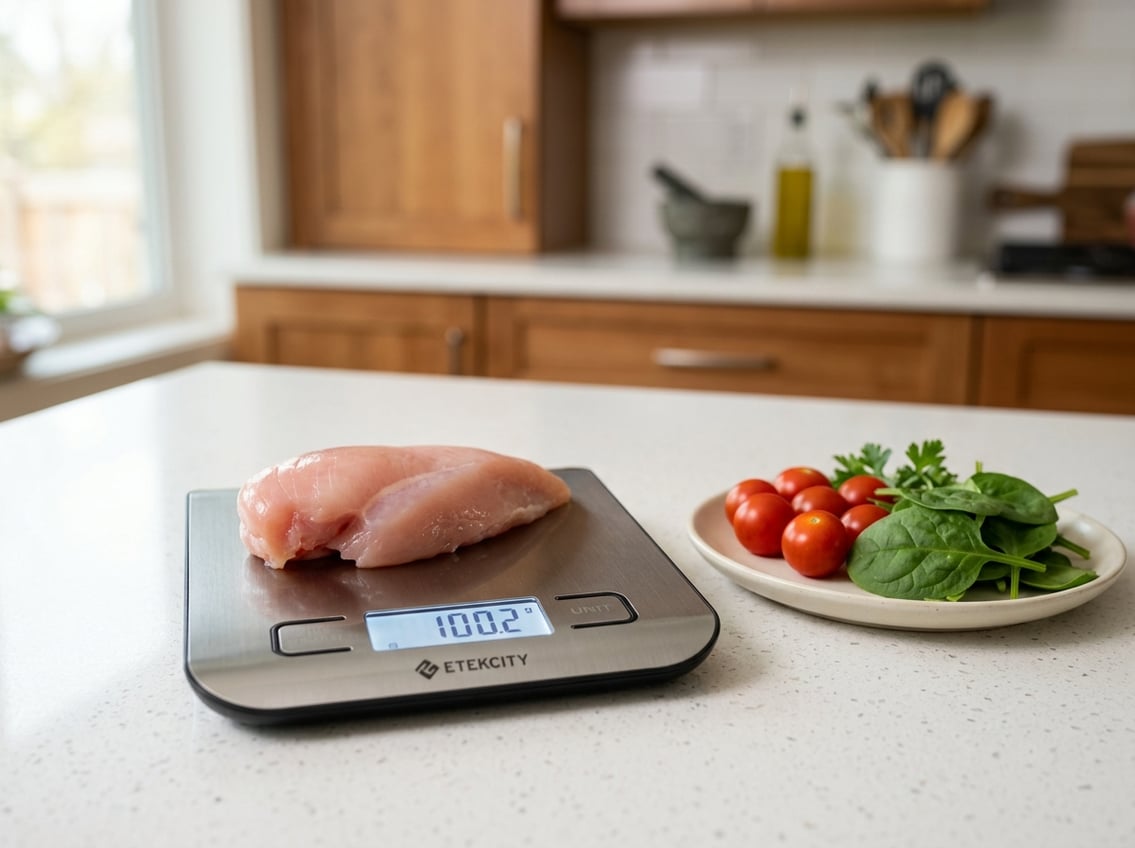
If your goal is 30 grams of protein, skinless chicken breast is an efficient choice.
A typical cooked serving lands very close to that target.
The main thing to watch is whether your food log uses raw or cooked weight.
That detail changes the portion size you need, even when the protein target stays the same.
Cooked Weight That Delivers About 30 Grams
For cooked chicken breast, aim for about 3.5 ounces, or 100 grams.
That portion is commonly reported as providing about 30 grams of protein in food databases such as USDA FoodData Central.
A grilled chicken breast portion in that range is a practical visual guide.
It is often about the size of your palm, though the shape and thickness can vary.
Raw Weight Equivalent for Meal Prep
If you portion chicken before cooking, you need a larger raw amount because water cooks out.
A raw portion around 4.5 to 5 ounces often cooks down close to the 3.5-ounce serving that delivers about 30 grams of protein.
That is useful for meal prep because raw weights are easier to batch at the start of the week.
Once cooked, the same piece will weigh less, even though the protein amount stays about the same.
Easy Ounce and Gram Conversions
Use these quick conversions as a simple guide:
- 3.5 oz cooked = about 100 g cooked
- 4.5 to 5 oz raw = about 125 to 140 g raw
- 30 grams protein = about one standard chicken breast serving
A cooked chicken breast around 100 grams provides about 30 grams of protein according to a recent chicken protein guide.
Small differences are normal because breast size, trimming, and cooking time all affect the final weight.
Why the Number Changes
The amount of protein in chicken breast is fairly consistent, but the weight on your scale changes after cooking.
The protein-to-calorie ratio and protein density shift based on how much water remains in the meat.
The biggest reason for the difference is moisture loss.
Raw chicken contains more water, while cooked chicken is denser, so the same protein weighs less after cooking.
Raw vs. Cooked Weight Explained
Raw chicken breast usually weighs more than the cooked portion it becomes.
The protein itself does not disappear during cooking, but the total weight drops as water cooks off.
That is why a raw 5-ounce breast can become closer to a 3.5-ounce cooked serving.
If you track raw and cooked weights as if they were the same, your protein math will be off.
How Water Loss Affects Protein Density
When water leaves the chicken, the protein density goes up.
Each ounce of cooked chicken contains more protein than each ounce of raw chicken.
A protein breakdown of chicken notes that a 100-gram raw chicken breast can lose a meaningful amount of weight during cooking while keeping the protein amount stable.
That is why cooked chicken often looks smaller but still delivers a strong protein hit.
Why Preparation Method Alters Per-Serving Math
Preparation method changes how much water stays in the meat.
Grilled and baked chicken breast usually lose more water than poached chicken.
Fried or breaded chicken adds extra calories and can lower the protein-to-calorie ratio.
Skinless chicken breast is the best benchmark.
It gives you a simple protein estimate without added fat, breading, or sauce.
How Chicken Breast Compares With Other Protein Foods
Chicken breast is strong on protein density, but it is not the only food that can reach 30 grams of protein.
Other foods can get you there too, with different calorie and nutrient tradeoffs.
If you want more variety, it helps to compare both protein amount and protein-to-calorie ratio.
Foods That Also Provide Around 30 Grams
Here are common foods that can get you near 30 grams of protein:
- Eggs: about 5 large eggs
- Salmon: about 4 ounces cooked
- Edamame: about 1.5 cups cooked, shelled
- Lentils: about 1.5 cups cooked
- Greek yogurt: about 1 cup, depending on the brand
A chicken portion is often the simplest lean protein option.
Dairy, fish, and plant foods can also reach 30 grams of protein with different serving sizes.
Best Options for Leaner Calories
If your goal is a high protein-to-calorie ratio, skinless chicken breast is hard to beat.
It gives you a lot of protein with very little fat compared with fattier cuts or more processed protein foods.
Salmon brings healthy fats.
Greek yogurt and edamame add different nutrients.
The best choice depends on whether you want the leanest calories, more fiber, or a different meal texture.
When Variety Makes More Sense Than Chicken
Chicken breast works well for many meals, but repeating it every day can get boring.
Variety can make your diet easier to follow and give you a wider mix of nutrients.
Mixing in eggs, salmon, lentils, Greek yogurt, and edamame can help you reach 30 grams protein without relying on one food every time.
That is a flexible way to build meals for the long term.
Using This in Real Meals
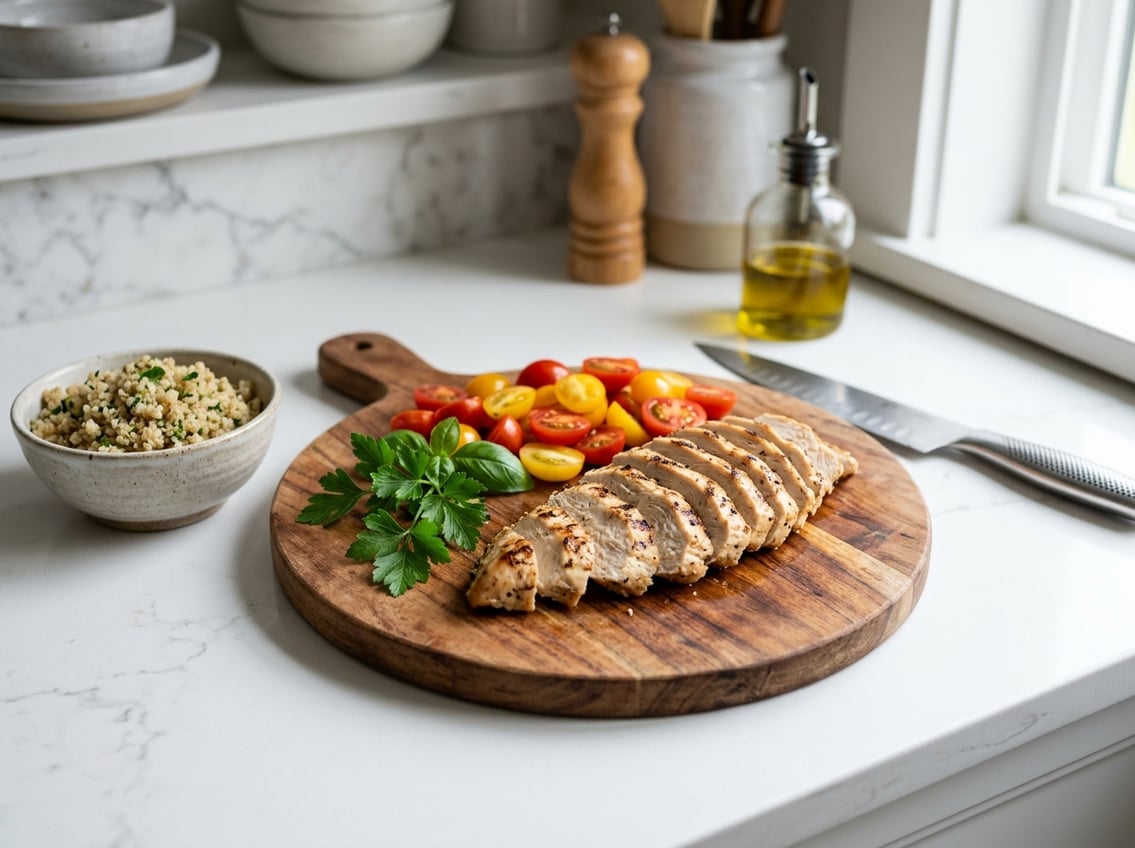
The easiest way to use chicken breast in daily meals is to portion it the same way each time.
A simple rule based on USDA food data keeps your tracking more accurate and your meals easier to plan.
Once you know your usual serving, you can build lunches and dinners around it without weighing every bite.
Portioning Without a Food Scale
If you do not have a scale, use your hand as a rough guide.
A cooked skinless chicken breast portion about the size of your palm often lands near 3.5 ounces, or close to 30 grams of protein.
This is not exact, so it works best as a practical estimate.
If your protein goal matters a lot, a scale gives you the most reliable result.
Planning Higher-Protein Lunches and Dinners
A simple lunch might be chicken breast with rice and vegetables.
For dinner, you can pair grilled chicken breast with potatoes, salad, or beans.
If you want higher protein without much extra work, cook several portions at once.
That makes it easier to keep each meal close to your target.
Common Tracking Mistakes to Avoid
People often mix raw and cooked weights in the same log.
Many also assume every chicken breast has the same size or protein amount.
Sauces, breading, and cooking oils change the calorie count.
For accuracy, check the label when possible. Use USDA FoodData Central as a reliable reference point.


