
Can You Use Chicken Breast for Chicken Noodle Soup? Yes
You can use chicken breast for chicken noodle soup, and it works well when you want a lean, mild-flavored protein that cooks quickly. Keep the meat moist and build enough flavor in the broth so the soup tastes rich and satisfying.
If you want a classic chicken noodle soup that feels like comfort food, chicken breast is a solid choice when you season it well and avoid overcooking it. A good soup recipe depends more on how you handle the broth, vegetables, noodles, and timing than on the cut alone.
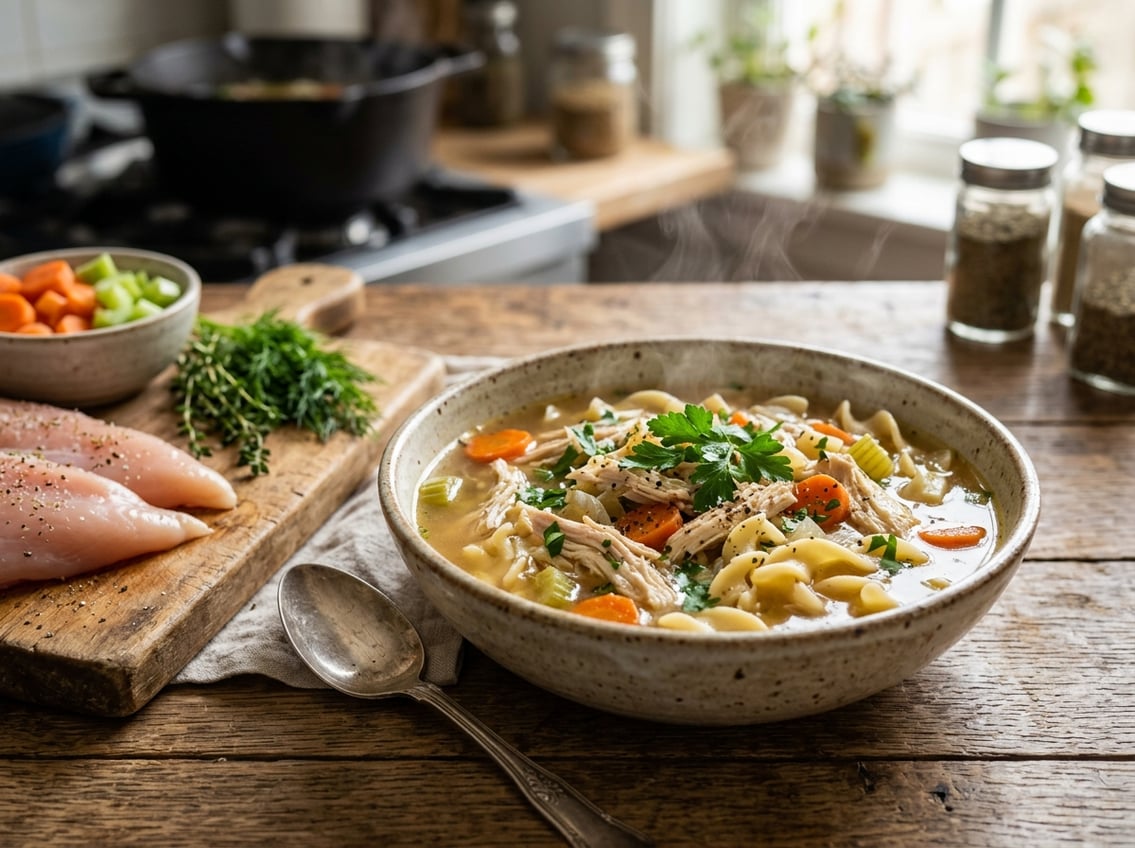
Chicken breast is practical for busy nights. It gives you a lighter version of classic chicken noodle soup without much extra work and is easy to adjust based on what you have in your kitchen.
When Chicken Breast Works Best
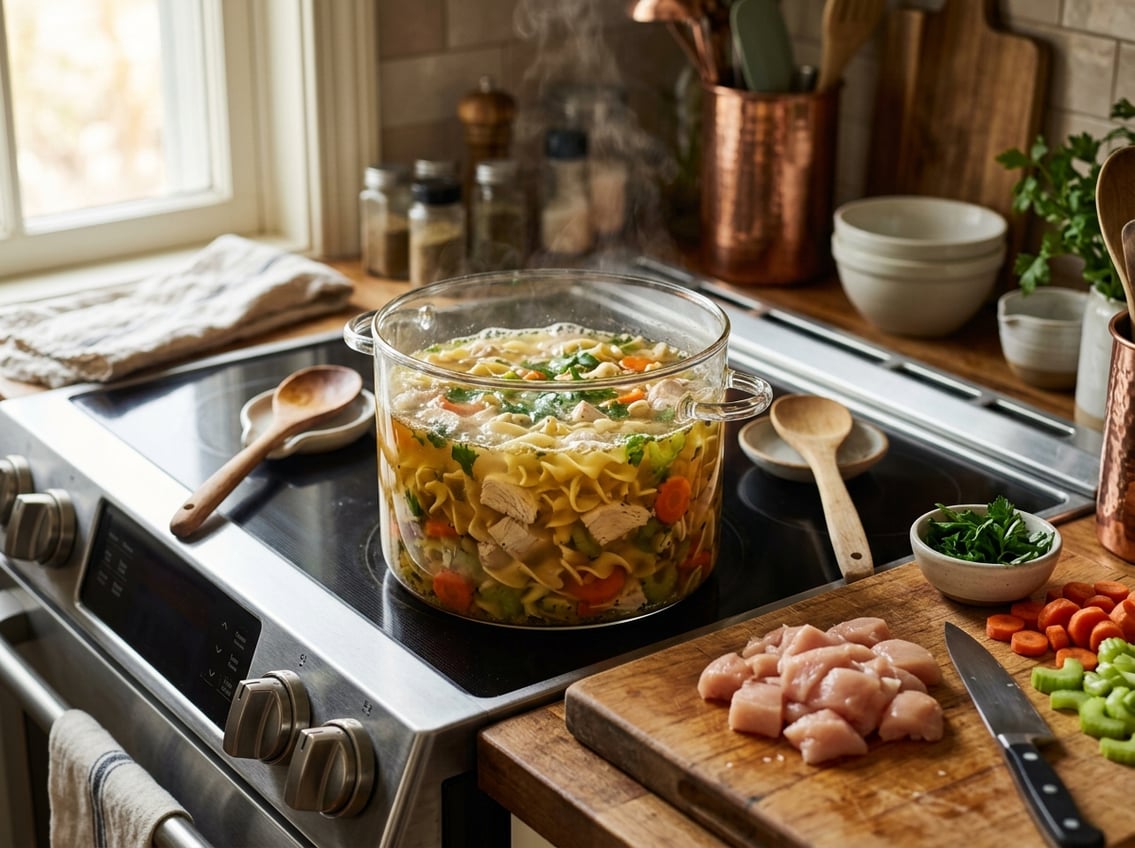
Chicken breast works best when you want a quick, clean-tasting soup with tender chicken and a lighter broth. It is a strong fit for an easy chicken noodle soup recipe, especially if you use store-bought chicken broth or a simple homemade broth.
What Chicken Breast Adds to the Soup
Chicken breast gives you lean protein and a mild flavor that lets the herbs, vegetables, and broth stand out. It shreds easily when cooked just right, which makes it a good choice for homemade chicken noodle soup.
If you want a lighter bowl, chicken breast is often easier to fit into that style than darker cuts. A simple chicken breast soup method can deliver tender chicken and comforting flavor.
Chicken Breast vs Bone-In Chicken and Rotisserie Chicken
Bone-in chicken adds more body and flavor because the bones and skin enrich the broth as they simmer. Rotisserie chicken is convenient since the meat is already cooked and can work well when you want a shortcut.
Chicken breast is best when you want control over texture and seasoning. It is a good middle ground between speed and freshness, especially if you make your own chicken broth or chicken stock.
How Broth Choice Affects the Final Flavor
Broth choice matters a lot when you use chicken breast, since the meat itself is mild. Chicken stock has a fuller body, while chicken broth is usually lighter and more direct in taste.
A rich homemade chicken broth can give your soup more depth, while store-bought broth keeps the process fast. If you want a deeper flavor without extra work, a broth-based chicken breast soup can still taste balanced and satisfying.
How to Make It Tender and Flavorful
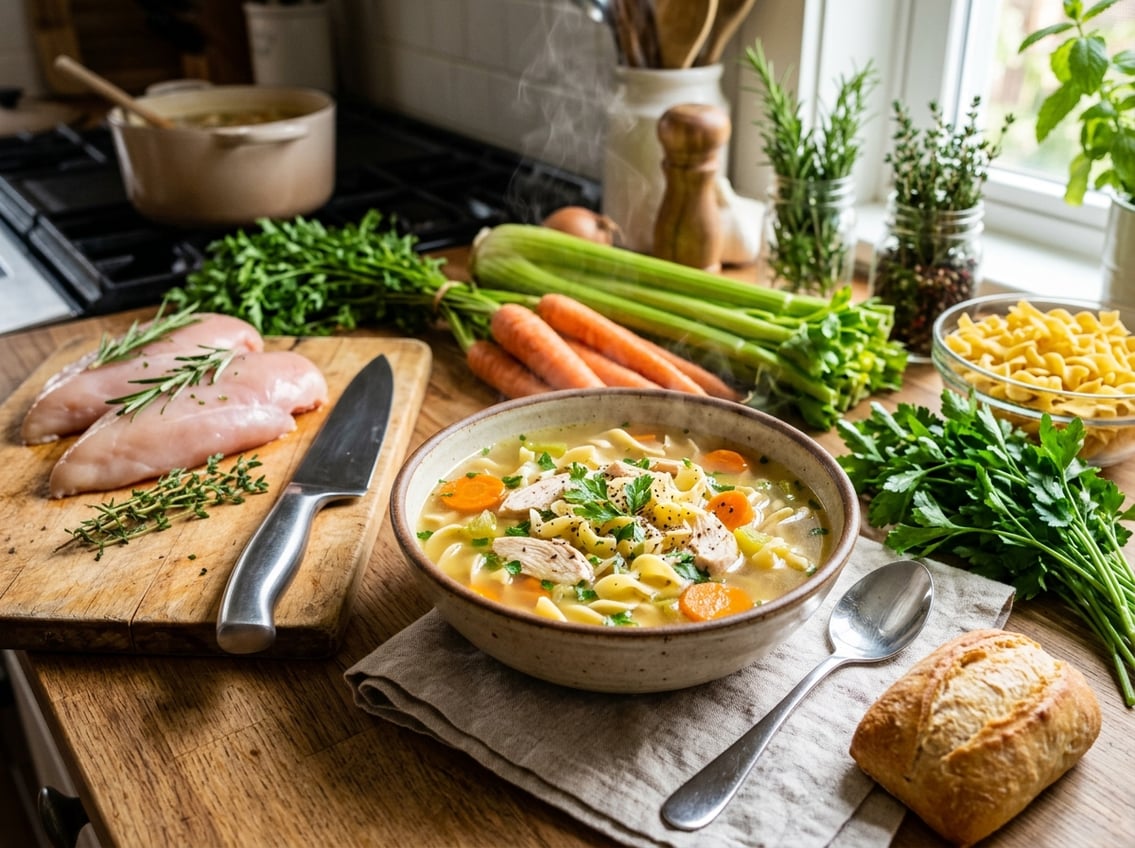
Start with a good soup base and careful heat control to keep chicken breast tender. Mirepoix, herbs, and gentle simmering help you keep the meat juicy while giving the broth a stronger flavor.
Build the Soup Base With Mirepoix and Aromatics
Start with mirepoix: onion, carrots, and celery. Cook those in olive oil or butter to give the soup a deeper base before you add the broth.
Garlic, thyme, parsley, bay leaf, Italian seasoning, and a pinch of red pepper flakes all work well. Fresh herbs give a brighter finish, while dried herbs hold up well during simmering.
Cooking Chicken Breast Without Drying It Out
When cooking chicken breast, keep the heat at a gentle simmer instead of a hard boil. Use a meat thermometer and remove the chicken when it reaches 165°F to prevent it from drying out.
A Dutch oven holds steady heat and works well. For extra flavor, sear the chicken first in olive oil or butter, then let it finish in the soup base. This method helps keep chicken breast tender in chicken noodle soup.
When to Shred Chicken or Dice It
Shred chicken when you want a softer, classic spoonful that blends into the soup. Dice it when you want neat pieces and a firmer bite.
For most chicken noodle soup recipes, shredding spreads the flavor through every bowl. Shredded chicken also pairs nicely with egg noodles and vegetables.
Putting the Soup Together
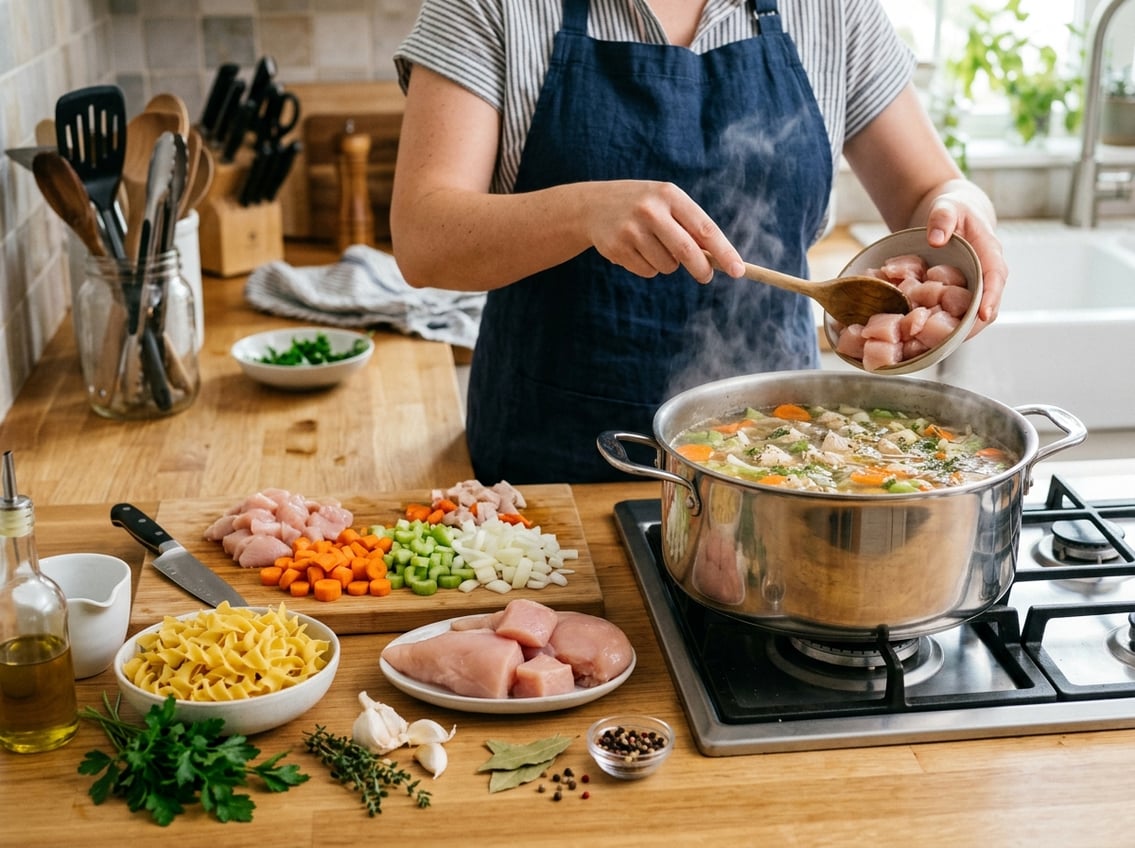
Add ingredients in the right order for the best results. This helps the noodles keep their texture and prevents them from turning soft too soon.
Choosing Egg Noodles and Other Pasta Options
Egg noodles are the classic choice for chicken noodle soup because they cook fast and hold a soft, familiar texture. Wide egg noodles give a heartier bite, while thinner noodles make the soup feel lighter.
You can use other pasta if needed, as long as you watch the cook time closely. Many chicken soup recipes work with small pasta shapes, though egg noodles fit the most traditional style.
Best Ingredient Order for Balanced Texture
Cook the mirepoix first, then add the broth or stock and simmer the chicken breast until tender. Remove the chicken, cook the noodles, and return the chicken near the end.
If you add noodles too early, they can soak up too much liquid. Add frozen peas near the end, since they only need a few minutes to warm through and keep their bright color.
Easy Variations for Faster or Heartier Bowls
For a faster version, use pre-cooked chicken or rotisserie chicken and a good store-bought broth. For a heartier bowl, use split chicken breasts or add extra carrots and celery.
A slow cooker chicken noodle soup works well with chicken breast if you keep the noodles separate until serving. That keeps the texture better and gives you more control over the final bowl.
Storing, Reheating, and Freezing
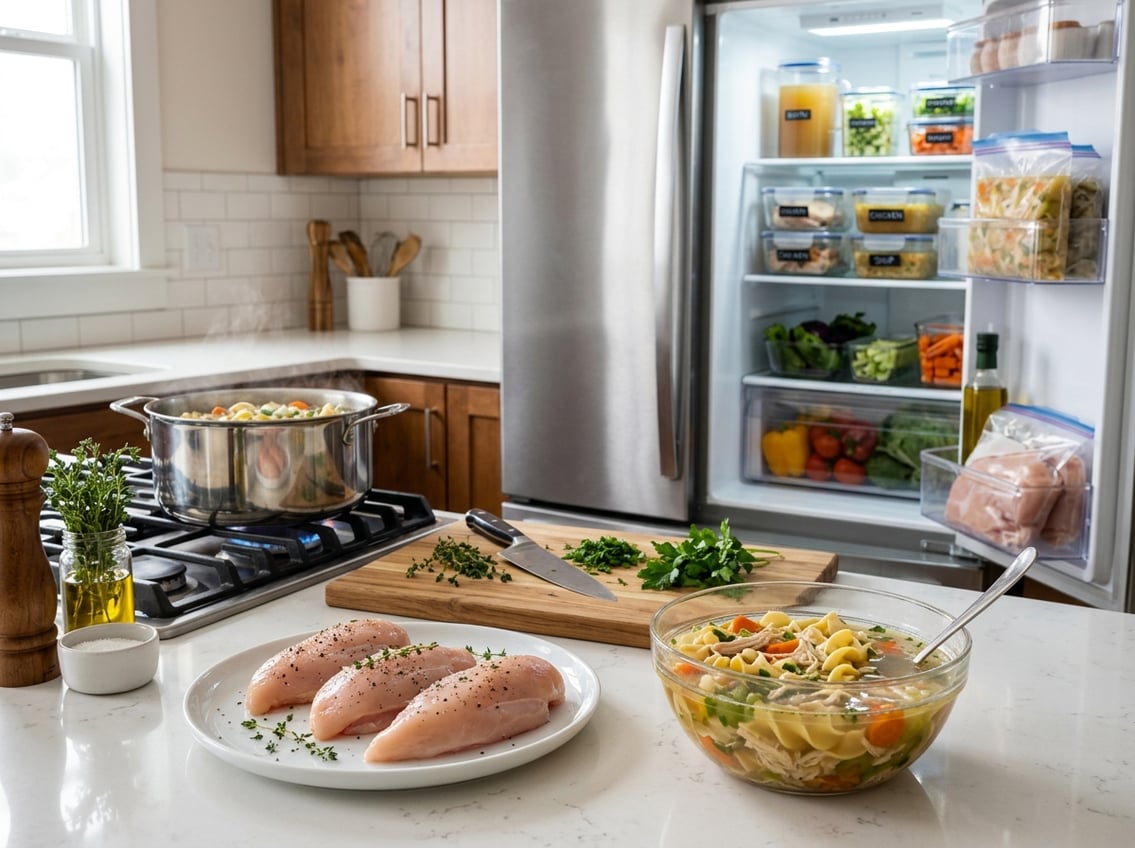
Chicken noodle soup stores well as long as you protect the noodles from absorbing too much broth. The best method depends on whether you plan to eat it soon or save it for later.
How to Store Leftovers Without Mushy Noodles
Let the soup cool before you move it to an airtight container. Store it in the refrigerator and try to eat it within 3 to 4 days for the best taste and texture.
If the egg noodles are already in the soup, they may soften more each day. Many recipes taste better when you store the noodles separately from the broth.
How to Freeze for the Best Texture Later
You can freeze chicken noodle soup, and it freezes best when you leave out the noodles. Broth, chicken, carrots, and celery hold up well, while egg noodles can turn soft after thawing.
Freeze the soup in a sealed container with a little room at the top for expansion. If you plan to keep it longer, freezing the chicken soup without noodles gives you better texture later.
When to Keep Noodles Separate From the Broth
Keep noodles separate when you want the cleanest reheated texture.
This works well for make-ahead soup or for any chicken noodle soup recipe you plan to freeze.
Cook fresh noodles when you reheat the soup.
Add them to the bowl before serving.
This small extra step keeps the broth clear and the noodles firm.


