
What Are the Benefits of Eating Chicken Breast Everyday? Benefits and Risks
Eating chicken breast every day can help you meet your protein goals, support muscle repair, and keep meals simple.
It is a lean, high-quality protein that fits many meal plans, especially when you want a filling food with a strong nutritional profile.
The main benefit of eating chicken breast every day is that it gives you complete protein in a low-fat form, while the main risk is missing out on nutrients you get from other foods.

Daily chicken breast is not automatically the best choice for every person.
Your body also needs fiber, healthy fats, and a range of vitamins and minerals from other protein foods, vegetables, fruits, whole grains, nuts, and seeds.
If you wonder about the benefits of eating chicken breast every day, the answer depends on your overall diet and how you prepare it.
Chicken breast can be a strong staple if it does not crowd out other useful foods.
What Daily Chicken Breast Does for Your Body
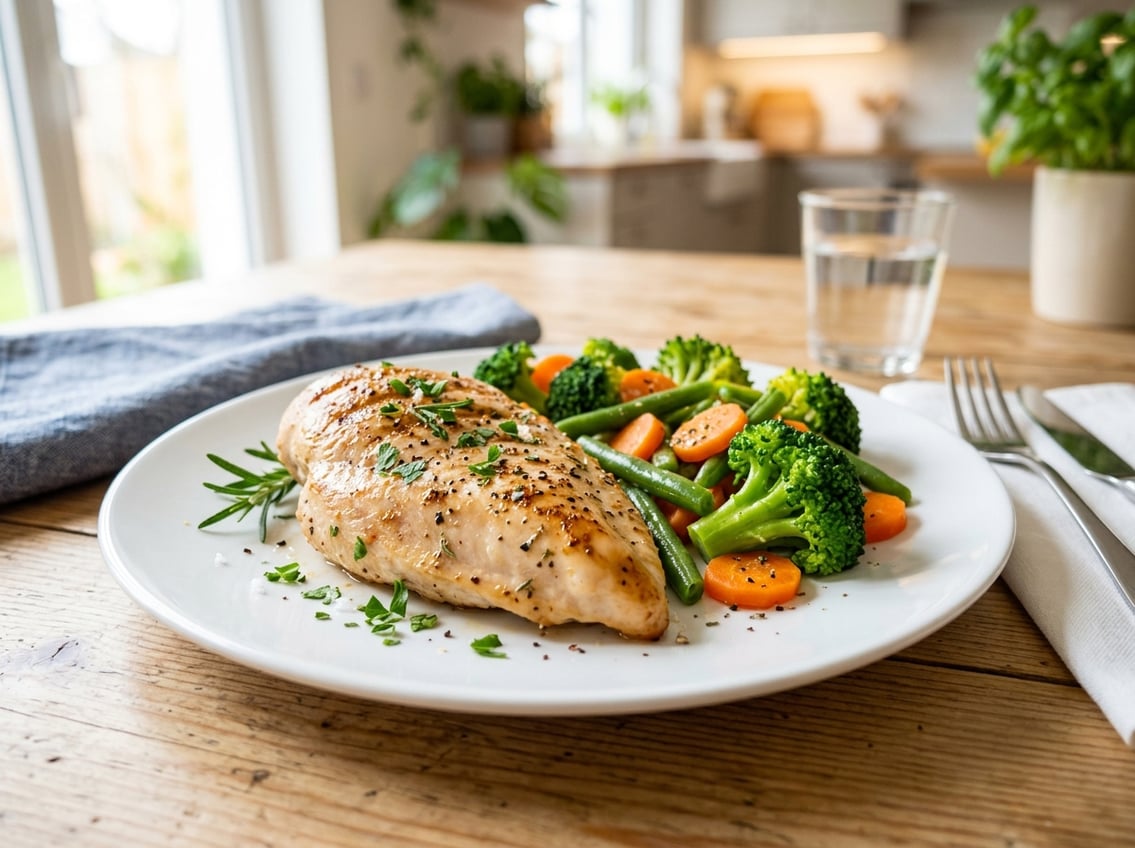
Daily chicken breast gives you a steady source of lean protein, which helps with muscle repair, fullness, and everyday protein intake.
It also provides key vitamins and minerals that support metabolism and basic body function.
Supports Protein Intake and Muscle Repair
Chicken breast contains all essential amino acids your body needs from food.
A 4-ounce serving provides about 35 grams of lean protein, making it easy to reach protein goals without a lot of extra fat.
This supports muscle mass, recovery from exercise, and daily protein needs.
Protein also helps with satiety, so you may feel full longer after a meal.
Helps With Satiety and Weight Management
Chicken breast can support weight management because it is filling and lower in calories than many fattier meats.
If you spread your protein intake across meals, such as aiming for about 15 to 30 grams of protein per meal, you may find it easier to control hunger.
This can help with weight loss goals, especially when you pair chicken with vegetables and other nutrient-dense foods.
The protein in chicken may also help protect muscle while you lose weight, which supports healthy body composition.
Provides B Vitamins and Essential Minerals
Chicken breast gives you several B vitamins, including niacin, riboflavin, vitamin b6, vitamin b12, and vitamin b3.
These nutrients help your body turn food into energy and support a healthy metabolism.
It also contains selenium, phosphorus, iron, zinc, choline, and small amounts of tryptophan.
These nutrients support immune function, cell repair, and normal nervous system function.
Some B vitamins also help make neurotransmitters, including serotonin.
How the Cut and Preparation Change the Benefits
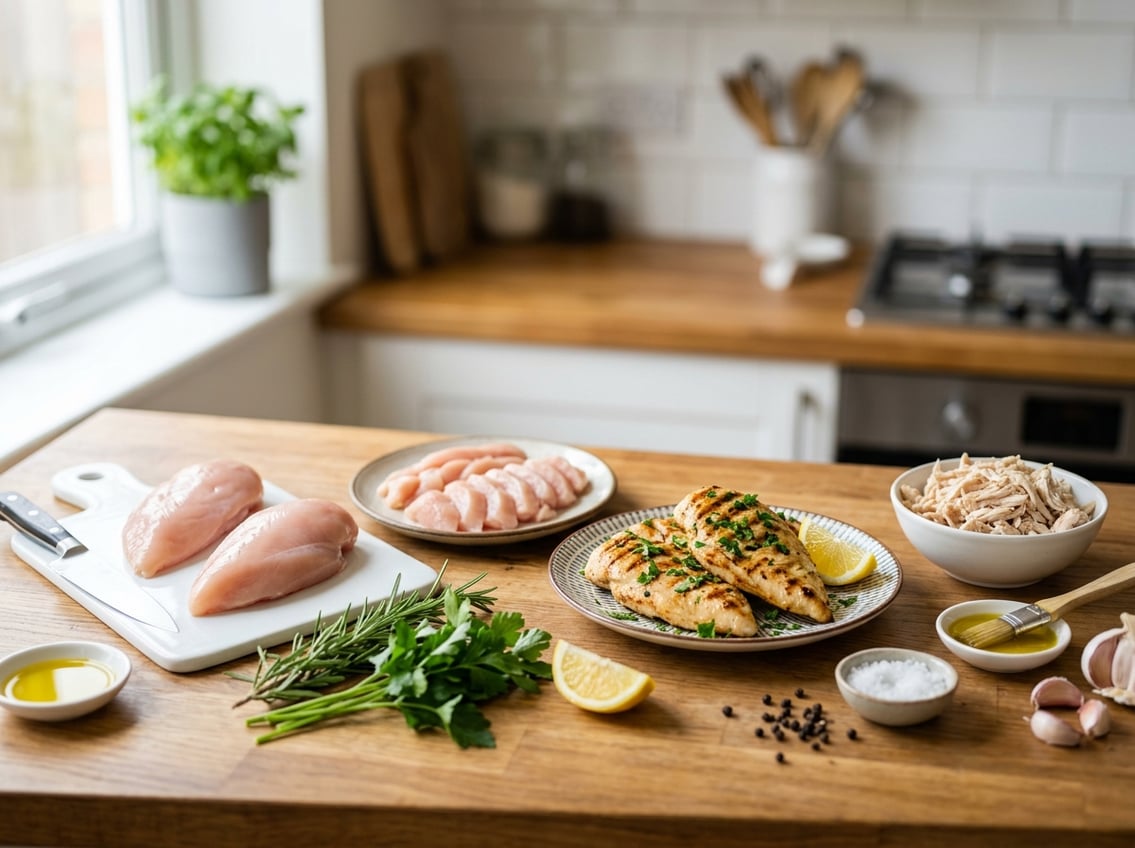
The health value of chicken depends on the cut you choose and how you cook it.
Skinless chicken breast is usually the leanest choice, while frying and heavy sauces add more fat, sodium, and calories.
Chicken Breast vs. Chicken Thigh and Dark Meat
Chicken breast is leaner than chicken thigh and other dark meat cuts.
Chicken breast has less fat, less saturated fat, and more protein per serving than thighs.
That makes chicken breast a good lean protein source if you want more protein with fewer calories.
Dark meat can still fit a healthy diet, though it usually has more fat and a slightly different nutritional value.
Why Skinless Options Lower Saturated Fat
Removing the skin lowers saturated fat in chicken.
Skinless chicken breast is especially useful if you want to keep saturated fat lower for heart health.
Chicken skin adds extra fat and calories, so choosing skinless chicken breast gives you more protein benefit without as much added fat.
That can matter if you eat chicken every day and want to keep your diet balanced.
Best Ways to Cook Chicken for Everyday Meals
Grilled, baked, roasted, and slow-cooked chicken are some of the best ways to cook chicken for everyday meals.
These methods usually add less fat than fried chicken.
If you want more flavor and better texture, use olive oil, herbs, spices, lemon, or a light marinade.
Healthy fats from olive oil can improve meal quality and may help with heart health when they replace heavy frying oils.
Where Daily Chicken Breast Can Fall Short
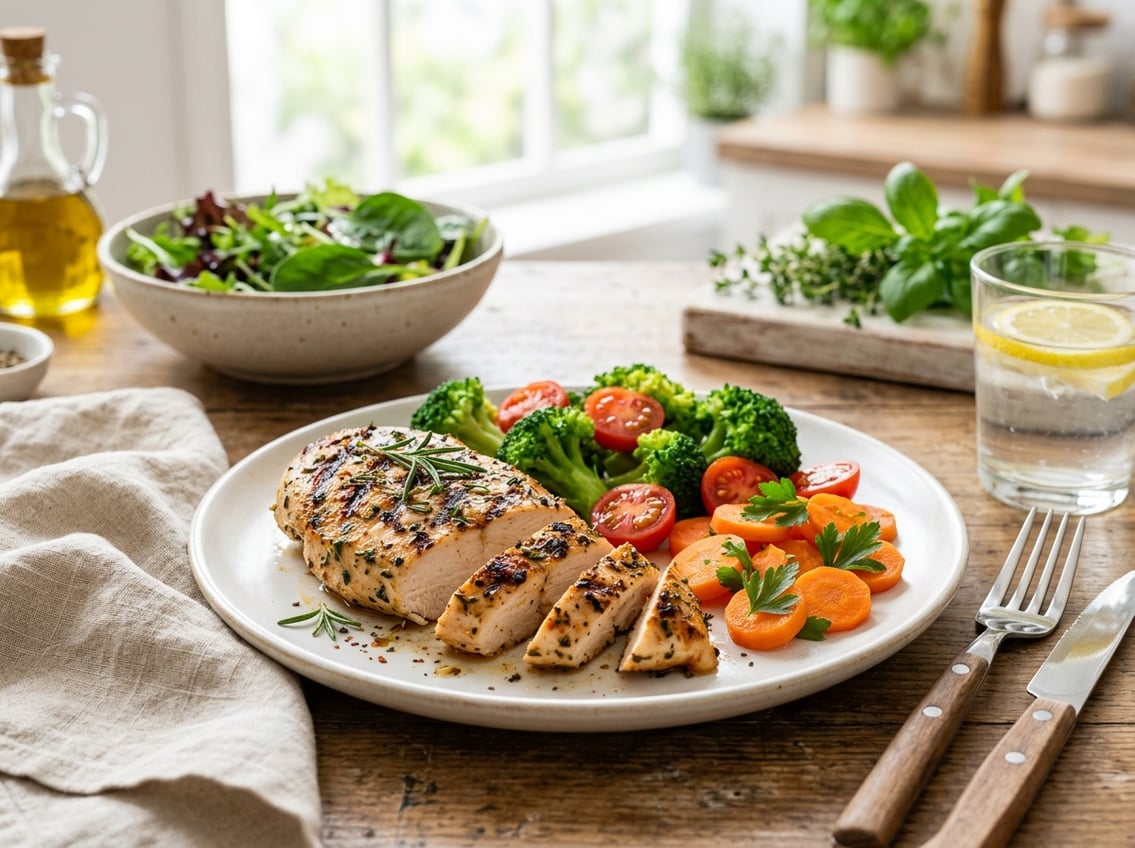
Eating chicken every day can narrow your diet if it becomes your main or only protein source.
The biggest issues are nutrient gaps, too much reliance on one food, and concerns about sodium or cholesterol depending on how you cook it.
Missing Nutrients From Other Protein Sources
Chicken breast does not provide fiber, omega-3 fatty acids, or many of the plant compounds you get from other foods.
If you eat chicken every day and skip salmon, eggs, tofu, nuts, beans, lentils, pulses, peas, shrimp, avocado, and seeds, you may miss useful nutrients.
A more varied protein pattern gives you more vitamin, mineral, and fat diversity.
That matters for a balanced diet and may support heart health better than relying on one lean protein source alone.
Cholesterol, Sodium, and Overreliance Concerns
Chicken breast is not unusually high in cholesterol, but frequent intake still deserves attention if your diet is not balanced.
The larger issue is often sodium, especially if you use processed or seasoned chicken products.
If you eat chicken every day, the risk is less about chicken itself and more about crowding out fiber-rich foods and healthy fats.
A daily protein routine should still leave room for vegetables, whole grains, fruits, and other proteins.
Antibiotics in Chicken and Buying Considerations
Some people worry about antibiotics in chicken when buying it.
In the United States, poultry producers follow FDA and USDA rules, and labels such as antibiotic-free or no antibiotics ever can help guide your choice.
You can look for chicken from sources that fit your preferences for production standards.
Buy from a trusted retailer, handle it safely, and cook it thoroughly.
How to Eat It Safely and Build a Balanced Plate
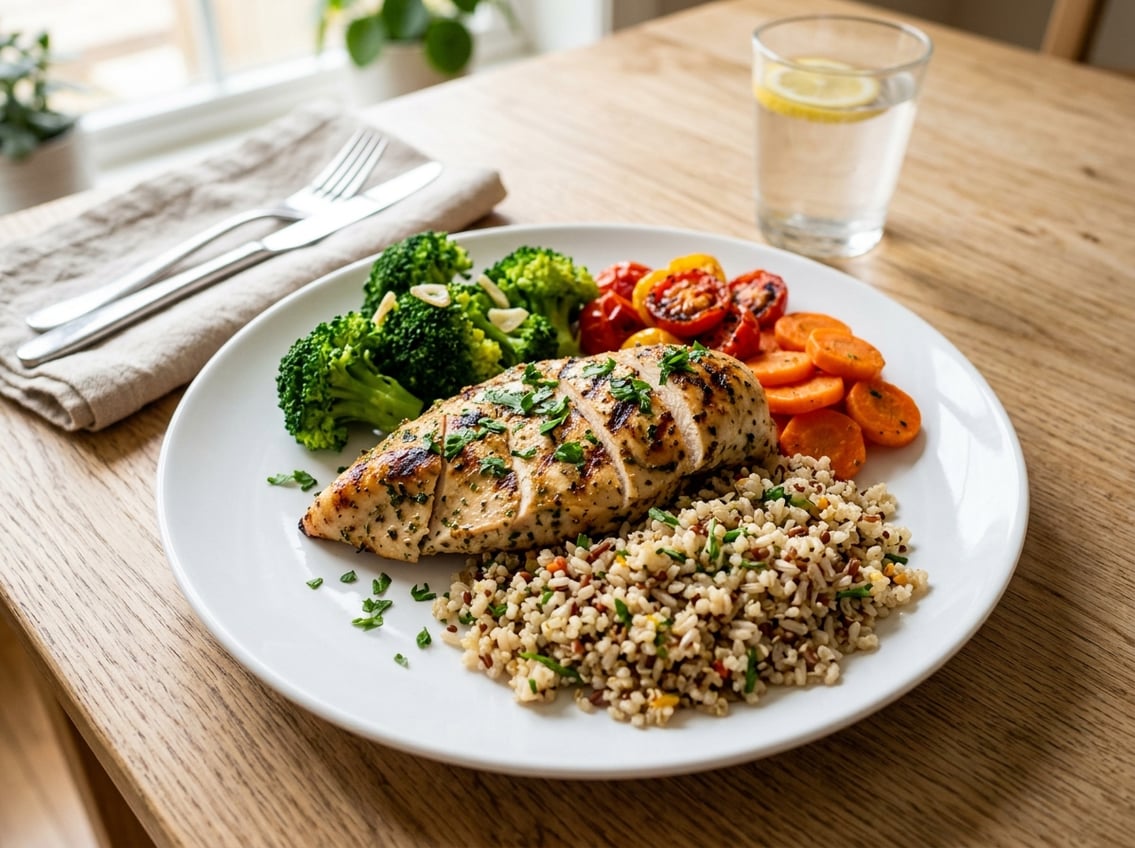
Safe cooking matters as much as protein choice.
Chicken breast should be cooked thoroughly to reduce foodborne illness risk, and a full meal should include fiber, healthy fats, and other foods that support better nutrition.
Safe Handling and Why 165 Degrees F Matters
Chicken can carry salmonella or campylobacter if you do not handle and cook it correctly.
The safest target is 165 degrees F in the thickest part of the meat to kill harmful bacteria.
Use separate cutting boards for raw chicken and other foods.
Wash your hands, clean surfaces well, and refrigerate leftovers promptly.
How to Cook Chicken Thoroughly Without Drying It Out
To cook chicken thoroughly without drying it out, use even heat and watch the cooking time closely.
Grilled chicken works well when you marinate it first or cook it over medium heat instead of high heat.
You can also bake or roast skinless chicken breast with a little olive oil, then rest it before slicing.
That helps keep the meat juicy while still reaching a safe internal temperature.
What to Pair With Chicken Breast for Better Nutrition
A balanced diet needs more than protein alone.
Pair chicken breast with vegetables, beans, lentils, peas, whole grains, avocado, nuts, or seeds to add fiber and healthy fats.
These foods improve nutrition and keep meals more satisfying.
They also help you avoid missing other important food groups.


