
Is It Necessary to Wash Chicken Breasts Before Cooking? Safety Guide
If you are asking is it necessary to wash chicken breasts before cooking, the short answer is no.
Washing raw chicken does not make it safer, and it can spread germs around your sink, counters, and tools.
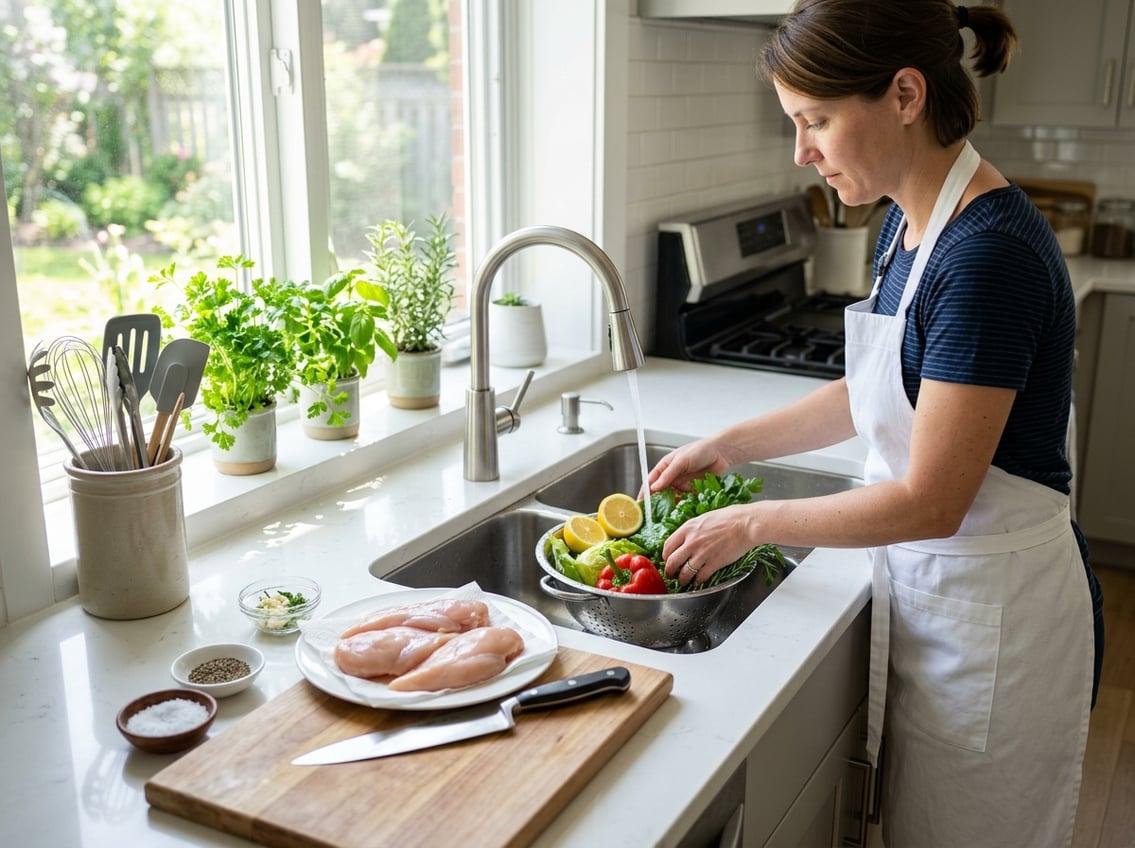
Many people wash chicken because it feels cleaner or because that is how they learned to cook.
In practice, washing raw chicken can create a bigger food safety problem than the one it seems to solve.
Why Rinsing Creates More Risk Than Benefit
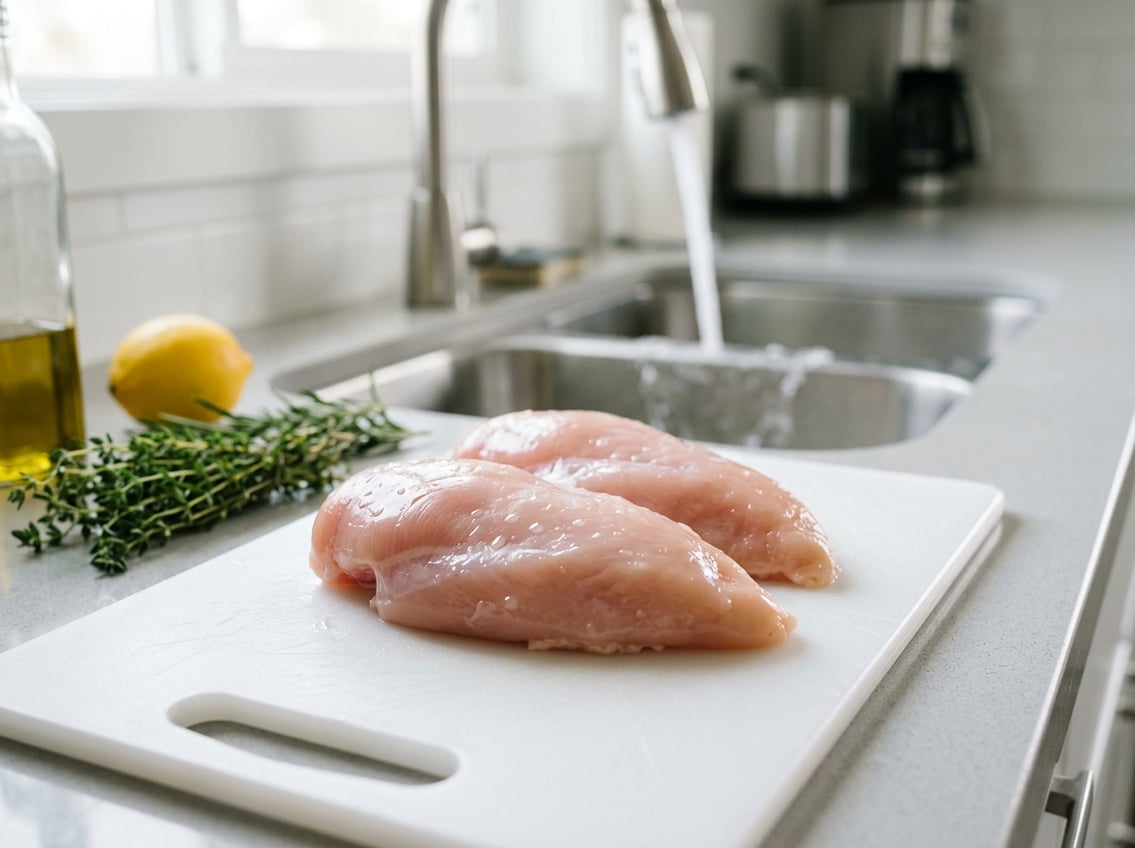
Rinsing raw chicken spreads bacteria instead of removing it.
Cross-contamination can turn a small prep step into a kitchen-wide food safety issue.
According to the Martha Stewart guide on rinsing raw chicken, washing can spread salmonella and campylobacter around your sink and workspace.
How Salmonella and Campylobacter Spread in the Kitchen
Salmonella and campylobacter often cause foodborne illness linked to poultry.
When water splashes from raw chicken, it can carry germs to nearby utensils, countertops, sponges, and even your hands.
That means the risk is not just the chicken itself.
It is everything the water touches.
Why Water Does Not Remove Food Safety Hazards
Water does not kill harmful bacteria on raw poultry.
It may move surface bits around, but it does not make the chicken safe to eat.
Proper cooking destroys pathogens, not rinsing.
The USDA advises consumers to avoid washing poultry because the step does not improve food safety.
If your goal is preventing foodborne illness, cooking matters more than rinsing.
How Washing Chicken Increases Foodborne Illness Risk
When you rinse chicken breasts, droplets can land on foods that will not be cooked, such as salad ingredients or fruit.
They can also spread to sink handles and dishcloths.
That makes the chance of foodborne illness higher, not lower.
What to Do Instead Before Chicken Goes in the Pan
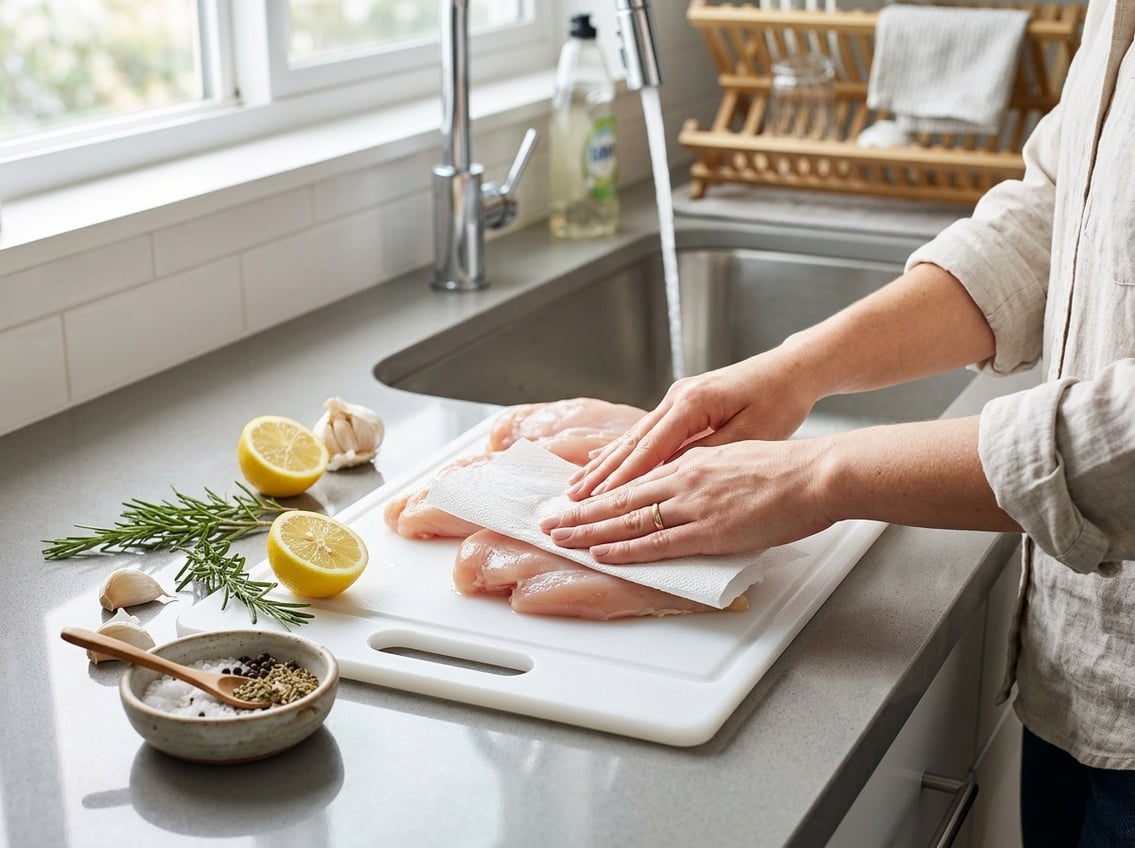
You do not need to rinse chicken breast to get it ready for cooking.
The safer prep steps are simple, and they support better browning, better flavor, and less mess.
Pat Dry Instead of Running It Under Water
Open the package over a clean area, then place the chicken on a dedicated surface.
Use paper towels to pat the surface dry.
This helps the chicken sear better in the pan and reduces steaming.
If there is excess liquid in the package, pour it out carefully and throw away the packaging.
Do not rinse chicken breast in the sink, since that is where splash contamination becomes more likely.
Safer Prep Steps for Chicken Breast and Package Juices
Keep raw chicken away from ready-to-eat foods.
Use a clean plate or tray for the chicken, and wash your hands right after handling it.
Clean any liquid from the package with hot, soapy water and sanitize the area after prep.
These steps reduce contact between raw poultry and the rest of your kitchen.
Alternatives to Rinsing Chicken for Texture and Flavor
If you want a cleaner look or a better finish, dry the chicken well and trim any extra fat or stray bits with a clean knife.
You can also season the meat after patting it dry.
That gives you better browning than a wet surface ever will.
How Marinating Chicken Fits Into Safe Prep
Marinating chicken is a safe way to add flavor as long as you do it correctly.
Use a covered bowl or sealed bag in the refrigerator, not the counter.
Never reuse marinade that touched raw chicken unless you boil it first.
If you want to avoid washing chicken while still making it taste better, marinating is a good option.
Safe Handling Habits That Matter More Than Washing
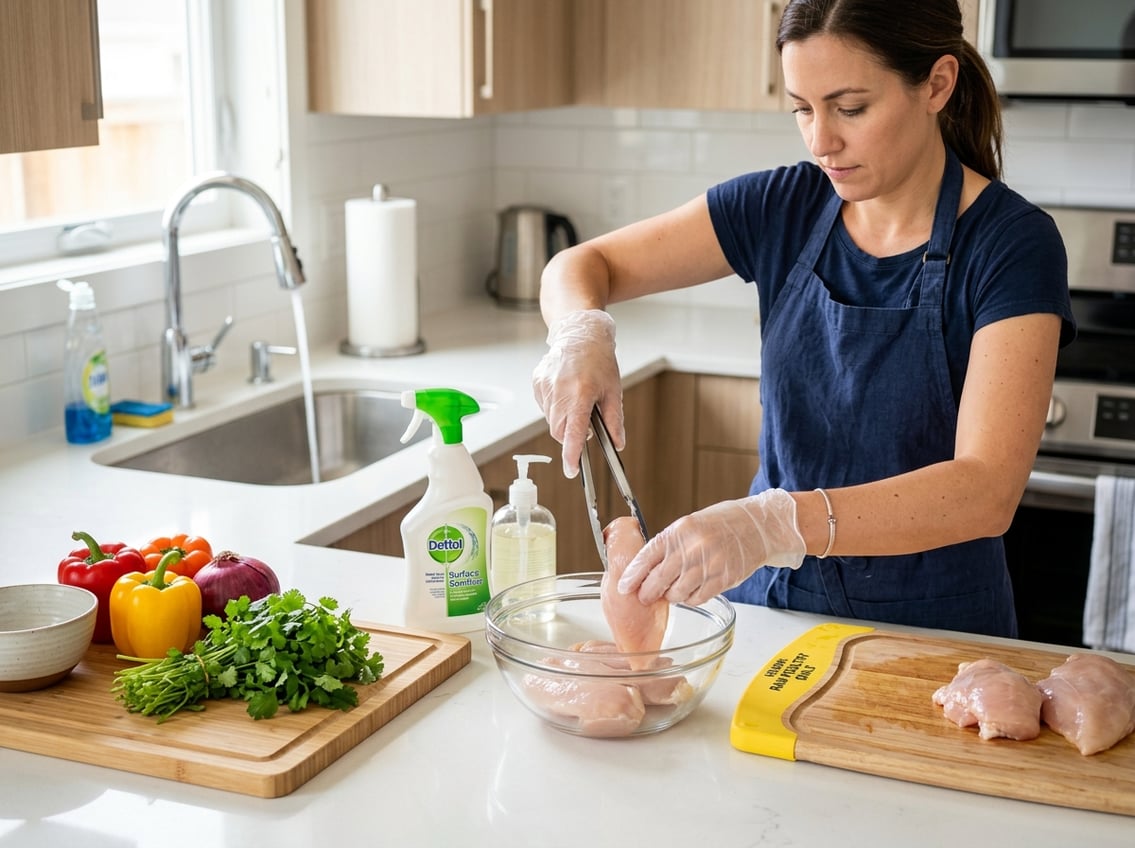
Safe handling protects your food.
Separate raw poultry from other foods, clean your hands and tools, and cook the chicken fully.
Use Separate Cutting Boards for Raw Poultry
Use separate cutting boards for raw chicken and for produce, bread, or cooked foods.
A plastic or nonporous board for raw meat is easier to wash with hot, soapy water.
If you use separate cutting boards, you lower the chance that raw chicken juices will reach foods that will not be cooked.
Handwashing, Sink Cleanup, and Kitchen Hygiene
Wash your hands with soap and water after touching raw chicken, its packaging, or any surface that contacted it.
Clean knives, counters, and boards right away with hot, soapy water.
If liquid splashed into the sink, scrub and sanitize that area too.
Good kitchen hygiene protects every part of the meal.
Cook Chicken Breasts to a Safe Final Temperature
Cook chicken breasts to 165 degrees Fahrenheit, as noted by The Pioneer Woman’s chicken safety guidance.
Use a food thermometer in the thickest part of the breast.
When chicken reaches the right temperature, harmful bacteria are destroyed.
Why Many People Still Wash Chicken
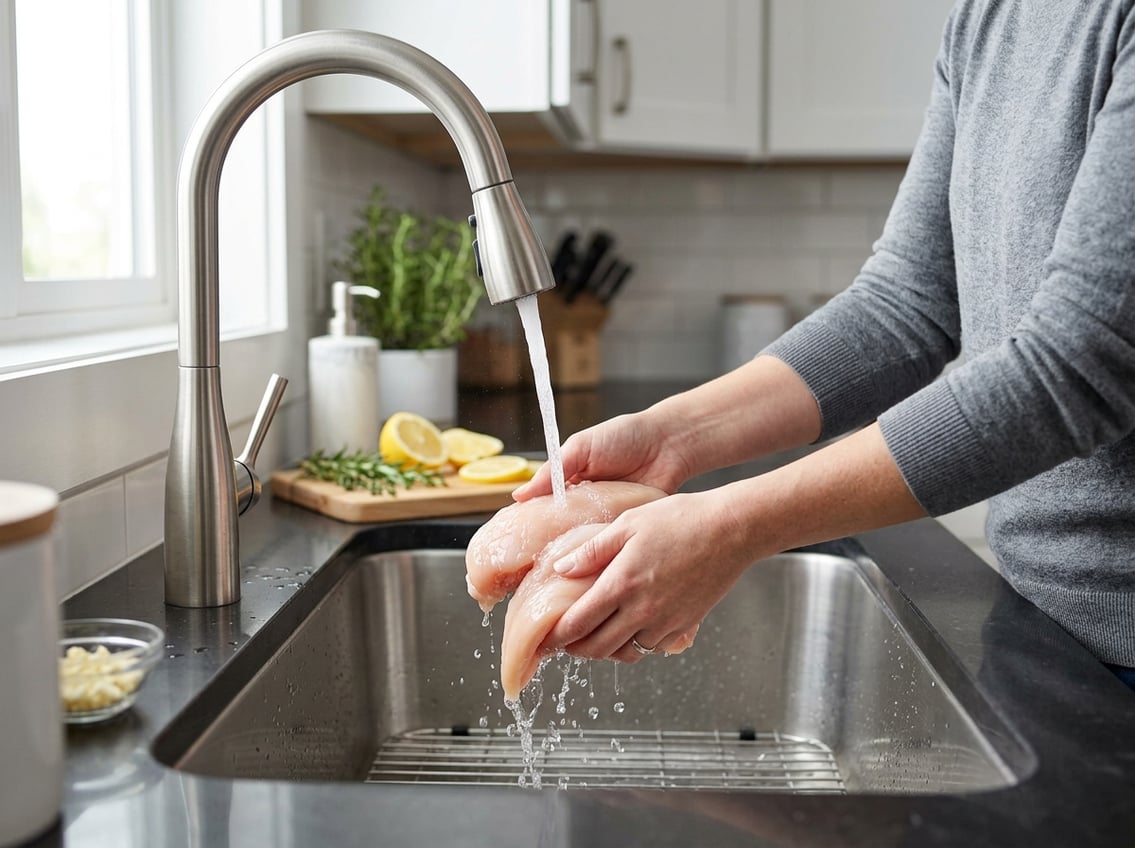
You may still hear people say you should wash chicken.
The habit has deep roots, and it often feels tied to care, cleanliness, and tradition.
Food safety advice has changed, and the old routine no longer matches current guidance.
Family Traditions and Older Recipe Advice
Older cookbooks and family recipes sometimes told you to rinse poultry before cooking.
If you learned that from parents or grandparents, it may feel like the correct step.
Older habits were often based on custom, not modern food safety data.
Concerns About Slimy Texture, Juices, and Cleanliness
Raw chicken can feel wet or sticky, which makes some people want to rinse it.
Others worry about package juices or think washing will remove bacteria.
A better response is to pat the chicken dry, clean the work area, and cook it properly.
That gives you control without the added splash risk.
How to Update Habits Without Sacrificing Confidence in the Kitchen
You do not need to keep an old habit just because it feels familiar.
Skip the rinse, use clean tools, and focus on safe cooking.
If you have wondered whether you should wash chicken, the answer is clear.
Avoid washing chicken and use safer prep instead.


