
What Does It Mean When Chicken Breast Is Chewy? Causes and Fixes
What does it mean when chicken breast is chewy? Most of the time, the meat lost too much moisture, cooked unevenly, or started with a quality issue like woody breast.
A chewy chicken breast is not a normal goal for chicken breast texture. It usually points to a problem you can identify and fix.
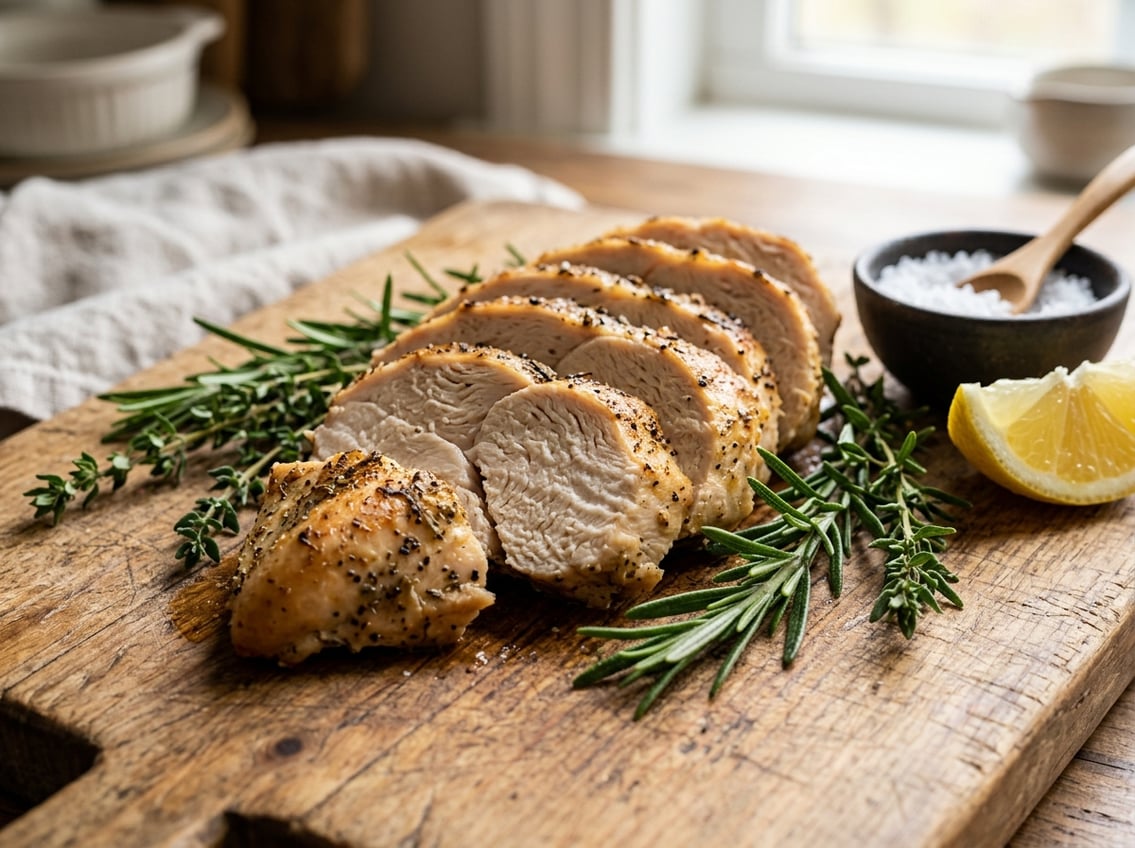
If your chicken breast turns out dry, springy, or rubbery, overcooking, undercooking, or a meat-quality issue is usually to blame.
Chicken breast is lean, so small mistakes change the texture fast. You can usually tell what went wrong by checking the doneness, the look of the meat, and how it feels when you cut into it.
What Chewy Texture Usually Tells You
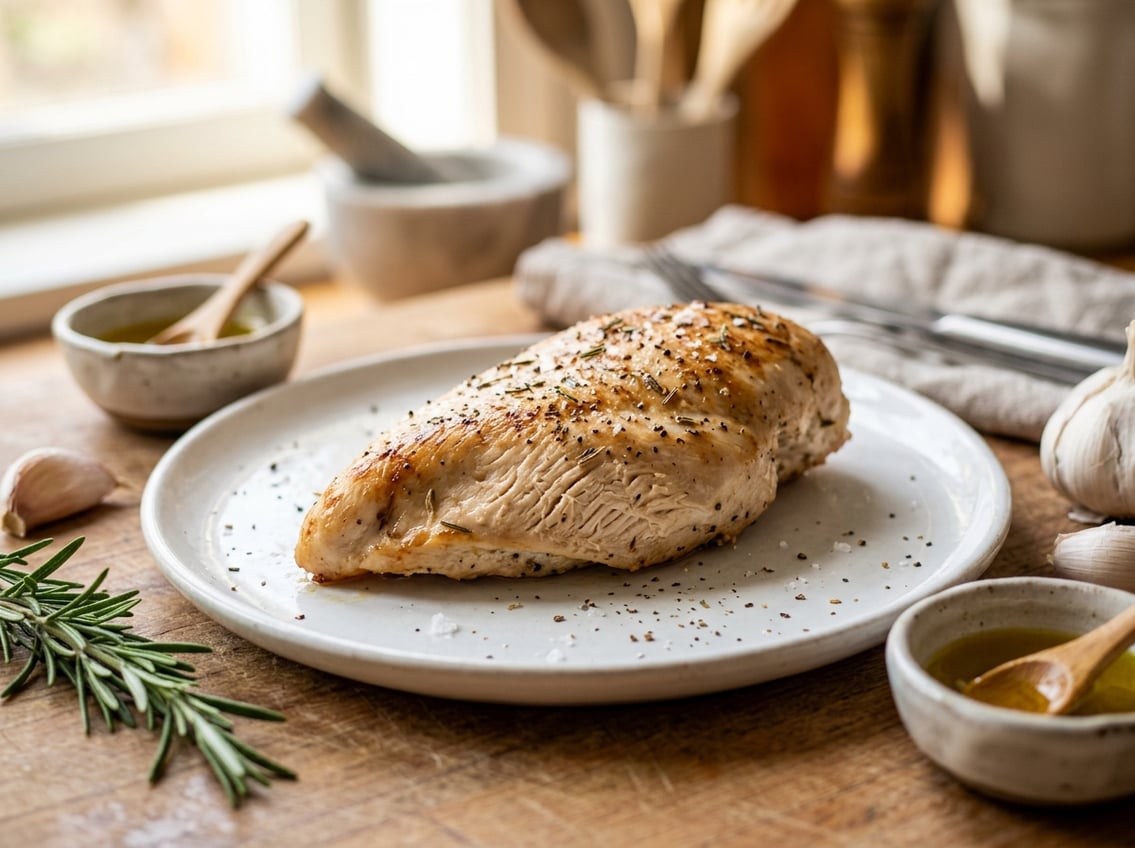
A chewy chicken breast usually means the muscle fibers tightened too much or didn’t cook in a way that let the meat stay moist.
In many cases, overcooked or undercooked chicken causes this, not a strange kitchen mistake. Woody breast, a meat texture issue, can also cause a rubbery bite before you even start cooking.
Signs of Overcooked Chicken Breast
Overcooked chicken breast feels dry, dense, and stringy. The slices may pull apart in tough strands, and the meat may look pale and feel firm all the way through.
You may also notice the juices disappear from the cutting board or the pan. The protein tightened too much and pushed moisture out.
Signs of Undercooked Chicken
Undercooked chicken can feel soft in a strange way, almost slick or gelatinous near the center. The outside may look done while the middle still looks translucent or pink.
A little pink does not always mean raw, but a truly undercooked breast feels squishy and unsteady rather than tender. If you are unsure, check the temperature instead of guessing.
When Woody Breast Is the Real Problem
Woody breast is a meat quality issue that makes chicken breast texture feel hard, rubbery, or oddly firm even when the chicken is cooked correctly.
The meat may slice cleanly yet still feel tough and fibrous when you chew it. If the breast feels dense in a very specific way from the first bite, the chicken itself may be the issue, not your timing.
How to Check Doneness and Diagnose the Cause
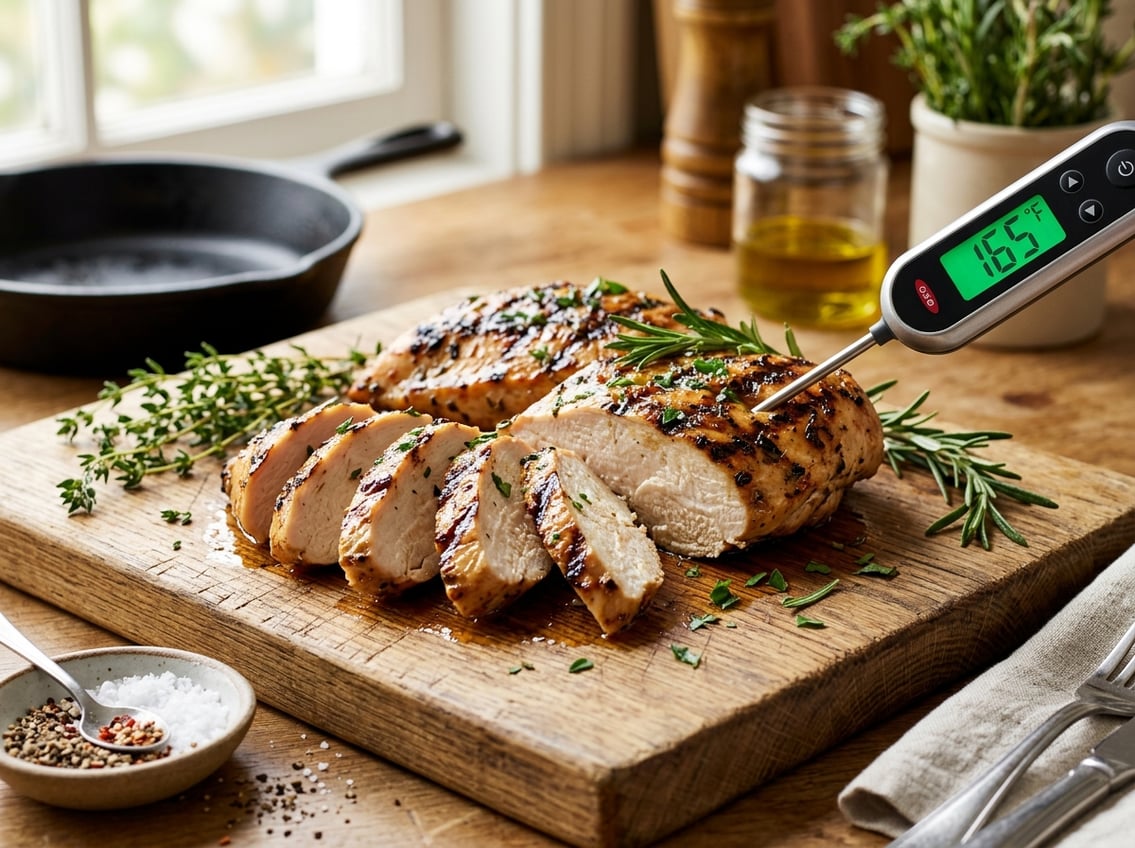
Start with temperature, then check texture and appearance. A meat thermometer tells you whether the chicken is actually done or just looks done on the outside.
That gives you a much better read than color alone, especially with chicken breast.
How to Use a Meat Thermometer Correctly
Insert the probe into the thickest part of the breast, away from the pan, bone, or a fat pocket. Wait for the reading to settle before pulling it out.
For thin cutlets, check more than one spot if needed. Find the true center, not a warmer edge.
What 165°F Means for Tender Chicken Breast
165°F is the safe internal temperature for chicken breast. This tells you the chicken is fully cooked, but it does not promise perfect tenderness by itself.
If the meat reaches 165°F and sits on the heat much longer, it can still turn chewy. The difference between safe and overcooked matters a lot when cooking chicken breast.
For a simple temperature guide, how to know when chicken is done explains where to place the thermometer in the thickest part.
Visual Clues That Point to a Meat Quality Issue
If the chicken is at the right temperature but still feels unusually stiff, woody breast may be the cause. The meat can look normal on the plate, yet feel hard to bite through.
Clear juices, a firm feel, and opaque meat usually point to doneness. If the texture still seems rubbery or tough, the chicken quality itself may be the main cause.
How to Fix Chewy Chicken After Cooking
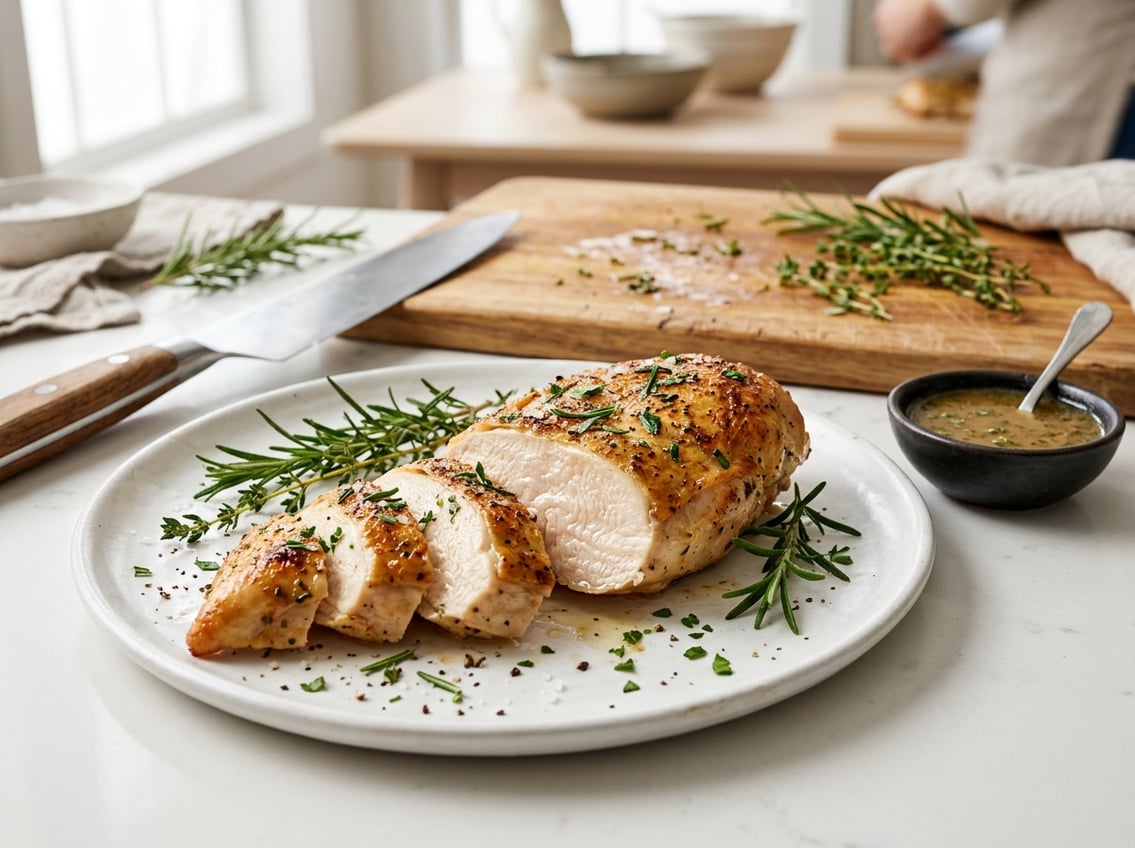
You cannot fully reverse overcooked chicken breast, but you can make it easier to eat.
The best fix depends on whether the meat is dry, rubbery, or just a little too firm. Gentle moisture and thinner cuts usually help more than extra cooking.
How to Fix Chewy Chicken Without Drying It Out More
If the chicken is already chewy, stop cooking it any further. Extra heat usually makes the texture worse.
Rest it briefly, slice it thinly across the grain, and serve it with sauce, broth, or pan juices. This helps each bite feel softer and less dense.
Best Ways to Add Moisture Back In
Moisture works best when you add it from the outside. Warm broth, gravy, salsa, yogurt sauce, or a light cream sauce can improve the bite without masking the chicken.
You can tuck sliced chicken into rice bowls, pasta, soups, or wraps where another moist ingredient balances the texture. If the meat is dry from overcooking, a sauce will not make it tender again, but it can make it easier to eat.
When to Slice, Shred, or Turn It Into Chicken Salad
Thin slices help if the chicken is only a little tough. Shredding works better if the meat is dry and stringy, because smaller pieces feel less chewy.
If the chicken is very dry, turning it into chicken salad is often the best move. Mayo, yogurt, celery, and other mix-ins can give the meat better texture and more flavor.
How to Prevent Tough Results Next Time
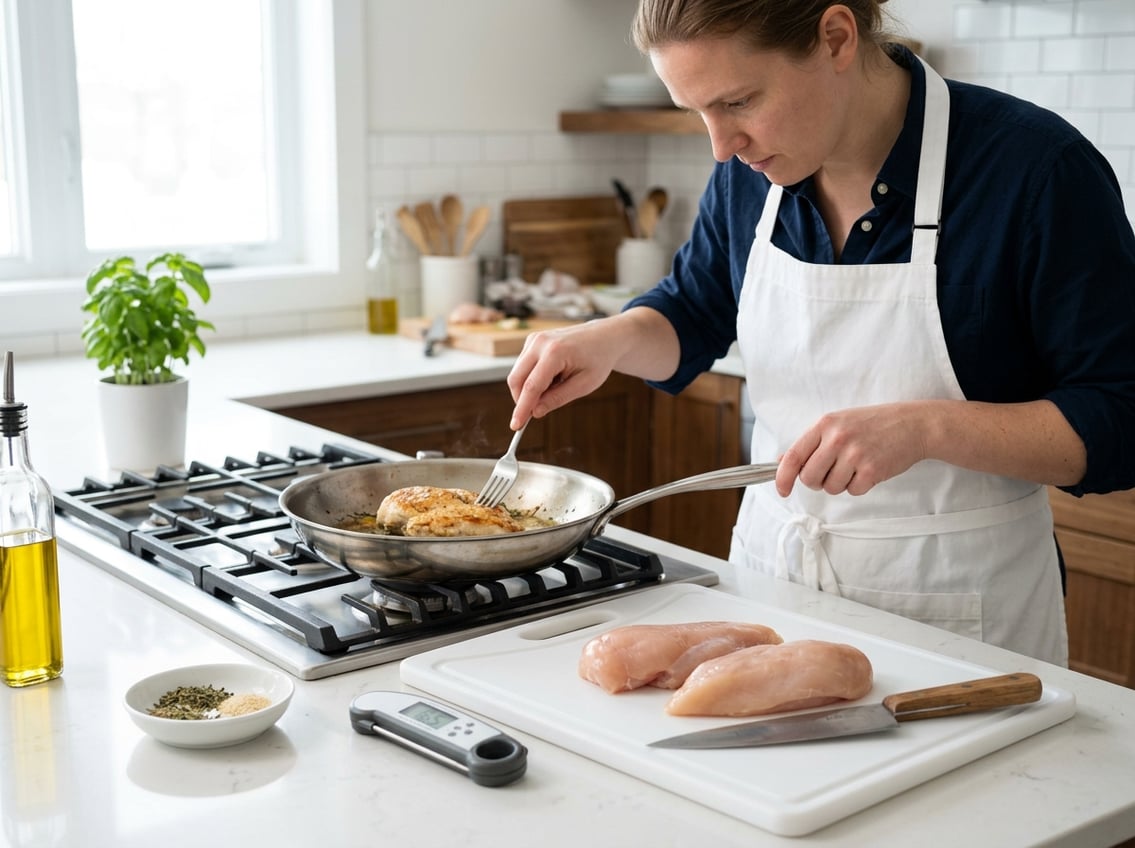
You can prevent chewy chicken breast by choosing better chicken, cooking it evenly, and stopping at the right time.
A meat thermometer is one of the easiest tools for getting tender chicken breast more reliably.
Choose Better Chicken and Watch for Woody Breast
Look for chicken breasts that are plump, even in shape, and not unusually hard or bulging. If the raw meat already feels firm in an odd way, it may have a texture problem after cooking too.
Woody breast can happen in commercial poultry, so your best check is the raw feel before it goes into the pan. A normal breast should feel smooth and flexible, not stiff and dense.
Prep for Even Cooking With Brining or Pounding
Brining helps the meat hold onto moisture, and pounding makes the thickness more even.
Both steps reduce the chance that one end dries out before the other end is done. Even thickness matters a lot for cooking chicken breast.
A thin edge can turn chewy long before the thick center reaches temperature.
Cooking Habits That Prevent Chewy Chicken
Use medium heat when possible. Do not crowd the pan.
Crowding traps steam and hurts browning. This can make the texture less appealing.
Use a meat thermometer and pull the chicken as soon as it reaches 165°F. That small step prevents chewy chicken breast better than guessing by time.
For a practical reference on doneness checks, mastering chicken doneness shows the key spots to watch for even cooking.


