
Who Long to Cook Chicken Breast in the Oven
The answer to how long to cook chicken breast depends on the cut, thickness, and oven temperature. For most boneless, skinless chicken breasts, you can expect about 20 to 30 minutes at 375°F, with thicker pieces taking longer and thinner pieces finishing sooner.
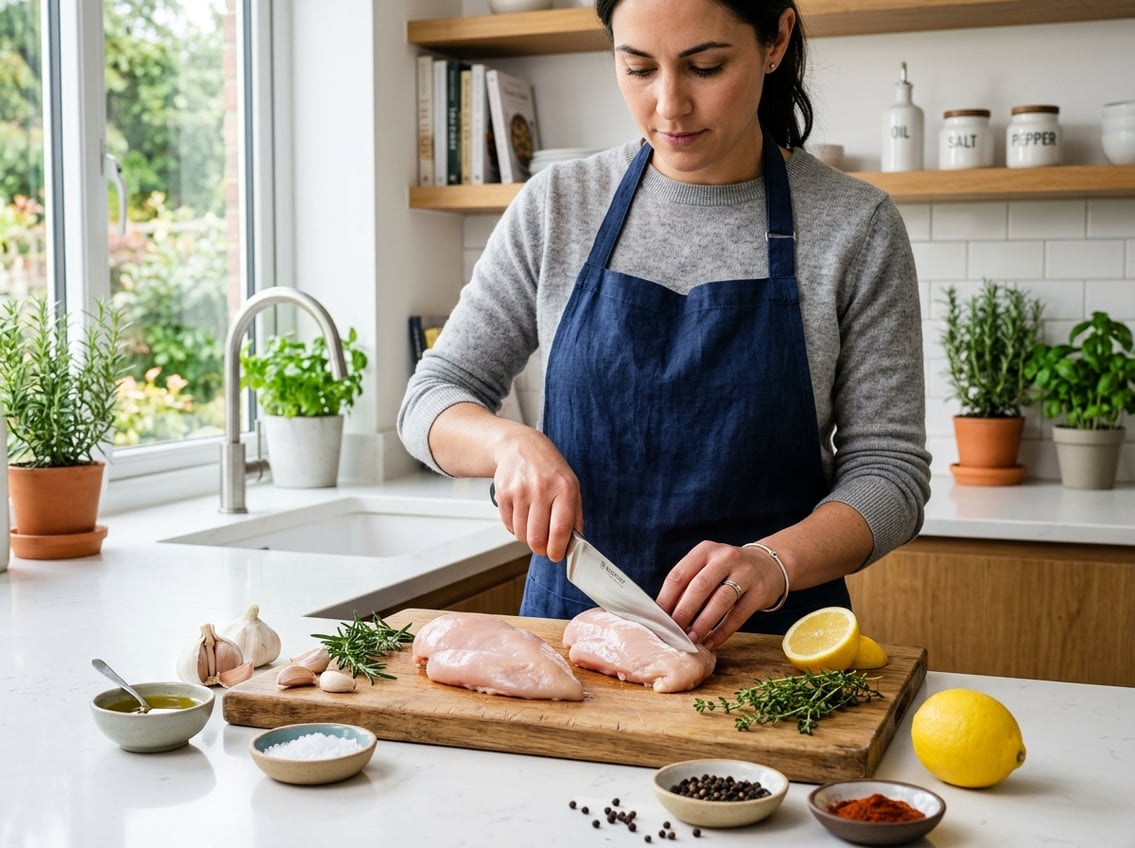
You should check the internal temperature to cook chicken breasts safely, not just rely on the clock. Aim for the thickest part of the chicken to reach 165°F, then let it rest before slicing so the juices stay inside.
Once you know the right time and temperature, you can manage baked chicken breast easily. Thickness, pan spacing, and oven type can make a big difference in the final result.
Chicken Breast Oven Times at a Glance
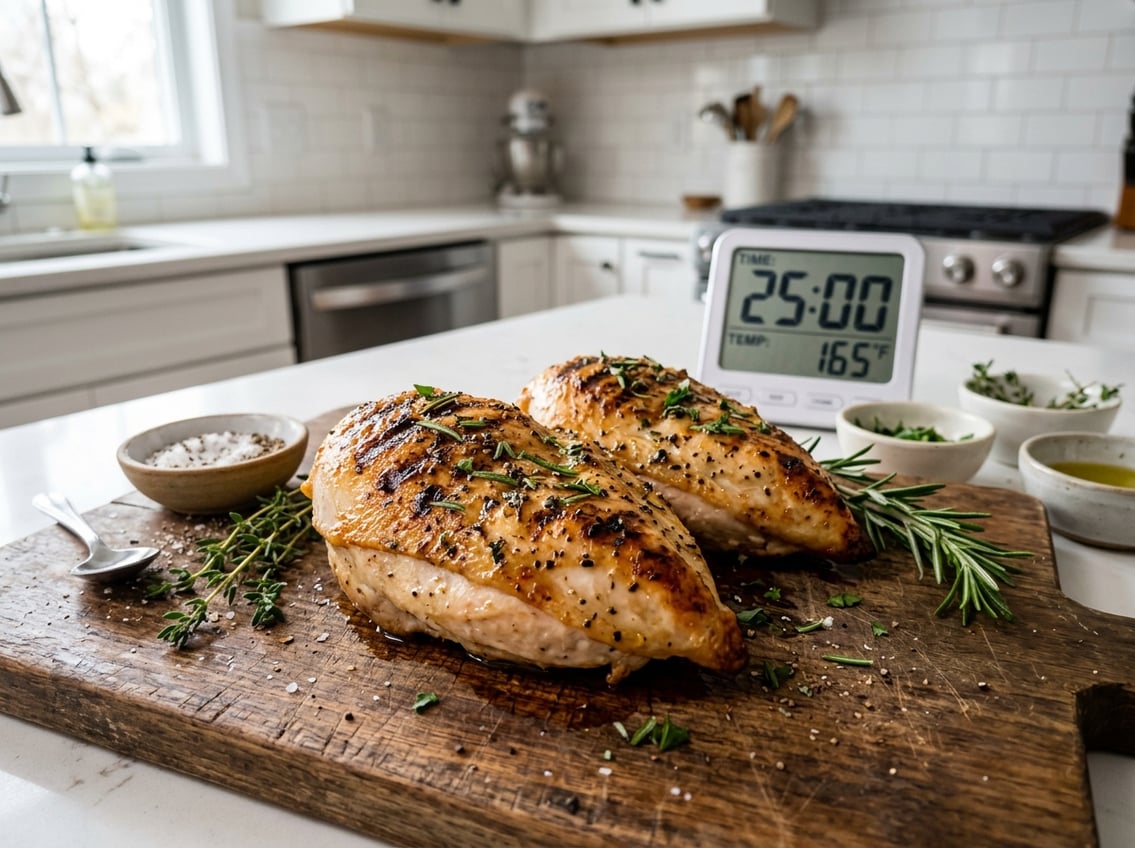
Start with a set time when baking chicken breast, then confirm doneness with a thermometer. Size and oven heat can shift the result, but most baked chicken breasts fall into a small time range.
AllRecipesBeginner’s baking guide explains that boneless pieces usually cook faster than bone-in cuts, and 165°F is the safe finish point. Use these times as a starting point for how long to cook chicken breast.
Boneless, Skinless Timing by Size and Thickness
For boneless, skinless chicken breasts, a 375°F oven usually needs 20 to 30 minutes. Smaller pieces can be ready closer to 18 minutes, while thicker breasts may need 30 minutes or a little more.
Check early if your chicken is around 6 to 8 ounces and evenly thick. It often finishes near the middle of that range.
Bone-In, Skin-On Timing Differences
Bone-in, skin-on chicken breasts take longer because the bone slows heat flow. At 375°F, they often need 30 to 40 minutes, sometimes more if they are large.
The skin helps protect the meat from drying out. Check the thickest part near the bone for 165°F before serving.
Best Oven Temperatures for Even Cooking
A 375°F oven works well for even baking and is a reliable starting point for baked chicken breast. If you use a hotter oven, such as 425°F, you can cut the time down to about 18 to 22 minutes for boneless pieces, according to AllRecipesBeginner.
If your chicken pieces are uneven or very thick, moderate heat is easier to manage. This helps you cook the inside without drying the outside.
How to Check for 165°F Without Guessing
Use an instant-read meat thermometer and place it in the thickest part of the breast. Avoid the pan and, for bone-in pieces, avoid touching the bone.
If the reading shows 165°F, the chicken is safe to eat. If it is lower, keep baking and check again in a few minutes.
How to Get Juicy Results Every Time
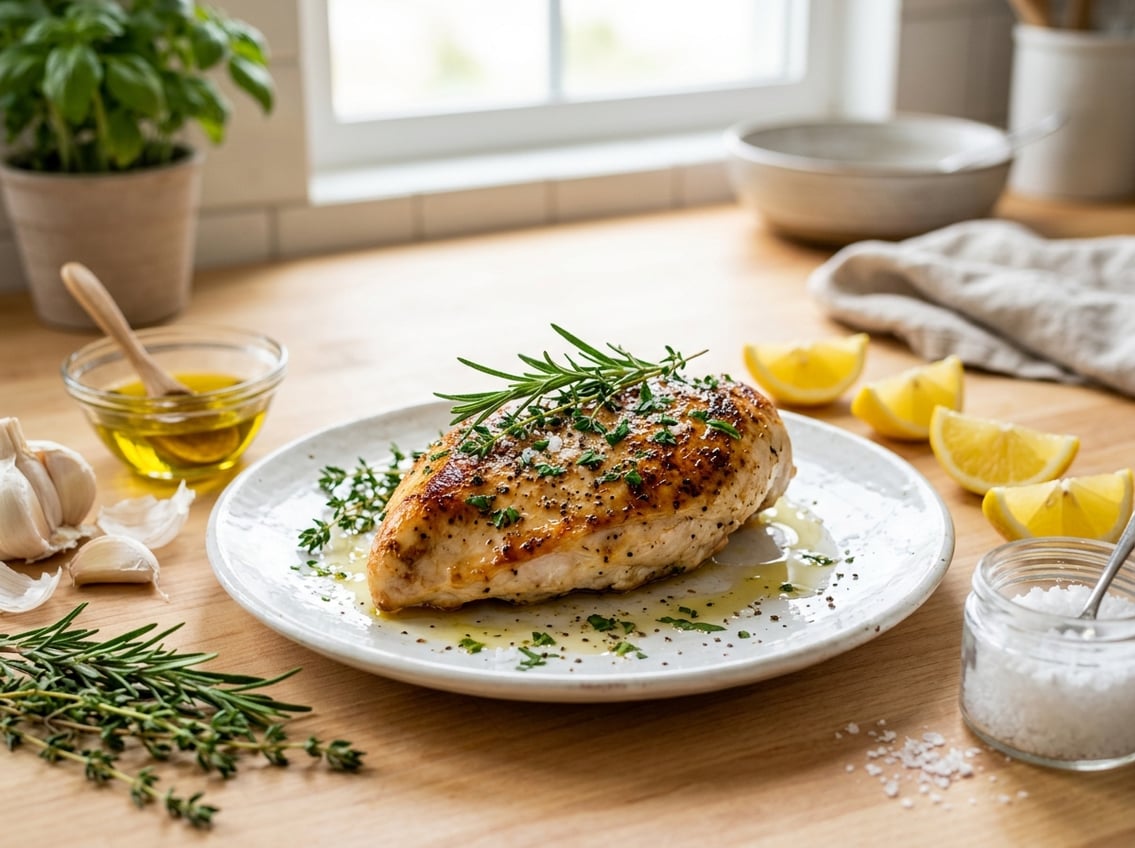
Juicy chicken starts before you turn on the oven. The way you prep, season, and rest the meat affects texture as much as the bake time.
A good baked chicken breast recipe relies on even thickness, enough surface seasoning, and a short rest after cooking. These steps keep the chicken from turning dry and help it taste better.
Prep Steps That Improve Even Cooking
If one end is much thicker than the other, gently pound it so the breast cooks at a more even rate. Trim loose fat and remove anything that may cook unevenly.
Pat the surface dry before seasoning. Dry chicken browns more evenly and gives you a better finish in the oven.
Seasoning, Oil, and Optional Brining
Light oil helps seasoning stick and can support better browning. Salt, pepper, garlic powder, paprika, and dried herbs all work well on a simple chicken breast recipe.
If you have extra time, a short brine can help. Even 30 minutes in lightly salted water can improve moisture and seasoning inside the meat.
When to Cover or Bake Uncovered
Bake uncovered when you want light browning and a drier surface, such as for a standard baked chicken breast. Covering with foil traps steam and can soften the exterior.
Use foil only if the chicken is browning too fast before it reaches temperature. Remove the cover near the end if you want a little color.
Why Resting Matters Before Slicing
Let the chicken rest for about 5 to 10 minutes after it comes out of the oven. This gives the juices time to settle back into the meat.
If you slice too soon, more juice runs out onto the cutting board. Resting keeps each bite more tender and helps your baked chicken breast stay moist.
Common Variables That Change Bake Time
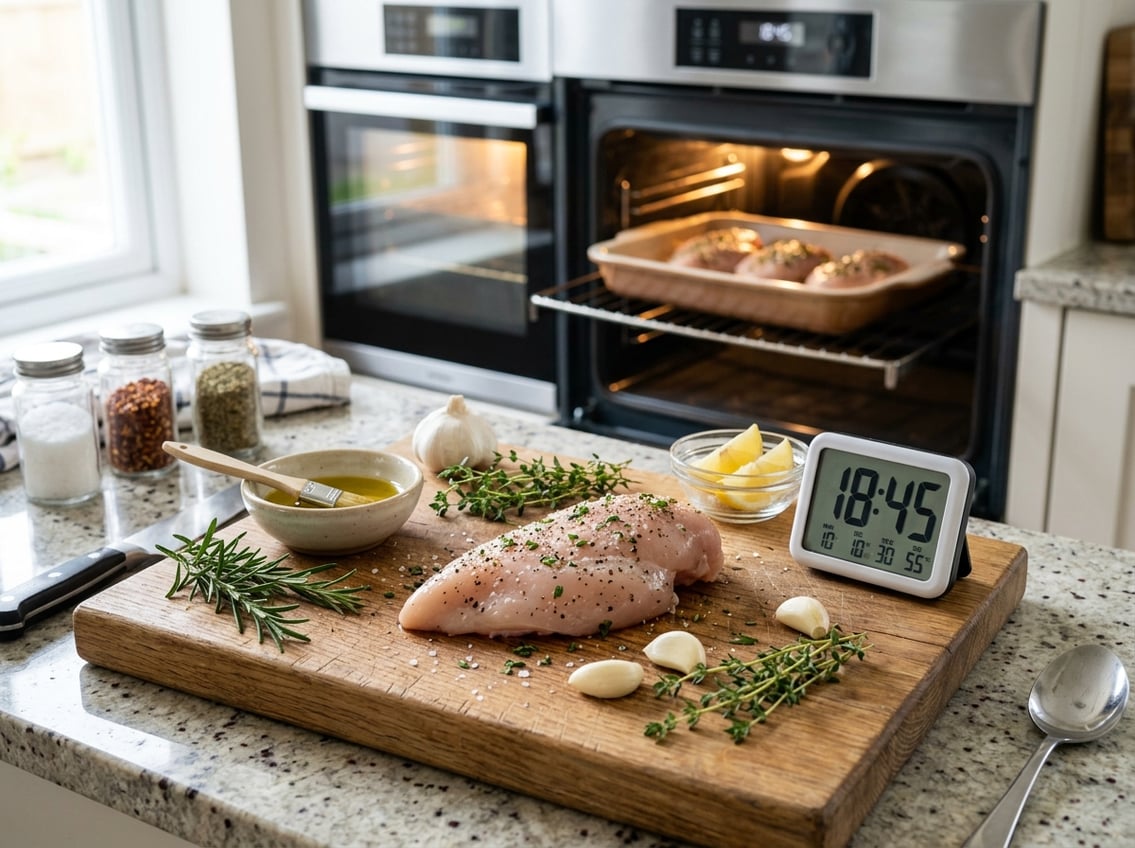
Small changes in the kitchen can change how long it takes to cook chicken breast. Thickness, starting temperature, and oven style all affect the final timing.
If you cook chicken breasts often, these differences matter more than the number on the package. The most reliable method is to watch the temperature and adjust for the shape of the meat.
Thickness vs. Weight: What Matters More
Thickness matters more than weight. A wide, thin breast can cook faster than a smaller but very thick one.
If the thickest point is much larger than the rest, the thin end may dry out before the center is done. Pounding or slicing the breast into even pieces helps a lot.
Fresh vs. Previously Frozen Chicken
Fresh chicken usually bakes more evenly than chicken that was frozen and thawed. Previously frozen chicken can release more moisture, which may slightly change browning and timing.
If you thawed the chicken in the fridge, it should still cook well. Partially frozen chicken needs more time and can cook unevenly, so thaw it fully first when possible.
Convection vs. Regular Oven Timing
A convection oven moves air around the food, so it usually cooks faster than a regular oven. You may need to reduce the time by a few minutes and check early.
When you bake chicken breasts in convection, start watching for doneness sooner. The outside can brown faster, so temperature checks matter even more.
Mistakes That Cause Dry or Undercooked Chicken
People often make the mistake of cooking by time alone. Crowding the pan traps steam and prevents even heat flow.
Skipping the thermometer, slicing too soon, and baking at very high heat for too long can also hurt the result. The oven timing guide from AllRecipesBeginner notes that using a thermometer and giving the chicken space are key steps.
Storing and Reheating Leftovers Safely
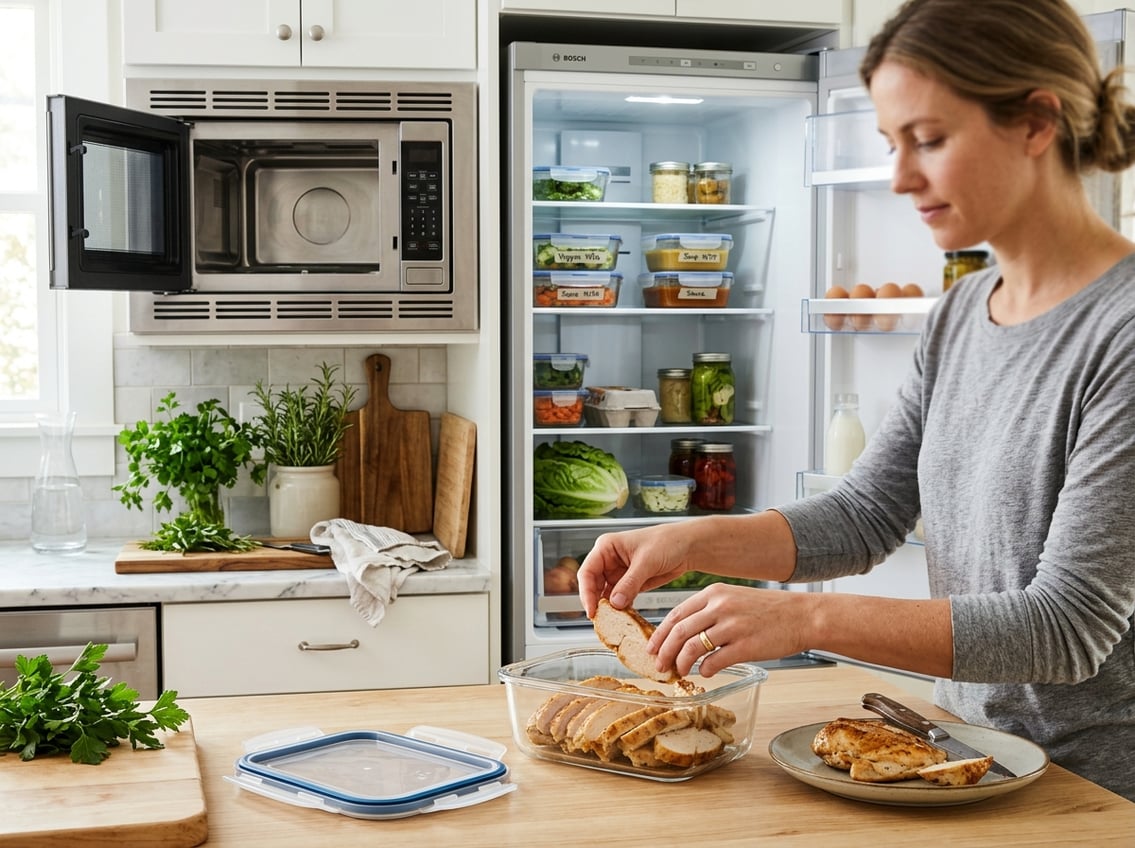
Store cooked chicken quickly and keep it cold to save it for later. Limit time at room temperature and reheat it gently.
According to the American Heart Association food safety guidance, leftovers usually keep for 3 to 4 days in the fridge and up to 6 months in the freezer. Baked chicken breasts are useful for meal prep if you handle them safely.
How to Store Baked Chicken in the Fridge
Let the chicken cool a little, then place it in an airtight container and refrigerate it within 2 hours. Keep it on a shelf in the main part of the fridge, not in the door.
If you want the best texture, store sliced chicken and whole chicken separately. Whole pieces tend to stay a bit juicier.
Freezing Cooked Chicken Breast Properly
Wrap the chicken well or seal it in a freezer-safe container before freezing. Remove as much air as possible to help prevent freezer burn.
Label the package with the date. Cooked chicken breast is best used within a few months for the best texture.
Best Ways to Reheat Without Drying It Out
Reheat baked chicken breasts gently in the oven at a lower temperature. You can also use the microwave with a damp paper towel over the top.
Heat the chicken until it reaches 165°F again.
If the chicken seems dry, add a splash of broth or a little sauce before reheating. This helps the meat warm more evenly without turning tough.


