
When Do You Know Chicken Breast Is Done? Quick Guide
You know chicken breast is done when the center reaches a safe internal temperature and the meat looks opaque, firm, and juicy. The most reliable way to confirm this is to use a meat thermometer and check for 165°F (74°C) in the thickest part.
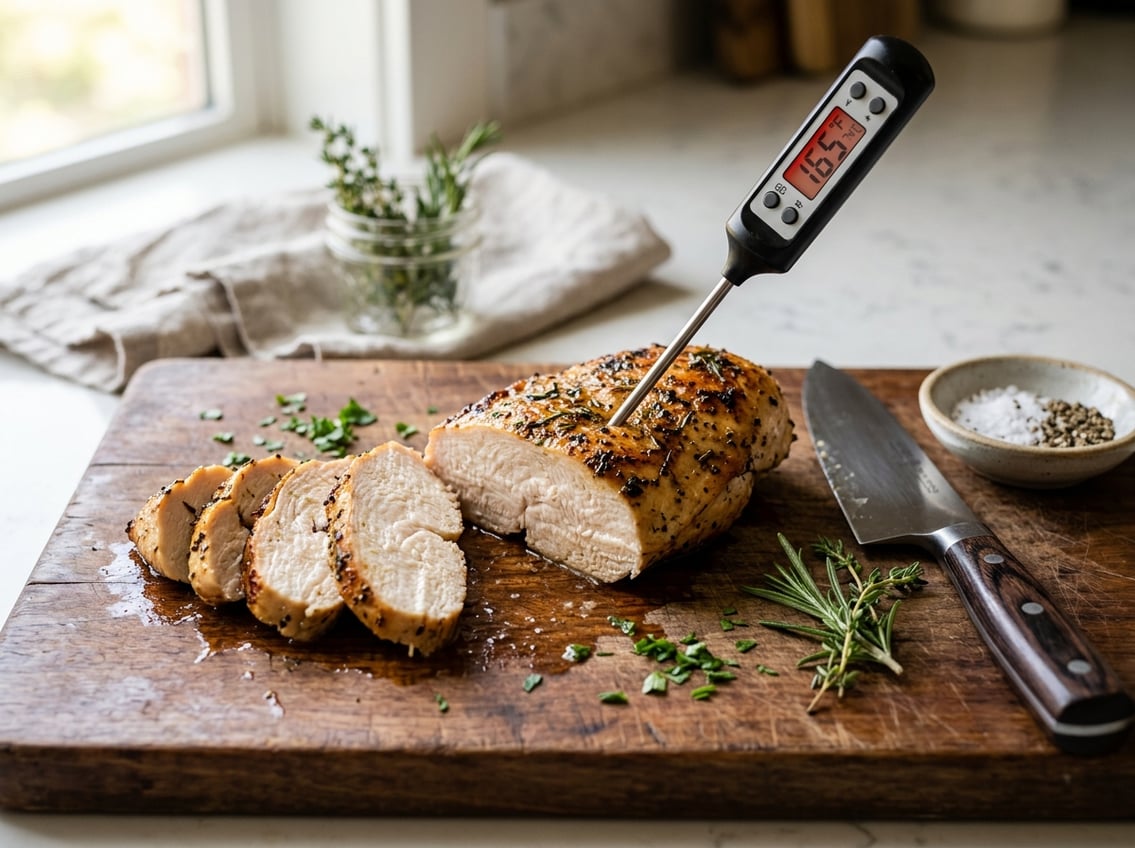
Undercooked chicken can make you sick. If chicken stays on the heat too long, it turns dry fast.
You can also use color, juices, and texture as backup signs if you do not have a thermometer.
Check Doneness by Internal Temperature
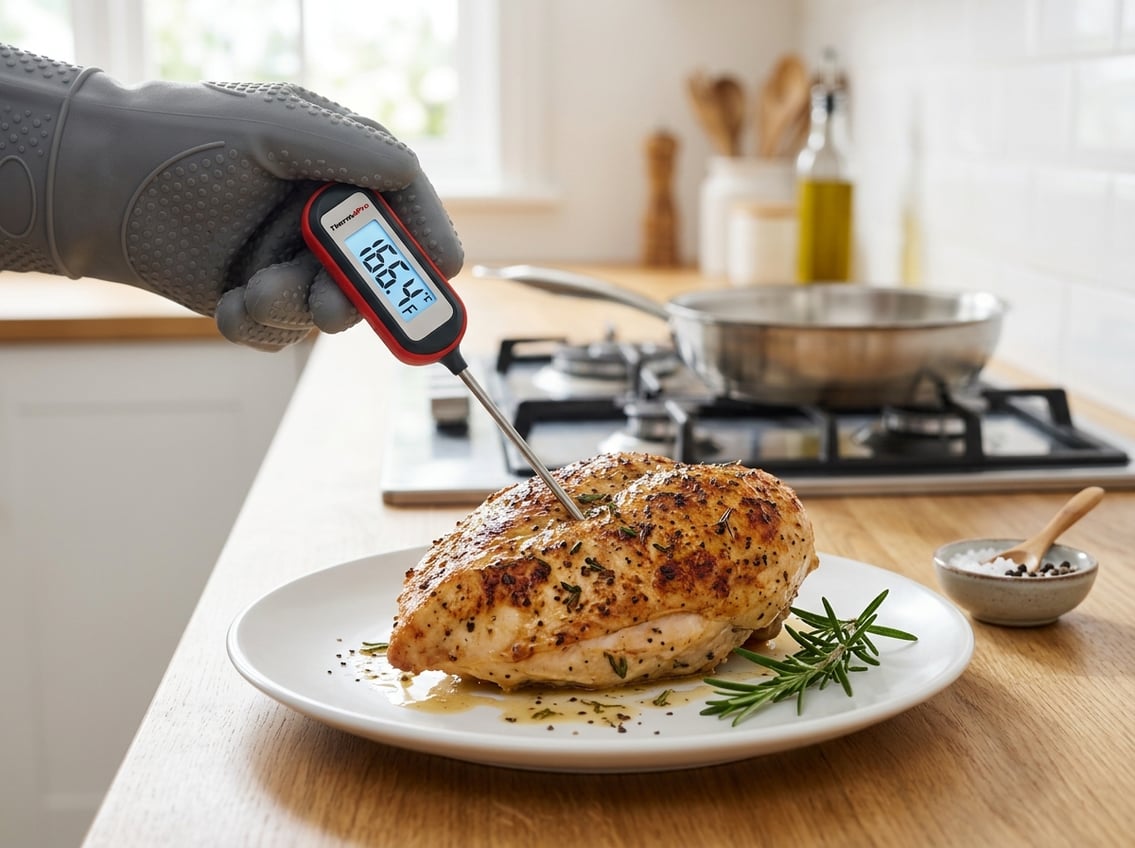
The internal temperature is the clearest answer for knowing when chicken is done. Appearance can help, but temperature tells you whether the center is safe to eat.
The Safe Minimum Temperature for Chicken Breast
Chicken breast is done at 165°F (74°C). This is the safe minimum temperature for poultry and provides a reliable target.
According to USDA-style temperature guidance, you should reach this number before serving.
How to Use a Meat Thermometer Correctly
Place the probe into the thickest part of the breast when you use a meat thermometer. Wait for the reading to settle before deciding the chicken is finished.
Avoid touching bone, the pan, or a pocket of fat to prevent inaccurate readings. If the breast has uneven thickness, check more than one spot.
Where to Insert the Probe in Thin or Thick Pieces
Insert the probe from the side and aim for the center with thick chicken breast. This helps you reach the coldest part of the meat.
For thin cutlets, check from the top down and stay in the middle of the piece.
Use Visual and Texture Clues as Backup
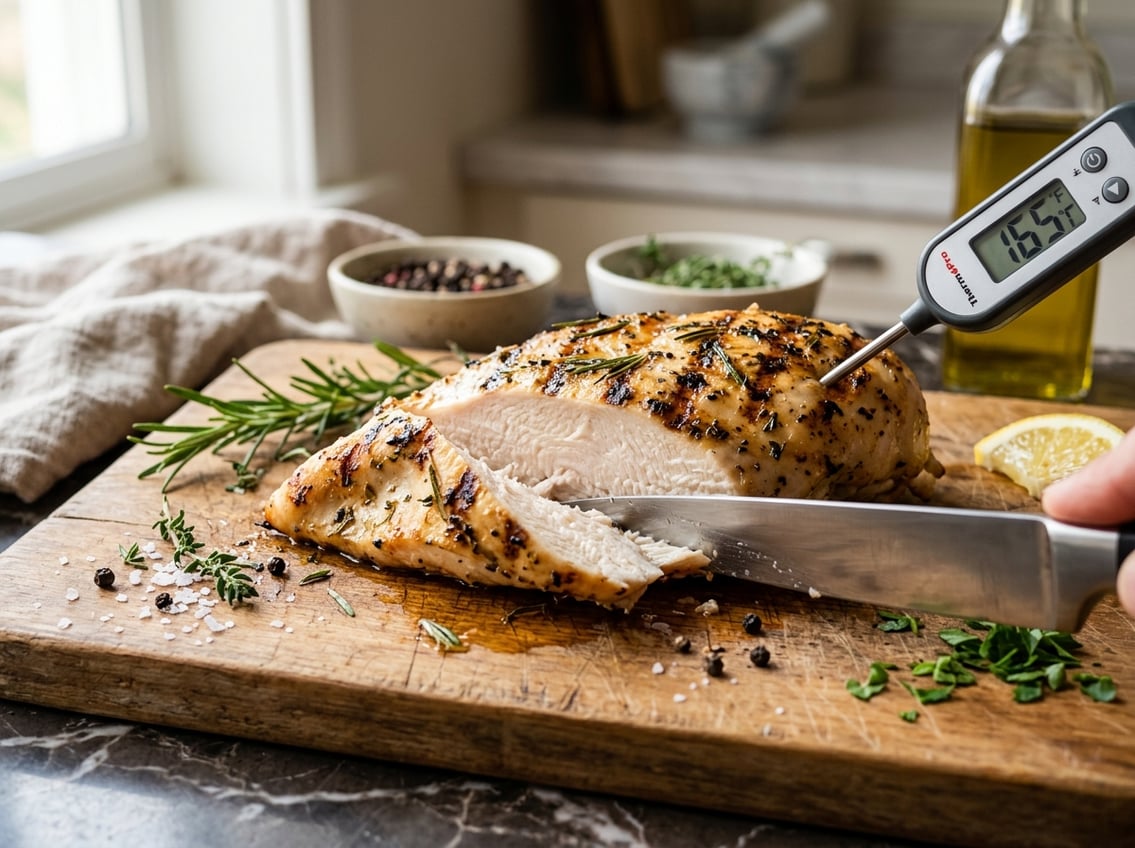
Visual signs help when you need a second check, especially if you are cooking without a thermometer. They are useful, but not as reliable as temperature.
What the Inside Color Should Look Like
When you cut into the thickest part, the meat should look opaque and white throughout. A little pink near the surface can happen from cooking methods or seasoning, so focus on the center.
If you see translucent or raw-looking meat in the middle, keep cooking.
What Clear Juices Can and Cannot Tell You
Clear juices are a good sign, and pink or red juices usually mean the chicken needs more time. Clear liquid is one of the common signs people use.
Clear juices do not prove the chicken has reached 165°F (74°C). Juices can look clear before the center is fully safe, so treat this as backup only.
How Firm Cooked Chicken Breast Should Feel
Cooked chicken breast should feel firm with a little spring when you press it. Raw chicken feels softer and more squishy.
If the meat feels hard and tight, it may already be overcooked.
Avoid the Most Common Mistakes
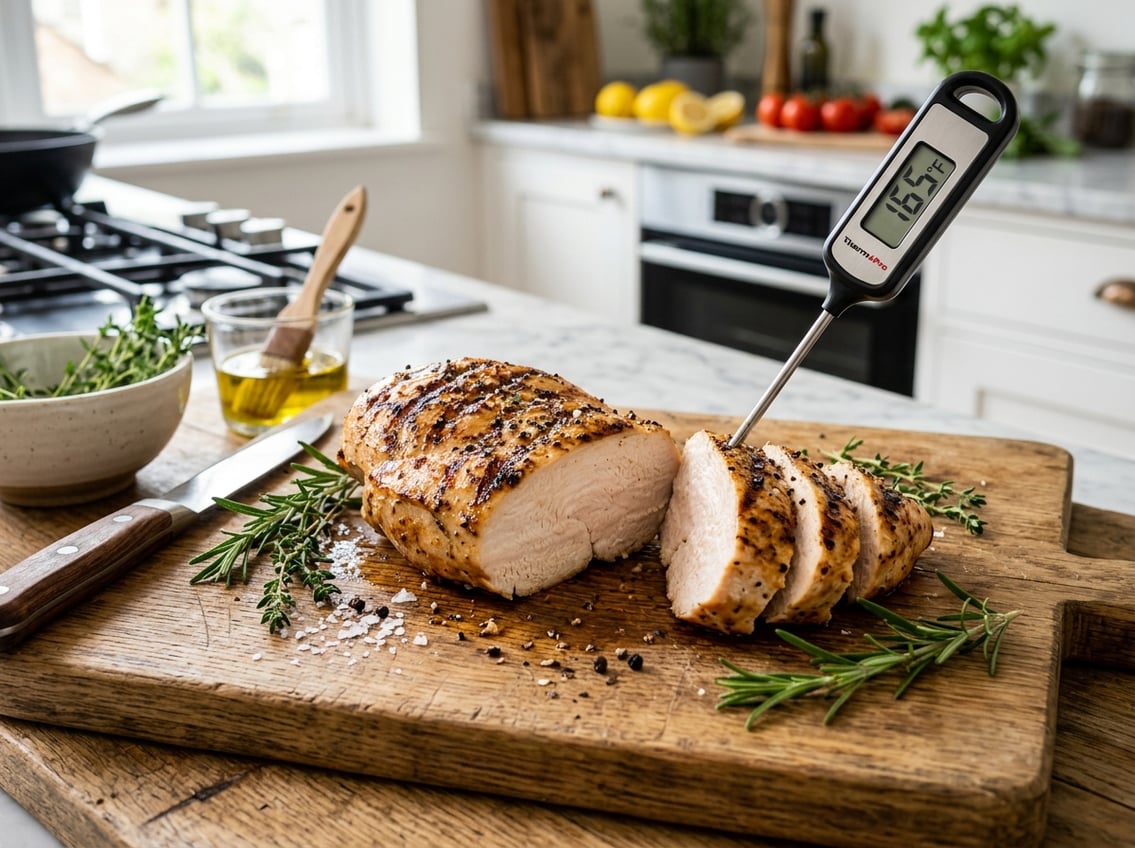
Simple mistakes can lead you to serve chicken too early or leave it on the heat too long. Rely on temperature first, then use your eyes and touch as support.
Why Color Alone Is Not Fully Reliable
Color can mislead you because cooked chicken is not always perfectly white in every spot. Lighting, marinades, smoke, and bone contact can all change how the meat looks.
A thermometer gives you a better answer than color alone.
How Overcooking Happens Even After It Is Safe
Chicken can go from safe to dry very quickly after it reaches 165°F (74°C). A few extra minutes in a hot pan or oven can push it past the point of good texture.
A quick temperature check helps you stop cooking at the right time.
When to Rest Chicken Before Slicing
Let chicken breast rest for a few minutes before you slice it.
Resting helps the juices settle back into the meat instead of running out onto the cutting board.
If you cut too soon, the chicken can seem drier than it really is.
Resting makes it easier to see the final texture when you check the center.


