
Chicken Breast More Protein Than Beef? A Clear Comparison
Chicken breast usually gives you slightly more protein per serving than beef, if you compare similar cooked servings and lean cuts. Beef often gives you more iron, zinc, and vitamin B12.
Your choice depends on your goal. If you want the leanest, highest-protein meat for calories, chicken breast often wins.
If you want a protein source with more minerals and a richer nutrient profile, beef can still be a strong pick.
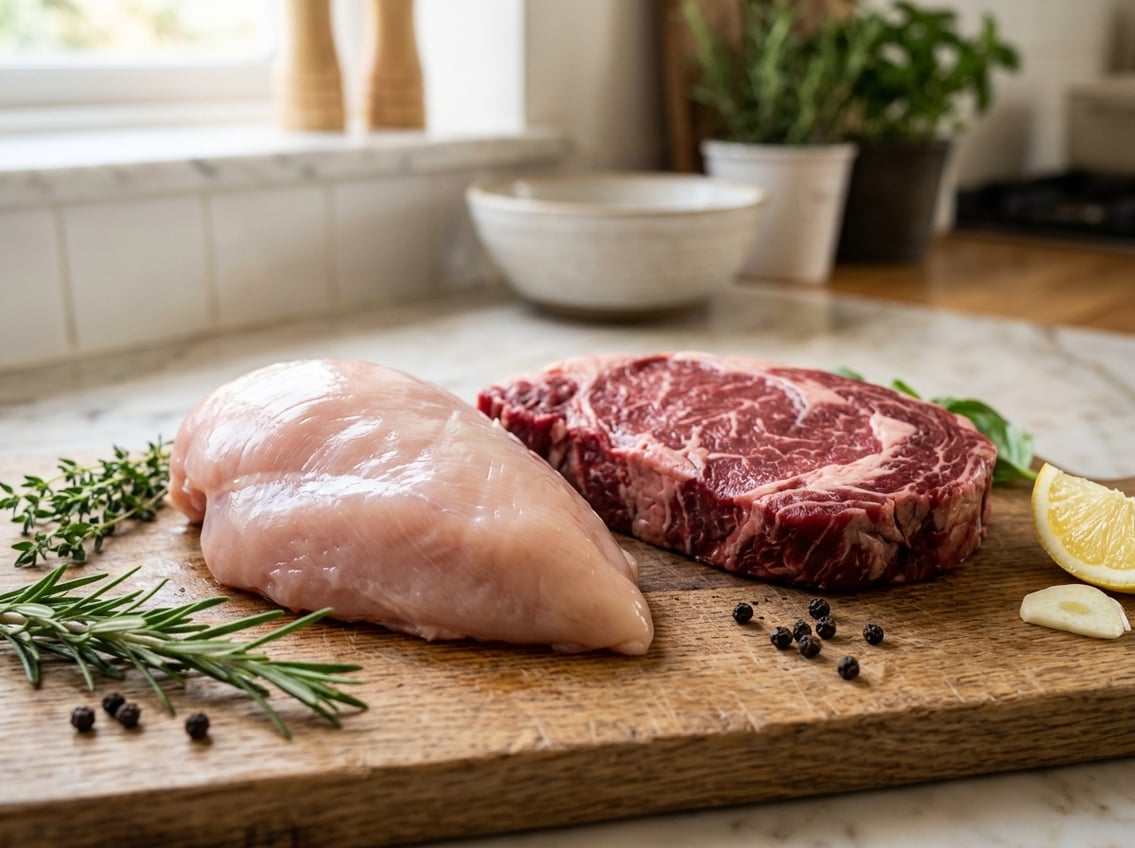
Quick Protein Comparison by Serving Size
Protein numbers change with the cut, the fat level, and how you cook the meat. When you compare equal cooked portions, chicken protein usually comes out a little higher than beef protein, especially with skinless breast and lean beef cuts.
| Food | Protein per 100 grams | Protein per typical 3-ounce cooked serving |
|---|---|---|
| Chicken breast | about 31 grams | about 26 to 30 grams |
| Lean beef | about 25 to 28 grams | about 22 to 26 grams |
Protein Per 100 Grams
A 100-gram serving of cooked chicken breast often contains about 31 grams of protein. A similar serving of lean beef usually lands a little lower, though the exact number depends on the cut.
Chicken breast can edge out beef on protein per 100 grams, especially when you compare it with lean cuts like sirloin or top round.
Protein Per Typical 3-Ounce Serving
A standard 3-ounce cooked serving of chicken breast often gives you about 26 to 30 grams of protein. Beef can range from about 22 to 26 grams per 3-ounce serving, with leaner cuts sitting near the top of that range.
If you are tracking protein per meal, chicken breast is usually the easier way to get a high number with fewer calories.
Why Chicken Breast Usually Comes Out Ahead
Chicken breast is naturally very lean, so more of its weight comes from protein rather than fat. Beef can match or come close when you choose a very lean cut, yet fattier cuts lower the protein density per bite.
Why the Numbers Change Between Cuts
The meat cut matters as much as the animal. Lean chicken breast, dark meat, lean cuts of beef, and marbled beef all give you very different protein density, even at the same serving size.
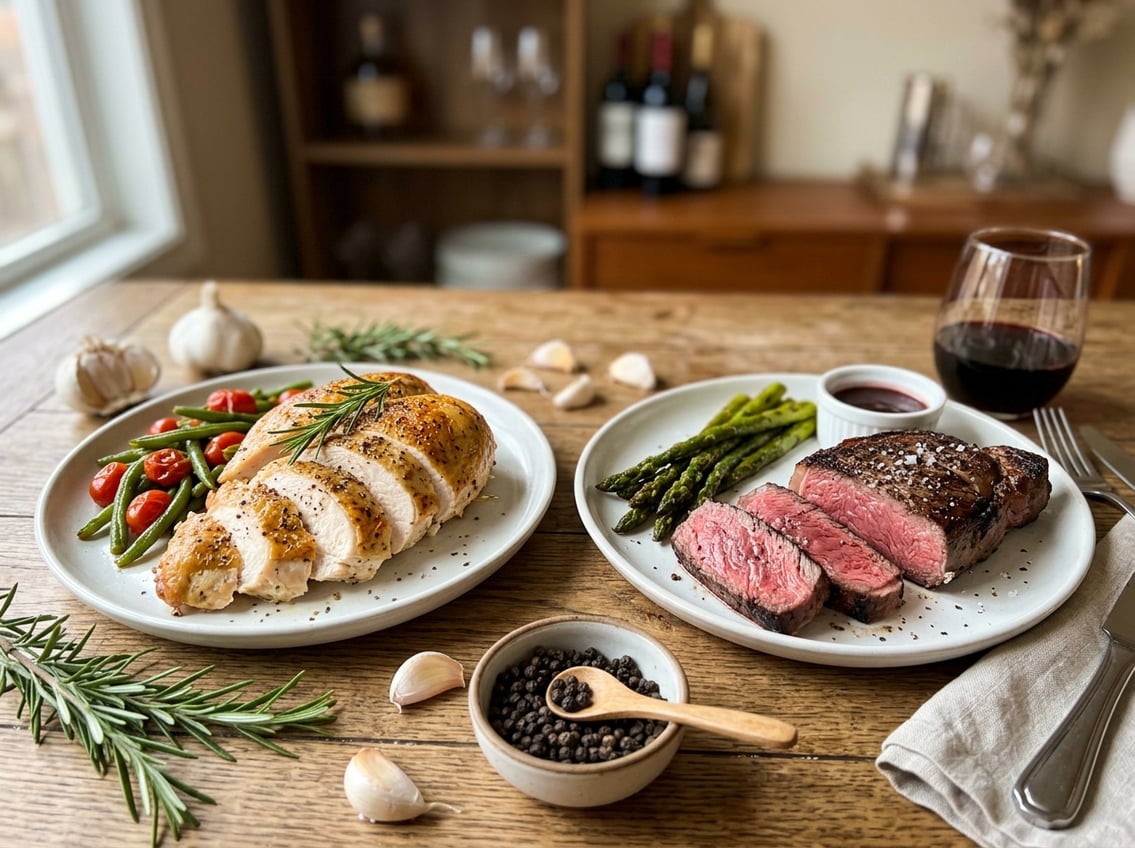
Lean Chicken Breast vs Dark Meat
Skinless chicken breast is one of the leanest meats you can eat. Dark meat, like thighs and drumsticks, usually has more fat and slightly less protein per calorie.
Lean Cuts of Beef vs Fattier Cuts
Lean cuts of beef, such as sirloin, tenderloin, or top round, can get close to chicken breast in protein. Fattier cuts, such as ribeye or brisket, usually carry more calories from fat and less protein density by weight.
A lean steak can still be a strong protein food. The difference shows up more clearly when you compare it with a skinless chicken breast.
How Fat Affects Protein Density
Fat adds calories without adding protein. As fat goes up, protein density goes down, which means you get less protein for each calorie you eat.
A lean beef cut may compare well to chicken breast, while a fattier cut often falls behind in protein per serving.
Protein Quality and Muscle Support
Both meats are high-quality protein sources. They provide complete proteins, which means they contain all the essential amino acids your body needs for muscle repair and normal body function.
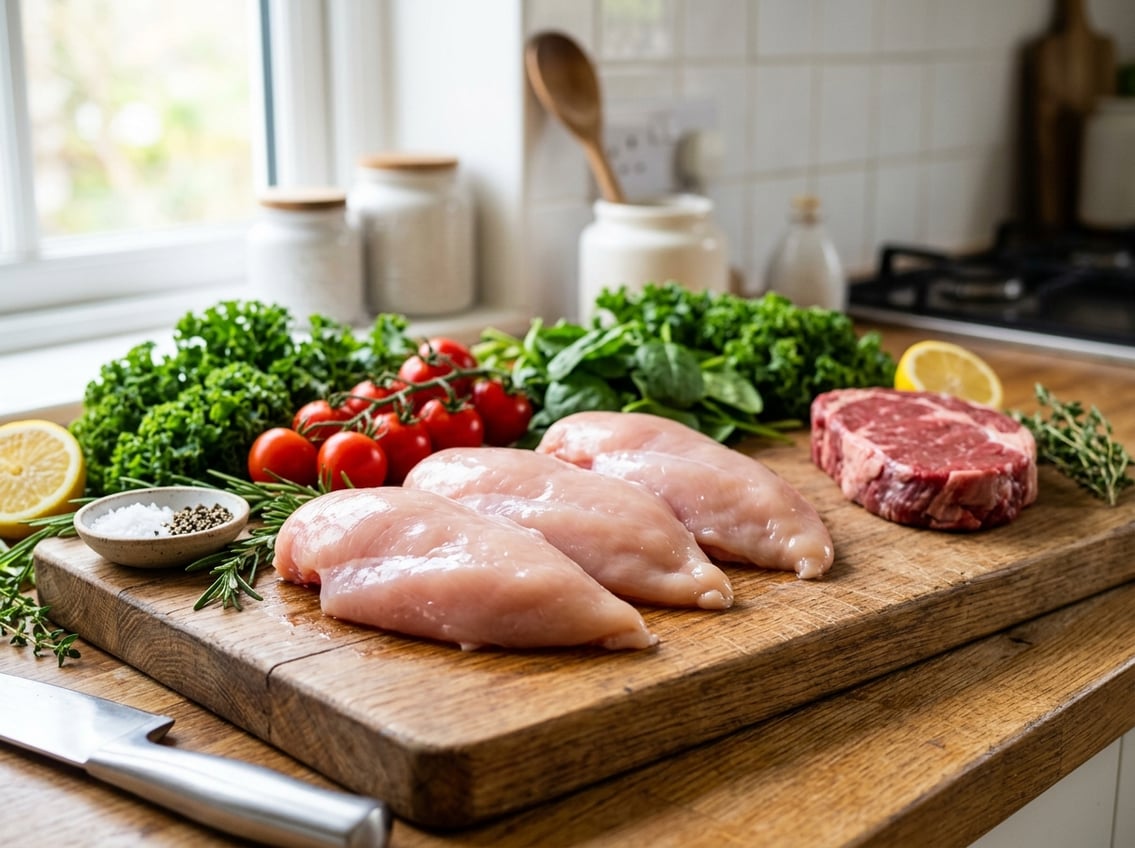
Complete Proteins and Essential Amino Acids
Chicken protein and beef protein are both complete proteins. That makes each one useful for supporting tissue repair, recovery, and everyday protein needs.
Beef and chicken both deliver essential amino acids, so you do not need to worry about combining them with plant foods in the same meal to make the protein complete.
Beef and Chicken for Muscle Repair
For muscle repair, both meats work well because they are rich in amino acids that support muscle protein synthesis. Chicken breast is often chosen for its lean profile, while beef is often chosen for its extra iron, zinc, and vitamin B12.
How Plant-Based Proteins Compare
Plant-based proteins can also support your diet, yet many single plant foods are lower in one or more essential amino acids. You often need a mix of sources, such as beans, lentils, soy, grains, nuts, and seeds, to match the amino acid completeness of meat.
Beef protein and chicken protein are more direct ways to get a complete, concentrated protein source in one food.
Cooking, Nutrition, and the Better Choice for Your Goal
Cooking changes water content, texture, and sometimes the way protein is measured on labels or in databases. Cooking does not erase the protein, and it does not make chicken or beef lose its value as a protein food.
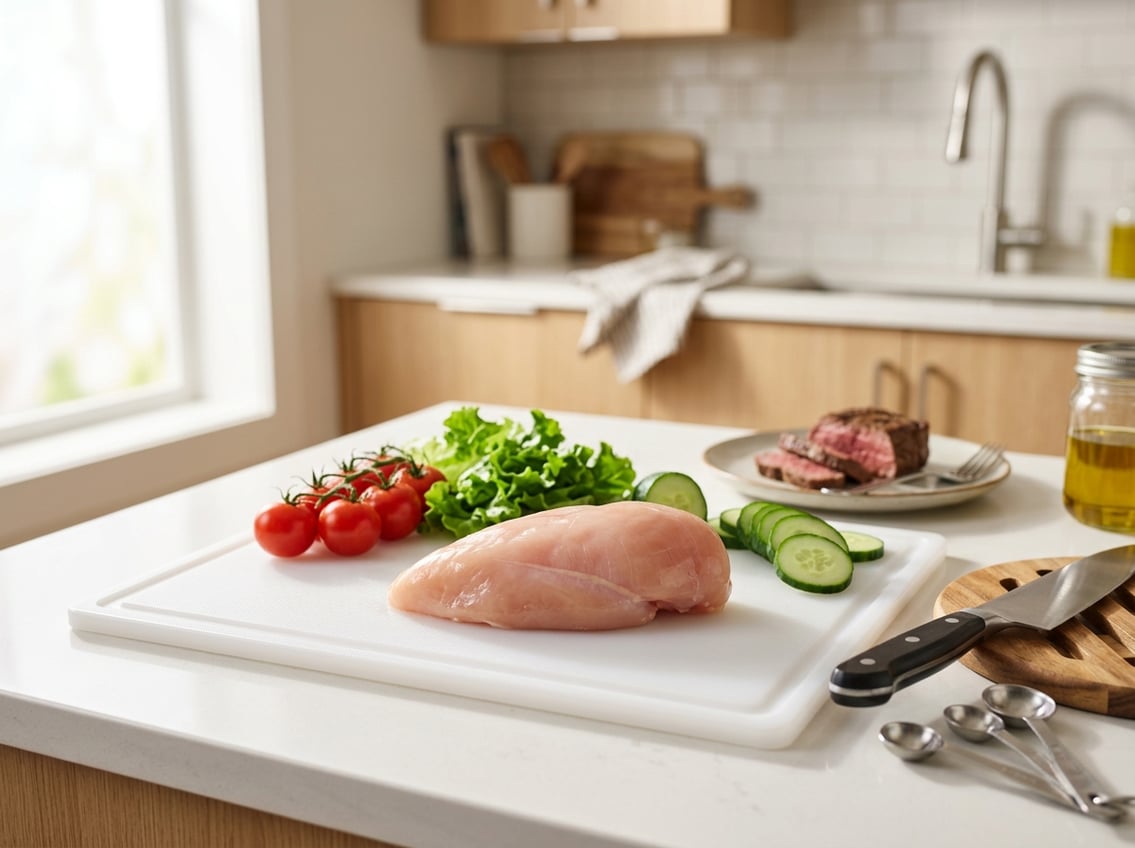
How Cooking Changes Measured Protein
When meat cooks, it loses water. That makes the protein look more concentrated by weight, even though the actual protein amount stays similar.
Protein per serving can vary between raw and cooked entries. A cooked 3-ounce portion is more useful for comparison than a raw weight comparison.
Protein Denaturation and What It Really Means
Heat changes the structure of the protein, which is called protein denaturation. Your body still digests and uses that protein.
Normal cooking does not make the protein worthless. It just changes the texture and can affect juiciness if the meat is overcooked.
Best Pick for Fat Loss, Muscle Gain, and Micronutrients
Chicken breast is often the cleaner choice for fat loss because it gives you a lot of protein for fewer calories.
Both chicken breast and lean beef work well for muscle gain, especially when you need enough total protein each day.
Beef often has the advantage for micronutrients because it provides a strong source of iron, zinc, and vitamin B12, as shown in a beef vs chicken nutrition comparison.
If your diet already includes those nutrients, chicken breast may be the simpler high-protein option.


