
When Do You Know Chicken Breast Is Bad? Clear Signs
When do you know chicken breast is bad? The answer comes from a mix of smell, texture, color, time, and storage history.
If you have to guess, that is already a warning sign.
You can sometimes spot spoiled chicken breast right away, but the safest judgment comes from checking how long you have stored it and whether it stayed cold the whole time.
Raw chicken can carry harmful bacteria even when it looks normal, so you should not rely on appearance alone.
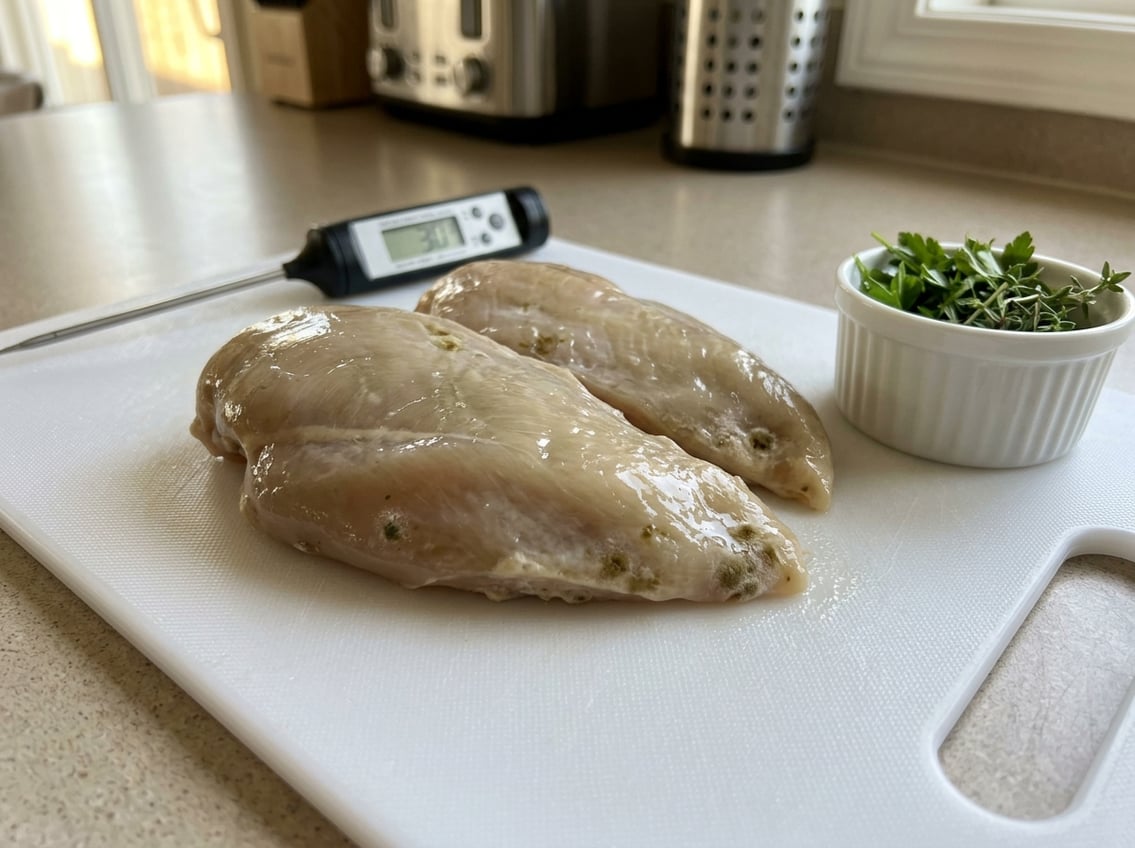
Foodborne illness is a real risk with poultry. Chicken can go bad in ways that are easy to miss.
For a broader safety overview, the USDA guidance on how to tell if chicken is bad matches the same basic rule. Time and temperature come first.
Immediate Signs to Check First
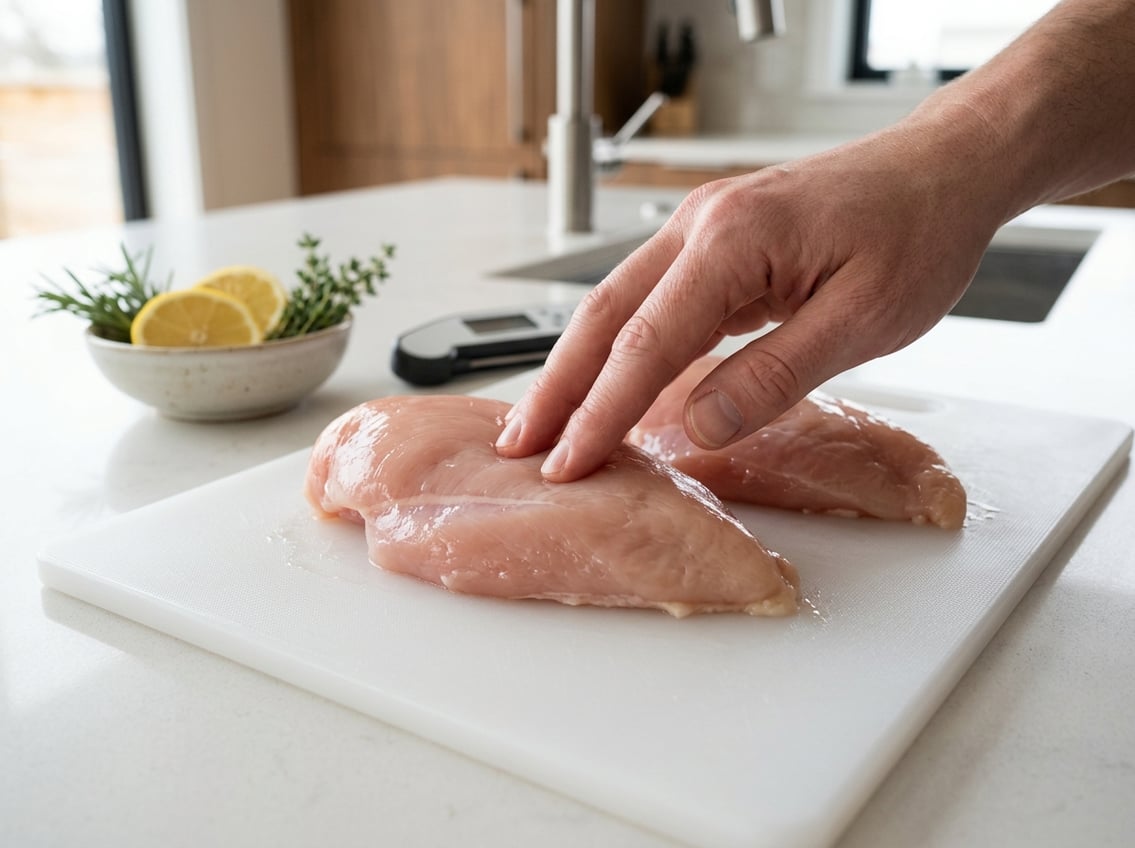
The fastest check is simple. Look, smell, and touch the chicken breast before you cook it.
If more than one warning sign shows up, do not try to save it.
Changes in Color and Surface Appearance
Fresh raw chicken breast is usually pale pink with a moist surface. If you see gray, green, or dull discoloration, especially with other warning signs, treat it as spoiled chicken.
A dry surface is not always a problem, since air exposure can change the look. What matters more is a color change paired with slime, an off odor, or packaging damage.
According to clear spoilage signs in raw chicken, color alone is not enough, but it matters when it appears with other red flags.
Chicken Smell and Other Off Odors
A bad smell is one of the clearest warnings. Fresh raw chicken should have little to no smell.
Spoiled chicken often smells sour, rotten, sulfur-like, or like ammonia. Vacuum-sealed chicken can smell a little strong when you first open it, then settle down.
If the smell stays sharp or makes you step back, the chicken is not safe to keep.
Slimy, Sticky, or Unusual Texture
Raw chicken should feel moist, not slippery. A slimy film, tacky feel, or sticky coating is a strong sign that bacteria have grown.
If the surface feels abnormal after a rinse or does not lose the slick film when you wash your hands, throw it away.
A strange texture is one of the easiest ways to spot spoiled chicken before cooking.
Time and Temperature Red Flags
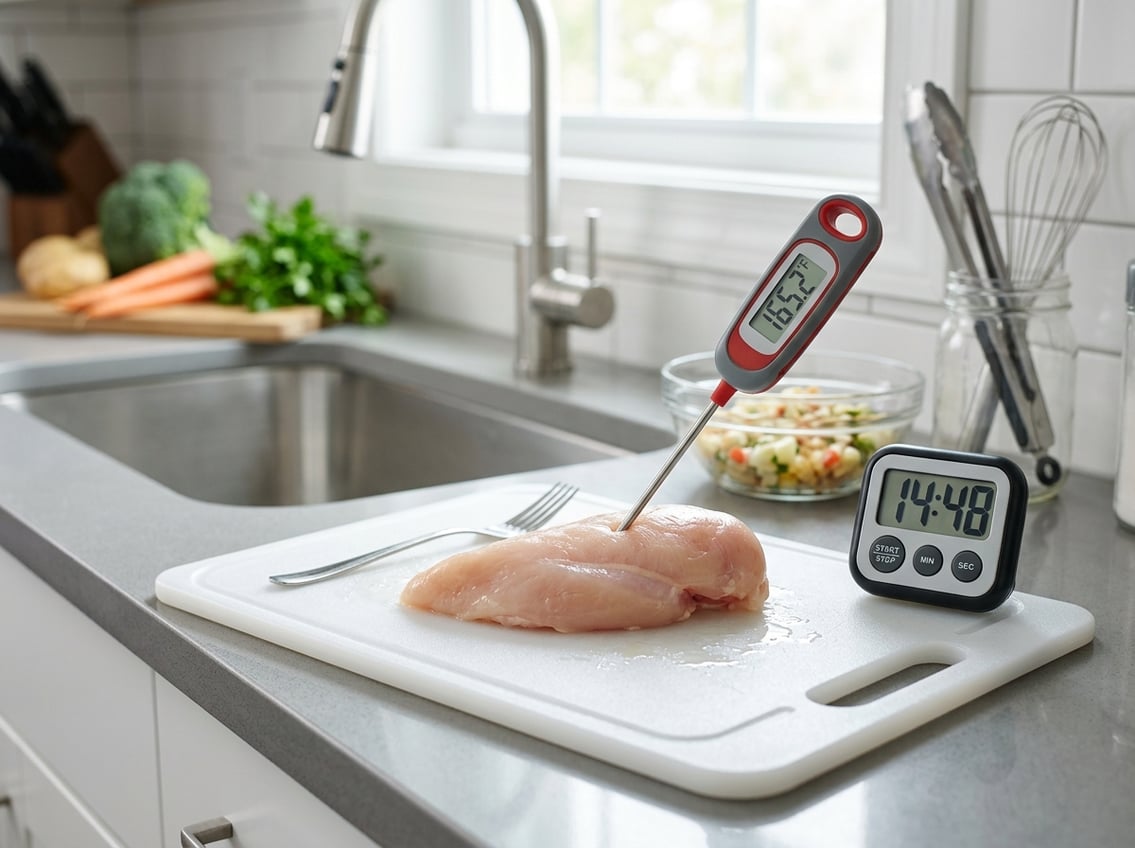
The clock matters as much as the senses. Even chicken that looks and smells fine can cause foodborne illness if it stayed too warm for too long.
Refrigerator Limits for Raw and Cooked Chicken Breast
Raw chicken breast should stay in the fridge only 1 to 2 days. Leftover cooked chicken should be used within 3 to 4 days.
If you are past those limits, toss it. That rule applies even if the chicken still seems normal.
A recent guide on how long chicken breast stays in the refrigerator gives the same storage window for safe use.
The Temperature Danger Zone Explained
Bacteria grow quickly between 40°F and 140°F, which is the temperature danger zone. If raw or cooked chicken sat in that range for more than 2 hours, discard it.
If the air temperature was above 90°F, the limit drops to 1 hour. This matters for groceries left in a hot car, food on a buffet, or chicken forgotten on the counter.
Cooking later does not erase that risk.
What Date Labels Actually Mean
Date labels can help, but they are not all the same. Best if used by usually points to quality, while pack date can help you track freshness.
Neither one replaces safe storage rules. If the chicken smells bad, feels slimy, or spent too long unrefrigerated, the date label does not make it safe.
Treat the label as a guide, not a guarantee.
How Storage Conditions Change the Answer
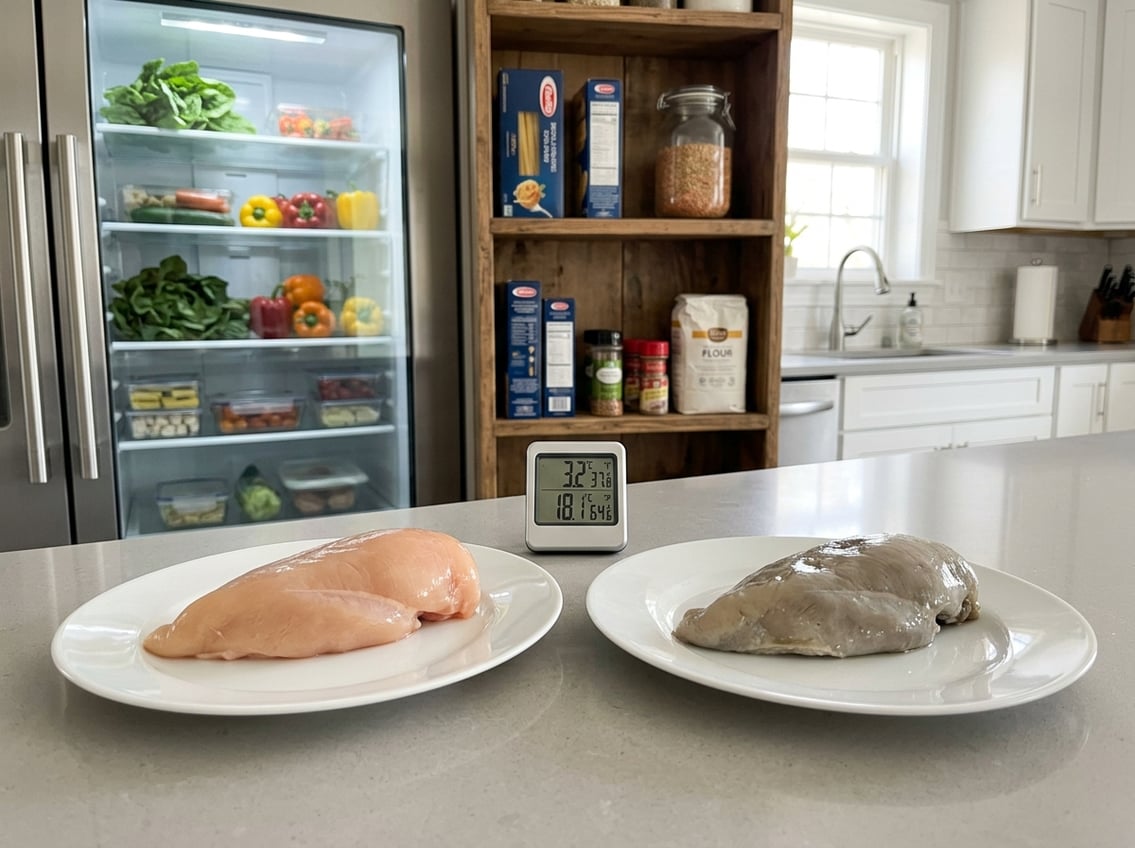
How you store the chicken changes the answer fast. Freezing, packaging, and uncertainty about handling all affect whether you should keep it or throw it out.
What to Know About Frozen Chicken and Freezer Burn
Frozen chicken held at 0°F stays safe longer, even though quality can decline. Freezer burn, which looks like dry, white, or gray patches, usually affects texture and flavor more than safety.
If the chicken was frozen solid the whole time, freezer burn alone does not mean spoiled chicken. If you see heavy ice crystals, thawing, refreezing, or leaked juices, the history is less reliable and the risk goes up.
Why Airtight Storage Matters
An airtight container or sealed freezer bag helps slow drying and keeps raw chicken from leaking onto other foods. Good storage also reduces odor transfer, which can make chicken seem worse than it is.
For cooked chicken, airtight storage matters even more because leftovers can pick up fridge odors and dry out quickly.
If the package was torn, leaking, or left open, treat the chicken with more caution.
When Uncertain Storage History Means Toss It
If you do not know how long the chicken was out, how warm it got, or whether it thawed and refroze, the safest answer is to discard it.
That is especially true for raw chicken that was delivered late, left on a porch, or moved between fridge and counter without a clear timeline.
Mistakes That Make Chicken Seem Safe When It Is Not
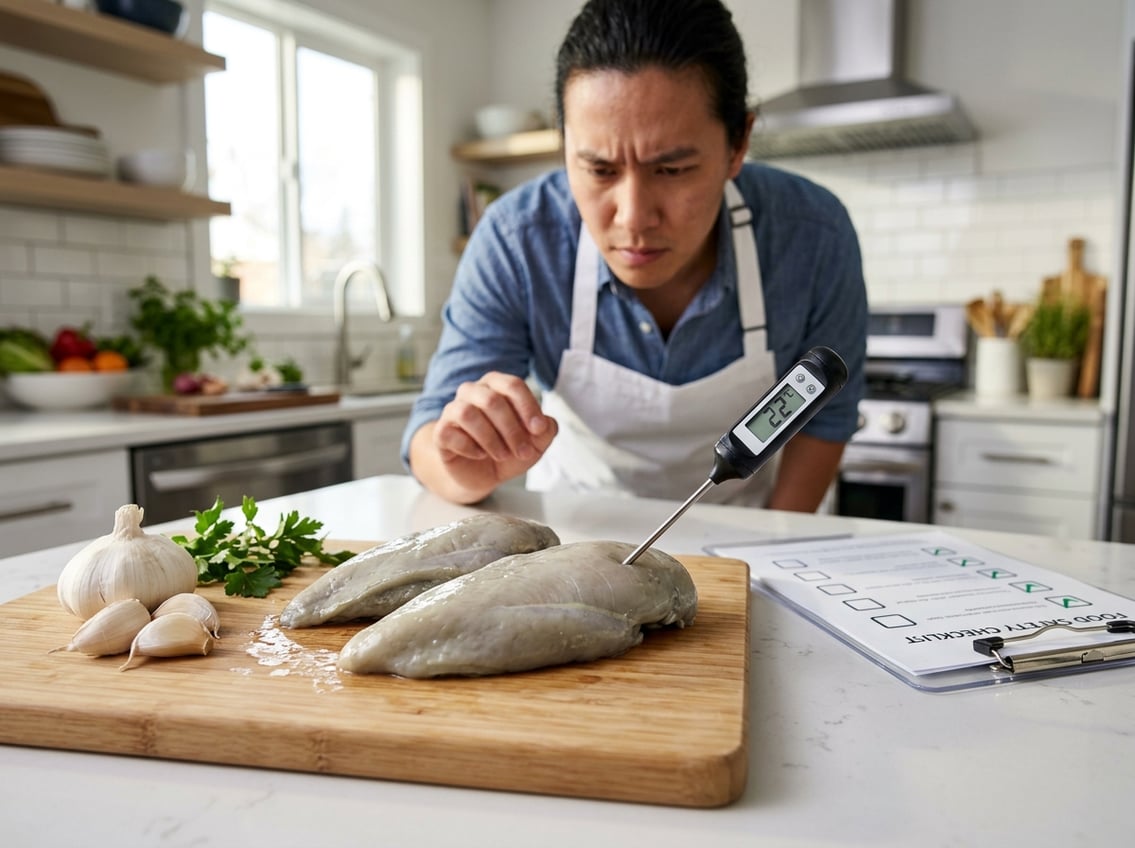
Some common habits make bad chicken look harmless. Safety and quality are not the same thing, and cooking can hide some clues while leaving the risk in place.
Why Smell Alone Is Not Enough
A normal smell does not prove chicken is safe. Some harmful bacteria do not create a strong odor, which means raw chicken can look and smell fine while still causing illness.
Smell matters most when it is clearly bad. When the smell seems normal, you still need to check time, temperature, and storage conditions before you trust the meat.
Why Cooking Does Not Fix Spoiled Meat
Cooking can kill many bacteria if chicken reaches a safe internal temperature, but it does not fix spoiled meat.
It also does not erase toxins that may have formed while the chicken sat too long in the danger zone.
If the chicken already smells rotten, feels slimy, or has passed the fridge limit, cooking it is not a safe rescue plan.
Spoiled chicken should be thrown away, not cooked into a meal.
Undercooked Chicken vs Spoiled Chicken
Undercooked chicken happens during cooking, while spoiled chicken results from improper storage.
You can finish cooking undercooked chicken if you handled it properly and kept it cold.
Spoiled chicken poses a higher risk because bacteria may have already made it unsafe.
Check the storage time and temperature if you are unsure whether the chicken is undercooked or spoiled. Discard the chicken if anything seems off.


