
What Is the Best Way to Cook Chicken Breast Without Drying It Out?
What is the best way to cook chicken breast without drying it out? You get the most reliable result when you control the temperature, use a meat thermometer, and stop cooking before the center fully peaks.
That simple approach gives the chicken time to finish with residual heat, which keeps it tender instead of chalky.
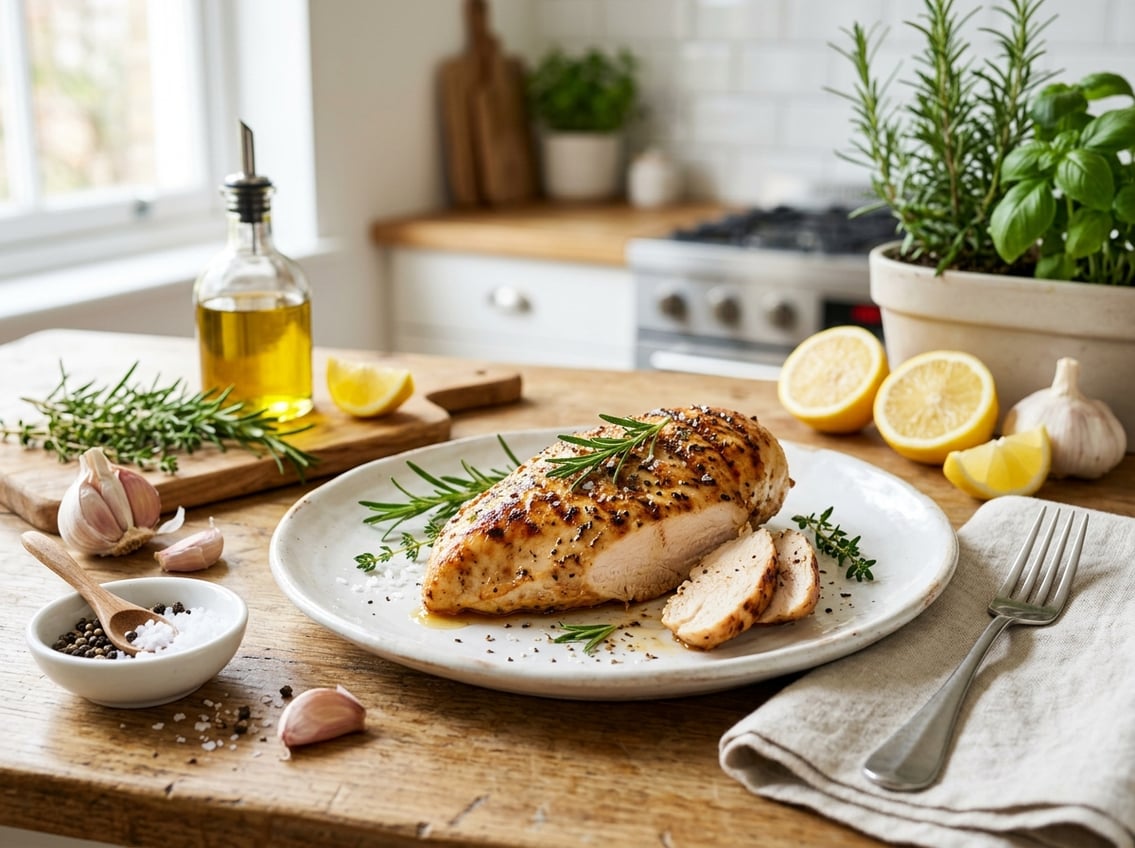
If you want juicy chicken breast every time, focus on even thickness and proper seasoning. Pull it off the heat a little early so residual heat can finish the job.
Chicken breast is lean, so it dries out faster than fattier cuts. Your best results come from a method that protects moisture from the start and avoids overcooking at the end.
The Core Method That Keeps Chicken Moist
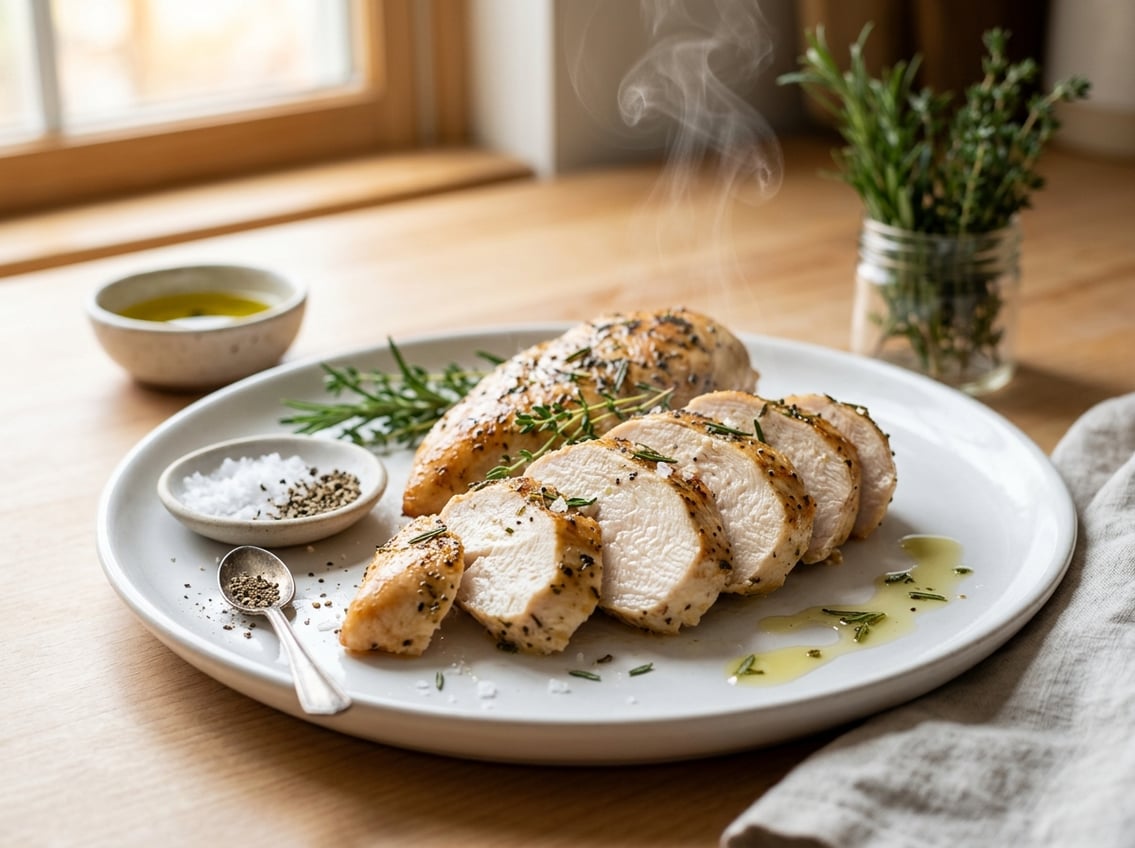
Watch the internal temperature, not the clock, to cook chicken breast dependably. A meat thermometer gives you control and helps you keep chicken juicy.
Chicken keeps cooking after you remove it from the heat. Carryover cooking from residual heat pushes the center to the right final temperature while the outside stays tender.
Use a Meat Thermometer Instead of Guessing
A thermometer removes the guesswork. Insert it into the thickest part of the chicken breast and check the temperature near the end of cooking.
A few degrees can be the difference between moist chicken and dry meat.
Pull the Chicken Before It Peaks
Pull the chicken a little early so the final temperature rises during rest. Do not wait until the chicken is fully done in the pan, oven, or on the grill.
The center continues to climb after the heat is off. This technique helps you avoid overcooking.
Let Residual Heat Finish the Job
Residual heat continues to cook the breast after you remove it from the stove or oven. If you time the pull correctly, the finish is gentle instead of harsh.
Many cooks stop short of the final temperature and let the meat finish on its own.
Rest Before Slicing
Resting keeps moisture in the meat. Give the chicken a few minutes before cutting so the juices redistribute.
If you slice too soon, the juices run out onto the board and the chicken ends up drier.
Prep Steps That Prevent Dry, Uneven Cooking
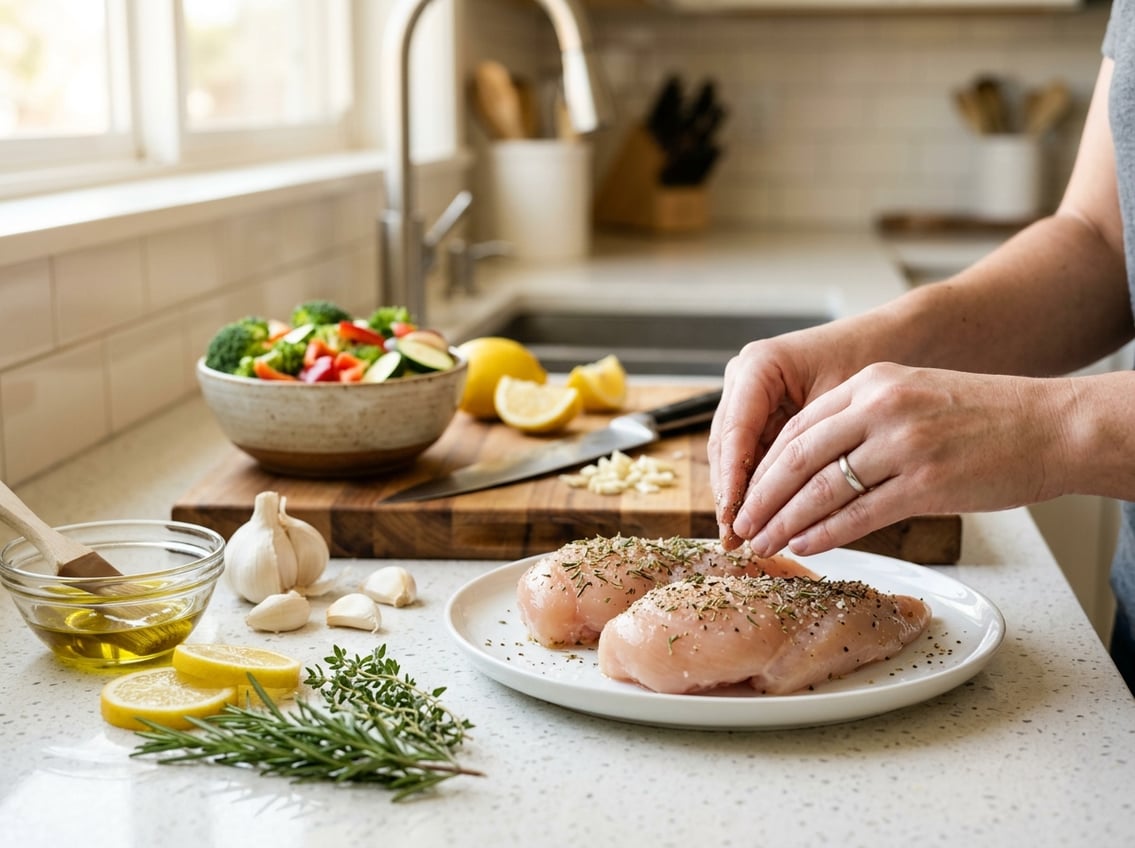
Good prep gives you a better result before you even start cooking. When the pieces are similar in shape and well seasoned, the chicken cooks more evenly and stays juicy.
Choose Similar-Size Pieces
Buy chicken breasts that are close in size and thickness. If one piece is much larger, it will cook slower and may dry out before the rest is done.
If you are cooking for a group, sort the pieces by size before you start. That helps every piece finish at the same time.
Pound Thick Areas for Even Thickness
Thick ends and thin ends cook at different speeds. Lightly pound the thickest part so the breast has a more even shape.
Even thickness helps the whole piece cook at the same rate and lowers the chance that one side dries out.
Season Well and Add a Light Coating of Oil
Salt and seasoning improve flavor, and oil helps the surface cook more evenly. A thin coating also helps the chicken brown without drying too fast.
Keep the oil light, not heavy. You want enough to help heat move across the surface, not so much that the chicken fries in oil.
Brine or Marinate for Extra Insurance
A brine or marinade gives you a wider margin for error. Chefs often recommend brining or marinating boneless, skinless chicken breasts ahead of time for more moisture and flavor.
A short brine can help if your schedule is tight, while a longer marinade adds flavor and can improve texture.
Best Cooking Methods for Reliable Results
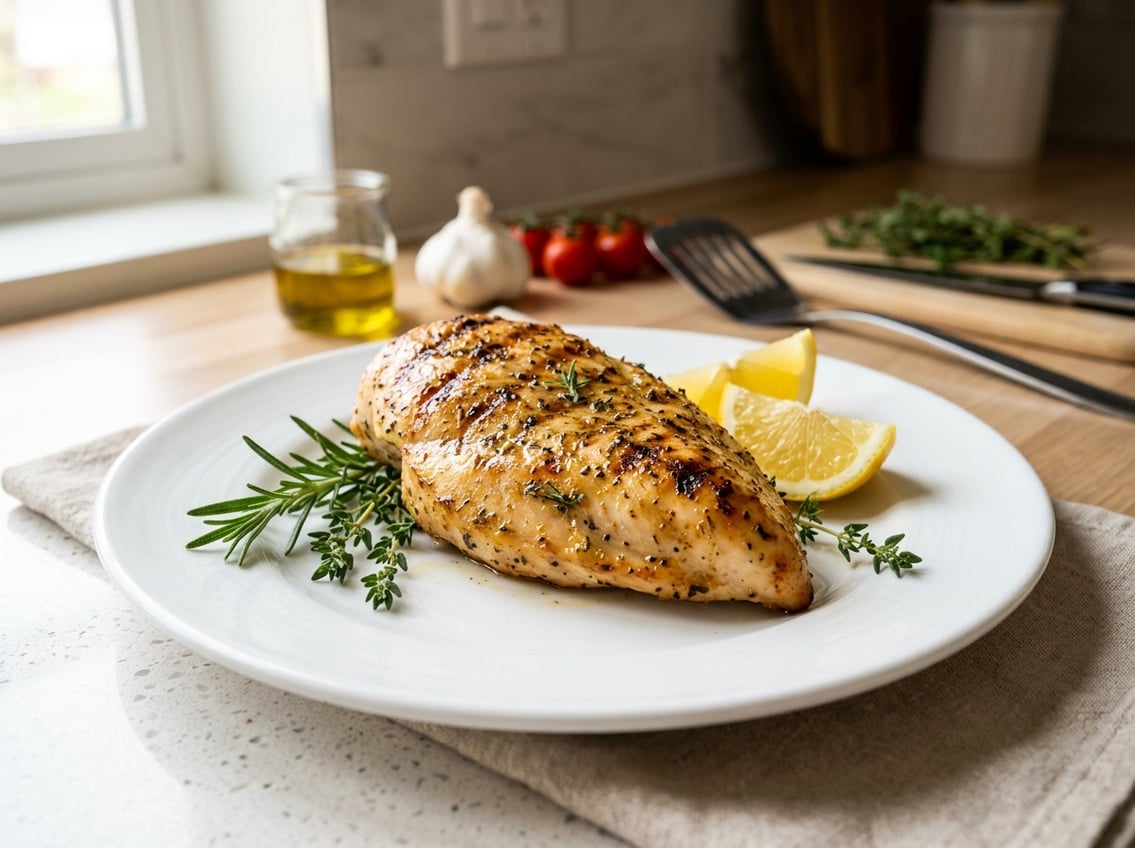
The best cooking method depends on your setup. Use a meat thermometer and stop at the right moment.
Moderate heat and careful finishing give you baked, pan-seared, or grilled chicken that stays tender.
Baked Chicken Breast at a Moderate Oven Temperature
Baking works well when you want a hands-off method. Use a moderate oven temperature so the outside does not overcook before the center is done.
Place the chicken on a sheet pan and check the temperature near the end of cooking.
Pan-Seared Chicken With Gentle Finishing Heat
Pan-searing gives you good browning and a fast cook. Start with medium-high heat for color, then lower the heat or move the pan off direct heat so the center can finish gently.
Use the thermometer early so you do not wait until the meat is already past the point of tenderness.
Grilled Chicken Over Direct Then Indirect Heat
Grilling can dry out chicken fast if the heat stays too intense. Start over direct heat for marks and flavor, then move the chicken to indirect heat to finish cooking more slowly.
That two-zone setup gives you more control over the final temperature. Check with a meat thermometer to keep chicken breast from drying out on the grill.
Mistakes That Dry Out Chicken Fast
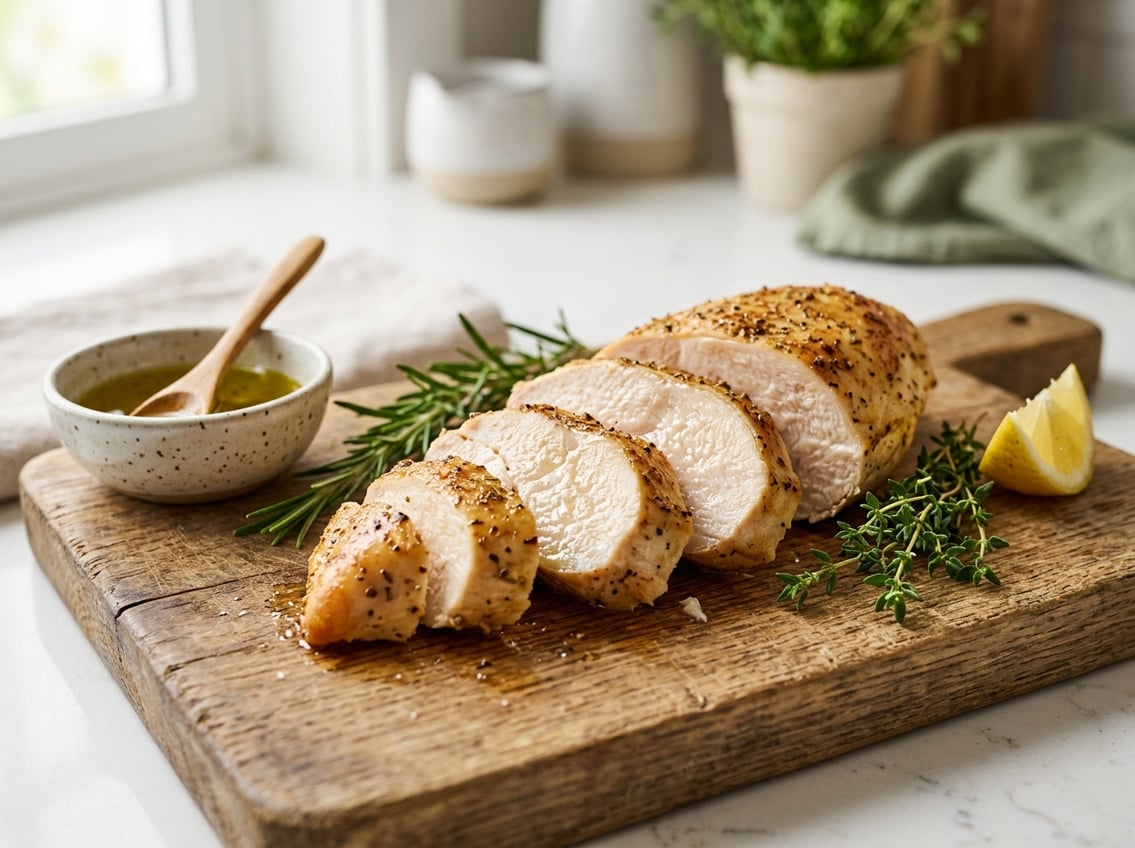
Most dry chicken comes from a few common mistakes. If you know what to watch for, you can keep chicken breast tender more often.
Cooking Only by Time
Time alone is not enough because ovens, pans, and grills all cook differently. A thick breast may need more time, while a thin one may be done much sooner.
Use a meat thermometer instead of relying on a fixed number of minutes.
Using Heat That Is Too High
Very high heat can overcook the outside before the inside is ready. The surface loses moisture fast, and the meat turns tough.
Use enough heat to brown the chicken, then lower it or move it to gentler heat to finish.
Skipping the Resting Period
If you slice right away, the juices escape before they settle back into the meat. You lose moisture that should stay in the chicken.
Resting lets the juices redistribute after cooking. It also gives residual heat time to finish the center.
Cutting Into the Meat Too Soon
If you cut too early, you get dry chicken even when the cook time was right. The cut opens the fibers and releases liquid onto the board.
Wait a few minutes before slicing. Cut across the grain if you want a softer bite.


