
How Long After Sell by Date Can You Eat Chicken Breast Safely
You can usually eat chicken breast 1 to 2 days after the sell-by date if you have kept it refrigerated at 40°F or below and it still looks, smells, and feels normal.
That short window applies to raw chicken breast, not cooked leftovers, and it depends on careful storage from the time you buy it.
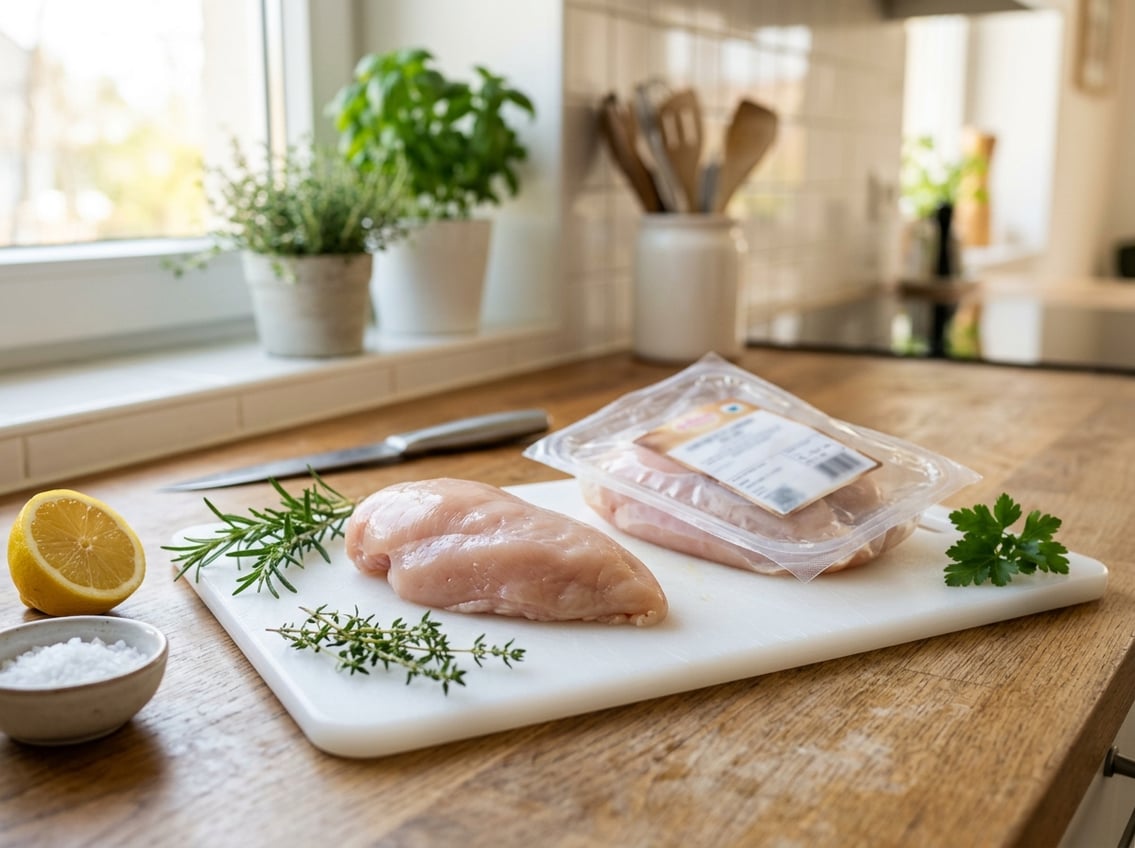
The sell-by date on chicken guides store inventory, not your safety, so temperature and handling matter more than the printed day.
If your chicken has been sitting too long, or if anything seems off, you should toss it.
The Safe Window in the Fridge
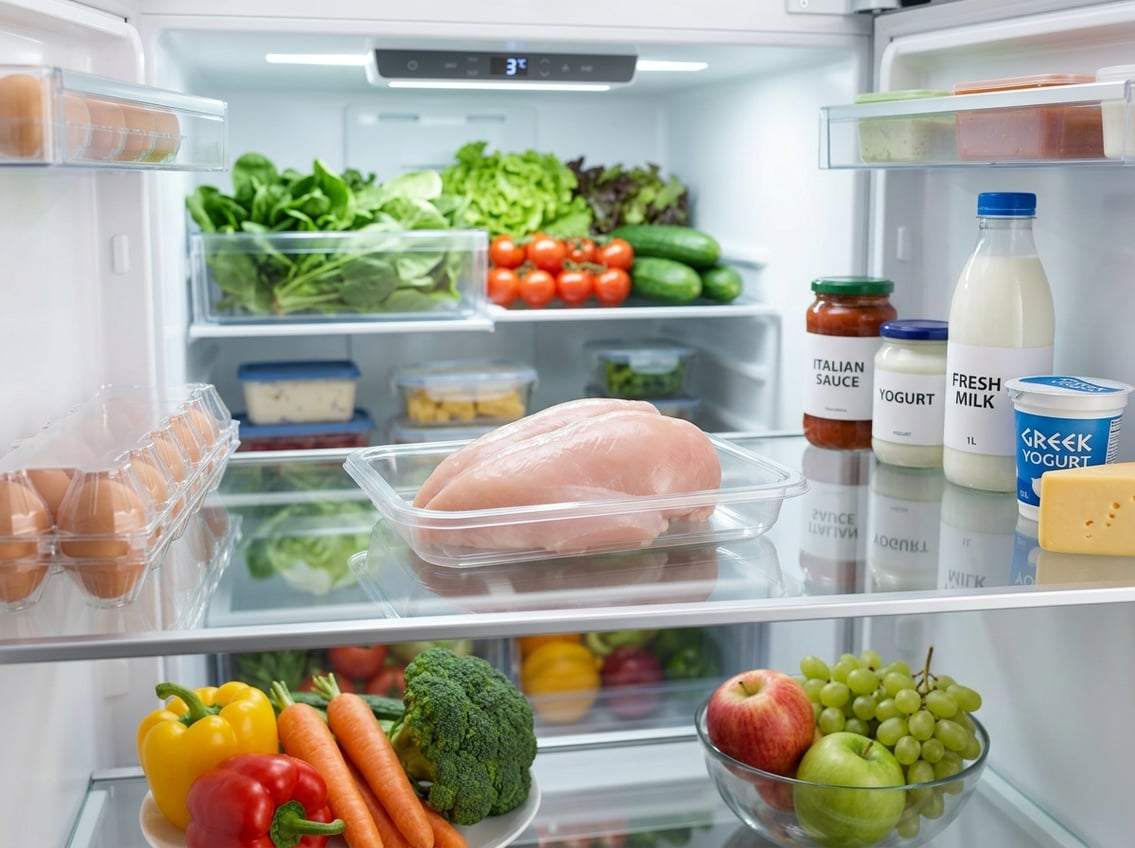
The clock on raw chicken breast starts the moment you refrigerate it, not just when you notice the sell-by date.
For safe results, keep the fridge cold, the packaging intact, and use the chicken quickly.
Raw Chicken Breast: The 1-to-2-Day Rule
Raw chicken breast generally stays safe in the fridge for 1 to 2 days after the sell-by date when you store it properly, according to USDA-based guidance summarized by CyCookery.
That window is narrow because chicken supports fast bacterial growth if conditions are warm or storage is sloppy.
If you bought it close to the date and kept it chilled the whole time, you may have a little flexibility.
If it spent time in a warm car, on a counter, or in a crowded fridge that runs warm, that flexibility drops fast.
When Cooked Chicken Follows a Different Timeline
Cooked chicken follows a different rule from raw chicken breast.
Once cooked, it usually stays safe in the fridge for 3 to 4 days, as long as you cooled it promptly and stored it in a sealed container.
Cooked chicken still needs care, especially if you left it out after serving.
Reheat leftovers to 165°F before eating to lower the risk of illness.
Why Refrigerator Temperature Changes the Risk
Temperature is the biggest factor in how long after the sell by date you can eat chicken breast safely.
Your refrigerator should stay at 40°F or below, because even small temperature rises can speed up spoilage.
A fridge door that opens often, overpacked shelves, or a weak cooling system can shorten safe storage time.
If you are not sure your fridge stays cold enough, treat the chicken more conservatively.
What the Date on the Package Really Means
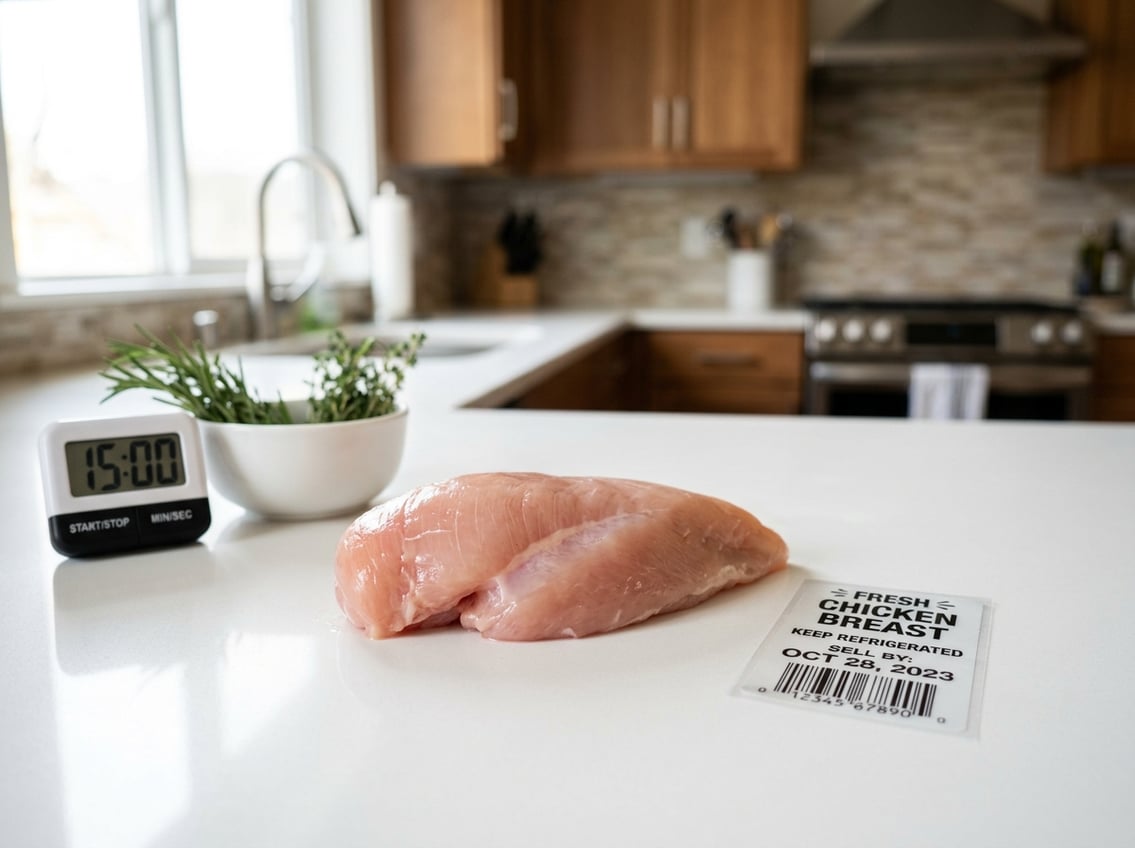
The date on the package gives you useful information, but it does not replace inspection and safe storage.
Labels can mean different things, and that difference matters when you decide whether to cook, freeze, or discard the chicken.
Sell-By vs. Use-By vs. Best-By
A sell-by date tells a store how long to display a product for sale.
A use-by date is a stronger marker for when quality is expected to drop, and sometimes safety becomes a concern sooner.
A best-by date points to peak quality, not safety.
The Penny Hoarder explains that sell-by dates are mainly for retailers, not consumers.
You should not treat the date as a guaranteed spoilage date or as a promise that the chicken is still fine after it passes.
Why the Printed Date Is Not a Safety Guarantee
The printed date cannot account for temperature changes, packaging damage, or how long the chicken sat before you bought it.
Two packages with the same sell-by date can age very differently.
Date labels should guide your choice, not make it for you.
If you handled the chicken well, it may still be usable shortly after the date.
If handling was poor, it may be unsafe before the date arrives.
When to Cook It Now, Freeze It, or Toss It
If the chicken is within 1 to 2 days past the sell-by date and still looks fresh, cook it right away.
If you do not plan to cook it soon, you can freeze raw chicken to slow spoilage and extend storage time.
If the chicken smells off, feels slimy, or shows unusual color changes, toss it instead of freezing it.
Freezing chicken can preserve quality, but it does not make spoiled chicken safe again.
How to Tell Whether Chicken Breast Has Gone Bad
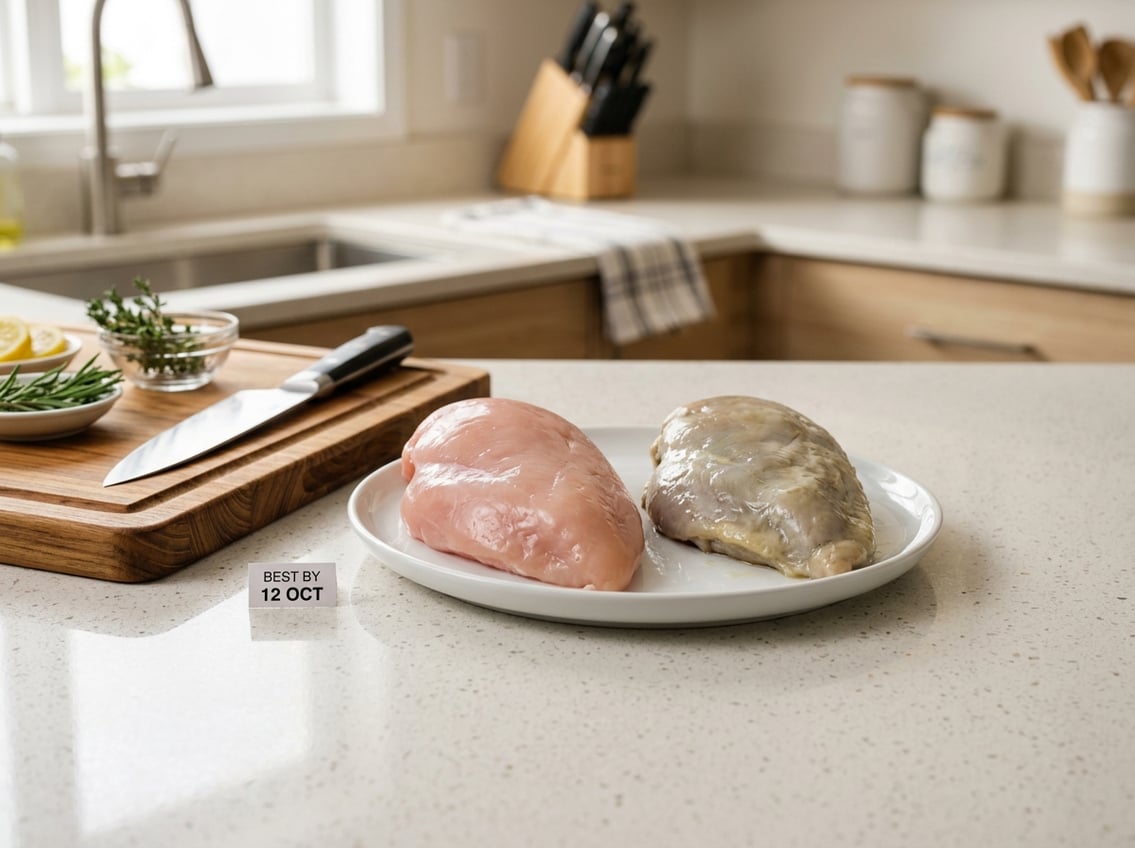
Dates help, but your senses often give the clearest warning.
Pay attention to smell, touch, and appearance, since these are the most common signs of spoiled chicken.
Odor, Texture, and Color Changes to Watch For
Spoiled chicken often has a sour, strong, or ammonia-like smell.
It may also feel sticky, slimy, or tacky instead of firm and smooth.
Color changes can help too.
Fresh raw chicken is usually pinkish, while spoiled chicken may turn gray, dull, or uneven in color.
These are common signs of spoiled chicken and you should not ignore them.
Why a Normal Smell Does Not Always Mean Safe
Not all harmful bacteria create a strong smell.
A package can seem only slightly off, or even nearly normal, while still carrying enough bacteria to make you sick.
Smell should not be your only test.
Use it together with texture, color, the date, and how long the chicken has been in your fridge.
When It Is Safer to Throw It Out
If you are unsure, throwing it out is the safer choice.
That is especially true if the chicken was left out too long, was stored above 40°F, or has passed the 1 to 2 day window by more than a small amount.
You should also discard it if the package is swollen, leaking, or damaged.
When chicken raises any doubt, the risk is not worth it.
Storage and Handling That Extend Usability
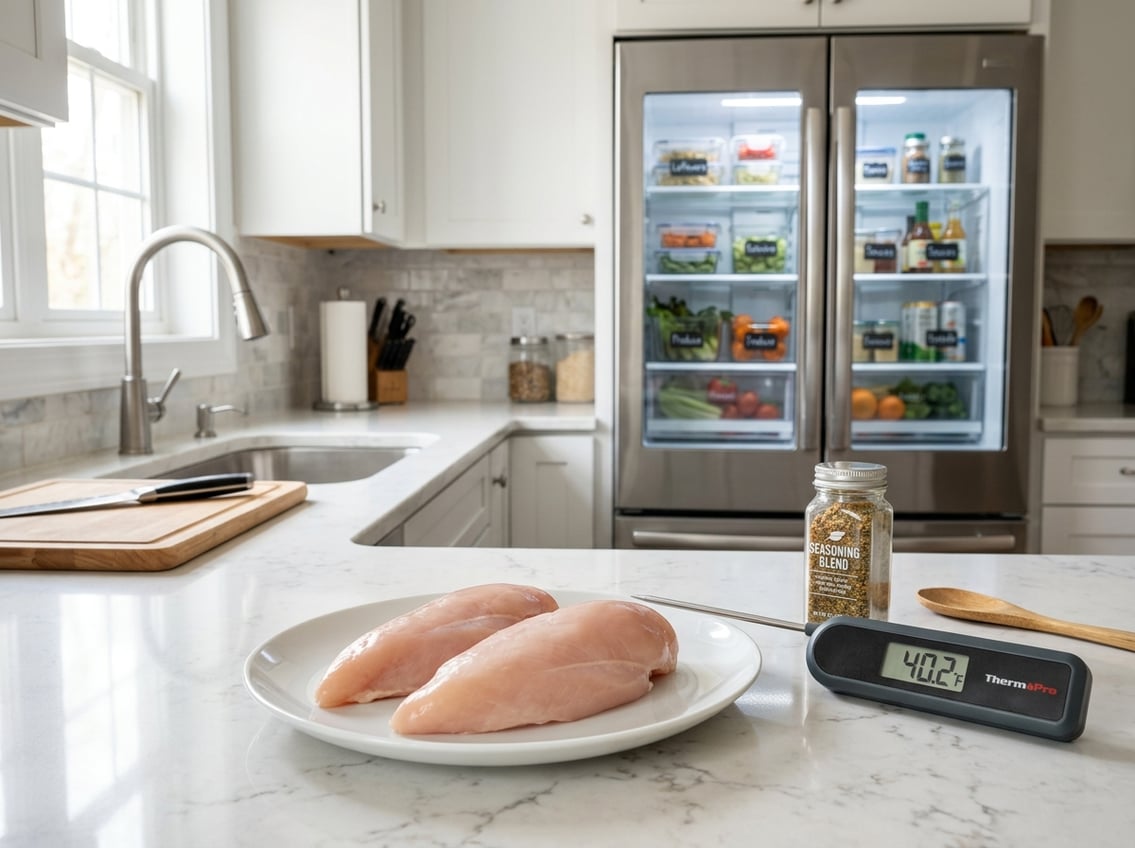
Good storage can buy you a little more safe time.
Bad handling can erase it fast.
The goal is to keep the chicken cold, sealed, and separate from ready-to-eat foods.
Best Practices for Storing Raw Chicken Breast
Keep raw chicken breast on the bottom shelf of the fridge so juices cannot drip onto other foods.
Store it in its original package if the wrap is intact, or place it in a leak-proof container.
Use the coldest part of the fridge.
Avoid leaving the package out while you prep the rest of your meal.
The less time it spends warming up, the better your chances of keeping it safe.
How and When to Freeze Raw Chicken
If you do not plan to cook raw chicken breast within the 1 to 2 day fridge window, freeze raw chicken before that time passes.
Freezing chicken can preserve quality for months, and CyCookery notes that raw chicken often keeps well for 9 to 12 months in the freezer.
Wrap it tightly, remove as much air as possible, and label it with the date.
Freezing sooner is better than waiting until the chicken is already close to spoilage.
Avoiding Cross-Contamination Before Cooking
Raw chicken spreads bacteria to hands, counters, utensils, and other foods. Wash your hands with soap and water after handling it.
Clean any surface that touched the raw meat. Keep raw chicken away from salads, fruit, bread, and cooked foods.
Use separate cutting boards for raw meat and ready-to-eat foods. This reduces your risk and makes kitchen cleanup easier.


