
How Do I Keep Chicken Breast From Drying Out? Simple Fixes
Chicken breast dries out when it cooks too long, cooks too hot, or starts with poor moisture retention. If you want to keep chicken breast from drying out, control the temperature, prepare the meat well, and stop cooking at the right moment.
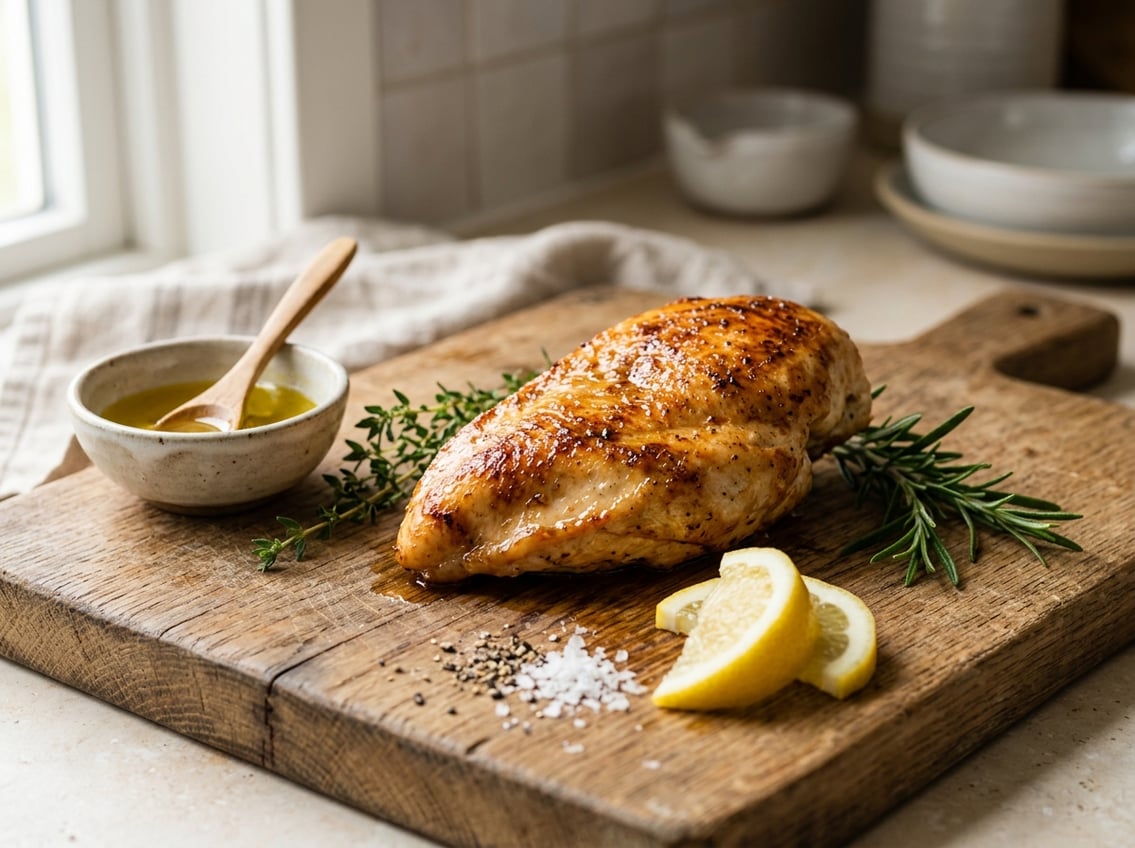
Treat chicken breast as a lean cut that needs careful heat and a short rest. Add a little help before it hits the pan, oven, or grill.
This approach gives you juicy chicken instead of tough meat.
You do not need special tools or advanced cooking skills to make moist chicken breast. Small changes in how you cook chicken breast can make a clear difference in texture and flavor.
Start With Temperature Control
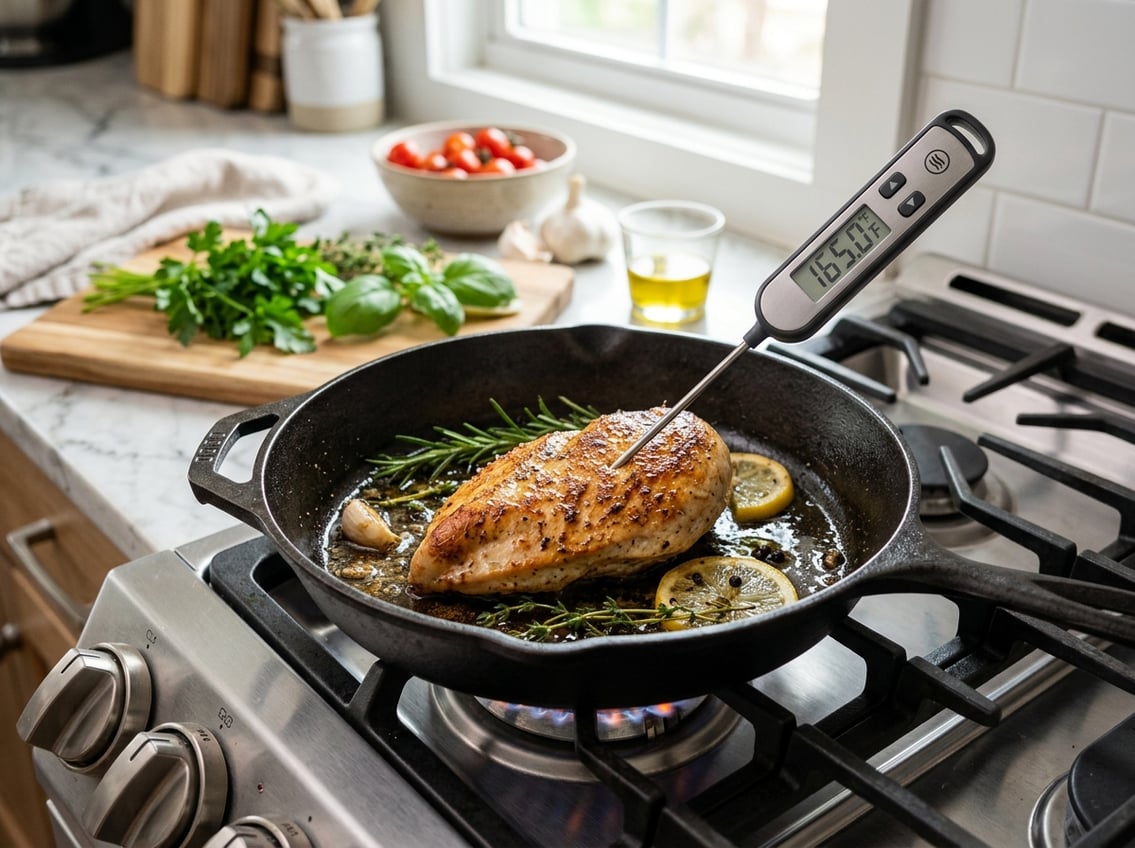
Temperature is the main reason chicken breast goes from tender to dry. If you keep heat steady and watch the internal temperature closely, you give the meat a better chance to stay juicy.
Why Chicken Breasts Dry Out
Chicken breast is lean, so it has less fat to protect it during cooking. Once heat pushes past the right point, moisture moves out fast and the meat turns dry.
High heat can make the outside look done before the center is ready.
Internal Temperature Targets That Keep Meat Juicy
For safe cooking, chicken breast needs to reach 165°F at the thickest point. You do not need to overshoot that target to make it safe.
Many cooks pull the chicken a little early and let residual heat finish the job. This gives you tender chicken with less risk of overcooking.
Why You Should Use a Meat Thermometer
Use a meat thermometer and check the thickest part of the breast. Visual cues are not reliable because color and juices can fool you.
A meat thermometer helps you stop at the right moment. It also helps you repeat good results every time.
How Residual Heat Finishes the Job
Residual heat keeps cooking the meat after it leaves the pan, oven, or grill. Your chicken can rise a few degrees while it rests.
If you pull it a little before it looks fully finished, you protect the juices inside. This is a simple way to get juicy chicken without guessing.
Prep the Meat for Better Moisture Retention
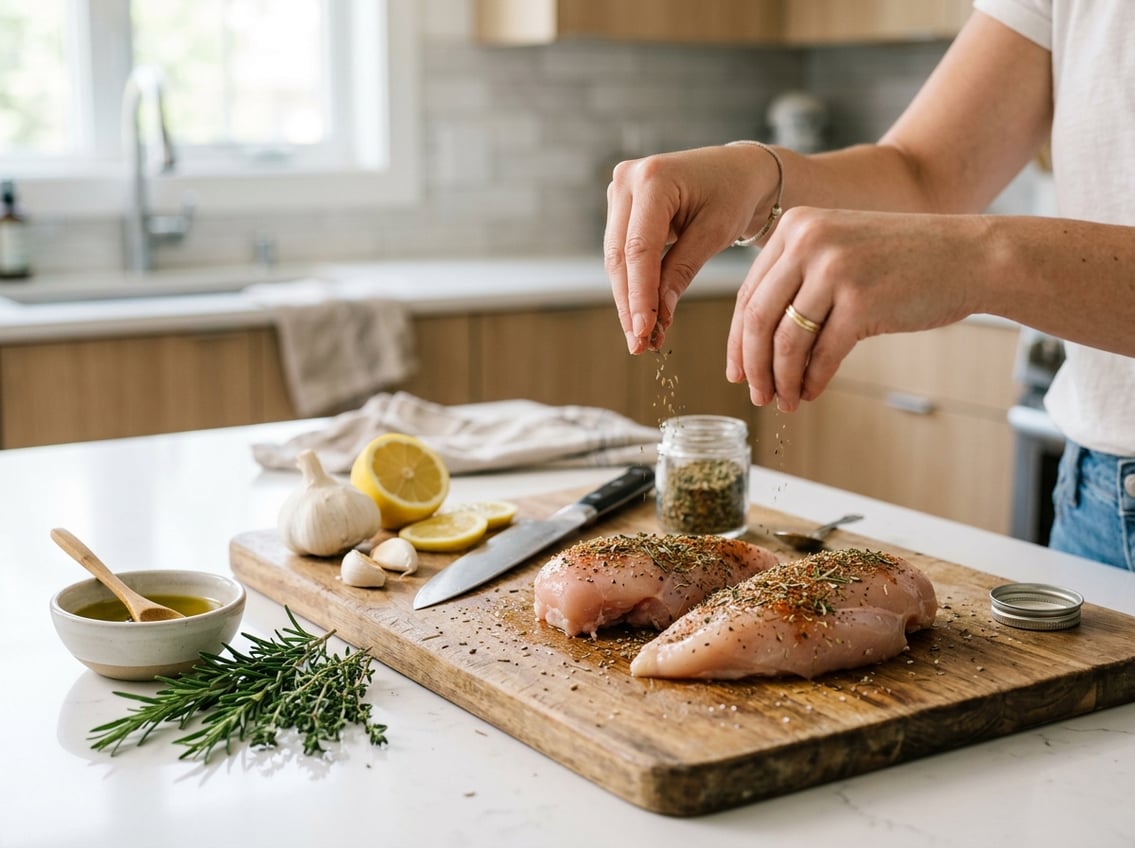
A little prep helps the meat hold onto moisture before cooking starts. Salt, acid, and even thickness all affect how tender the final chicken breast feels.
How to Brine Chicken for More Moisture
To brine chicken, start with a simple saltwater mix and soak the chicken breast for a short time. Brining helps the meat absorb water and seasons it from the inside.
Keep the brine time moderate so the texture stays pleasant. After brining, pat the chicken dry before cooking so it browns well.
When to Marinate Chicken Breast Instead
You can marinate chicken breast when you want more flavor along with a little moisture help. Marinades work well when you want herbs, acid, and oil to coat the surface.
This adds taste without much effort. It is useful when you want moist chicken breast with more flavor in every bite.
Pounding for Even Thickness and Gentler Cooking
Chicken breast often has a thick end and a thin end, which makes it cook unevenly. Pound it to an even thickness so the whole piece finishes at the same time.
This step reduces the chance that one side dries out before the other side is done. It also makes tender chicken easier to achieve on the stove, in the oven, or on the grill.
Choose Cooking Methods That Protect Juiciness
The best cooking method depends on how much control you want over heat. Some methods are more forgiving, especially when you focus on the internal temperature instead of cooking by time alone.
Baking Without Drying the Meat
Baking works well when you keep the oven moderately hot and avoid overcooking. A light coating of oil or butter also helps protect the surface.
Check the center early and often near the end of cooking. Baking around 400°F and stopping at 165°F is a common approach.
Pan-Searing With a Gentle Finish
Pan-searing gives you good browning, then a lower heat finish helps the center cook through more evenly. Sear first, then reduce the heat or move the pan to the oven if needed.
This keeps the surface from burning before the inside reaches the right internal temperature.
Grilling With Direct and Indirect Heat
Grilling can dry out chicken breast fast if the heat is too intense. Start over direct heat for color, then move the chicken to indirect heat to finish.
A grill thermometer keeps the cooking zone in a medium range, around 350°F to 400°F. This range is often recommended for keeping chicken from drying out on the grill.
Poaching for the Most Forgiving Results
Poaching is one of the easiest ways to keep moisture in the meat. Gentle simmering in water or broth gives you soft, moist chicken breast with very little risk of scorching.
This method is useful when you plan to slice the chicken for salads, soups, or meal prep.
Resting, Slicing, and Serving Without Losing Juices
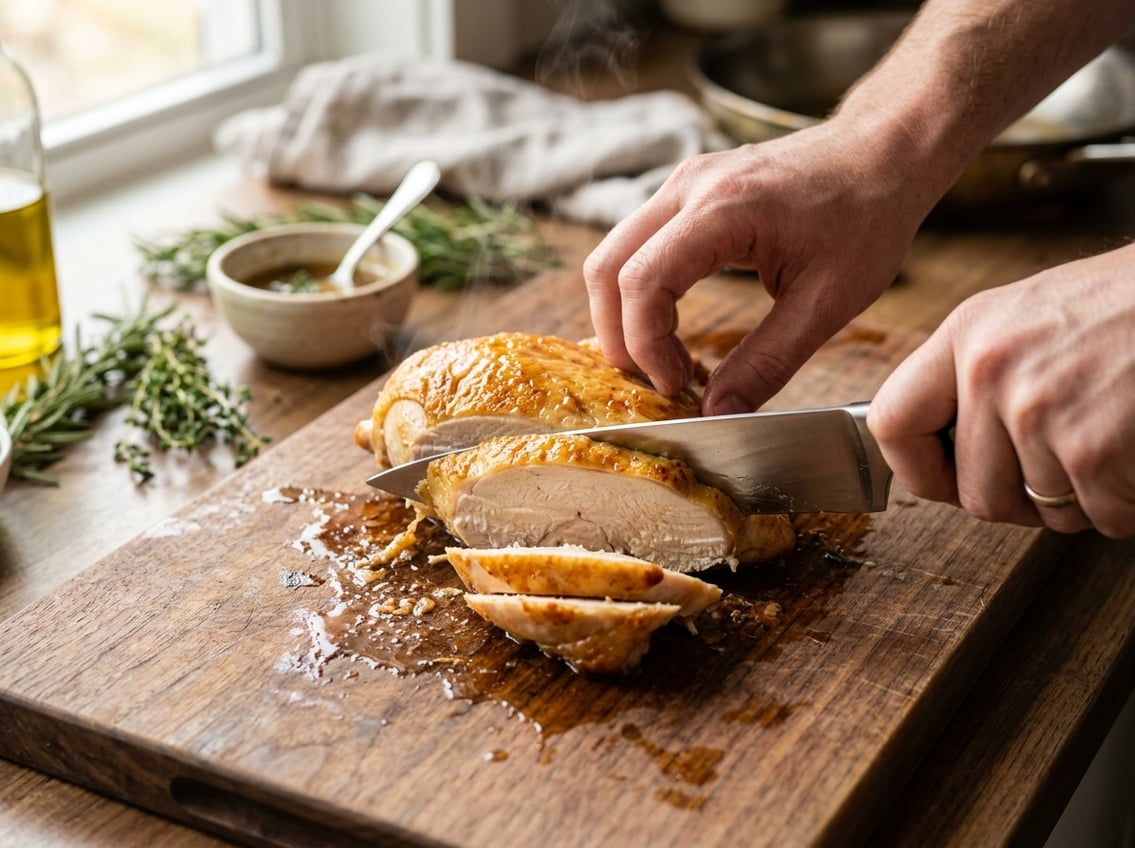
Once the chicken leaves the heat, your job is not finished. Resting and slicing the right way help keep the juices inside the meat.
How Long to Rest Cooked Chicken
Let cooked chicken breast rest for about 5 to 10 minutes before slicing. That pause gives residual heat time to finish cooking and helps the juices settle.
If you cut too soon, the juices run out onto the board instead of staying in the meat.
How to Slice for Tender Texture
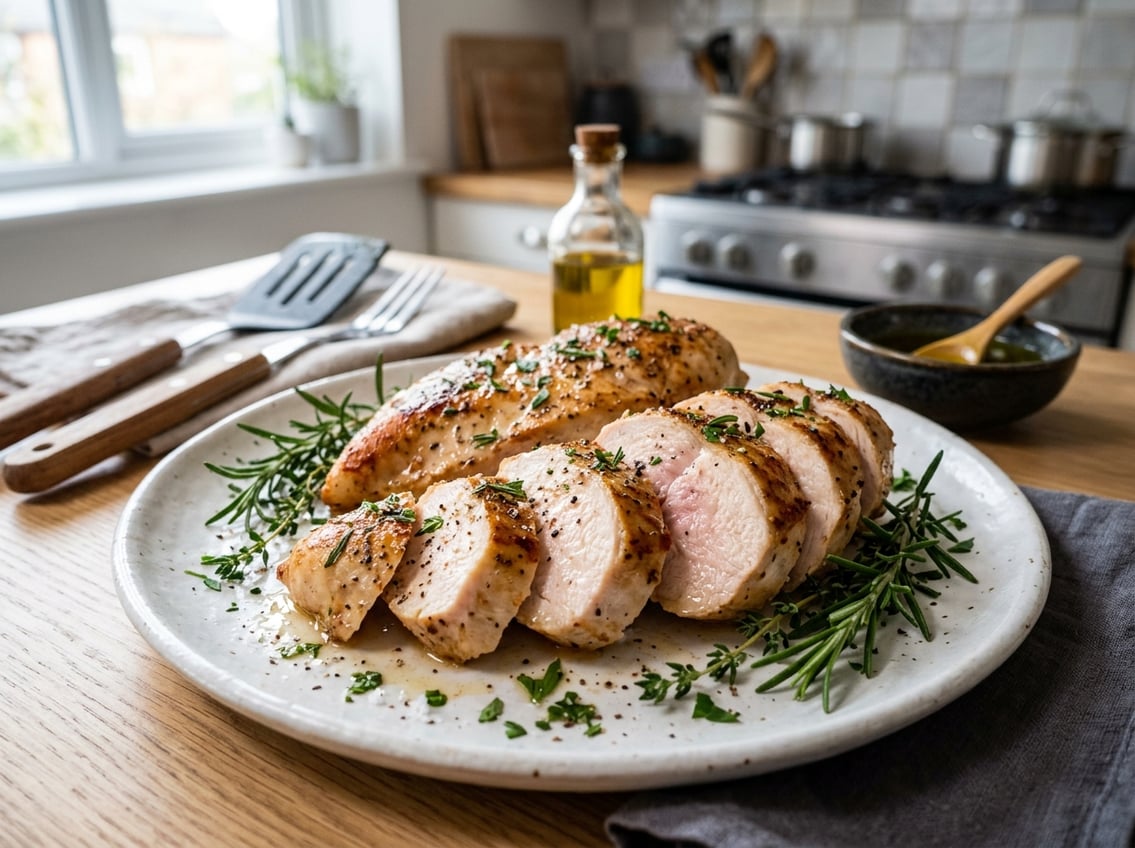
Slice chicken breast against the grain, cutting across the direction of the muscle fibers. This makes each bite easier to chew and helps the meat feel more tender.
Use a sharp knife and keep the slices even. Thin, clean slices hold together better and serve more neatly.
Simple Finishing Ideas That Add Moisture
Add a small amount of sauce, broth, or pan juices at serving time to bring back moisture. You can also use a light glaze, salsa, or herb oil.
Keep toppings simple so they support the chicken instead of covering it up. When you cook the meat well and let it rest properly, you only need a small amount to keep each bite juicy.


