
How Long Can Chicken Breast Raw Stay in Fridge Safely
You should keep raw chicken breast in the fridge for 1 to 2 days to stay within safe food handling guidance. This short window applies to chicken kept cold at 40°F or below the whole time, which matches U.S. food safety advice.
If you wonder how long chicken breast can stay raw in the fridge, use it quickly or freeze it right away.
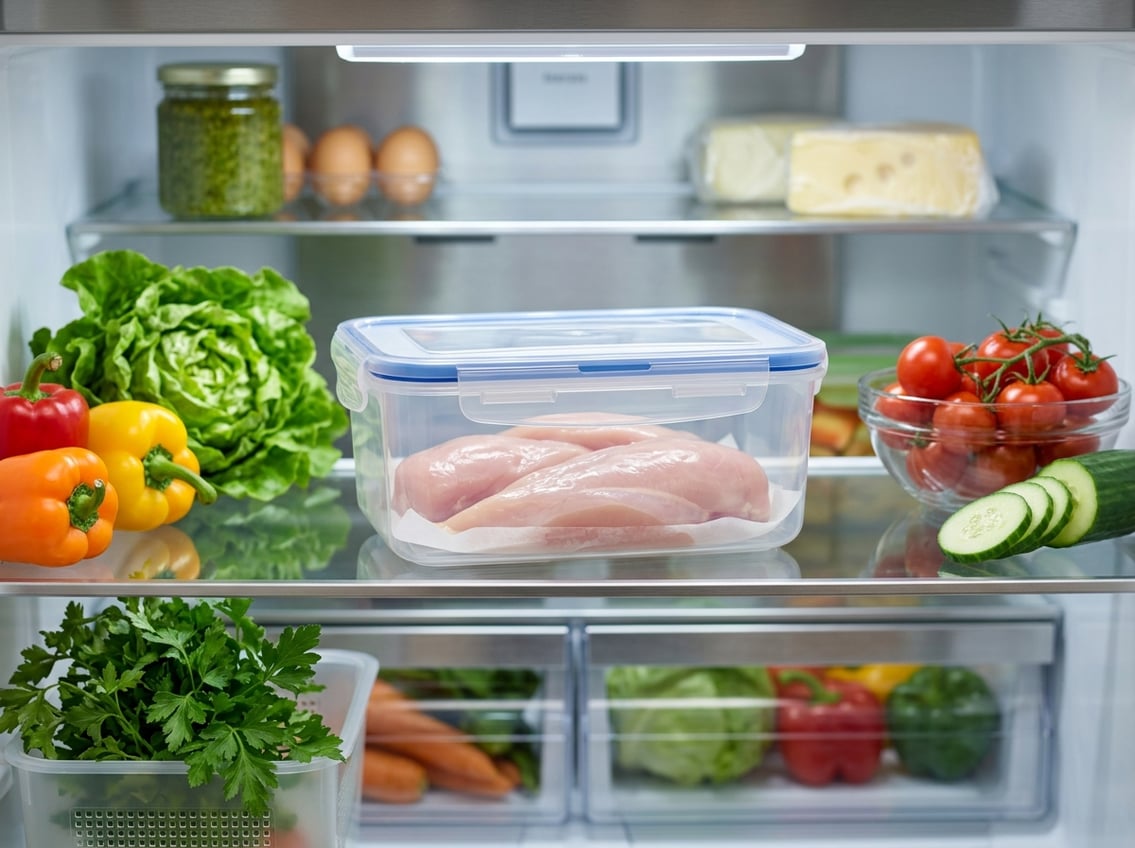
Time and temperature matter a lot with raw chicken. Even if a package looks fine after a day or two, it may not be safe to cook.
Use the chicken within 1 to 2 days, or freeze it before that window closes.
Safe Fridge Timeline for Raw Chicken Breast
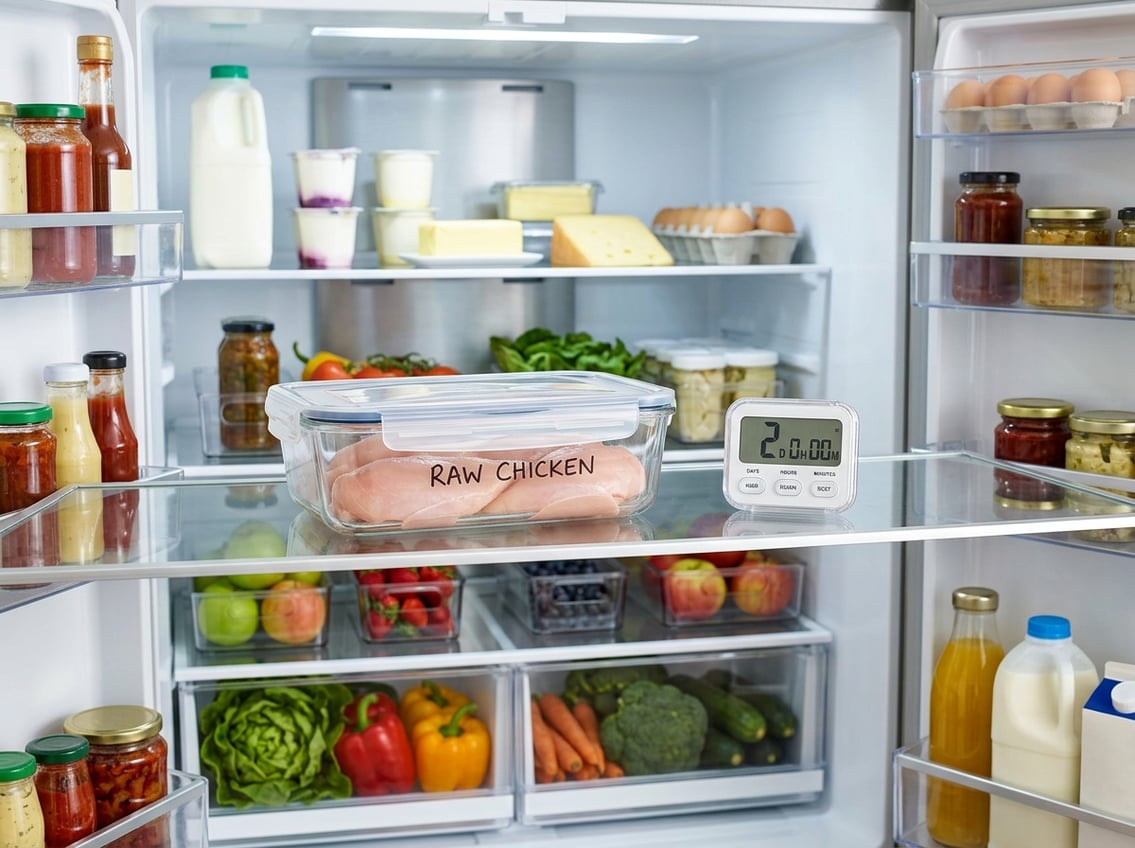
Raw chicken breast does not stay fresh for long in the refrigerator. The short storage window exists because bacteria can grow even while the meat is chilled, especially if the fridge runs warm or the package has been opened.
Keep chicken for only a short time and do not stretch the date just because it looks normal.
The 1-To-2-Day Rule
Cook or freeze raw chicken within 1 to 2 days of refrigeration. This advice matches USDA food safety guidance.
This timeline applies to chicken breast, thighs, and other raw poultry cuts. Treat the day you bring it home as the start of the clock.
What Changes the Storage Window
If the temperature rises above 40°F, if the chicken sits out before refrigeration, or if the package leaks, the fridge timeline gets shorter. Repeated opening and closing of the fridge can also affect cold spots near the door.
Freshness at purchase matters. Chicken close to its use-by date may not last as long, even if you keep it chilled.
Sell-By Date vs Actual Safety
The sell-by date is for store inventory, not a direct safety test. A package can still be within the sell-by date and be close to the end of its safe fridge time.
Use the sell-by date as a shopping clue. Rely on storage time and cold temperature for safety.
Food Network’s guide on how long raw chicken lasts in the fridge also points to careful fridge storage and freezer prep.
How to Store It Correctly From Day One
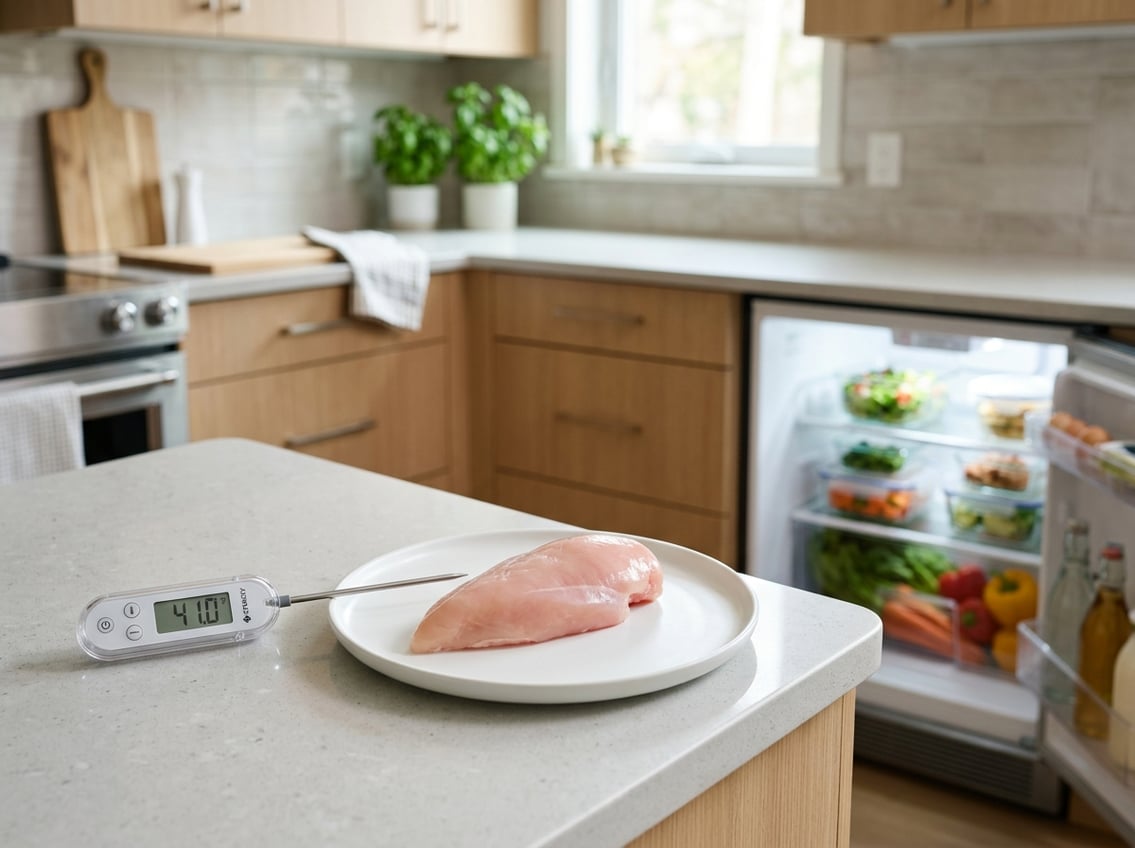
Start good raw chicken storage as soon as you get home. Keep the meat cold, stop leaks, and keep juices away from ready-to-eat foods.
Small storage habits make a difference in how long raw chicken lasts and in how safe your fridge stays.
Best Shelf Placement and Temperature
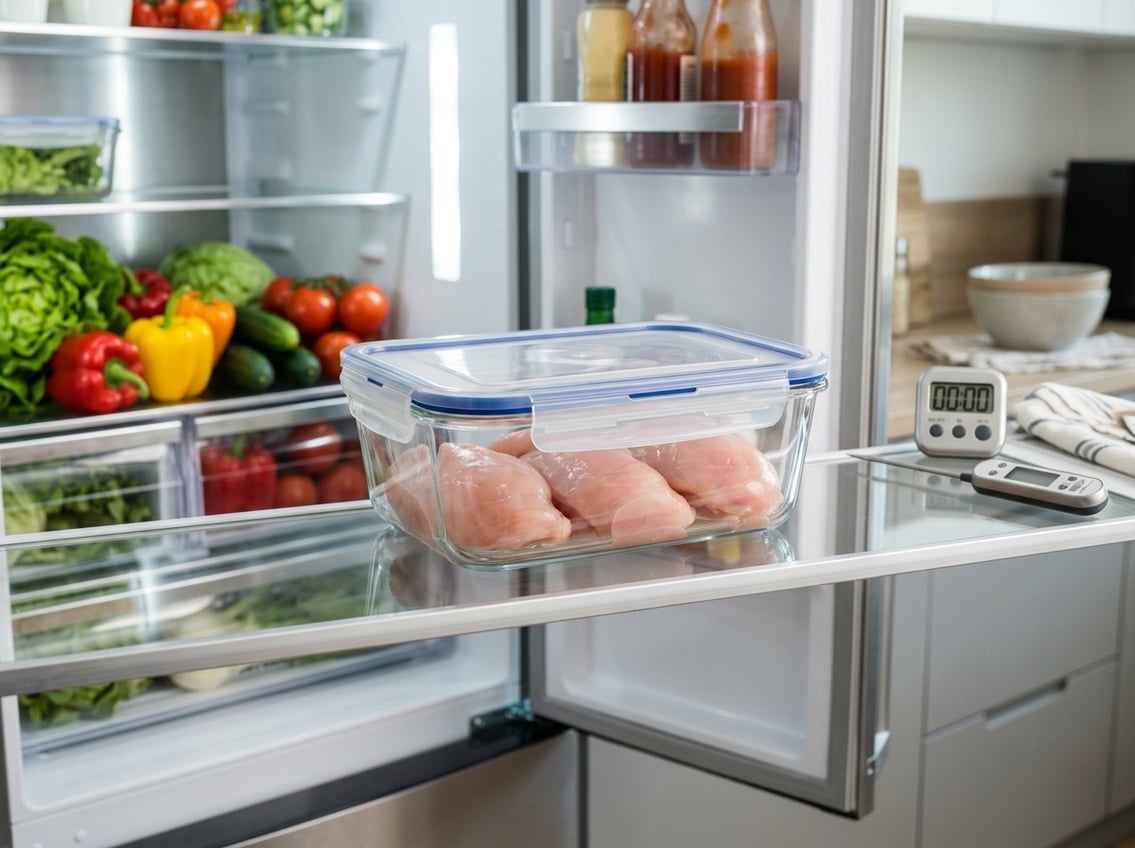
Place raw chicken on the bottom shelf of the fridge so juices cannot drip onto produce or cooked food. Keep the refrigerator at 40°F or below, and use a fridge thermometer if you are not sure.
The coldest, most stable part of the fridge is safest for poultry. The door is the worst spot because the temperature changes more often.
Original Packaging vs Airtight Container
If the package is sealed and not leaking, keep it in the original wrapping for a short time. Once you open it, move the chicken to an airtight container or wrap it tightly so it does not dry out or spread odor.
This helps reduce cross-contamination. Raw chicken storage works best when air exposure and contact with other foods stay low.
Best Practices for Storing Raw Chicken
Keep raw chicken separate from produce, leftovers, and anything you plan to eat without cooking. Wash your hands, tools, and counters after handling it.
A few simple habits help:
- Put chicken away right after shopping
- Use a clean tray or container to catch drips
Label the container with the date you stored it. Cook or freeze it within 1 to 2 days.
This chicken breast refrigeration guide notes the same short fridge window and stresses airtight storage.
When to Freeze and How to Thaw Safely
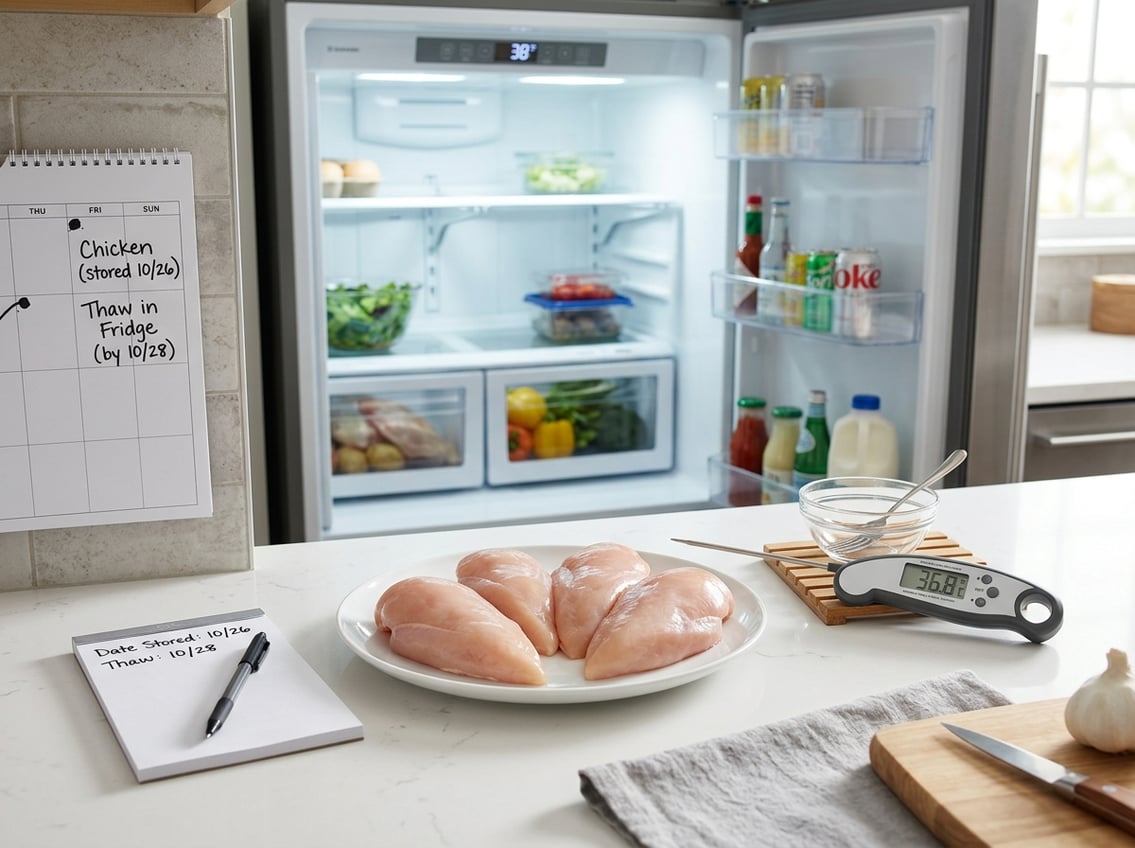
Freeze chicken breast before the 1 to 2 day fridge window ends if you do not plan to cook it soon. Freezing protects quality for much longer and helps you avoid tossing food.
Safe thawing matters, since poor thawing can raise the risk of bacteria growth.
When to Freeze Raw Chicken Breast
Freeze raw chicken breast if you know you will not cook it within 1 to 2 days. Do not wait until the chicken has already sat in the fridge too long.
Portion it before freezing so you can thaw only what you need. That makes meal prep easier and lowers waste.
How to Prevent Freezer Burn
Wrap chicken tightly or place it in a freezer bag with as much air removed as possible. Extra air dries the surface and increases the chance of freezer burn.
Use sealed packaging, double wrap if needed, and label the date. Southern Living’s chicken freezing tips also recommend tight packaging to protect texture.
Refrigerator Thawing and Other Safe Methods
Use refrigerator thawing for the safest method, since the chicken stays cold while it defrosts. Smaller breasts may thaw overnight, while larger pieces can take longer.
Other safe methods include cold water thawing in a leak-proof bag and microwave thawing if you cook the chicken right away. Never thaw chicken on the counter, since the outer layer can warm into the danger zone while the center is still frozen.
Spoilage Signs and When to Throw It Out
Freshness checks help, but they do not replace safe storage time. If raw chicken has been in the fridge too long, throw it out even if it seems close to normal.
Spoilage signs often show up in smell, color, and texture.
Smell Color and Texture Checks
Raw chicken should look pale pink and feel moist, not slimy. If it turns gray, green, or dull, or if it smells sour or like ammonia, discard it.
A sticky or tacky surface is another warning sign. Healthline’s guide to chicken spoilage signs says color and texture changes are key clues that the meat is no longer safe.
Why Bad Chicken Is Not Worth the Risk
Bad chicken can cause foodborne illness, and cooking it does not always make it safe if spoilage has already advanced.
If you are unsure, do not taste it. Use the date, the fridge time, and the condition of the meat to make the call.
What to Do With Thawed Chicken Breast
Cook chicken breast within 1 to 2 days after you thaw it in the fridge.
If you thaw it using cold water or the microwave, cook it right away.
Do not refreeze chicken unless you kept it cold the entire time and thawed it in the refrigerator.
Keep chicken out of the temperature range where bacteria grow quickly.


