
Is It Possible to Make Chicken Breast Tender? Yes—Here’s How
You can make chicken breast tender, and the process starts long before it hits the pan.
The key is to manage the meat’s shape, moisture, and heat so the muscle fibers stay easy to chew.
If you know how to tenderize chicken breast the right way, you can turn tender chicken breasts into moist chicken breasts without relying on guesswork.
Small changes, like pounding to an even thickness, using a short marinade, and stopping cooking at the right temperature, make a clear difference.
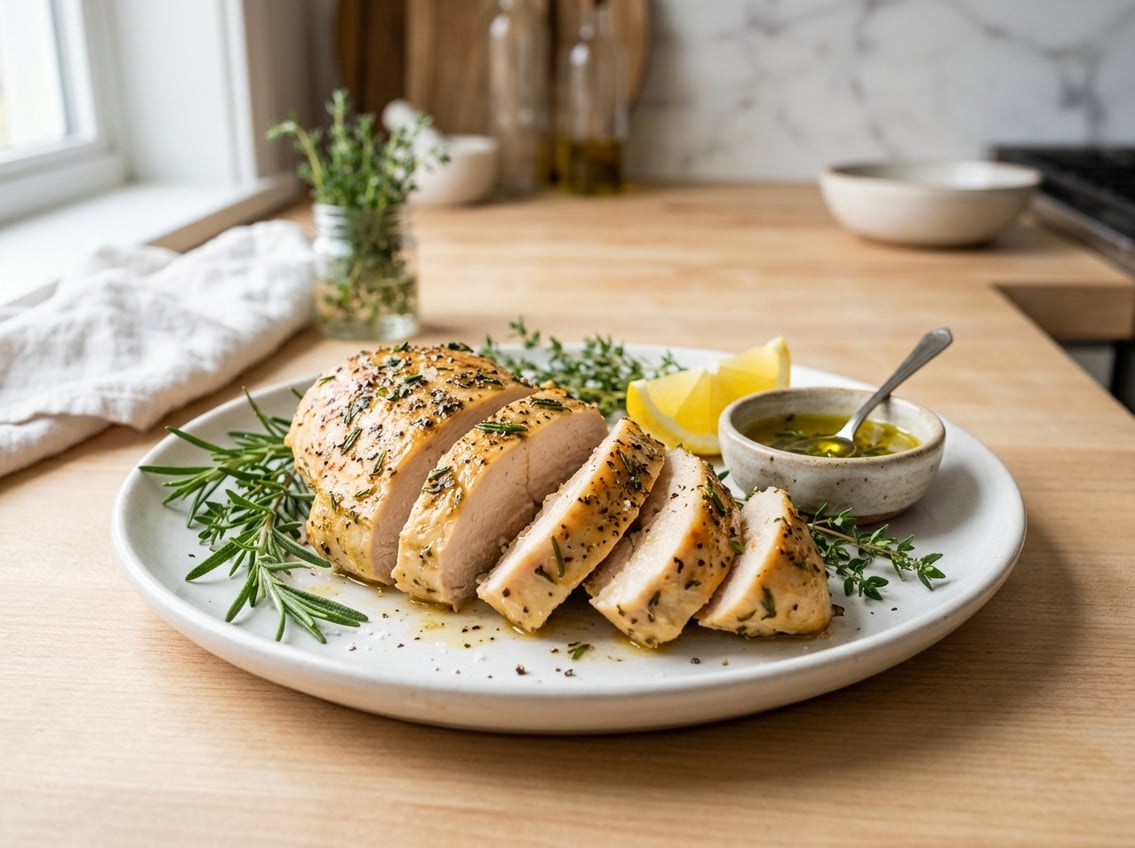
What Actually Makes Chicken Breast Tender
Chicken breast tenderness depends on the muscle fibers, the amount of moisture left in the meat, and how much heat it gets.
The most effective tenderizing methods work by shortening fibers, adding water retention, or keeping the protein from tightening too much during cooking.
When you aim for a juicy chicken breast, you want meat that cuts easily, stays moist, and does not turn stringy or dry.
Why Chicken Breast Turns Dry and Chewy
Chicken breast is lean, so it has very little fat to protect it during cooking.
Once the meat gets too hot, the proteins tighten and squeeze out moisture. That is why overcooked chicken often feels dry and rubbery.
Uneven thickness makes the problem worse.
Thin edges cook faster than the center, so one part dries out while another part is still finishing.
The Difference Between Tenderness and Moisture
Tenderness and moisture are related, yet they are not the same thing.
Moist meat can still be tough if the fibers are long and tightly packed. A tender piece can also taste dry if it loses too much liquid in the pan.
When Tenderizing Helps Most
Tenderizing helps most with boneless, skinless breasts, which are the most likely to turn chewy.
It also helps when you plan to grill, pan-sear, or bake lean chicken at high heat.
For extra support, the Allrecipes guide on getting tender chicken every time explains that cutting and flattening can improve both tenderness and juiciness.
The Best Ways to Improve Texture Before Cooking
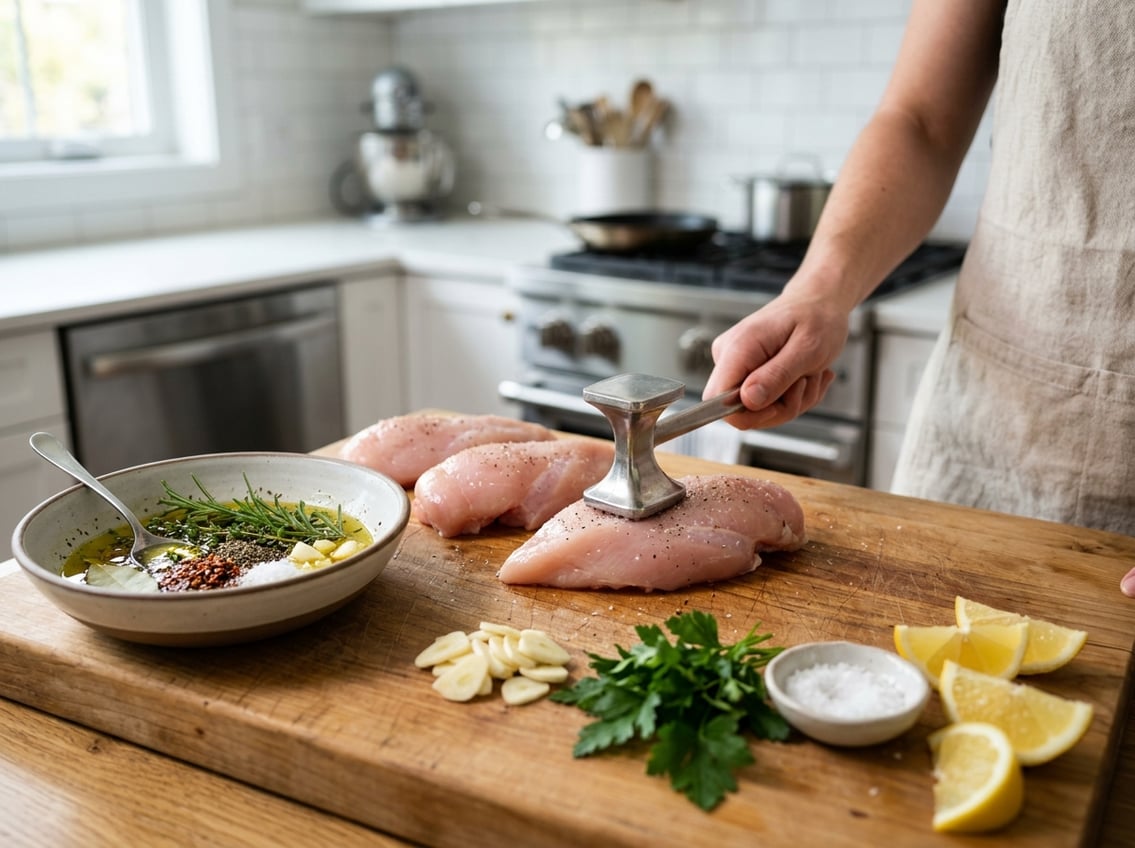
The best pre-cook steps change the meat before heat ever reaches it.
You can use pressure, salt, acid, or knife work to make chicken breast cook more evenly and eat more easily.
Each method has a slightly different effect.
The best choice depends on the result you want.
Pounding to Even Thickness With a Meat Mallet or Rolling Pin
Use a meat mallet or rolling pin to make the breast an even thickness.
That means the meat cooks at a similar rate from edge to edge, which lowers the chance of dry spots.
Place the chicken between sheets of plastic wrap or parchment.
Pound gently until it is even. You do not need to flatten it paper-thin, just make the thick parts closer to the thin parts.
Brining and Buttermilk Soaks for Better Moisture Retention
A short brine helps the meat hold onto more water during cooking.
Salt changes how the muscle proteins behave, which can improve texture and reduce dryness.
Buttermilk works well too.
Its mild acidity and thickness help coat the chicken and give it a more forgiving texture before cooking.
Marinating Chicken With Lemon Juice or Vinegar
Marinating chicken in lemon juice or vinegar can help tenderize chicken breast, especially when the marinade is short and balanced with oil or other ingredients.
Acid softens the surface of the meat, so the texture feels less firm after cooking.
Keep acidic marinades brief.
Too much time in strong acid can make the outside mushy instead of tender.
Cutting and Slicing Against the Grain
Slicing against the grain shortens the muscle fibers, which makes each bite easier to chew.
The Allrecipes testing on cutting chicken breast against the grain found that this simple cut produced juicy, fork-tender results.
This works especially well after cooking, when the breast rests for a few minutes.
You can also cut large breasts into smaller pieces before cooking to add more surface area for seasoning and marinade.
Cooking Methods That Keep Chicken Breast Soft and Juicy
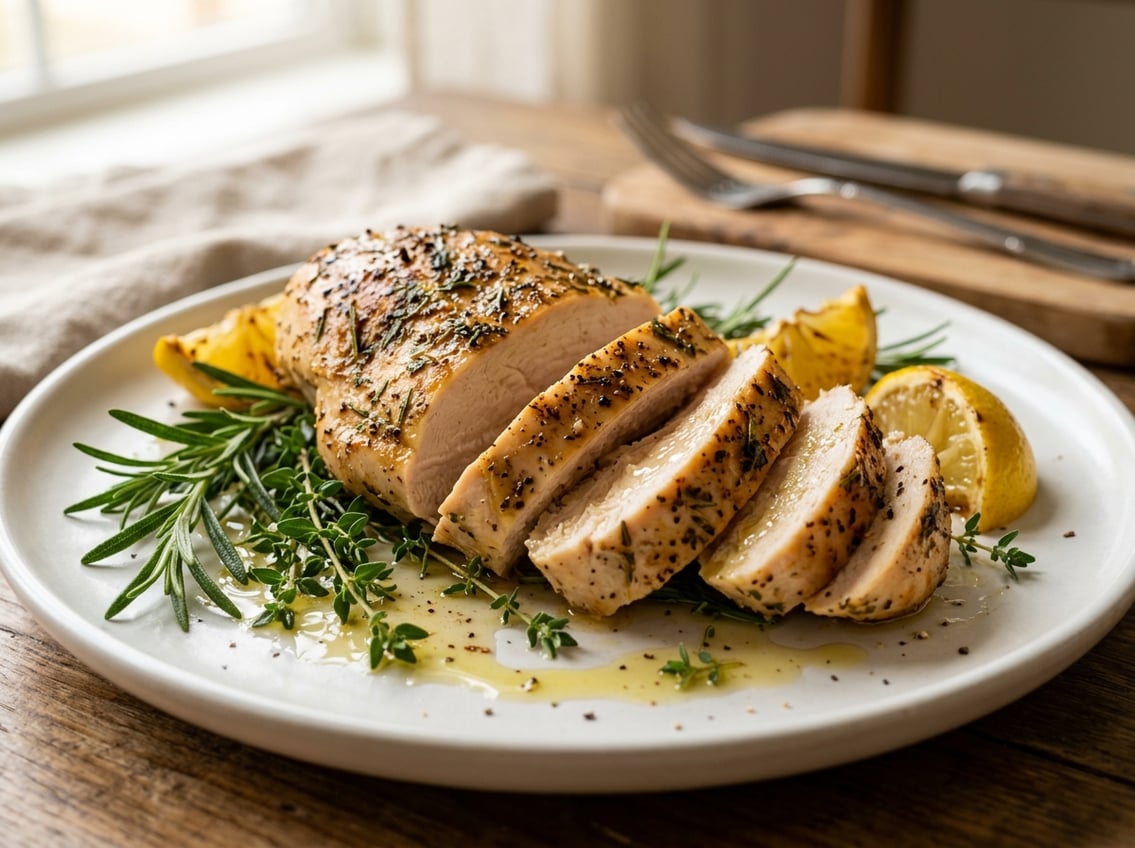
Good prep helps, but cooking method still decides whether you end up with a moist chicken breast or a dry one.
The most reliable methods use controlled heat and a quick stop at the right moment.
You want the inside to reach safe temperature without overcooking the outer layers.
Skillet Sear-and-Cover Cooking
A skillet sear-and-cover method gives you browning on the outside and gentle cooking inside.
Start the breast in a hot pan, then lower the heat and cover it so the trapped steam helps finish the center.
This approach works well for average-sized breasts.
It is also a practical way to make tender chicken breasts on a weeknight without a long cook time.
Oven Baking Without Overcooking
Oven baking can make a moist chicken breast if you watch the time closely.
Use moderate heat and remove the chicken as soon as it reaches a safe internal temperature.
A short rest after baking helps the juices settle back into the meat.
Slow Cooking and Poaching for Very Soft Results
Slow cooking and poaching create very soft chicken because they use gentle heat.
These methods are useful when you want shredded chicken, chopped chicken for salads, or meat that falls apart easily.
They are not the best choice if you want a browned exterior, but they are dependable for tenderness.
Resting and Checking Temperature at the Right Time
Use a thermometer to keep chicken breast juicy. Check the thickest part of the meat and pull it from the heat when it is done.
Let the chicken rest before slicing. Resting helps the juices stay in the chicken instead of running onto the cutting board.


