
How Many Chicken Breasts Are in a Pound? Size Guide
How many chicken breasts are in a pound? In most U.S. grocery stores, you can expect about 2 to 3 boneless, skinless chicken breasts per pound, depending on their size.
Small breasts can push that count closer to 3 or 4. Large breasts may bring it down to 1 or 2.
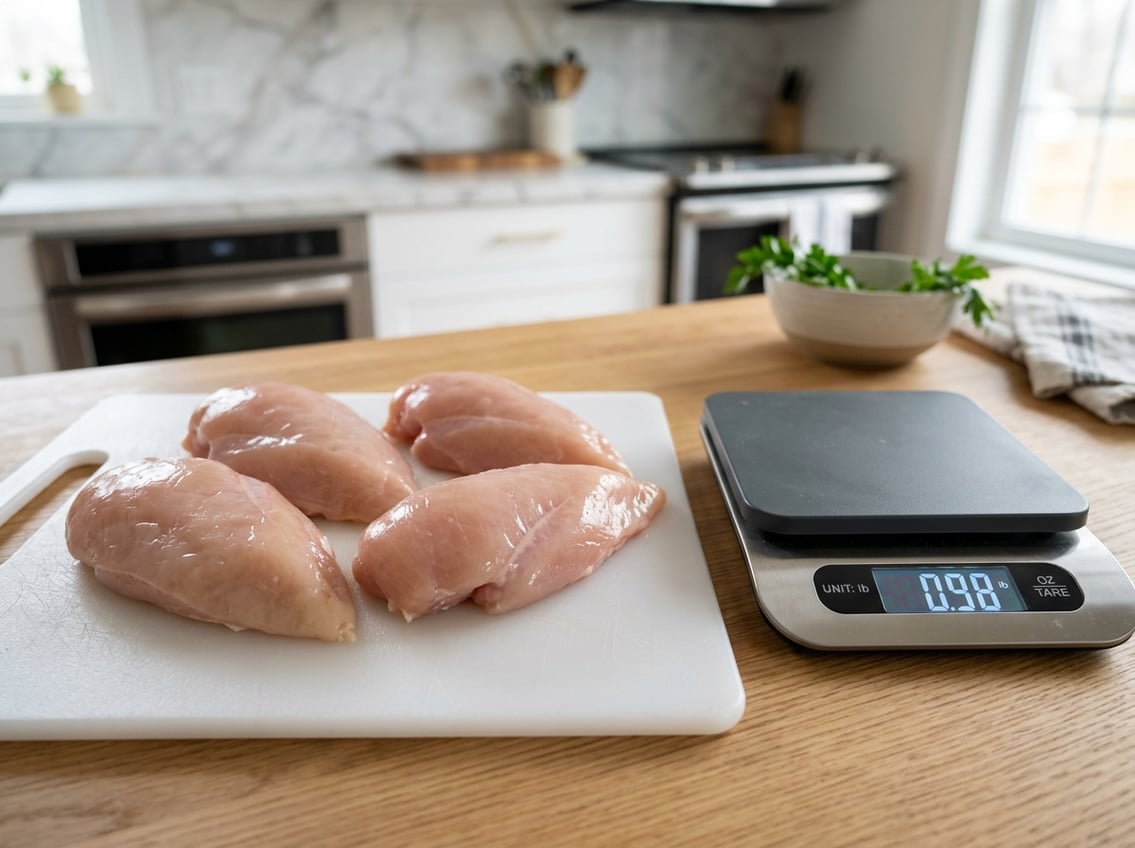
If a single chicken breast weighs about 6 to 8 ounces, you usually get 2 breasts in a pound. If they are smaller, you may get 3.
That estimate works well for meal planning and shopping.
A chicken breast’s exact weight can vary a lot based on cut type, packaging, and how the bird was processed.
If you want the most accurate count, think in ounces instead of relying on the number of pieces alone.
Quick Answer by Common Breast Size
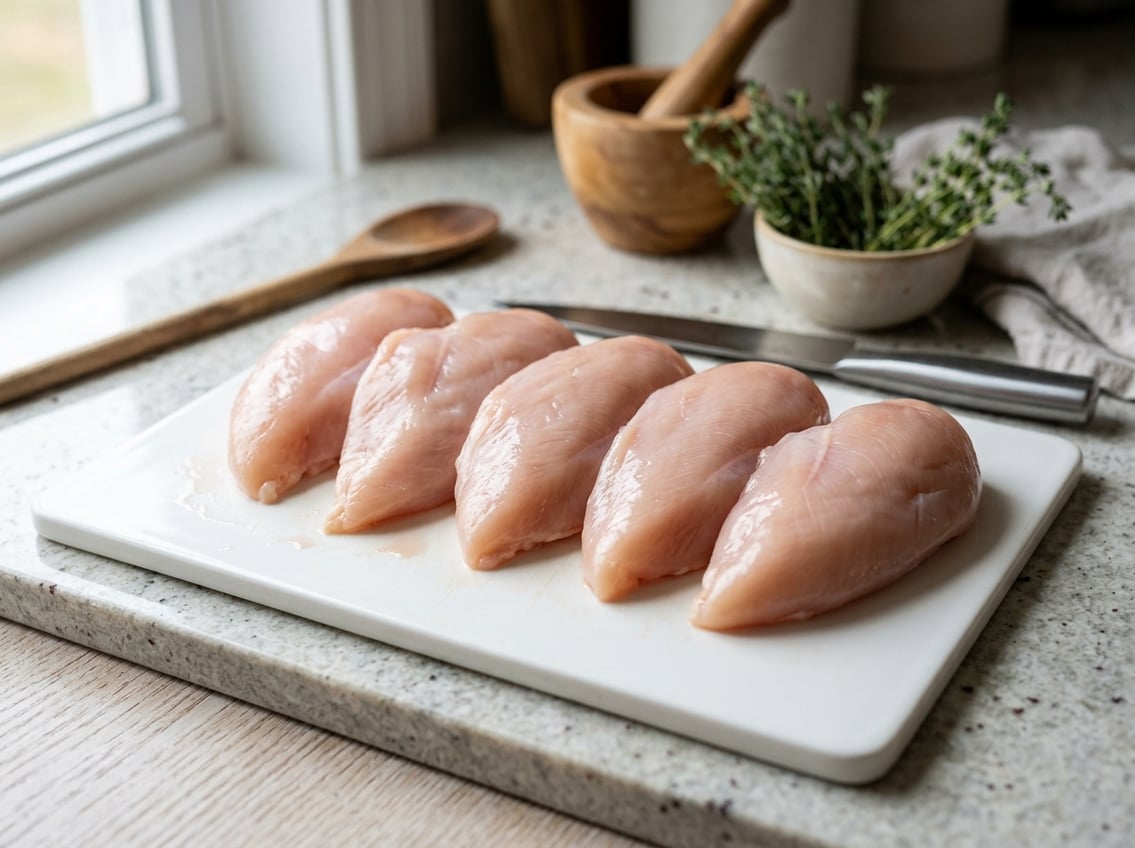
The count depends on the weight of each piece. A pound is 16 ounces.
Once you know the average weight of one breast, you can estimate the number of chicken breasts per pound quickly.
According to Chef’s Resource, boneless, skinless chicken breasts usually range from 1 to 3 per pound. The average breast weighs about 4 to 8 ounces.
Typical Boneless Skinless Count Per Pound
For boneless, skinless breasts, use these estimates:
- Small breasts, 4 to 5 ounces each: about 3 to 4 per pound
- Average breasts, 6 to 8 ounces each: about 2 per pound
- Large breasts, 9 to 12 ounces each: about 1 to 2 per pound
These ranges match what you usually see in U.S. stores.
Packaged breasts often sit in the middle, so 2 per pound is a safe planning number.
Small, Average, and Large Size Estimates
A small breast may work well for lighter portions or sliced dishes.
An average breast is the most common size for weeknight cooking.
Large breasts are common in value packs and restaurant-style portions.
Some large breasts can weigh close to a pound on their own, which lowers the count per pound.
When One Breast Can Be Close to a Pound
A jumbo breast can weigh 10 to 16 ounces or more.
You may get only one breast per pound, or even a little less than one if the piece is very large.
Counting pieces alone can be misleading. The weight of chicken breast matters more than the number printed on the package.
What Changes the Count
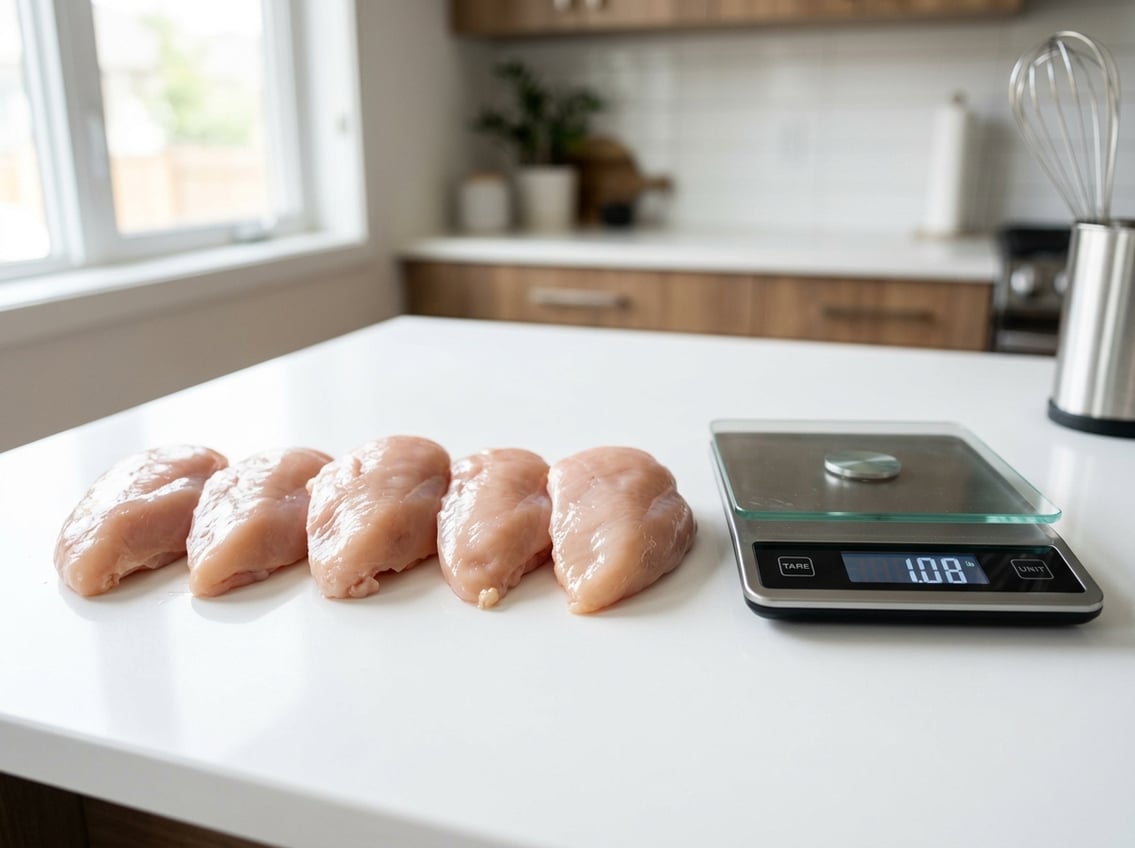
The count changes because not all chicken breasts are sold the same way.
Bone, skin, moisture, and cooking all affect the final chicken breast weight you see at the store and on your plate.
Boneless vs. Bone-In
Boneless breasts give you more meat per pound, so you usually get more usable portions.
Bone-in breasts weigh more because the bone adds weight, which lowers the number of pieces per pound.
If a recipe calls for boneless meat, bone-in pieces are not a one-to-one swap by weight.
You need to account for the bone when planning portions.
Skin-On vs. Skinless
Skin adds weight, so skin-on breasts may give you fewer pieces per pound than skinless ones.
Skinless breasts are easier to portion for recipes that need a more exact yield.
Skin-on breasts can be a better choice when you want richer flavor.
Raw vs. Cooked Weight Loss
Raw chicken loses moisture during cooking, so the cooked weight is lower than the raw weight.
Grilling, baking, and boiling all reduce weight. Boiling often causes more loss, as noted by Chef’s Resource.
A pound of raw chicken will not weigh a pound after cooking. Your finished portions will look smaller.
How to Estimate What You Need for Recipes
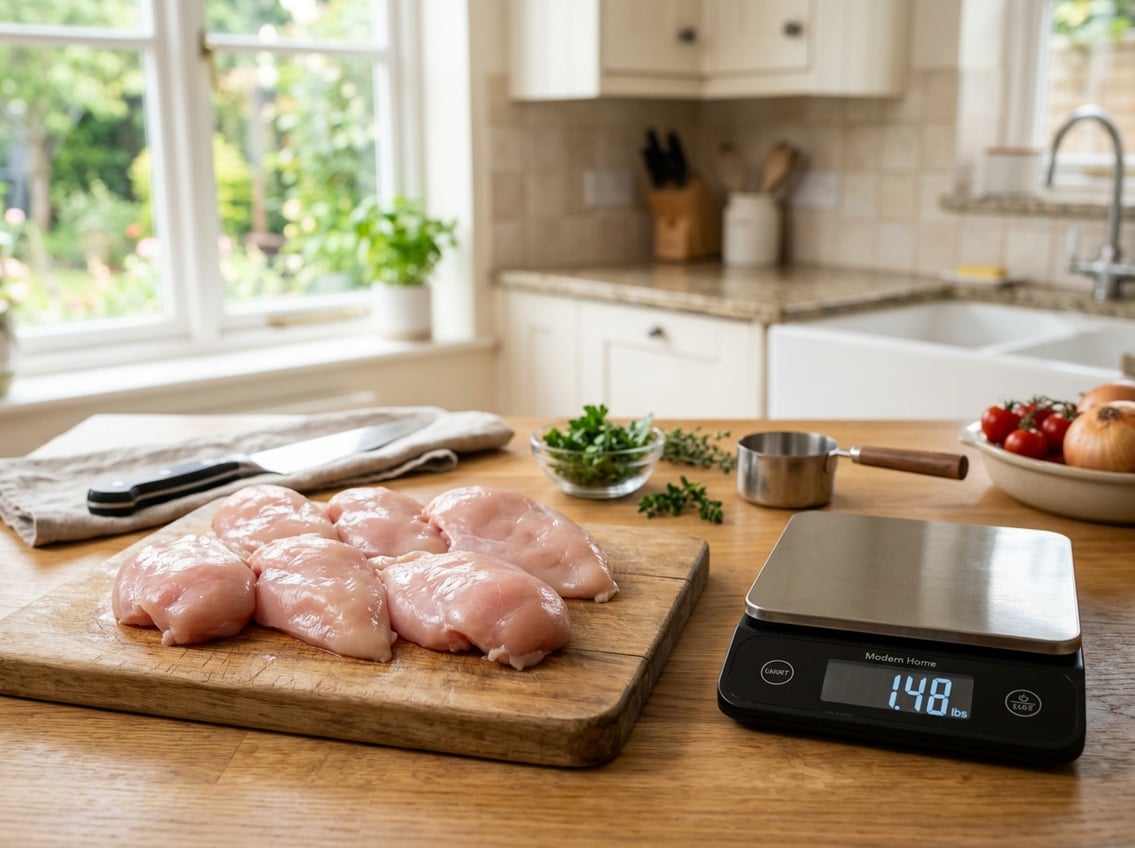
Recipe planning gets easier when you think in ounces first.
If you know the target weight, you can convert it into the number of breasts and avoid buying too little or too much.
Converting Pounds to Number of Breasts
Use these quick estimates:
- 1 pound: about 2 average breasts
- 2 pounds: about 4 average breasts
- 3 pounds: about 6 average breasts
If the breasts are small, the count goes up. If they are large, the count goes down.
A package label often lists both weight and piece count. This gives you a better estimate than either detail alone.
Planning Servings for Meals and Meal Prep
For a main dish, a common serving is around 4 ounces of raw chicken per person.
This means 1 pound usually serves about 4 people as a protein portion, depending on the rest of the meal.
If you are meal prepping, buy a little extra.
Extra chicken can cover shrinkage during cooking and help with uneven breast sizes.
Using Package Weight and Count Together
Always check both numbers on the label.
A package with 4 breasts may weigh 2 pounds, while another 4-breast package could weigh much less if the pieces are smaller.
Look at pounds for budget and recipes. Use the count for convenience.
This gives you a clearer estimate of how much chicken you are actually buying.
Buying Smarter at the Store
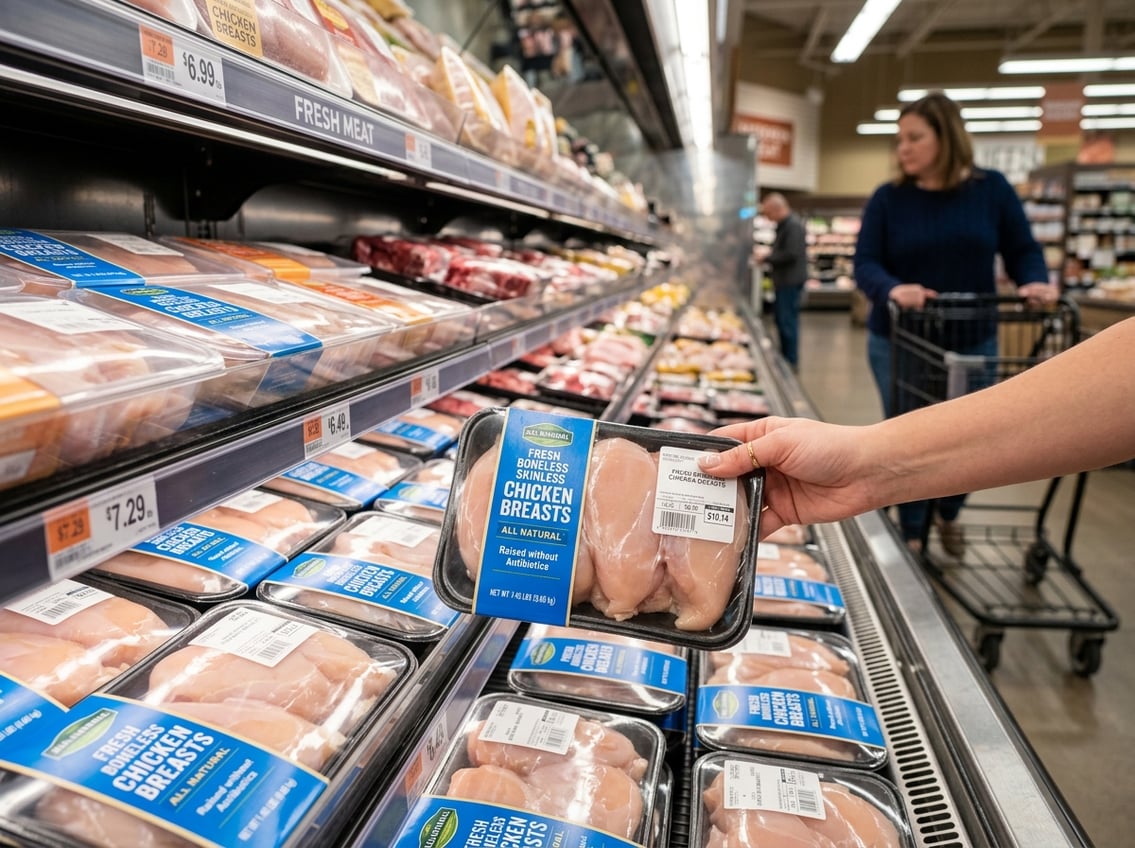
When you buy chicken breasts, price per pound usually tells you more than price per package.
Size, trimming, and added solutions can all change the real value.
Reading Labels and Checking Package Accuracy
Check the package for the net weight, piece count, and whether the chicken has been enhanced with a solution.
According to Chef’s Resource, some chicken is injected with water and salt, which raises the weight without adding much meat.
Package labels are usually close, yet small differences can still happen.
If you need exact portions, weigh the chicken yourself.
Choosing Similar Sizes for Even Cooking
Try to buy breasts that are close in size if you plan to cook them together.
Similar pieces cook at the same speed, which helps prevent dry smaller pieces and undercooked larger ones.
If the pack includes very different sizes, you can pound the thick end or split larger breasts into cutlets.
That makes the final meal more even.
Weight vs. Quantity for Better Value
Buying by weight gives you a clearer price comparison than buying by quantity.
Two packages may both contain four breasts. The heavier package gives you more meat for your money.
If you shop often, compare the price per pound across brands and stores.
That is the most reliable way to decide whether a pack is a good value.


