
How Long Does It Take to Cook Chicken Breast? Timing Guide
Knowing how long it takes to cook chicken breast helps you plan dinner, avoid dry meat, and reach a safe internal temperature.
In most ovens, boneless, skinless chicken breasts cook in about 20 to 30 minutes. Bone-in chicken breasts usually need about 35 to 40 minutes.
The exact time depends on the size of the breast, whether it is boneless or bone-in, and the oven temperature you use.
A thermometer gives you the most reliable result, since chicken is done when the thickest part reaches 165°F.
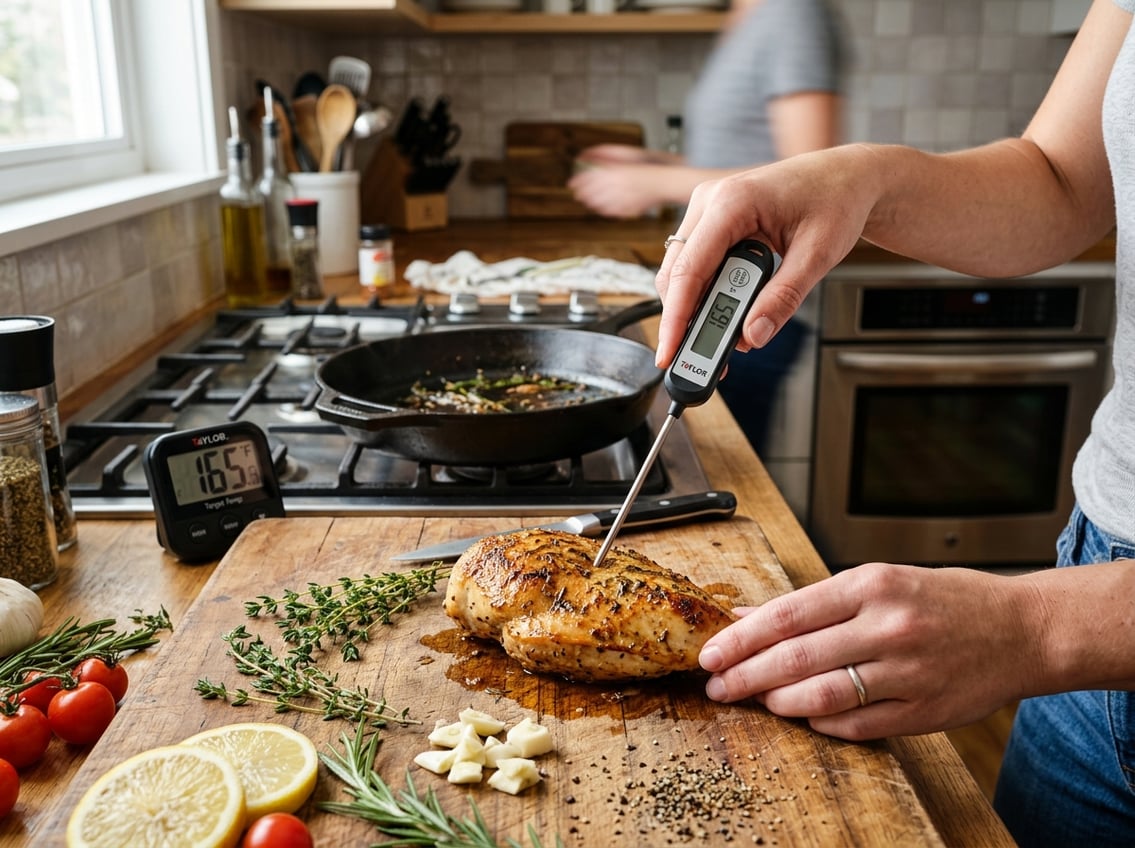
If you want a simple chicken breast recipe that turns out well, start with the timing, then adjust for thickness and finish with a short rest.
That small process makes a big difference in texture.
Oven Timing at a Glance
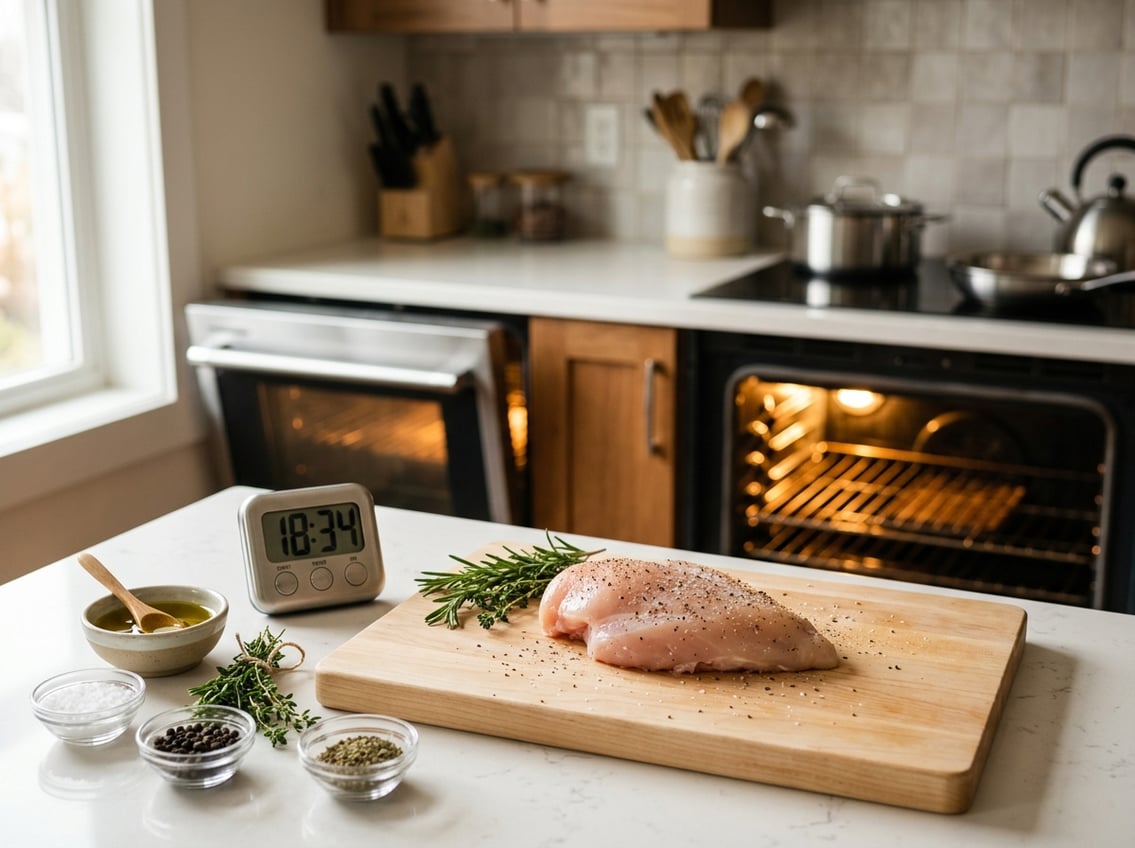
Oven time changes more with cut and thickness than with almost anything else.
If you know whether you are baking boneless or bone-in chicken breast, you can estimate the right cook time before you even check the thermometer.
Boneless, Skinless Breast Timing
For large boneless, skinless chicken breasts, bake them for 20 to 30 minutes in a 350°F to 375°F oven.
At 425°F, some recipes finish in about 25 minutes, according to The Pioneer Woman’s chicken breast timing guide.
If the breasts are smaller or thinner, check them earlier.
Thin pieces can cook faster than expected.
Bone-In Chicken Breast Timing
For large bone-in chicken breast pieces, bake them for 35 to 40 minutes in a 350°F to 375°F oven.
Bone and skin add flavor and help protect the meat, so baked chicken breasts with bone often need more time than boneless cuts.
Food Network gives a similar range for bone-in, skin-on baked chicken breast, which is useful when you want a dependable starting point.
Best Oven Temperatures for Even Cooking
A moderate-hot oven produces the most even results.
Food Network notes that many baked chicken breast recipes use 180°C, or 356°F, because chicken breast cooks through evenly and quickly at that heat.
If you want more browning, use a hotter oven like 400°F to 425°F.
Hotter heat can shorten the bake time, so watch the chicken closely near the end.
When Baked Chicken Breasts Are Done
Use an instant-read thermometer and check the thickest part of the breast.
Chicken is done at 165°F in the center, as noted by Food Network’s doneness guide.
If you do not have a thermometer, cut into the thickest part and look for no pink meat and clear juices.
A thermometer gives you a cleaner, more reliable result.
What Changes the Cook Time
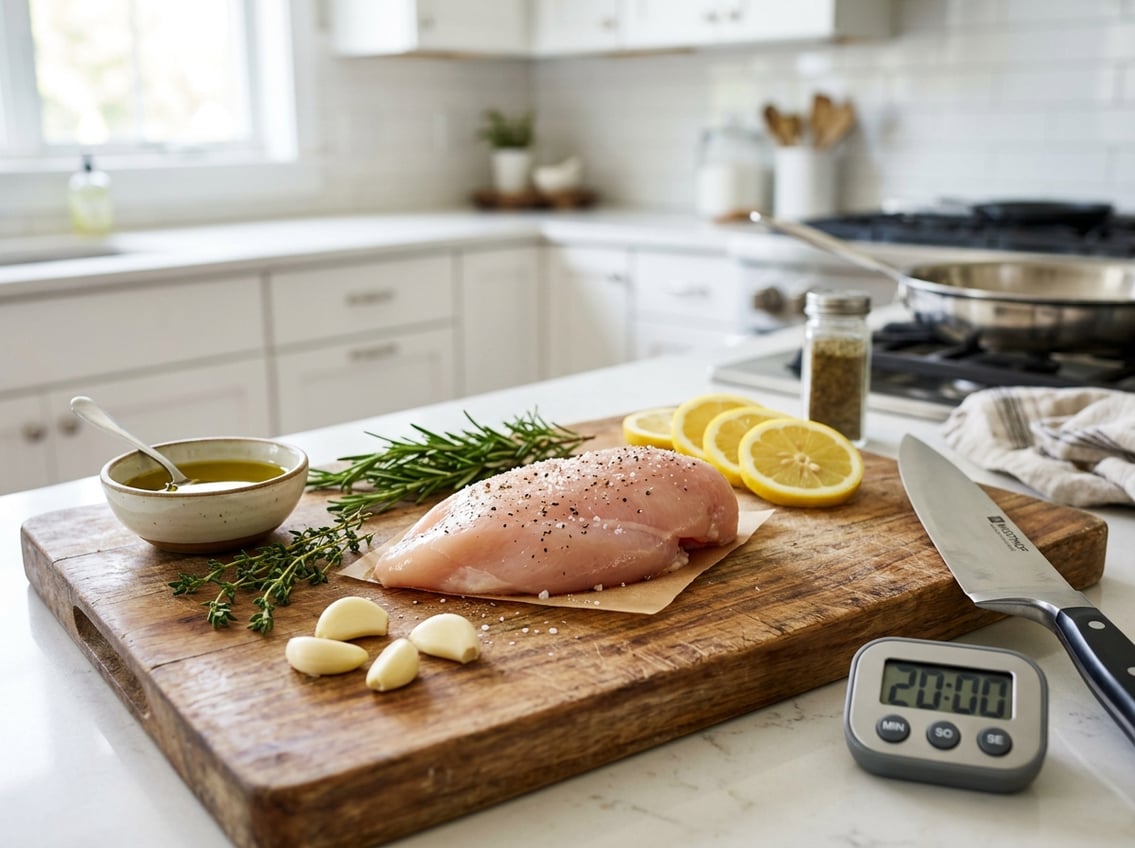
The time it takes to cook chicken breast varies.
Breast size, starting temperature, covering, and resting all affect how long you need in the oven.
Breast Size and Thickness
A thick chicken breast takes longer than a thin one, even at the same oven temperature.
Two pieces that weigh the same can still cook at different speeds if one is plump and the other is flatter.
If your chicken breast recipe uses very large breasts, expect the cook time to lean toward the high end of the range.
For smaller pieces, check early so you do not overcook them.
Fresh vs. Frozen Starting Point
Fresh or fully thawed chicken cooks more evenly and gives you the best timing.
Frozen chicken breast takes longer and needs extra attention.
One guide on frozen chicken breast notes that oven time may increase by about 50% compared with thawed chicken.
For most home cooking, thawing first gives better texture and a more predictable result.
Covered vs. Uncovered Baking
Covered chicken traps moisture and can slow browning.
Uncovered chicken usually cooks a little more quickly on the surface and gives you better color.
If you cover the dish, expect the chicken to stay softer on top.
If you uncover it, check near the end so the outside does not dry out before the center reaches temperature.
Why Resting Affects Final Results
Resting does not change the bake time, but it changes the final texture.
When you let baked chicken breast rest, the juices settle back into the meat instead of running out when you cut it.
Food Network recommends resting baked chicken breasts for at least 10 minutes before slicing.
That short wait helps the chicken stay moist.
How to Get Juicy Results Every Time
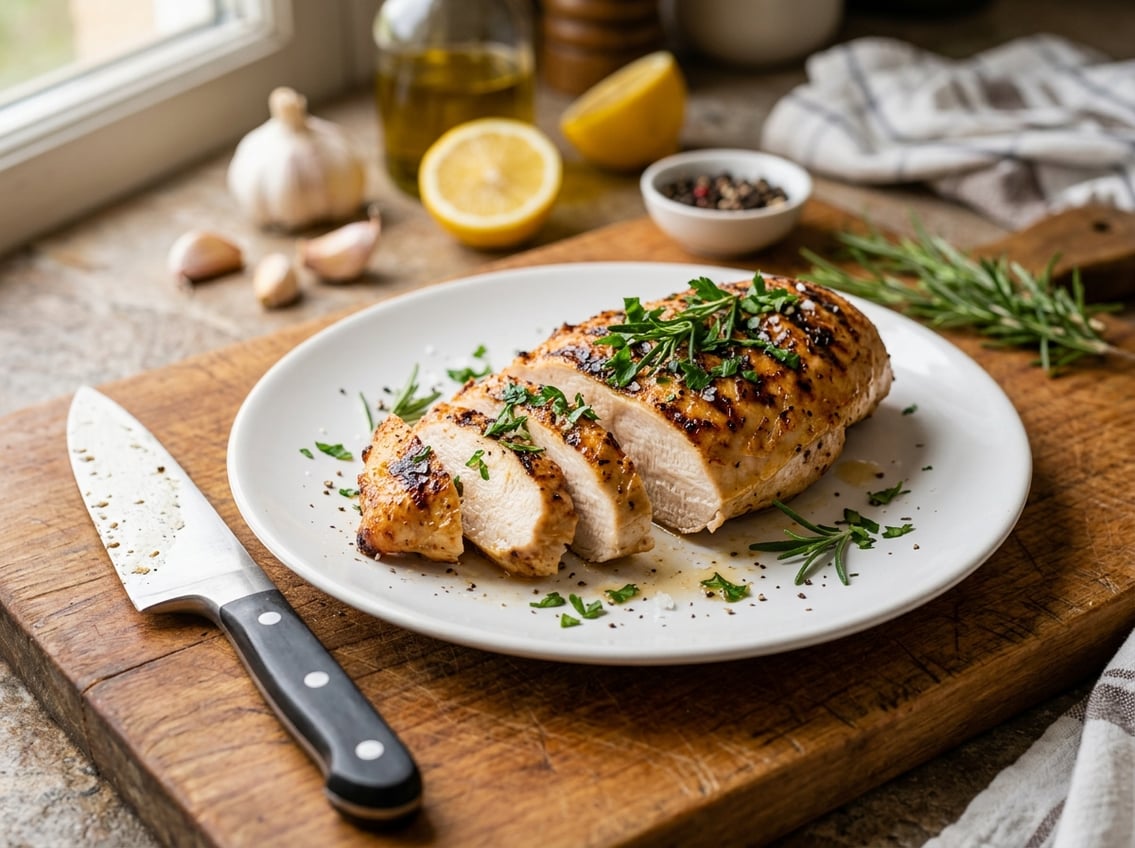
Juicy baked chicken starts before the pan goes into the oven.
Seasoning, oil, and temperature control matter as much as timing, especially when you want reliable results from a basic chicken breast recipe.
Seasoning and Oil Basics
Use enough oil to lightly coat the surface.
That helps seasoning stick and supports browning without making the chicken greasy.
Simple salt, pepper, garlic powder, and paprika work well for most baked chicken breast recipes.
You can add herbs or citrus, too, as long as you keep the seasoning balanced.
Using a Thermometer Correctly
Place the thermometer in the thickest part of the breast, not near the edge or touching the pan.
That spot shows the true doneness of the meat.
Pull the chicken from the oven when it reaches 165°F.
If you wait much past that point, you raise the chance of dry chicken.
Common Mistakes That Dry Out Chicken
Overbaking is the most common problem.
Starting with uneven pieces, skipping resting time, and cutting into the chicken too soon can also hurt texture.
Avoid guessing by time alone.
Even a good baked chicken breast method can fail if the pieces are very different in size.
Simple Baked Chicken Breast Recipe Applications
Once you know how to bake chicken breasts well, you can use them in many meals.
Slice them for salads, serve them with vegetables, or add them to grain bowls and wraps.
That flexibility makes plain baked chicken breast work well in meal prep.
You can season it lightly now and change the sauce or side dish later.
Storing and Reheating Leftovers
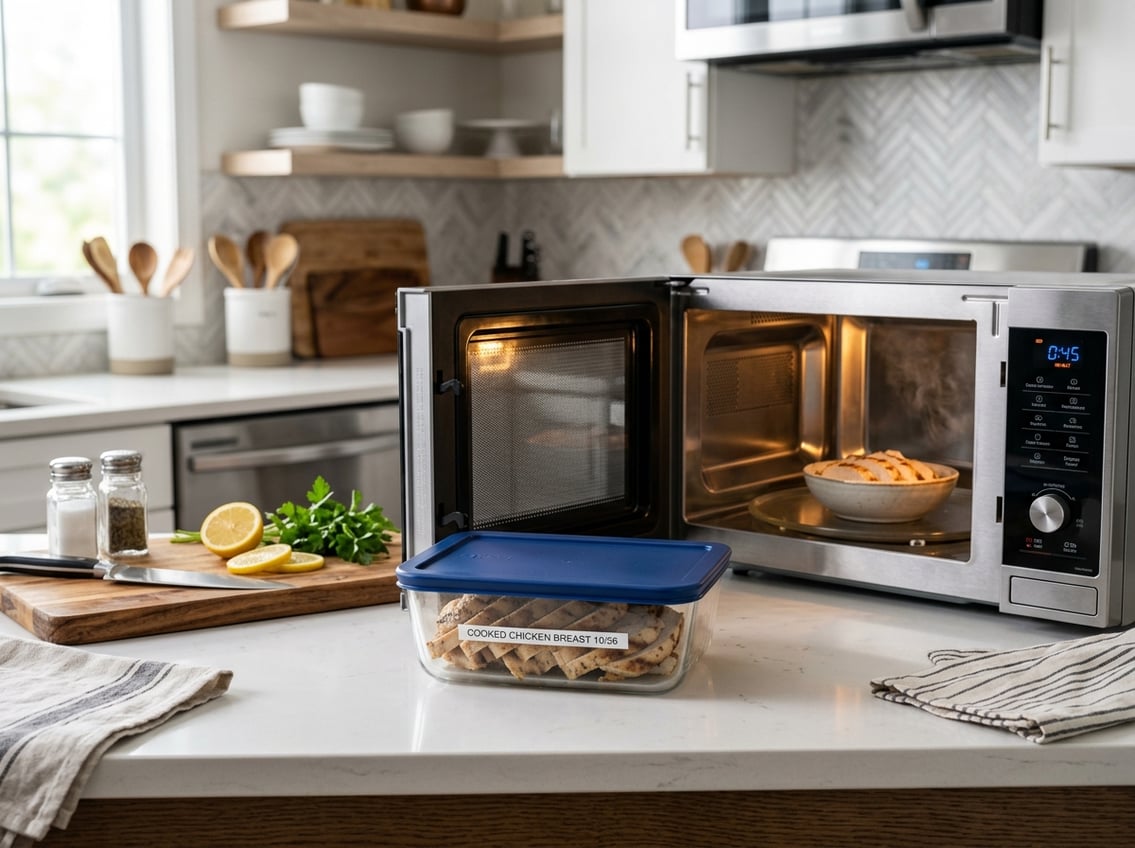
Good storage keeps baked chicken breast safe and usable for later meals.
Cool it properly, keep it sealed, and reheat it gently so the meat stays tender.
How to Store Baked Chicken
After cooking, let the chicken cool completely, then place it in an airtight container.
Food Network recommends refrigerating it once cooled.
If you plan to use it in another dish, slice or shred it after it cools.
That makes later meals easier to build.
How Long It Keeps in the Fridge
Baked chicken breast keeps in the refrigerator for up to 4 days, according to Food Network’s storage guide.
Keep the container closed tightly and store it in the coldest part of your fridge.
If it smells off or looks unusual, do not use it.
Freezing for Later Meals
For longer storage, freeze cooled chicken in a resealable bag or freezer-safe container.
Food Network says frozen baked chicken breast keeps for up to 4 months.
Label the container with the date so you can use older portions first.
Best Way to Reheat Without Drying Out
Reheat the chicken only until it reaches 165°F again, as recommended by NSF’s leftover safety guide.
Use a covered oven dish with a little broth or water to help keep moisture in.
You can also use the microwave in short bursts and check often.
Low heat and short intervals help the chicken stay soft instead of rubbery.


