
Do You Bake Chicken Breast Covered or Uncovered? Best Method
When you ask do you bake chicken breast covered or uncovered, your answer depends on the result you want.
Covered baking helps retain moisture and gives you soft, moist chicken. Uncovered baking gives you better browning, more surface texture, and a more roasted finish.
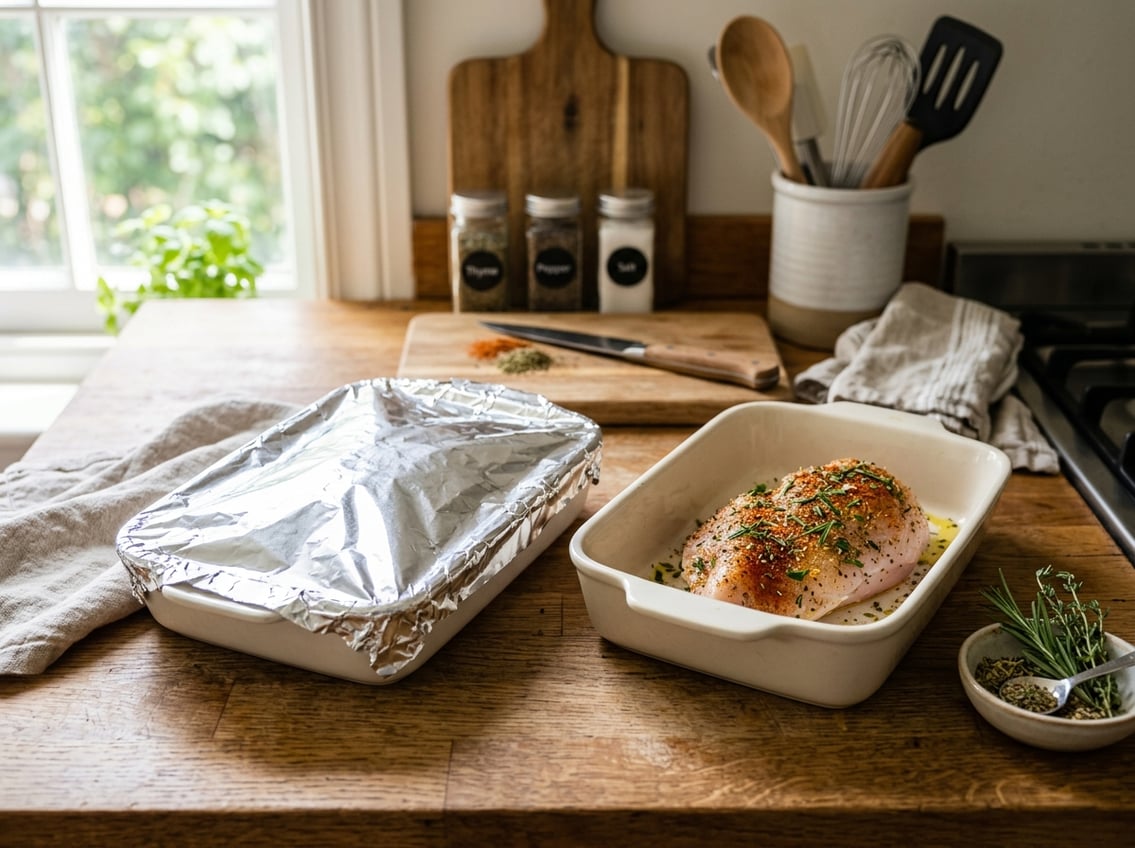
In most home ovens, you get great results by baking chicken breast uncovered. You can use a short covered phase if you need extra protection from drying out.
Chicken breast is lean, so it can go from tender to dry very fast. Both baking chicken covered and baking chicken uncovered have clear uses, and you can choose the method based on the texture you want.
How to Choose the Right Baking Method
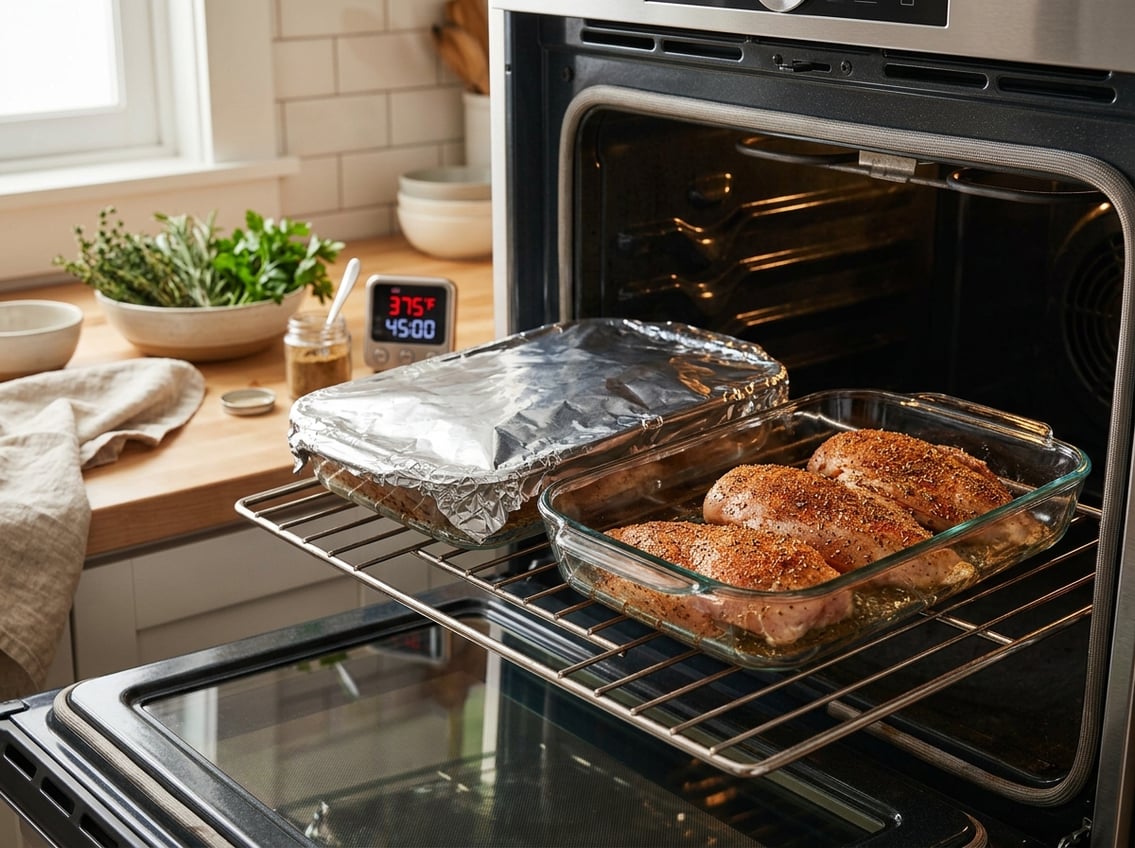
When you bake chicken covered or uncovered, you trade moisture for browning. Covering chicken while baking traps steam and protects lean meat, while uncovered heat gives you a better crust and more color.
Your choice depends on your pan, your seasoning, and whether you want a soft finish or a more roasted look.
For many meals, you can start covered and finish uncovered for the best balance.
When Covered Works Best for Tender Results
Covered baking works well when the chicken sits in broth, sauce, or a pan with vegetables.
The foil or lid traps steam, which helps keep chicken from drying out and supports a more tender bite.
This method fits casseroles, braised-style dishes, and very lean pieces that need extra protection.
Low and slow cooking with a cover is useful when you want moist chicken.
When Uncovered Is Better for Browning
If you want crispy skin or a more roasted chicken look, bake chicken uncovered.
Dry oven heat lets the surface brown, which improves color and flavor.
Uncovered chicken works well when you season the meat with oil, salt, and spices before baking.
Uncovered baking is a strong choice when you want a golden exterior and even cooking.
Why a Hybrid Method Often Works Best
A hybrid method gives you both moisture and browning.
You can cover the chicken at the start to retain moisture, then uncover it near the end so the surface dries and colors.
This helps with thicker breasts or meals where you want a reliable finish.
You also get more control if your oven runs hot or your chicken pieces are uneven in size.
Texture, Moisture, and Doneness
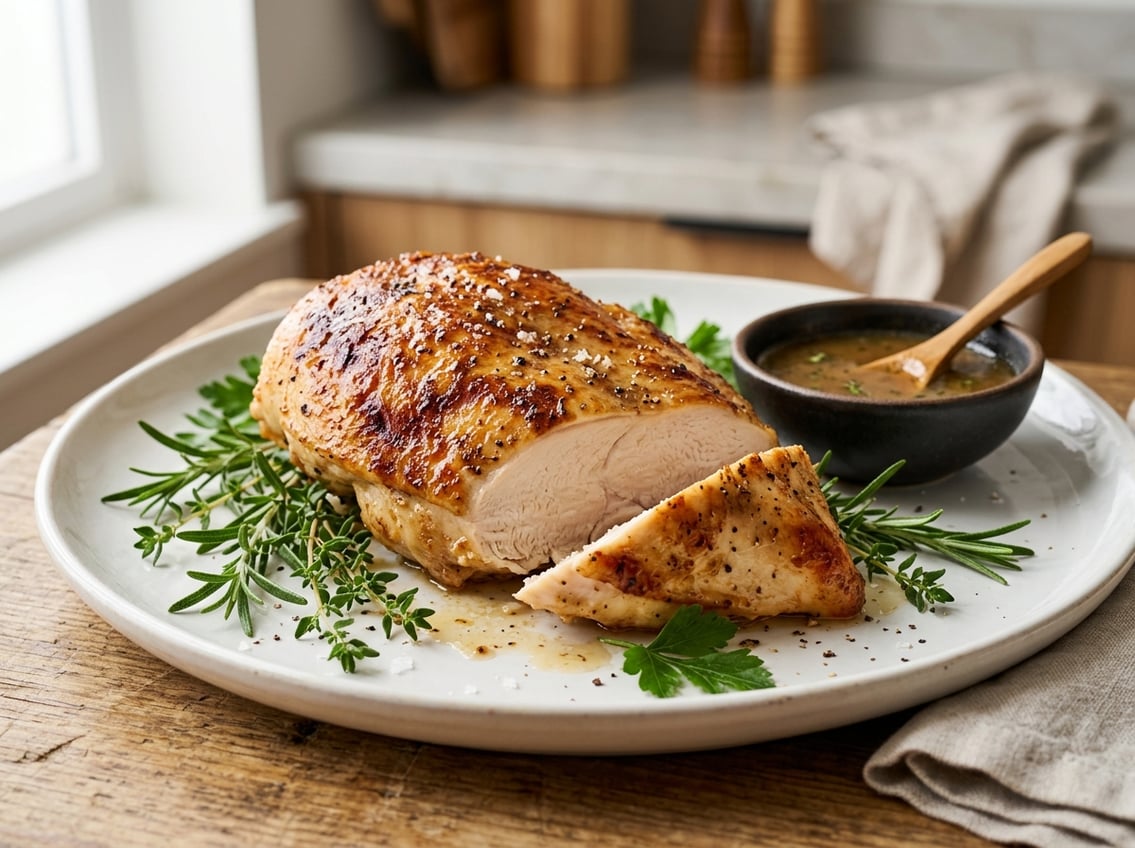
The way you bake chicken changes both the outside texture and the amount of moisture in baked chicken.
Covered heat softens the surface, while dry heat firms it up and adds color.
The main goal is to keep the breast tender without overcooking it.
A meat thermometer gives you the most reliable result, no matter which method you use.
How Covering Affects Moisture in Baked Chicken
Covering chicken keeps steam inside the pan, which helps the meat stay juicy.
That can be useful when you want a soft texture and less surface browning.
The tradeoff is that the chicken will not develop much crust while it stays covered.
If you want both tenderness and color, uncover it near the end of baking so the surface can dry slightly.
How Dry Heat Changes Surface Texture
Dry oven heat changes the outside of the chicken first.
It pushes moisture out of the surface, which creates a firmer bite and a more browned finish.
That is why bake chicken breasts uncovered is the usual choice for a more roasted look.
You also get better control over texture if you want a little color without steaming the meat.
How to Prevent Overcooking Chicken Breast
To prevent overcooking, check the thickest part of the breast with a thermometer.
Pull the chicken when it reaches a safe final temperature and let it rest before slicing.
Resting helps the juices settle back into the meat, which supports a more juicy chicken result.
This step matters even more with boneless chicken breast, since it dries out faster than darker cuts.
Best Oven Setup for Chicken Breast
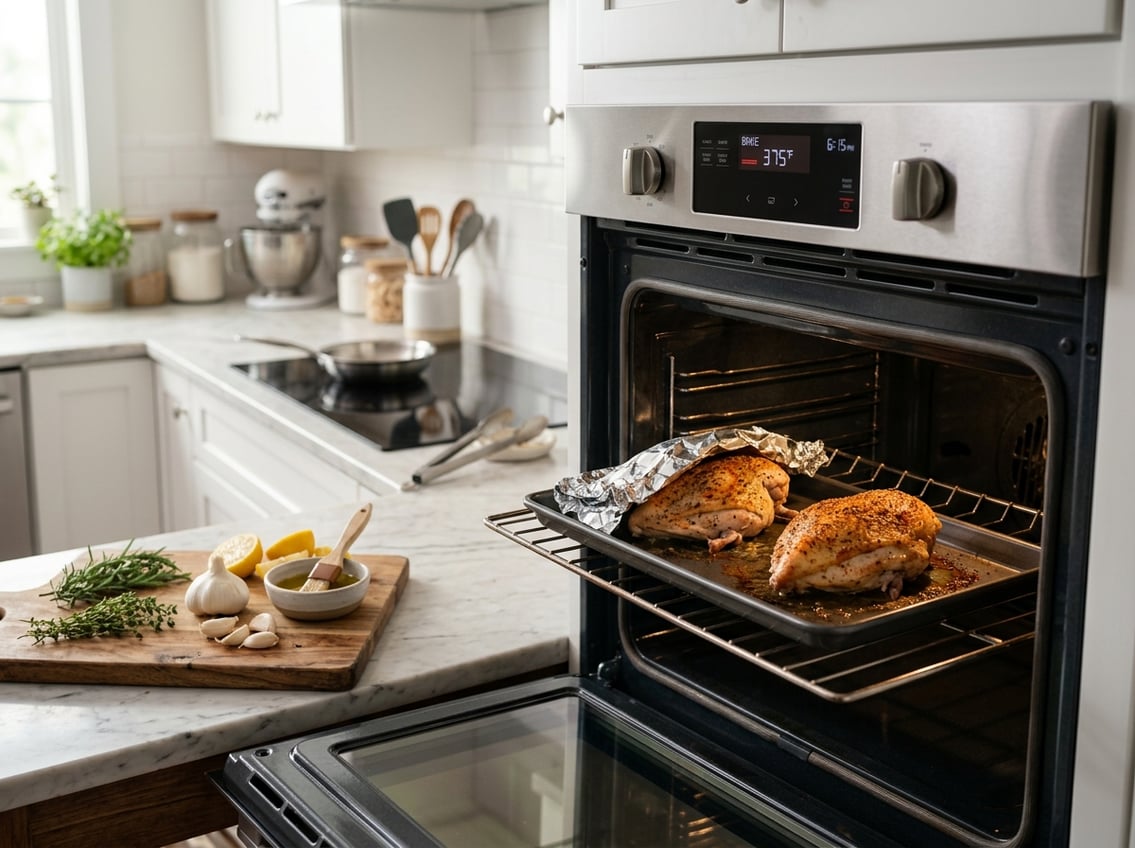
For most chicken breast recipes, a moderate oven temperature gives you the best balance of cooking time and texture.
You get better airflow and more even cooking when the pan setup is right.
A few simple steps, like using a rack and drying the chicken first, can make a clear difference in the final result.
Best Temperature and Cooking Time for Chicken Breast
A common starting point is 375°F (190°C).
At that temperature, chicken breast cooks at a steady pace without browning too fast.
The exact cooking time depends on thickness, size, and whether the chicken is covered or uncovered.
A thermometer is still the best way to check doneness, since time alone can be misleading.
Using a Wire Rack for Better Airflow
A wire rack lifts the chicken so hot air can move around it.
That helps the bottom cook more evenly and can improve the surface texture.
This setup works well when you want to bake chicken breasts uncovered and reduce sogginess.
It also helps the meat cook more evenly if the pieces are similar in size.
Why Patting Chicken Dry Matters Before Baking
If you want better browning, pat chicken dry before it goes into the oven.
Extra surface moisture slows browning and can make the exterior steam instead of roast.
Drying the chicken also helps seasoning stick better.
When you want to prevent chicken from drying out, use oil and watch the internal temperature closely instead of leaving extra water on the surface.
Method Variations and Common Scenarios
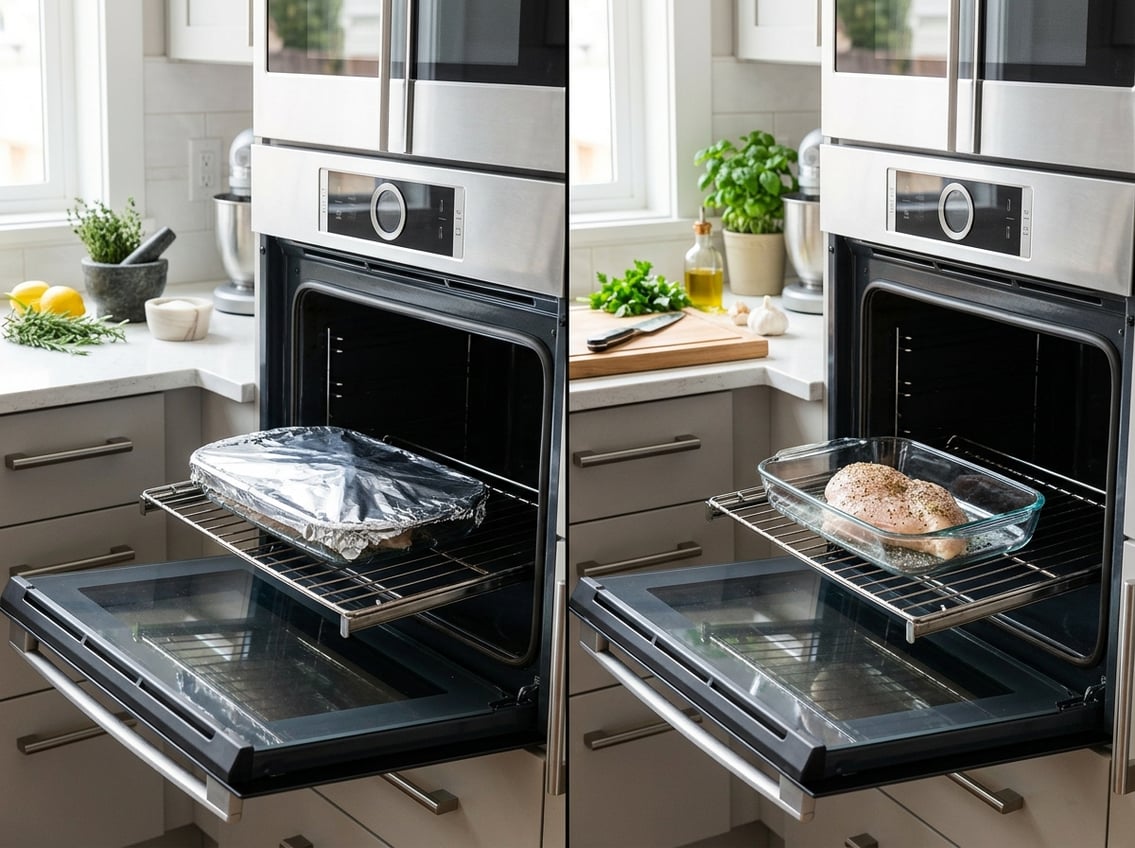
Different cuts and meal setups call for different approaches.
Boneless chicken breasts usually need more attention than bone-in chicken, and added ingredients like vegetables can change how much steam builds in the pan.
You can choose between baking chicken covered and baking chicken uncovered as long as you adjust the method to fit the dish.
Boneless vs Bone-In Cuts in the Oven
Boneless breasts cook faster and dry out more easily, so careful timing matters.
They often do best uncovered for browning, then rested after baking to keep the meat juicy.
Bone-in chicken usually takes longer and can handle a little more oven time.
The bone helps protect the meat near it, which can make the result more forgiving.
How to Bake Chicken With Vegetables
When you bake chicken with vegetables, the vegetables release moisture as they cook.
That can create a more covered-like environment even if the dish is left open.
If you want a more roasted finish, spread the ingredients in a single layer and avoid overcrowding the pan.
If the vegetables are watery, covering part of the cook time can help the chicken stay moist while everything finishes together.
Can You Bake Chicken From Frozen
You can bake chicken from frozen, but the cooking time will be longer and the texture may be less predictable.
Check the internal temperature carefully with a thermometer, because the outside can cook before the center is safe to eat.
Thawing first is still the better option.
This gives you more control over browning, moisture, and the final texture of the chicken.


