
When Does Chicken Breast Expire? Storage and Safety
When does chicken breast expire? The answer depends on how you store it, whether it is raw or cooked, and if it has stayed cold the entire time.
Fresh chicken breast is highly perishable, so a date label alone does not guarantee safety.
You can usually keep raw chicken breast in the refrigerator for 1 to 2 days, cooked chicken breast for 3 to 4 days, and frozen chicken breast for about 9 months when stored at 0°F or below.
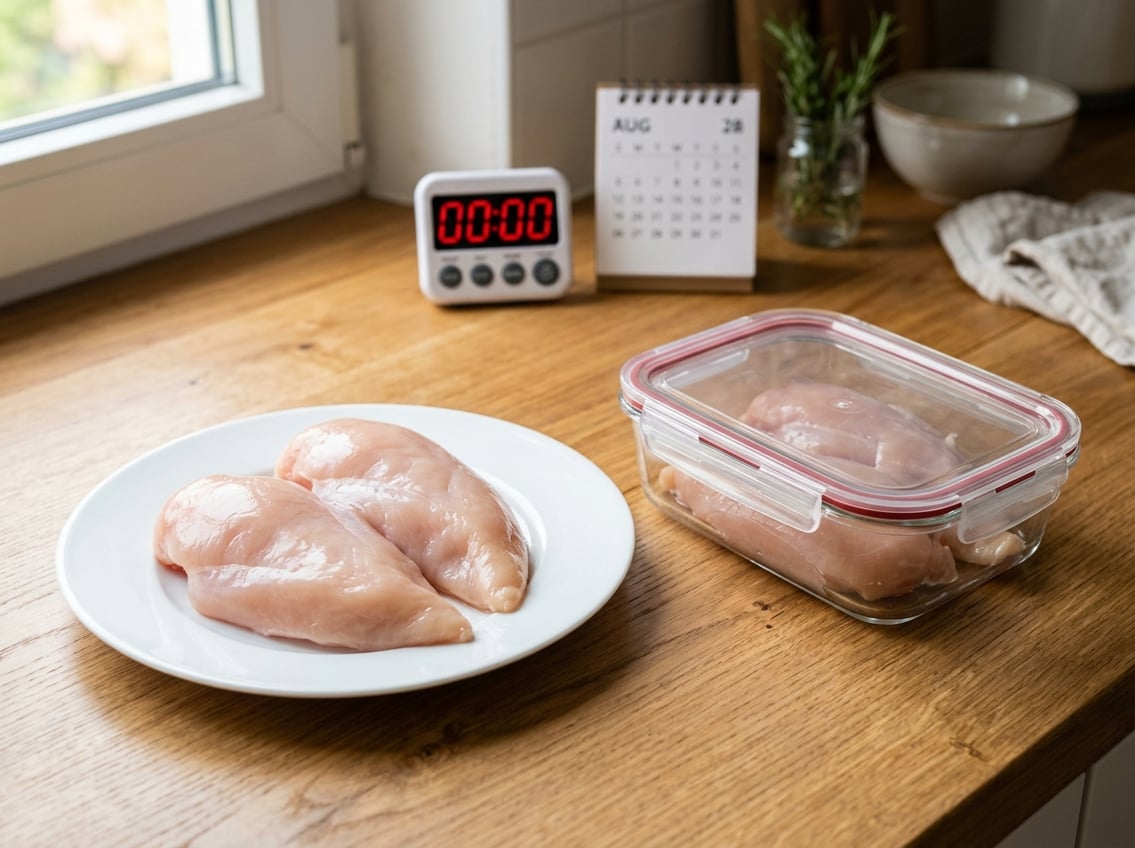
If you want to know how long chicken is good for, look at storage time, temperature, packaging, and visible signs of spoilage.
Those details provide better guidance than the sell-by date on the package.
How Long Chicken Breast Lasts
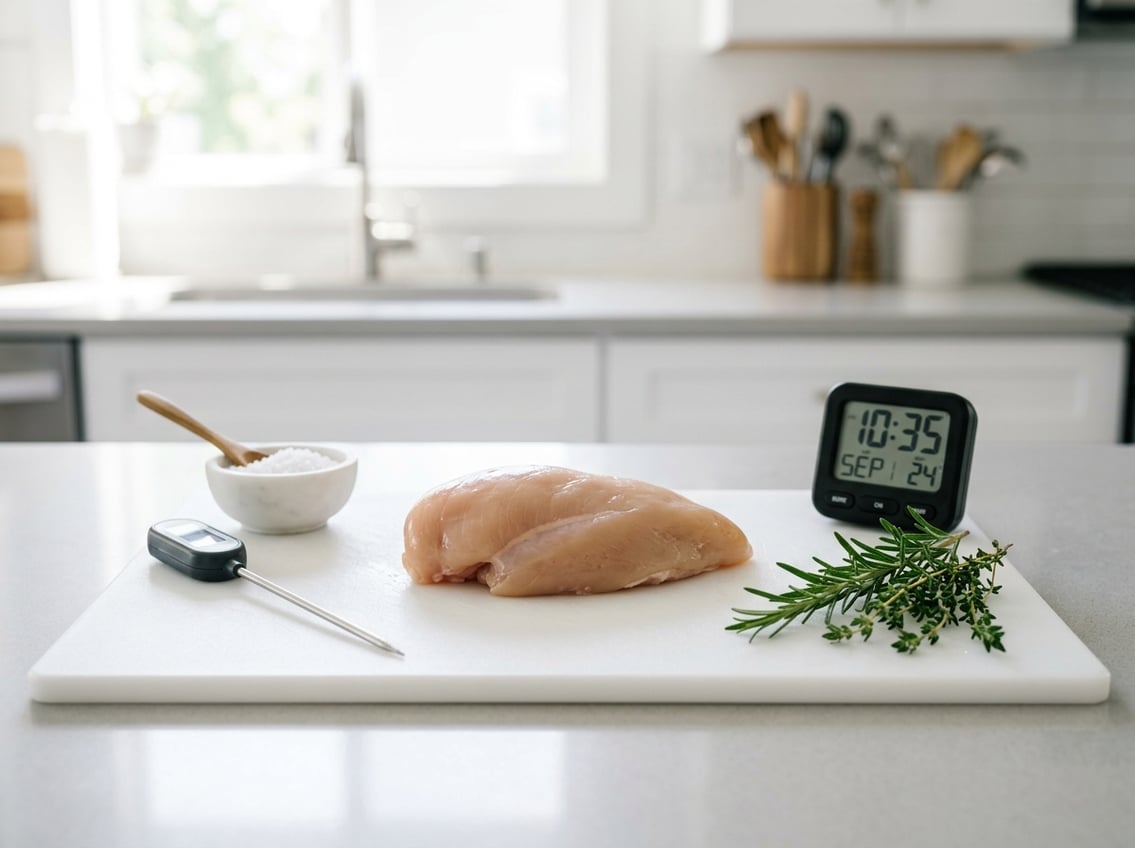
The shelf life of chicken breast changes based on temperature and whether it is raw or cooked.
Fresh chicken breast can stay safe for a short time in the fridge, while frozen chicken breast lasts much longer.
Raw Chicken in the Refrigerator
Keep raw chicken breast in the refrigerator at 40°F or below and use it within 1 to 2 days.
That short window applies to most chicken sold in the United States, even if the package still looks sealed.
If you do not plan to cook it soon, move it to the freezer before the second day passes.
Guidance from the USDA and Too Good To Go recommends freezing chicken pieces such as breasts to extend their safe life.
Cooked Chicken in the Refrigerator
Cooked chicken breast lasts 3 to 4 days in the fridge.
Store it in a covered container as soon as it cools, and refrigerate it promptly.
If the chicken sat out for more than 2 hours, or more than 1 hour in hot weather above 90°F, throw it away.
Time and temperature matter as much as the cooking method.
Frozen Storage Timelines
Frozen chicken breast keeps well for about 9 months at 0°F or below, as noted in the Cooknight guide on chicken breast expiration.
Quality can decline after that point, even if the meat stays safe longer when continuously frozen.
You can also freeze cooked chicken, though its texture may change faster than raw chicken.
Use freezer-safe packaging to reduce freezer burn and moisture loss.
How to Tell Whether It Has Gone Bad
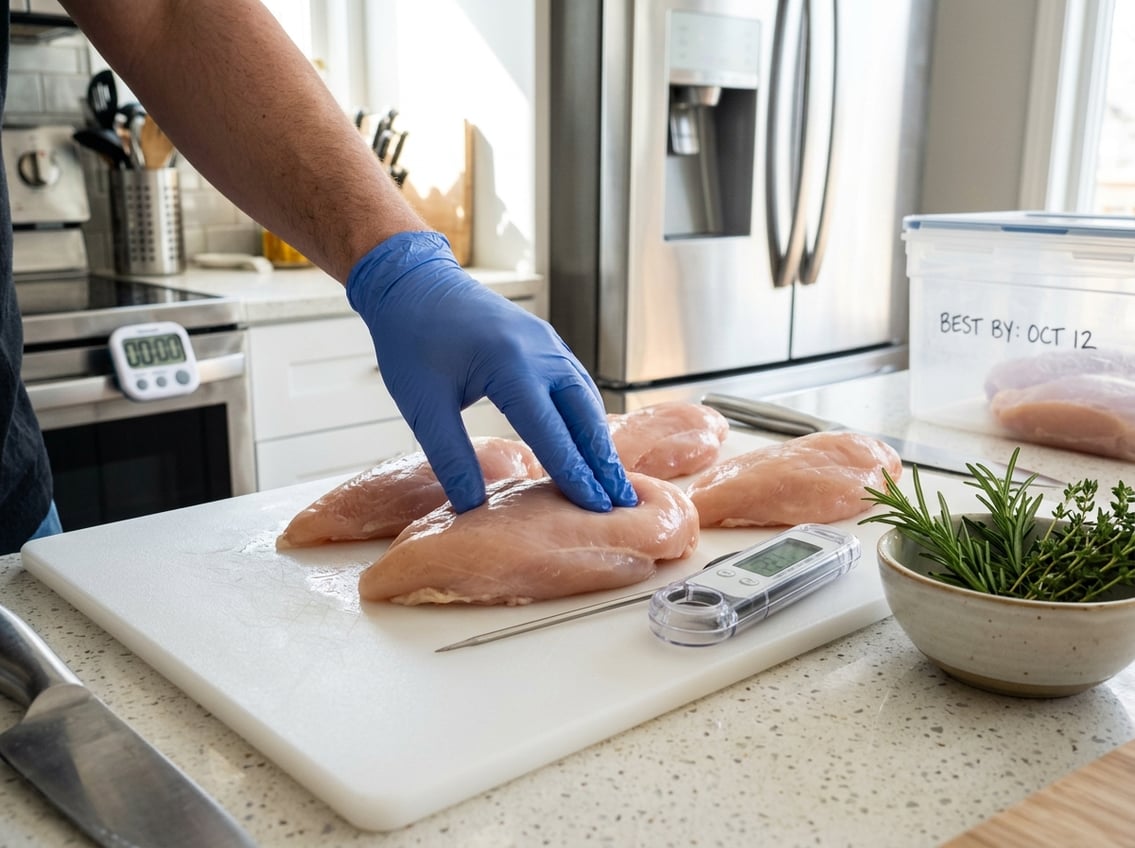
Spoiled chicken breast usually gives clear warning signs before cooking.
Check color, smell, and texture, along with any damaged packaging or leaking liquid.
Color, Smell, and Texture Changes
Fresh chicken is pinkish-white and firm.
If the meat turns gray, greenish, dull, or develops a slimy feel, it has likely spoiled.
Smell is another strong clue.
A sour, rotten, or ammonia-like odor means the chicken should be thrown out.
If you are unsure, do not taste it.
Packaging and Leak Warning Signs
Check the package before you buy it and again before you cook.
Swollen packaging, torn seals, excess liquid, or a bad smell when you open the package can all signal spoilage.
If raw chicken leaks onto other food or into your fridge, clean the area right away with hot soapy water.
That helps prevent foodborne illness in the rest of your kitchen.
When to Throw It Out
Throw the chicken away if it is past the safe time limit, shows clear spoilage signs, or was stored above 40°F for too long.
Do not rinse it, since rinsing can spread bacteria around your sink.
If the chicken has any mold, unusual stickiness, or an off smell that does not go away, discard it.
When safety is uncertain, the safest choice is to throw it out.
Storage, Freezing, and Thawing Rules
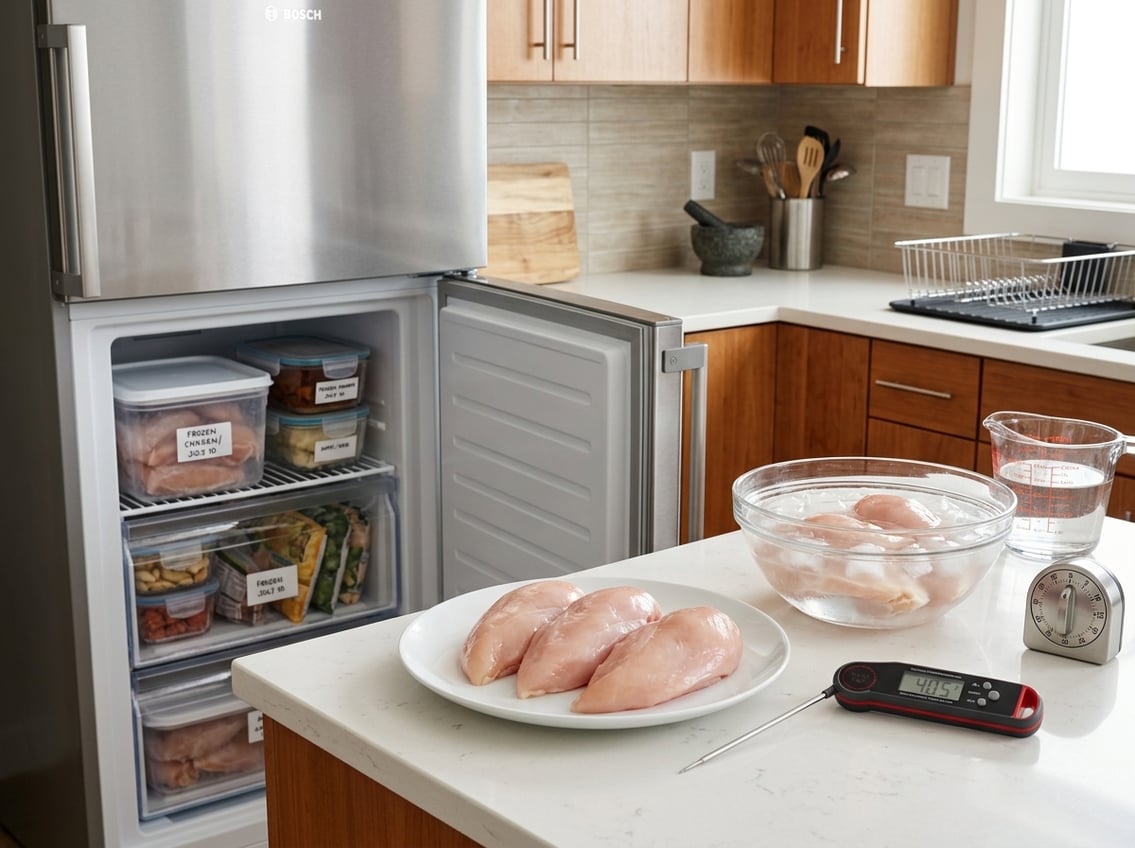
Good storage habits slow bacterial growth and keep chicken usable longer.
The main rules are simple: keep raw chicken cold, freeze it before it ages out, and thaw it safely.
How to Store Raw Chicken Safely
Store raw chicken in the coldest part of the refrigerator, ideally on the bottom shelf in a leak-proof container.
That keeps juices from dripping onto produce, leftovers, or ready-to-eat foods.
Keep the refrigerator at 40°F or lower.
If your fridge runs warm or you leave the chicken in the car, on the counter, or in a warm bag for too long, the safe time drops fast.
Best Practices for Freezing
If you want to freeze chicken breast, do it before the use-by date or within 1 to 2 days of buying it.
Wrap each piece tightly or use freezer bags, then remove as much air as you can.
Label the package with the date so you can track how long it has been frozen.
Freeze chicken breast quickly to protect quality and limit freezer burn.
Safe Ways to Thaw Chicken
Thaw frozen chicken in the refrigerator.
You can also thaw chicken in cold water if you keep it in a sealed bag and change the water every 30 minutes.
Do not thaw chicken at room temperature.
The outer layers can warm into the danger zone while the center stays frozen if you thaw at room temperature.
Date Labels and Food Safety Risks
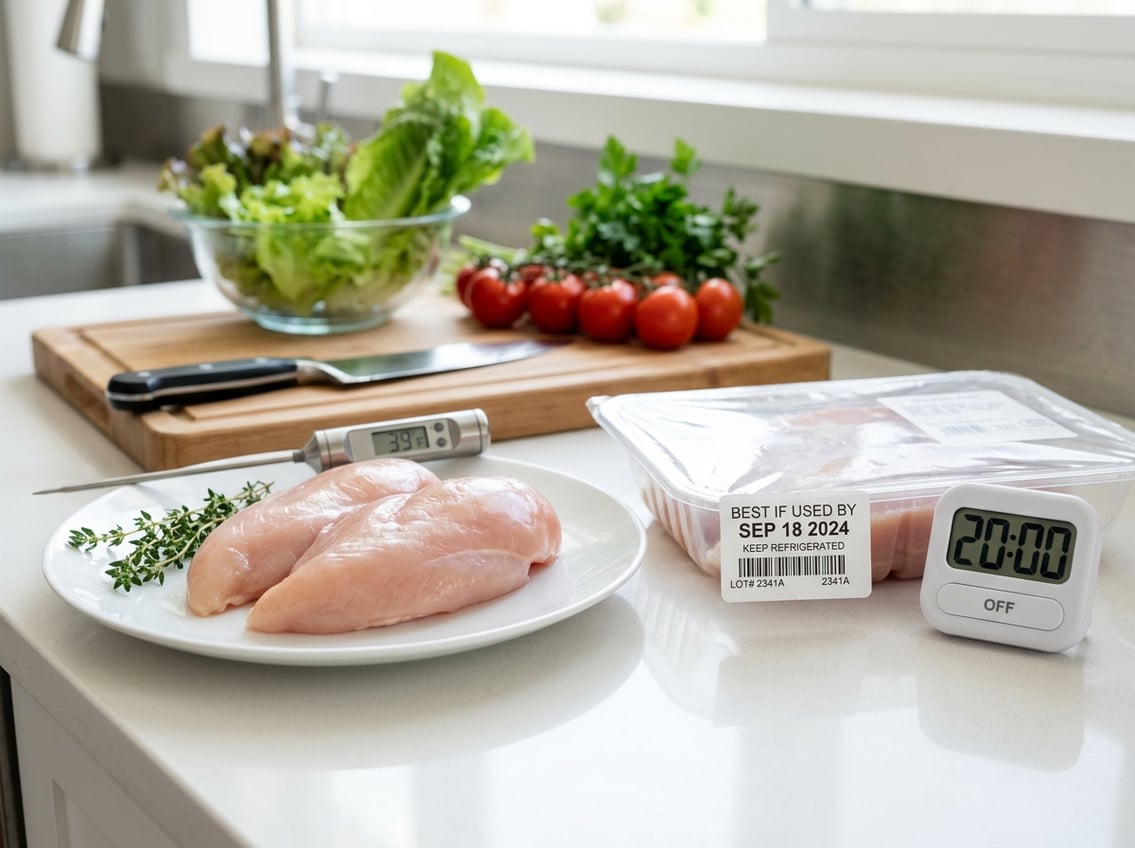
Date labels can help you plan, but they do not replace safe storage and smell tests.
How long chicken stays good depends on both the label and how the meat has been handled.
Sell-By, Use-By, and Expiration Dates
A sell-by date tells stores when to rotate stock.
A use-by date points to the last day the product is expected to be at peak safety or quality.
Chicken breast may still seem fine before or near that date, but it can spoil sooner if it was not kept cold.
Some chicken packages also use freeze-by dates.
If you do not plan to cook the chicken soon, freeze it on or before that date to extend its safe life.
Why Dates Are Not the Only Factor
A date label does not show whether the chicken stayed under 40°F the whole time.
It also does not tell you if the package was opened, punctured, or left out too long during transport or meal prep.
Spoiled chicken breast can appear before the date, so food safety checks matter even when the package looks fresh.
Use the label as a guide, not as your only test.
Common Illness Risks From Unsafe Chicken
Chicken can carry bacteria such as Salmonella and Campylobacter. These bacteria can cause foodborne illness.
Symptoms include diarrhea, vomiting, stomach cramps, and fever.
You can prevent foodborne illness by storing chicken cold, handling it cleanly, and cooking it to 165°F. The risk increases if chicken is undercooked, stored too long, or kept in the refrigerator past its safe limit.


