
Is It Necessary to Rinse Chicken Breast Before Cooking? Safety Guide
Is it necessary to rinse chicken breast before cooking? No, you do not need to rinse chicken breast. Food safety experts say you should not wash raw chicken before cooking.
Rinsing does not make the meat safer. It can spread bacteria around your sink, counters, and tools.
The safer move is to skip rinsing chicken breast. Pat it dry if needed, and cook it to the right internal temperature.
That approach protects your kitchen and gives you the best chance of safe, evenly cooked chicken.
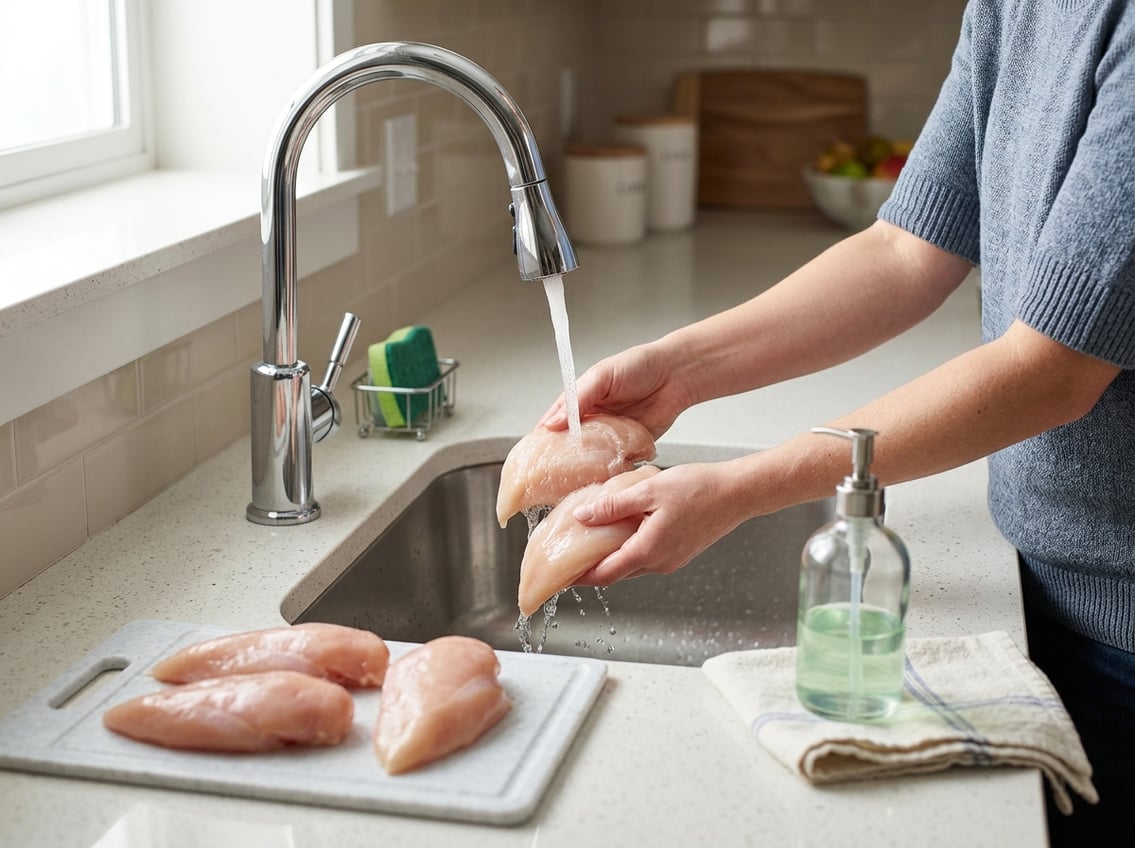
If you learned to wash chicken from family habits or older recipes, you are not alone. The habit is common, yet modern food safety guidelines point you away from rinsing and toward careful handling and proper cooking.
The Short Answer and Why Experts Say No
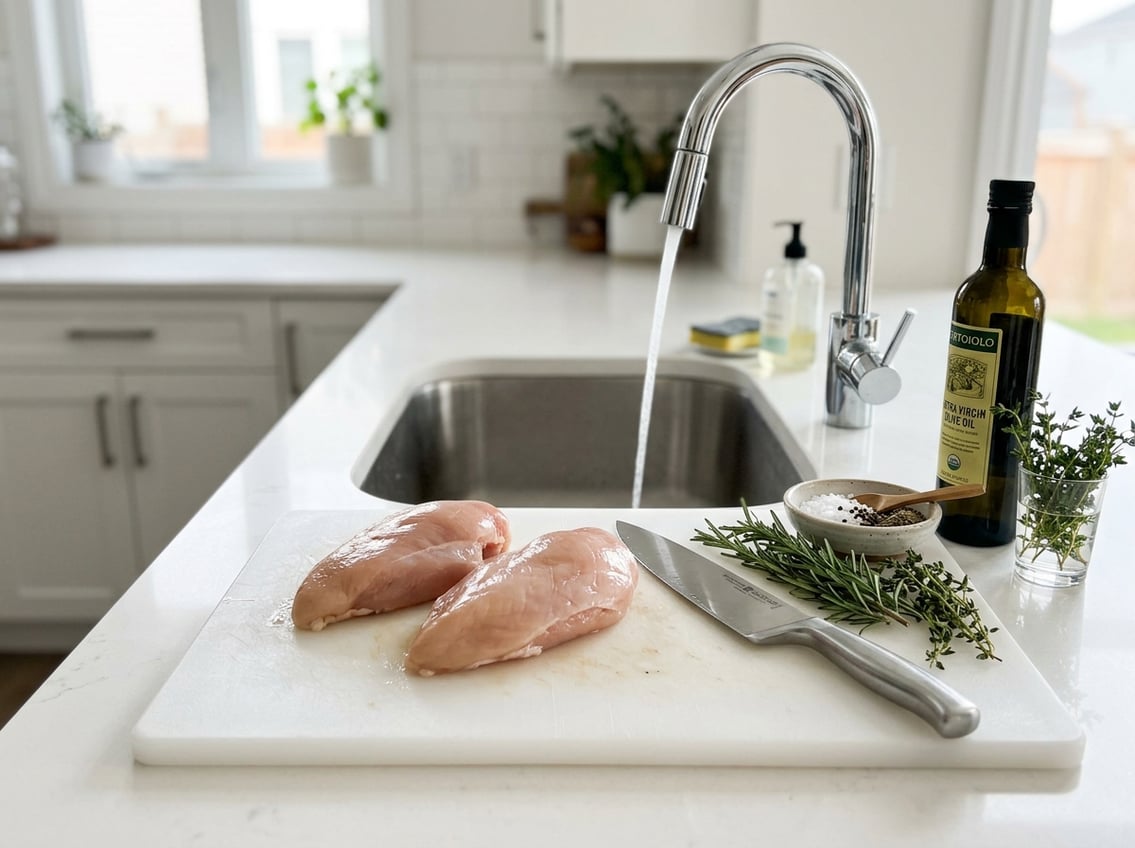
You do not need to wash chicken before cooking. Washing raw chicken can raise your risk of foodborne illness instead of lowering it.
The main issue is not the chicken itself being rinsed clean. The problem is what happens in your kitchen when water splashes bacteria around.
Why Washing Raw Poultry Does Not Make It Safer
Raw poultry can carry germs on the surface. Washing does not remove those germs in a reliable way.
The USDA has told consumers not to wash raw poultry for years, because the step adds risk without improving safety, as noted in Martha Stewart’s food safety guide.
Cooking is the step that makes chicken safe, not rinsing.
How Salmonella and Campylobacter Spread in the Kitchen
When you rinse raw chicken, water can carry bacteria like salmonella and campylobacter to nearby surfaces. Those germs can land in the sink, on the counter, on utensils, or on a sponge, which creates cross-contamination.
A clean-looking sink is not a safe sink after raw chicken has been rinsed in it. That is why health experts say washing chicken before cooking is unnecessary and can increase food poisoning risk.
Why Cooking Chicken Is What Makes It Safe
Proper cooking kills the harmful germs that may be present on raw chicken. That is why safe internal temperature matters more than rinsing.
For chicken breast, use a meat thermometer and cook to 165°F in the thickest part.
How to Prepare Chicken Breast Safely Instead
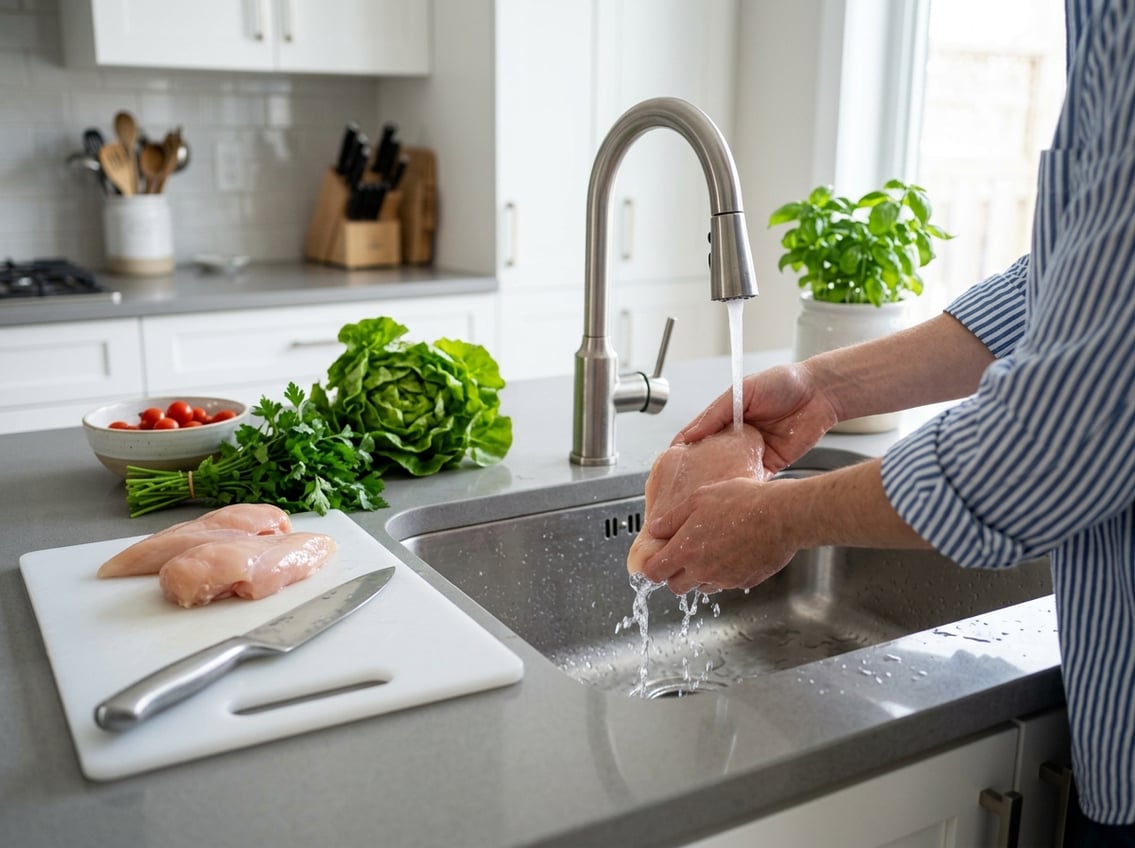
You have safer options than rinsing chicken breast, and they are simple. Focus on dry prep, clean handling, and correct cooking rather than trying to wash away bacteria.
These steps support better kitchen hygiene and better results in the pan or oven.
Pat It Dry Rather Than Rinse Chicken Breast
If you want better browning, use paper towels to pat the chicken breast dry. That helps the surface sear instead of steam.
This is one of the best alternatives to rinsing chicken. It keeps water from splashing around your kitchen and still gives you a good texture for cooking chicken.
Handle Packaging and Juices Without Spreading Bacteria
Open the package carefully and keep the chicken on a clean plate or tray. Throw away the packaging and any liquid from the package right away.
Wash your hands after touching raw chicken, and keep raw meat away from ready-to-eat foods.
Use a Meat Thermometer to Check Doneness
A meat thermometer takes the guesswork out of cooking chicken. Insert it into the thickest part of the breast to check that it reaches 165°F.
Preventing Cross-Contamination During Prep
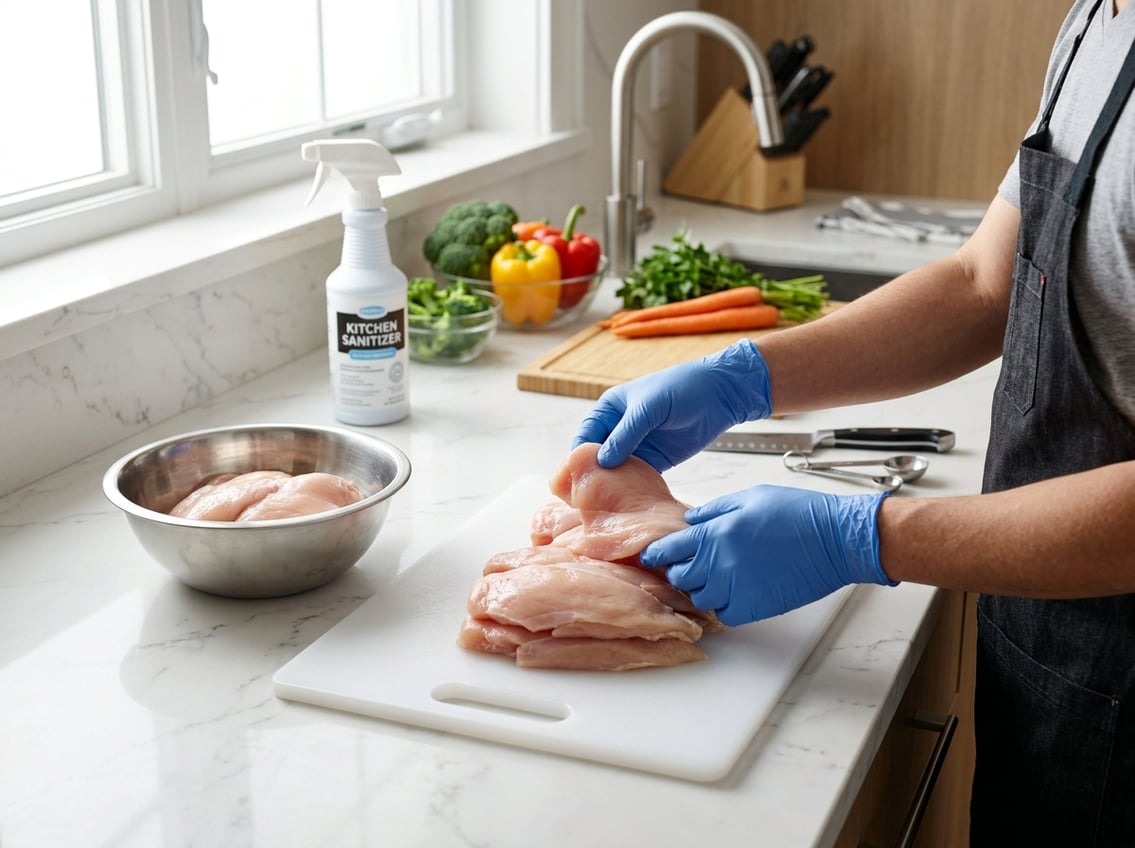
Cross-contamination is the real risk when you handle raw chicken. You lower that risk by keeping raw meat separate and cleaning everything it touches.
Small habits make a big difference during prep, cooking, and cleanup.
Use Separate Cutting Boards and Utensils
Use separate cutting boards for raw chicken and for produce or cooked foods. If you can, use separate utensils too.
The USDA recommends keeping poultry apart from fresh produce and using a designated board for raw meat, as noted in its cross-contamination guidance. That makes it easier to avoid cross-contamination.
Clean Hands, Sinks, Counters, and Tools Properly
Wash your hands with warm water and soap for 20 seconds after touching raw chicken. Clean knives, boards, counters, and sinks with hot, soapy water.
Kitchen hygiene works best when you clean the full work area, not just the food.
Store Raw Chicken and Marinate It Safely
Store raw chicken on the bottom shelf of the refrigerator so juices do not drip onto other foods. Keep it sealed in a container or on a tray.
If you marinate chicken, do it in the refrigerator, not on the counter. Never reuse marinade that touched raw chicken unless you boil it first.
Why Some People Still Wash Chicken
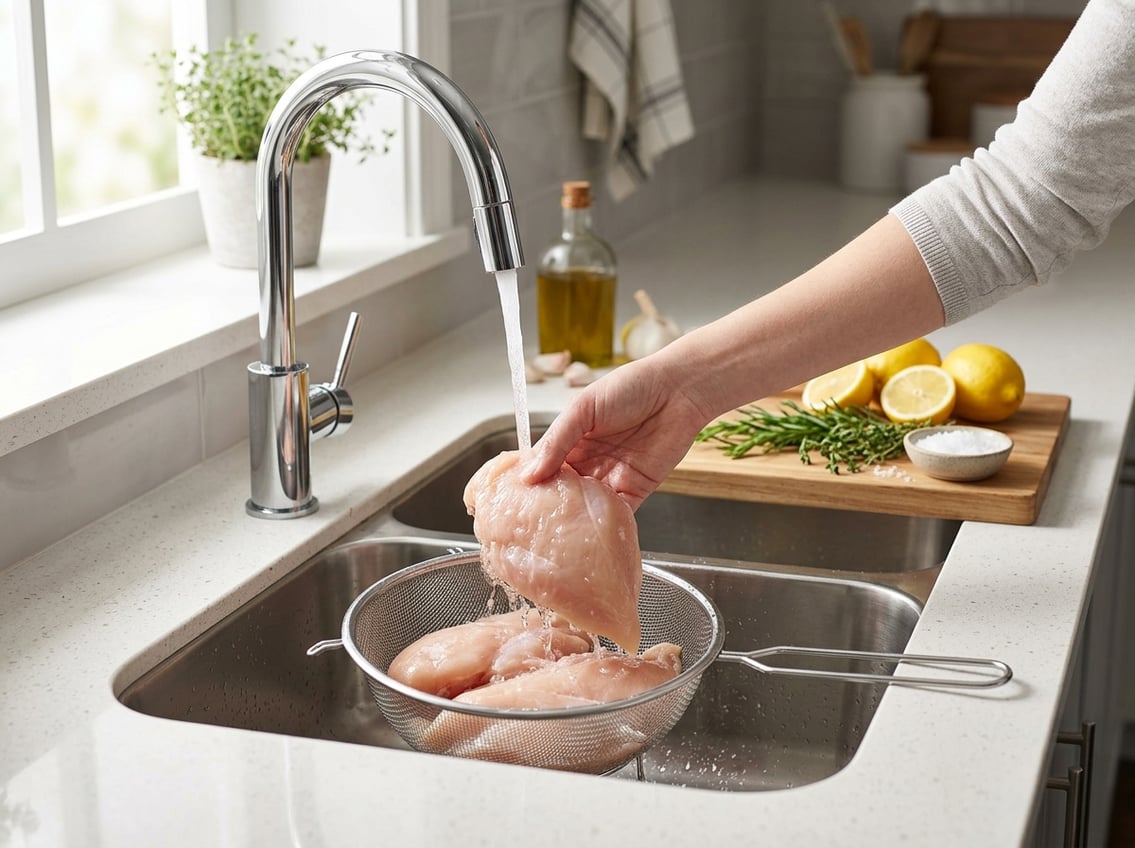
You may still see people rinse chicken because the habit feels normal and familiar. In many kitchens, it comes from family routines, older recipes, or the idea that water removes dirt.
The challenge is that old habits can conflict with current food safety guidelines.
Family Habits and Older Recipe Traditions
Some people learned to wash chicken from parents or grandparents. Others saw it in older cookbooks or on cooking shows and kept doing it.
Those habits can be hard to change because they feel tied to care and cleanliness.
Concerns About Package Liquid, Texture, or Debris
A lot of people rinse chicken because they dislike the liquid in the package. Others want to remove anything that looks slimy or loose.
Those concerns are understandable, yet rinsing still does not make the meat safer. Patting the chicken dry and cleaning the prep area are better alternatives to rinsing chicken.
How to Replace the Habit With Safer Kitchen Steps
If you are used to washing chicken, swap the habit for a simple routine.
Open the package carefully. Pat the chicken dry.
Wash your hands. Clean the workspace.
This routine protects your kitchen and helps you focus on cooking chicken to a safe temperature.


