
Is It a Good Idea to Brine Chicken Breast? Quick Guide
Brining chicken breast is a simple way to make lean chicken more juicy and more evenly seasoned. For boneless skinless chicken breasts, brining reliably improves moisture retention and reduces the chance of dry meat.
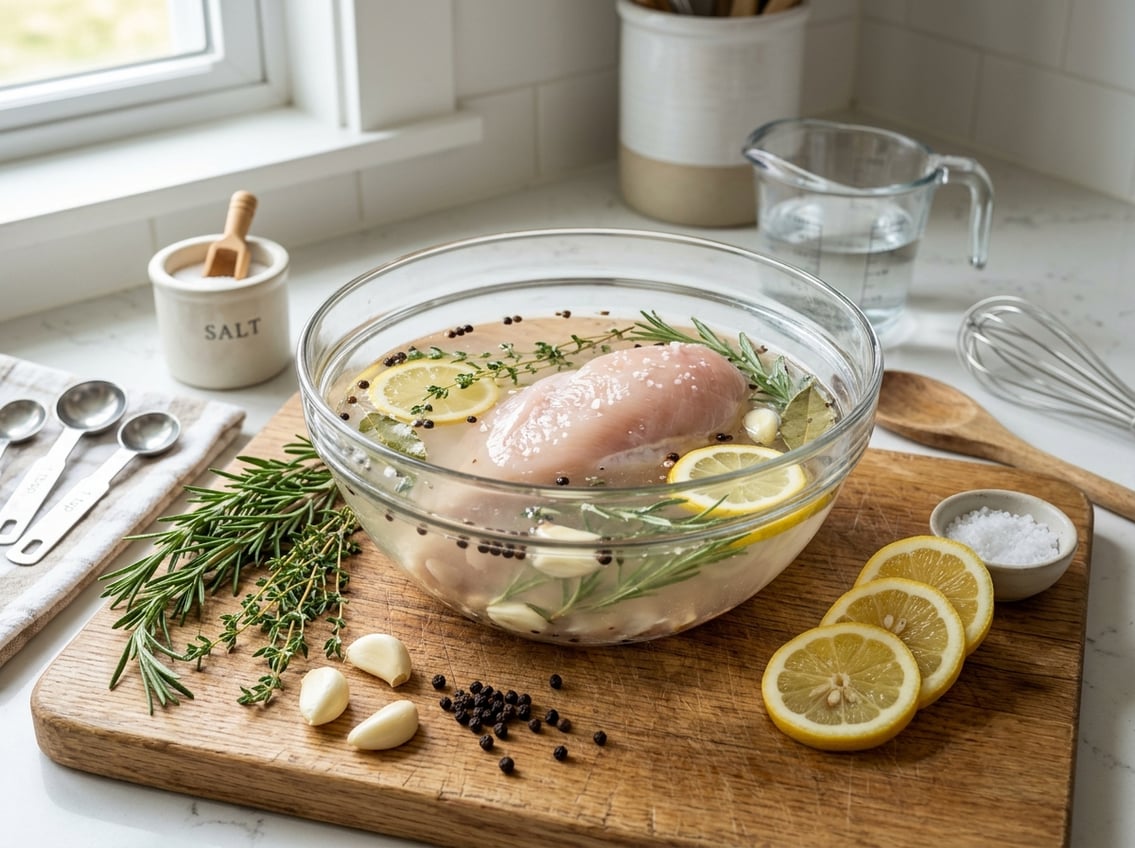
You can get good results without a complicated method. A short brine helps chicken hold onto moisture during cooking, which matters most when you grill, bake, or sear at higher heat.
Brining gives you a little more room for error. If you miss the exact second your chicken reaches 165°F, brining helps keep the meat from turning tough too fast.
When Brining Helps Most

Salt moves into the meat through osmosis, helping the chicken take in seasoned liquid and hold onto more moisture during cooking. Salt also changes protein denaturation, so the chicken is less likely to squeeze out as much juice as it heats.
Brining matters most with lean cuts and fast cooking methods. If you want juicy chicken, brining is especially helpful.
Why Lean Chicken Breasts Benefit From Salt
Chicken breast has very little fat, so it dries out faster than darker cuts. A salt brine gives the meat more moisture retention and a little more forgiveness during cooking, especially with boneless skinless chicken breasts.
A short brine can gently tenderize the texture. You still need to cook carefully, since brining does not prevent overcooking.
Best Cases for Grilling, Baking, and Searing
Brining helps most when you grill chicken, bake it in the oven, or use a hot pan for searing. These methods push moisture out fast, so brined chicken stays juicier through the cook.
Use a meat thermometer and pull the chicken when the thickest part reaches 165°F. This is important when you cook over high heat.
When Brining Is Unnecessary or Not Worth It
If the chicken is already heavily seasoned, pre-salted, or packed in a salty marinade, extra brining may not help. Very thin cutlets also need less time, so the gain can be small.
For quick weeknight meals, a dry seasoning and careful cooking may be enough.
Wet Brine, Dry Brine, and Marinade Compared

A wet brine uses a saltwater solution, while dry brining uses salt without added water. Marinating focuses more on flavor on the outside than on salt-driven moisture changes.
Each method serves a different goal. If you want more moisture and a more seasoned interior, brining is usually the better tool.
What a Wet Brine Does Well
A wet brine helps salt move into the meat more evenly. This can improve juiciness and create a mild, well-seasoned result throughout the chicken.
Wet brining works well when you want a simple base for later seasoning. It is a strong choice for plain chicken breast before grilling or baking.
How Dry Brining Changes Surface Flavor
Dry brining uses salt directly on the surface, then you rest the chicken so the salt pulls in moisture and reabsorbs it. The result often gives you stronger surface flavor and, in some cases, crispier skin on skin-on cuts.
For boneless skinless chicken breasts, dry brining is useful when you want less mess and a shorter setup. It is a practical option when you do not want to mix a full saltwater bath.
Brining vs Marinating for Flavor Infusion
Marinating adds flavor from ingredients like yogurt, lemon juice, vinegar, soy sauce, sesame oil, vegetable oil, honey, or glaze. It can improve surface flavor, though it usually does not season the center as well as brining.
For stronger flavor infusion inside the meat, salt-based brining works better. For a flavor coating, a marinade is the better match.
How to Brine Chicken Breasts Correctly

To brine chicken breasts, keep the method simple and measure the salt carefully. Use the right salt concentration, a short brining time, and enough liquid to cover the meat.
You do not need many ingredients. A reliable brine for chicken breasts starts with water, salt, and optional flavorings.
A Simple Brine Recipe and Salt Options
For a basic brine recipe, use cold water and kosher salt. One practical version is 4 cups of water with about 1/4 cup Diamond Crystal kosher salt, or less if you use a denser salt like table salt.
Salt type matters because volume and weight are not the same. Diamond Crystal kosher salt, sea salt, and table salt all measure differently, so use care if you switch brands.
How Long to Brine Without Overdoing It
Keep brining time short for chicken breast. Many cooks find 30 minutes to 2 hours enough, and a longer brining duration can push the meat toward an overly salty or soft texture.
Thin pieces need less brining time, while thicker breasts can handle a little more. Keep the chicken cold during brining and do not leave it out on the counter.
What to Add for Better Flavor
A plain brine works well, yet you can add a little sugar, brown sugar, spices, herbs, garlic, peppercorns, thyme, rosemary, oregano, bay leaves, or citrus peels. These additions give the brine more aroma without changing the main job of the salt.
Keep extras light so the brine still does its main work. Strong flavors are better added in the pan, on the grill, or after cooking.
Mistakes That Ruin Texture and Flavor

Most problems happen from too much time, too much salt, or poor cooking after brining. Good results depend on balance, not just the brine itself.
If you want juicy chicken, aim to improve texture without turning the meat soft, salty, or rubbery.
Signs of Over-Brining and Mushy Texture
If you over-brine, the chicken can turn mushy or take on a cured, ham-like bite. The meat may taste too salty or feel spongy instead of firm and juicy.
This usually means the brining time was too long or the salt concentration was too strong. Shorter is usually safer for chicken breast.
Why Salt Type and Timing Matter
Table salt, kosher salt, and sea salt do not measure the same way by volume, so swapping can change the result. That is one reason a carefully tested brine recipe matters.
Timing matters just as much. Even a good brine can go wrong if the chicken sits too long before cooking or if you add more salt later without adjusting the rest of the meal.
How to Cook After Brining for the Best Result
After brining, pat the chicken dry before grilling, baking, or searing.
Dry surfaces brown better and cook more evenly.
Use a meat thermometer and stop cooking at 165°F in the thickest part.
Apply the same care when brining pork chops.


