
Is It Normal for Chicken Breast to Be Stringy? Causes and Fixes
Is it normal for chicken breast to be stringy? Sometimes, yes.
A mild grain in chicken breast is normal. Loose strands, mushy spots, or a split, fibrous look can point to a texture defect or overcooking.
The key is to tell the difference between normal muscle grain and chicken that has a structural problem. Stringy chicken breast is not always a safety issue, but it can make the meat dry, tough, and unpleasant to eat.
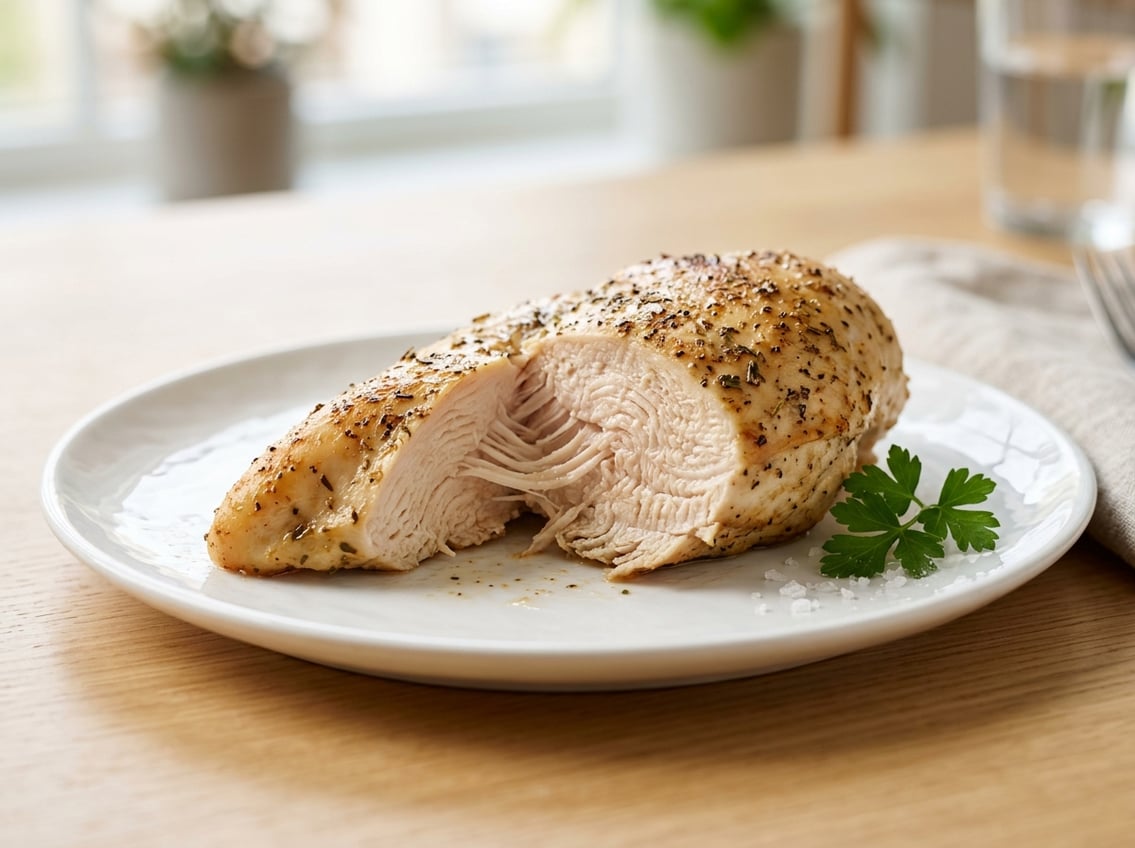
If you have asked, “why is my chicken breast stringy,” the answer usually comes down to the bird, the way it was processed, or the way you cooked it.
Lean breast meat shows these changes more clearly than darker cuts.
What Stringy Texture Usually Means
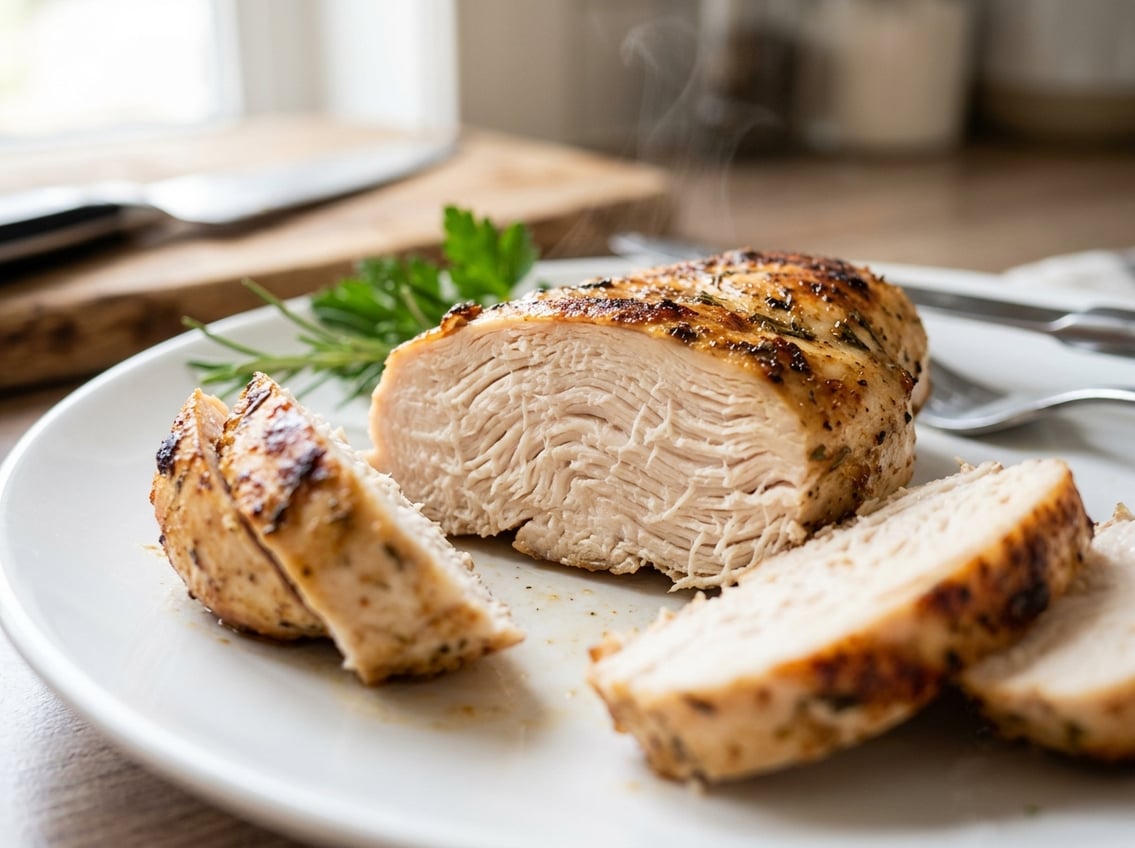
A stringy texture can be a normal grain, or it can signal a defect like spaghetti meat.
It can also show up in chicken that turns tough during cooking, especially when moisture leaves the meat too fast.
Normal Grain Vs a Texture Defect
Normal chicken breast has muscle fibers that run in one direction, so a little grain is expected.
The surface should still look firm and compact.
A texture defect looks different.
The fibers separate into loose strands, the meat may look ragged, and the cut can feel fragile or mushy rather than tight.
What Is Spaghetti Meat?
“Spaghetti meat” is the common name for a chicken breast defect where the muscle bundles pull apart into thin strands.
In what is spaghetti meat, the structure weakens enough that the meat can look split before cooking.
This is not the same as normal grain.
It is a visible change in the way the muscle holds together, and it can make the chicken breast stringy when you cook it.
Spaghetti Meat Vs Woody Chicken
Spaghetti meat and woody chicken are different problems.
Spaghetti meat usually looks soft, split, and loose, while woody chicken feels dense, hard, or rubbery.
Both can make chicken breast tough.
A woody chicken texture tends to feel firmer, while spaghetti meat often looks more fragile and fibrous.
Why It Happens Before and During Cooking
Chicken breast can start with weak structure before it ever hits the pan.
Cooking then changes the muscle fibers, myofibrils, and connective tissue, which can turn a small texture issue into tough or stringy chicken.
Fast Growth in Broiler Chickens and Meat Structure
Broiler chickens grow fast, and rapid growth can outpace the support structure in the breast meat.
When the muscle gets larger faster than the connective tissue can keep up, the fibers separate more easily.
That is one reason broiler chickens sometimes produce chicken breast that looks stringy or weak.
The meat is still usable, but its internal structure is less stable.
How Overcooking Dries Out Lean Breast Meat
Chicken breast is lean, so it dries out faster than fattier cuts.
When heat is too high or the cook time is too long, muscle fibers contract too much and push moisture out.
That is how juicy chicken breast turns into tough chicken.
According to Chef’s Resource, overcooking is a common reason chicken becomes dry and stringy.
Carryover Cooking and High-Heat Mistakes
Carryover cooking keeps raising the temperature after you remove the chicken from the heat.
If you wait too long to pull it, the breast can overshoot the safe target and lose more moisture.
Very high heat can also cause the outside to tighten before the inside is done.
That creates a dry, stringy chicken breast even when the center seems cooked properly.
Is It Safe to Eat and How to Spot Problems
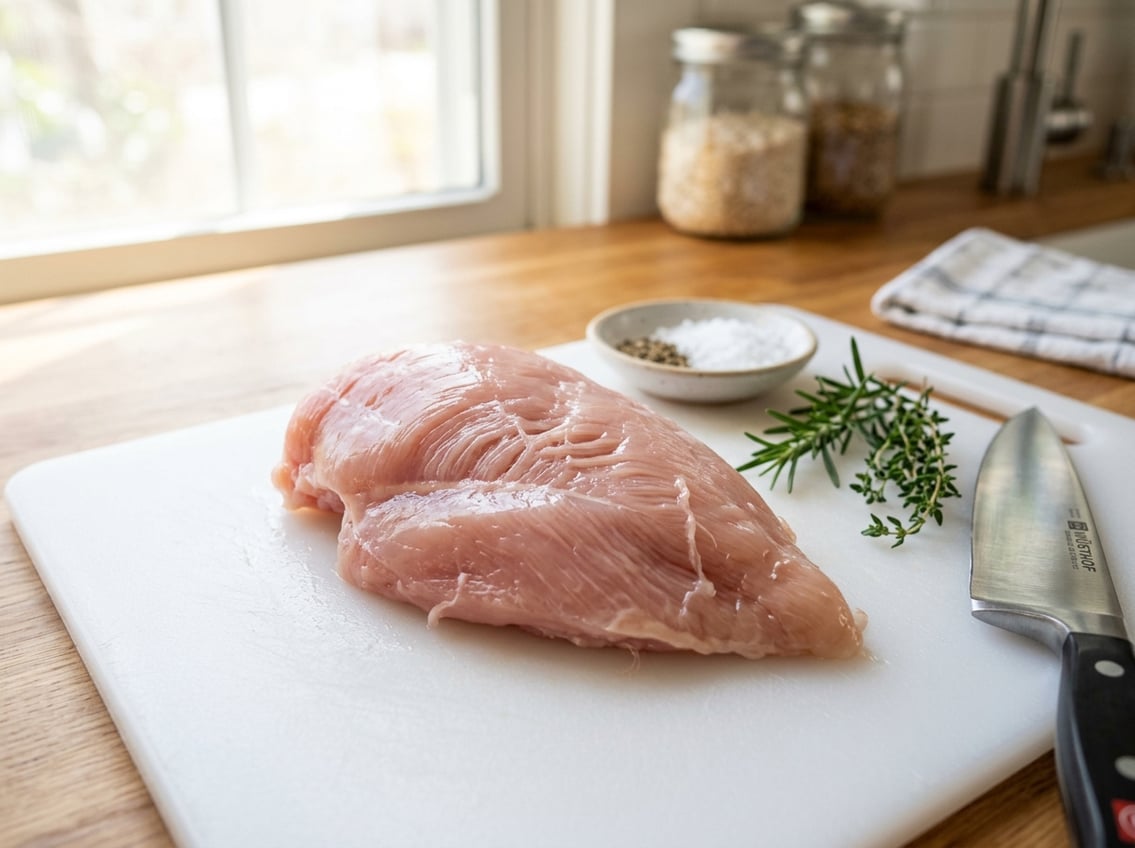
A strange texture does not always mean spoiled chicken.
You need to separate harmless texture defects from signs of bad chicken, especially with raw chicken breast stringy enough to look unusual.
When Strange Texture Is Safe
If the chicken smells normal, looks normal, and was stored and cooked safely, a stringy texture alone does not mean it is unsafe.
This is common with spaghetti meat chicken and other texture defects.
According to Cook Answers, the meat may still be safe even if it looks mushy or fibrous.
The main issue is quality, not necessarily food safety.
Signs You Should Throw It Out
You should skip the chicken if you notice an off smell, slimy surface, gray-green color, or sour taste.
Those are spoilage signs, not just texture issues.
If the chicken breast stringy appearance comes with sticky slime or a bad odor, do not cook or eat it.
A bad texture plus spoilage signs means the meat is not worth saving.
What to Look for When Buying Chicken
Choose chicken that looks firm, moist, and even.
Avoid packs with pieces that look split, overly pale, or oddly fibrous before cooking.
Some shoppers prefer smaller cuts or organic chicken when they want a better chance at tender meat.
Even then, you still need to check for freshness and proper storage.
How to Prevent and Fix a Bad Texture
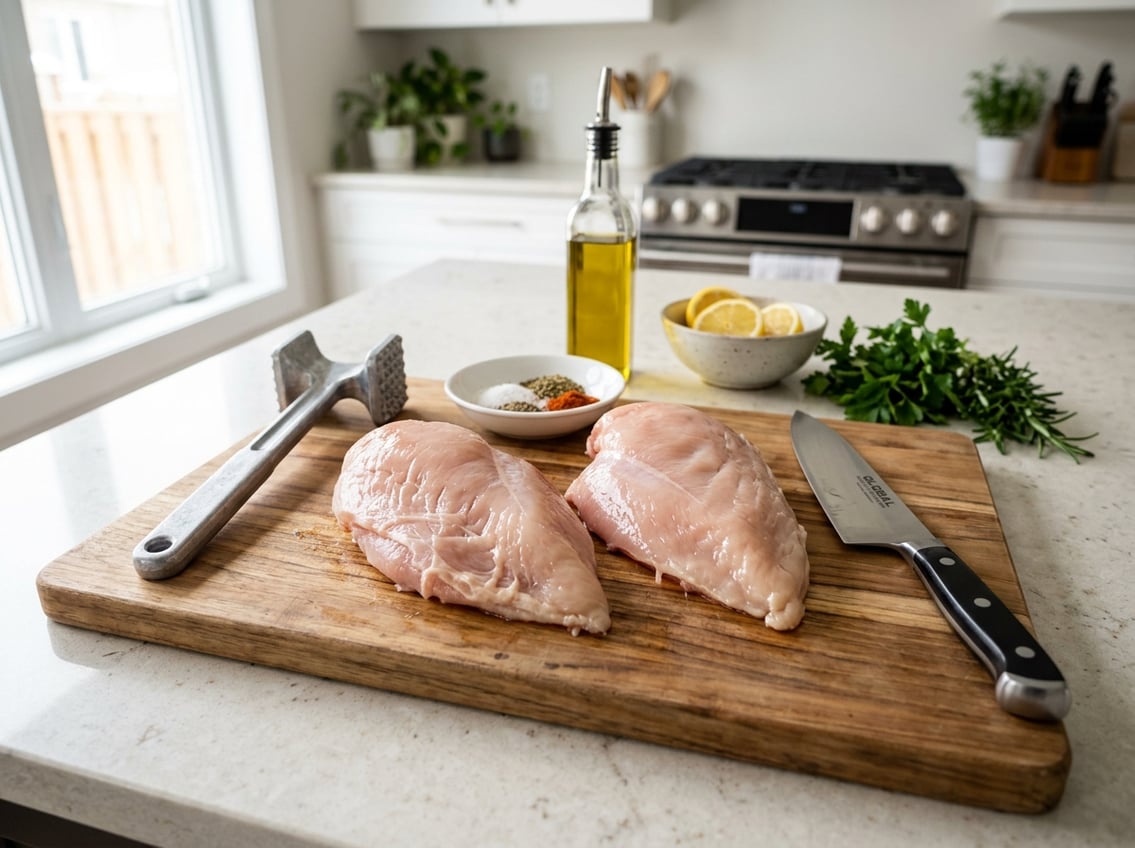
Good temperature control matters more than guesswork.
Moisture, cutting direction, and gentle handling also help you prevent stringy chicken breast and keep the meat tender.
Use a Meat Thermometer for Better Doneness
A meat thermometer is the easiest way to avoid dry chicken.
Cook to temperature, not time, and remove the meat when it reaches 165°F in the thickest part, as the CDC recommends for chicken.
Let the chicken rest after cooking so carryover heat finishes the job.
That short pause helps keep juicy chicken breast from turning dry.
Brining and Tenderizing for Better Moisture
Brining chicken breast helps it hold more moisture during cooking.
A simple saltwater brine can improve texture without adding much work.
You can also try brining chicken before grilling or roasting.
Use tenderizing chicken methods like light pounding or a brief marinade.
These steps help prevent stringy chicken and improve juiciness.
Pounding, Slicing, and Low-Heat Methods
Pounding chicken breast helps even out thickness, so the meat cooks at the same rate. This lowers the risk of dry edges and raw centers.
After cooking, slice against the grain to shorten the muscle fibers on the plate. For thicker breasts, cooking low and slow when the recipe allows can also help.
These habits help you prevent stringy chicken breast and get tender, juicier results.


