
Why Does Chicken Breast Dry Out? Causes and Fixes
Chicken breast dries out easily because it is very lean and has little fat to protect its moisture as it cooks.
When you cook the meat too long or at too high a temperature, the fibers tighten and liquid escapes, resulting in dry chicken breast instead of juicy meat.
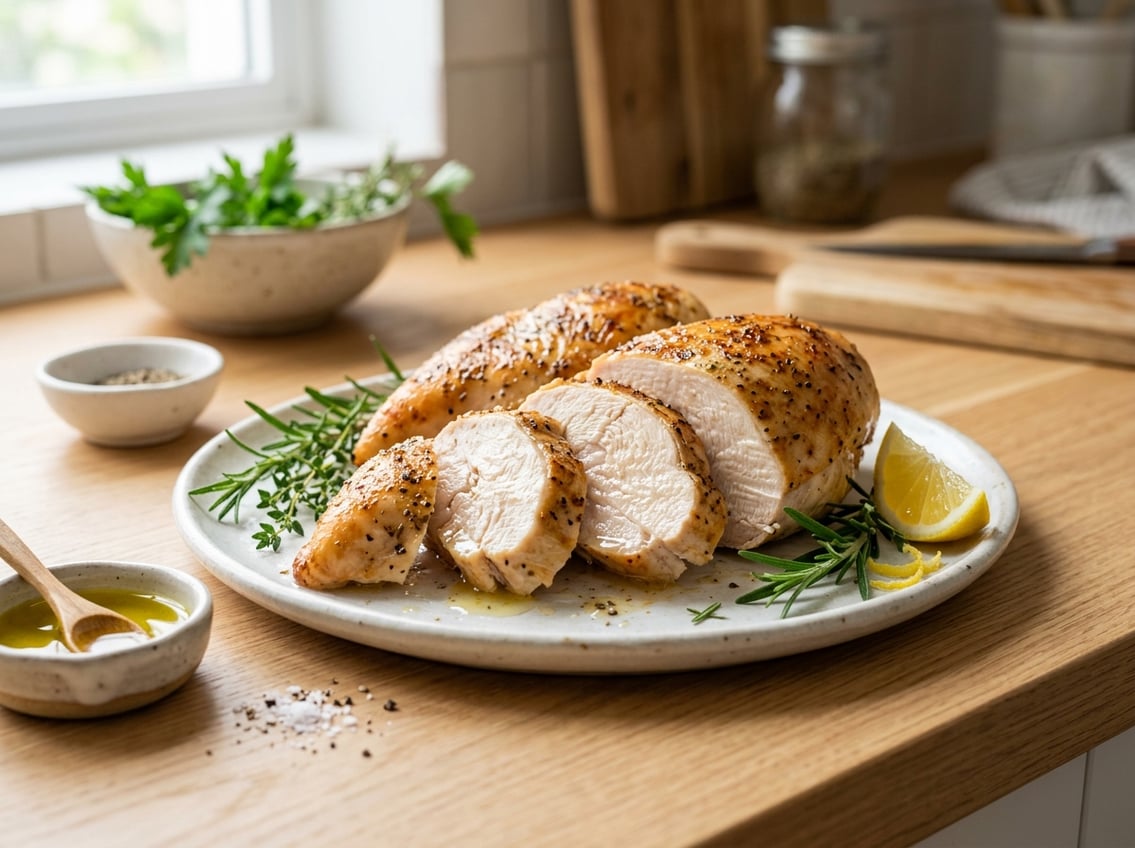
You can keep chicken breast moist, tender, and safe by controlling heat, using a thermometer, and resting the meat at the right time.
Chicken breast is one of the easiest cuts to overcook because it has so little fat and such a narrow window between done and dry.
Once you know what causes the problem, you can fix it with simple changes in timing and technique.
What Makes Chicken Breast Lose Moisture So Fast
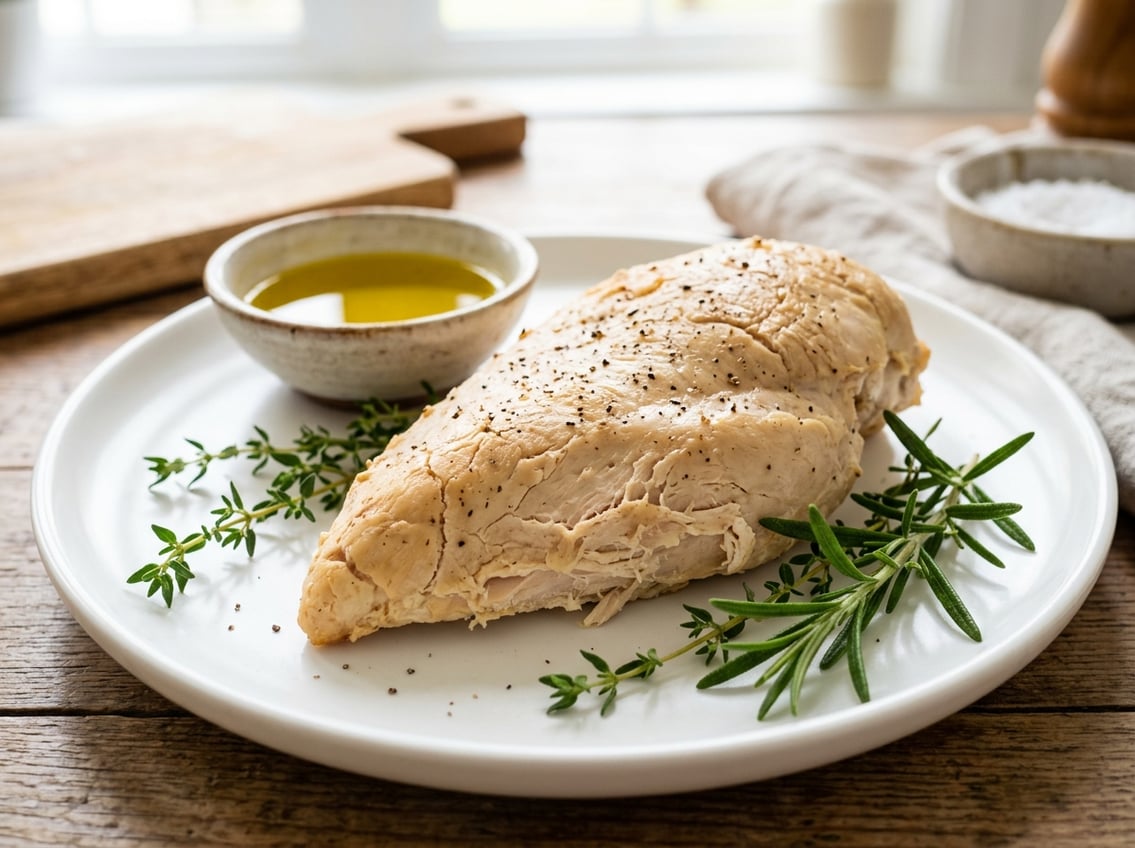
Chicken breast dries out faster than many other cuts because it starts with less fat and less built-in protection against heat.
If you roast chicken breast alone, it can go from moist to dry quickly if the heat is too strong or the cooking time runs long.
Why Lean White Meat Is Less Forgiving Than Dark Meat
Chicken breast is lean white meat with less fat than thighs or drumsticks.
Fat helps keep meat moist during cooking, so chicken breast is less forgiving when heat is high or timing is off.
As Simply Recipes points out, the breast muscle has little fat and dries out faster than fattier cuts.
How Heat Tightens Proteins and Pushes Out Juices
As chicken cooks, the proteins firm up and contract.
That tightening squeezes moisture out of the muscle fibers, which is why overcooked chicken breast turns from juicy to dry, stringy meat.
Chicken Obsessed explains that once lean muscle moves past its safe temperature, liquid gets pushed out of the fibers.
Why High Heat and Long Cooking Dry It Out Quickly
High heat cooks the outside fast and can overrun the inside before the meat has a chance to stay tender.
Long cooking lets moisture escape while the temperature keeps climbing, so chicken breast can be moist at the right temperature, then dry just a few degrees later.
The Biggest Cooking Mistakes That Cause Dry Results
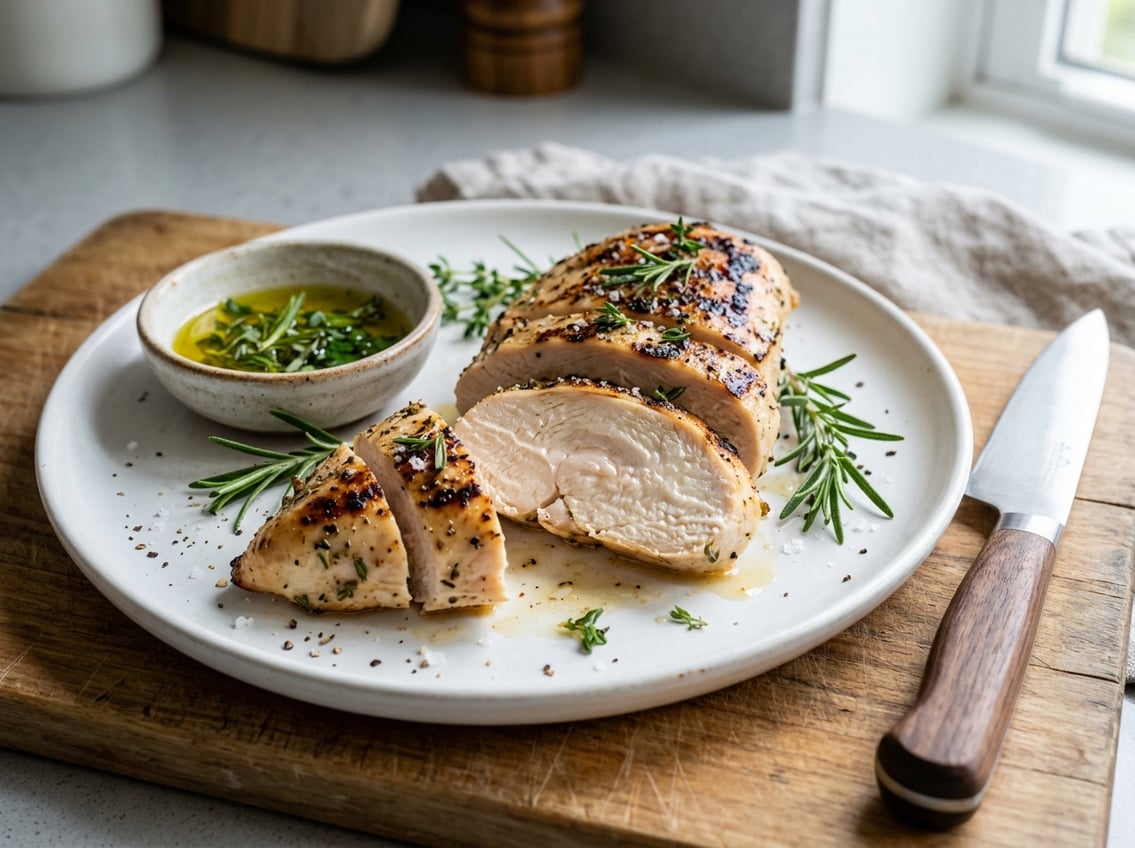
A few simple mistakes cause most dry chicken breast.
The biggest issues are cooking past the right point, guessing doneness, uneven thickness, and slicing too early.
Cooking Past the Right Internal Temperature
Chicken breast is easy to overcook because it keeps cooking after you remove it from the heat.
The safe target is 165°F, but pulling it a little early and letting residual heat finish the job often gives the best result.
Overcooking past that point turns tender chicken breast into tough meat fast.
Skipping a Digital Thermometer and Guessing Doneness
Guessing doneness often leads to dry chicken breast.
A digital or instant-read thermometer tells you the actual internal temperature, so you can avoid relying on color or timing alone.
Simply Recipes notes that chefs use a thermometer to avoid both dry and undercooked chicken.
Uneven Thickness From Not Pounding Chicken Breast
Chicken breasts are often thick on one end and thin on the other.
If you skip pounding them to an even thickness, the thin parts overcook while the thicker parts catch up.
Even cooking is much easier when the meat has a similar thickness across the whole piece.
Cutting Too Soon Before Residual Heat Settles
Residual heat keeps moving through the meat after it leaves the pan or oven.
If you cut too soon, the juices run out before they settle back into the fibers.
A short rest lets the inside finish evenly.
How to Keep Chicken Breast Juicy Every Time
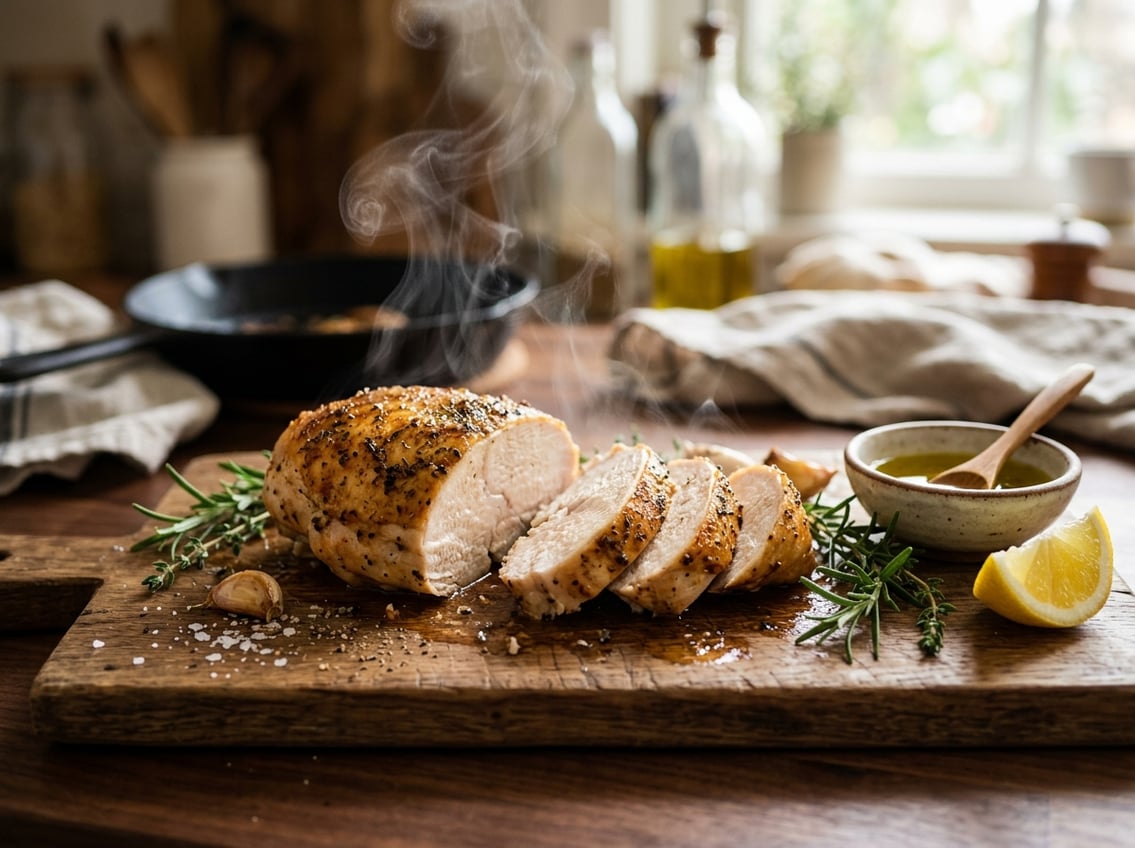
You can keep chicken breast moist by building a little protection before cooking and stopping at the right point.
Dry brining, gentler heat, and proper resting all help the meat stay tender.
Use Dry Brining to Improve Moisture Retention
Dry brining means salting the chicken ahead of time and letting it sit.
The salt seasons the meat more evenly and helps it hold onto moisture during cooking for a juicier finish.
Pull the Meat Early and Let Carryover Cooking Finish
Carryover cooking matters because the temperature keeps rising after the heat is off.
Pull chicken breast a few degrees before it is fully done, then let residual heat finish the cooking while it rests.
Choose Lower, Gentler Heat for Better Texture
Lower heat gives the proteins more time to cook without squeezing out as much liquid.
One chef quoted by Simply Recipes recommends cooking at 225°F for more tender results.
Gentler heat often gives you better texture.
Rest Properly Before Slicing
Resting helps the juices stay in the meat instead of spilling onto the cutting board.
Wait a few minutes before slicing, then cut against the grain for a softer bite.
Best Cooking Approaches for More Reliable Texture
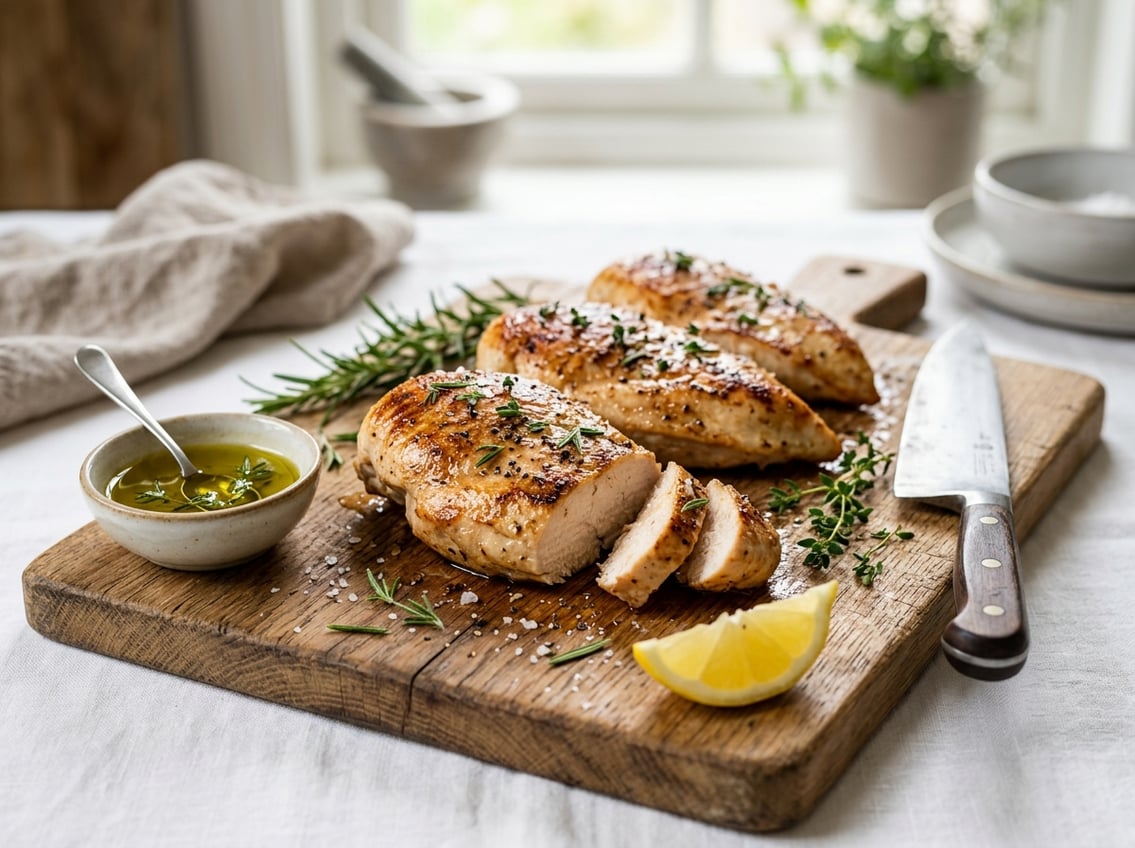
The most reliable methods give you steady heat and clear temperature control.
Roasting, pan-searing, and low-temperature cooking all work well when you watch the internal temperature closely.
Oven Roasting and Roast Chicken Timing Tips
Oven roasting gives you even heat, making it easier to cook chicken breast through without burning the outside.
Use a digital thermometer and check the thickest part, since time alone can vary based on size and shape.
If you roast chicken breast alongside other pieces, remove the breasts first so they do not overcook.
Pan-Seared Chicken Breast With a Gentle Finish
Pan-searing gives you good browning, then a lower oven finish helps prevent dryness.
Start with moderate heat in the pan, then finish the chicken gently until the internal temperature is close to done.
This method works well when you want color on the outside and moist chicken inside.
When Low-Temperature Cooking Makes Sense
Low-temperature cooking gives you more control and reduces the risk of overcooking.
It works especially well for thick chicken breast. This method lets the meat heat evenly while staying tender.
If you cook at 225°F or use another gentle setting, watch the thermometer closely. Pull the meat before it goes too far.


