
Chicken Breast More Protein Than Steak? Clear Comparison
Chicken breast usually has more protein than steak, especially when you compare skinless chicken breast to common steak cuts. The difference is not huge for every cut, and the result changes when you look at calories, fat, and serving size.
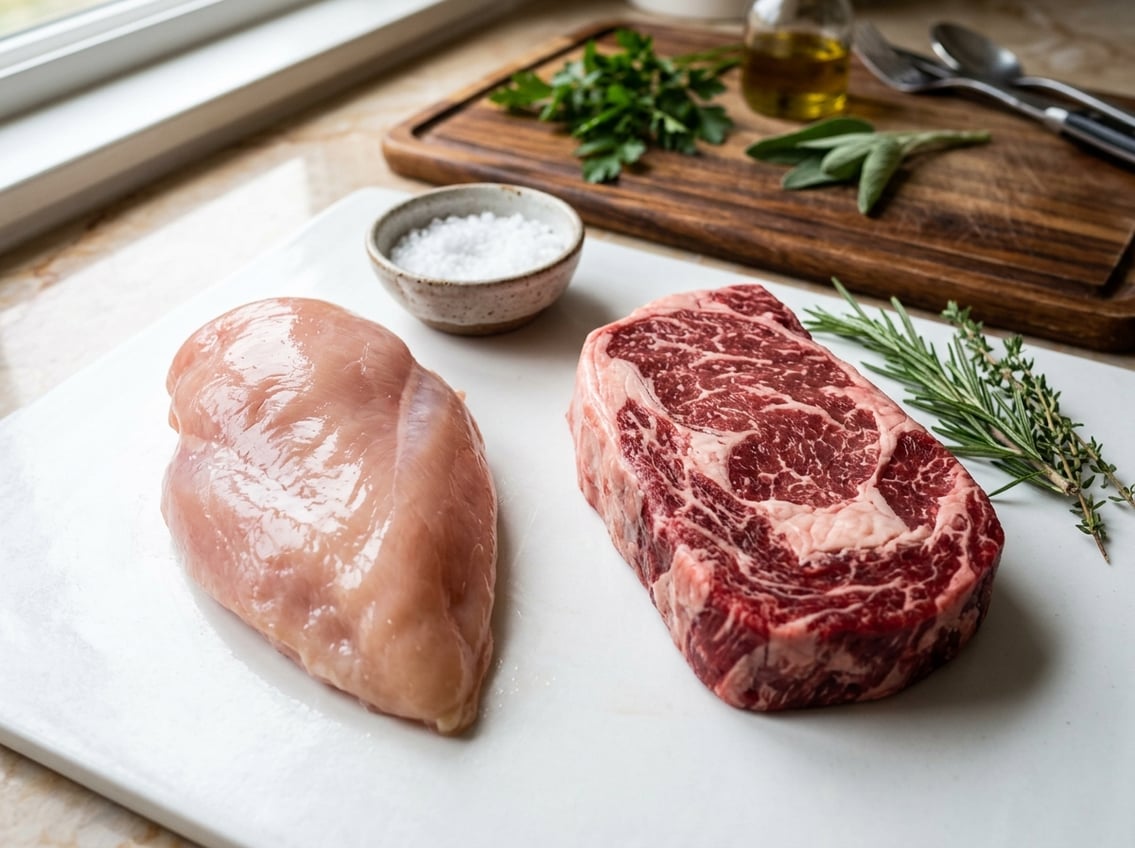
If you want the most protein for the fewest calories, skinless chicken breast usually has the edge. If you care about mineral content, flavor, or a different fat profile, steak can still be the better fit.
Both foods give you complete protein with all essential amino acids. The main difference is protein density, which tells you how much protein you get for each bite and each calorie.
The Direct Protein Comparison
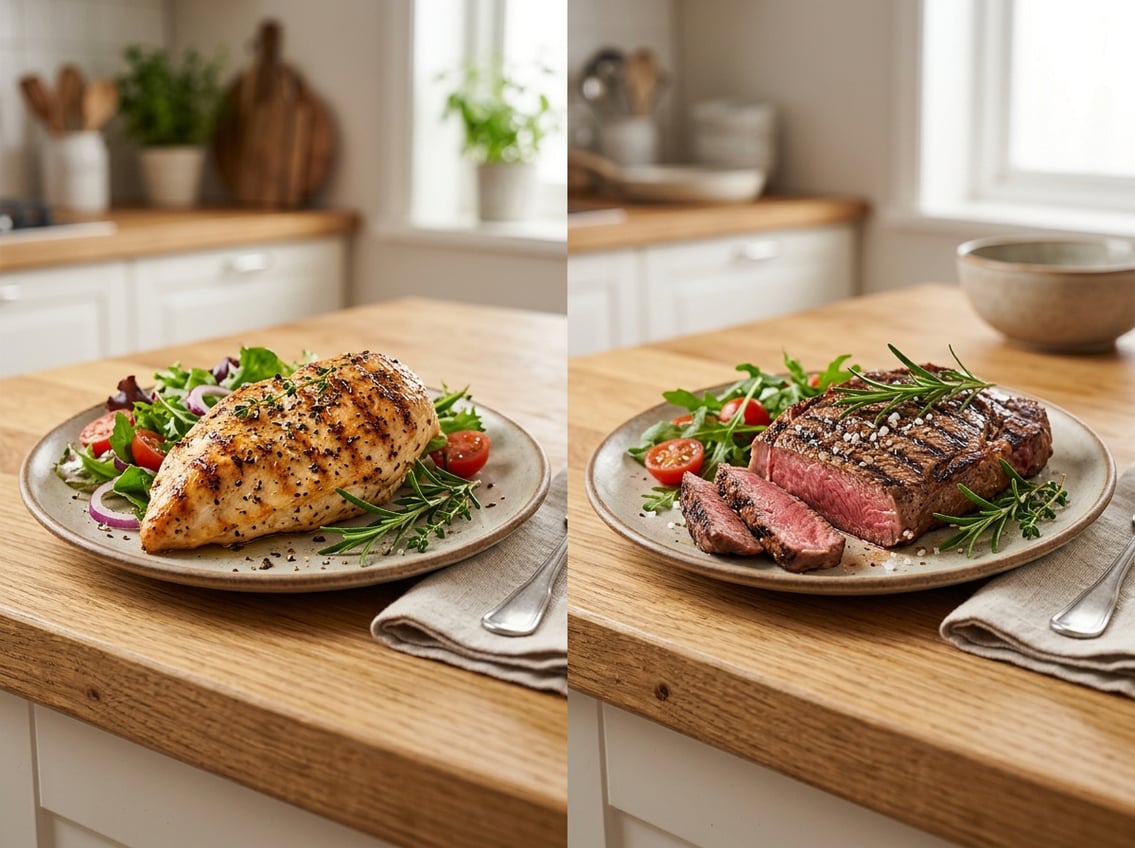
Skinless chicken breast usually provides more protein than steak when you compare equal weights. The comparison changes depending on the cut of steak and the cooking method.
These numbers work best when you think in standard servings and calorie totals.
Protein Per 100 Grams and Standard Servings
In a typical macronutrient comparison, skinless chicken breast has about 31 grams of protein per 100 grams. Lean sirloin steak has about 29 grams per 100 grams, according to a recent nutritional breakdown from Eat Much.
That means chicken breast usually gives you slightly more protein by weight.
A 3-ounce portion of steak often gives you around 23 grams of protein, as noted by Chophouse Steaks. Chicken breast often lands a little higher for the same portion size.
Protein Per 100 Calories and Protein Per Calorie
Chicken breast usually delivers more protein per 100 calories because it is naturally leaner than most steak cuts. Calories matter when your goal is to maximize protein without adding much energy.
Protein per calorie is often the better metric than protein per serving. Foods can have a strong protein total and still bring extra fat and calories with them.
Why Skinless Chicken Breast Usually Wins on Protein Density
Protein density means how much protein you get relative to calories and fat. Skinless chicken breast usually wins here because it has high protein with very little fat.
Steak protein is still excellent, especially in lean cuts. Most steak options carry more calories per gram of protein.
What Changes the Answer in Real Life
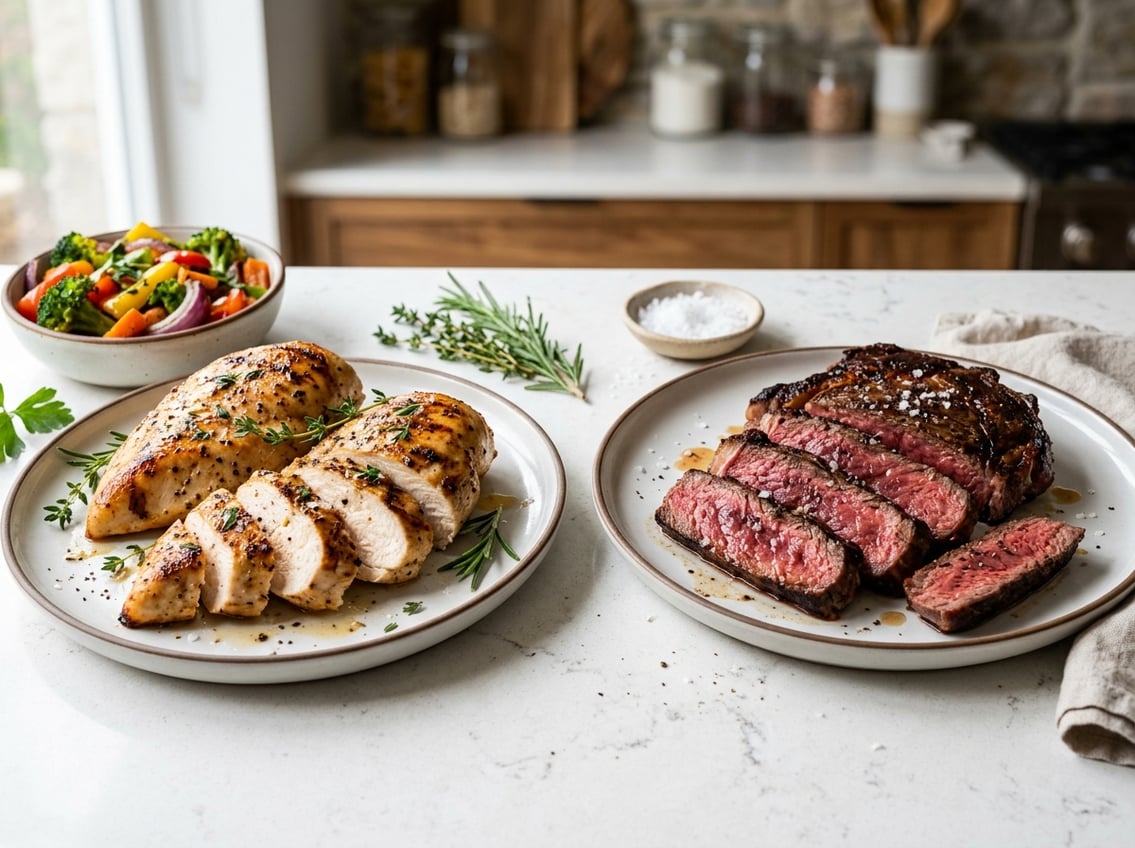
The best answer depends on the cut, the cooking method, and your meal target. A lean steak can close the gap, while added oils, butter, or breading can change the numbers fast.
Lean Steak Cuts Versus Fattier Cuts
Lean steak cuts such as sirloin or eye of round come much closer to chicken breast than ribeye or strip steak. A lean cut can be a solid lean protein choice, especially if you want more iron and zinc.
Fattier cuts lower the protein density because more of the serving is made up of fat. This changes the balance of protein per calorie.
Cooking Methods and Added Fat
Pan-frying in oil, basting with butter, or serving steak with rich sauces pushes calories up fast. Chicken breast can also lose its lean advantage if you bread it or cook it with a lot of added fat.
Grilling, roasting, and air-frying keep both foods closer to their natural macronutrient profile. The cooking method can matter as much as the meat itself if you track intake closely.
Protein Per Meal for Different Eating Goals
If you want muscle gain, you may care more about total protein per meal than protein density alone. A larger steak portion can make it easier to reach a high protein target in one sitting.
If your goal is fat loss, a smaller portion of chicken breast may fit better because it gives you more protein with fewer calories. That makes it easier to build a meal around vegetables, grains, or other foods without overshooting your calorie target.
Calories, Fat, and Overall Nutrition Tradeoffs
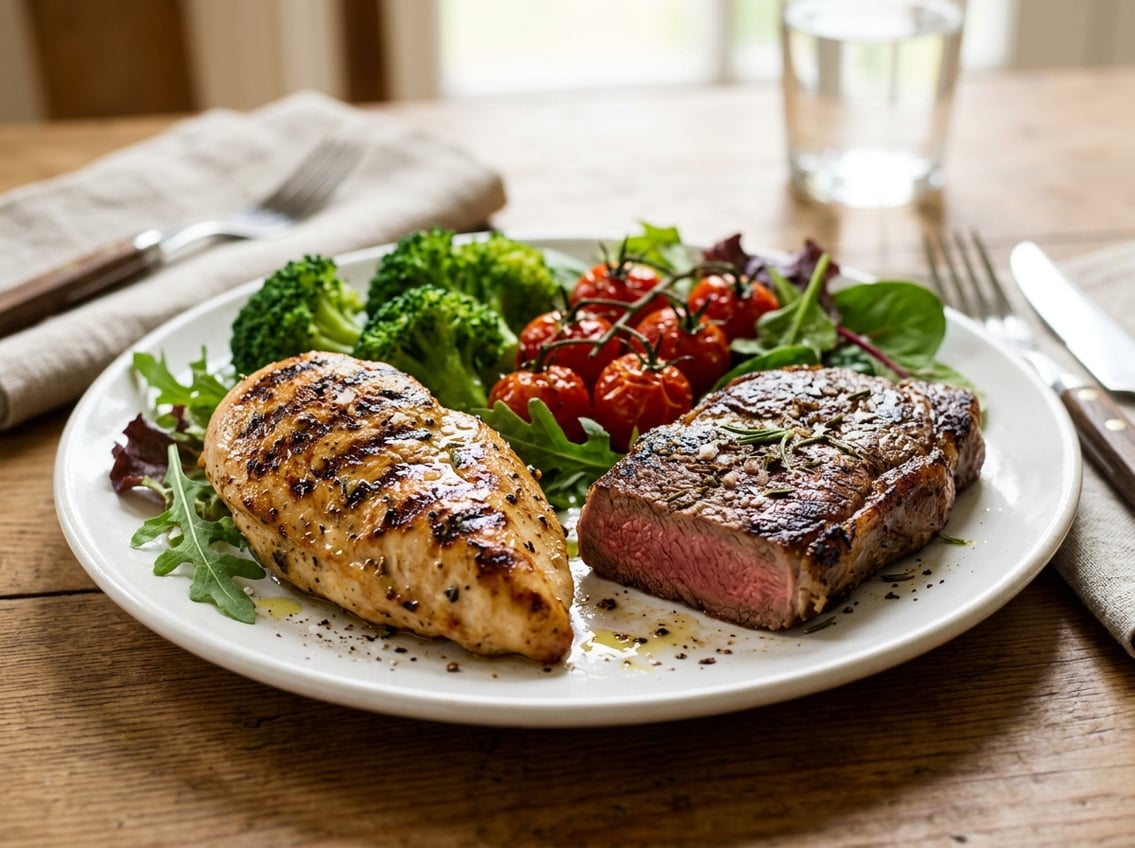
Protein is only one part of the decision. The better choice for you also depends on fat intake, total calories, and which vitamins and minerals matter most in your diet.
Macronutrient Breakdown of Chicken Breast and Steak
Chicken breast is usually lower in calories and fat, which makes it a classic lean protein. Steak contains more fat on average, so its calorie count is usually higher for the same amount of protein.
That difference matters if you are comparing foods for cutting, maintenance, or bulking. A tighter calorie budget usually favors chicken breast, while a higher-calorie plan can leave room for steak more easily.
Saturated Fat and Unsaturated Fat Differences
Steak usually contains more saturated fat than skinless chicken breast. Chicken breast has less total fat, and the fat it does contain is a smaller part of the meal.
If you are watching saturated fat intake, chicken breast is often the simpler choice. If you want a richer taste and more natural fat in the meal, steak may fit better.
Vitamin and Mineral Strengths of Each Option
Steak stands out for iron, zinc, vitamin B12, and selenium, according to FoodStruct’s chicken breast vs. steak comparison. Those nutrients support oxygen transport, immune function, and energy metabolism.
Chicken breast brings its own strengths, especially niacin and phosphorus. Chicken often works well when you want a very lean meal, while steak offers stronger mineral support.
Which Option Fits Your Goal Best
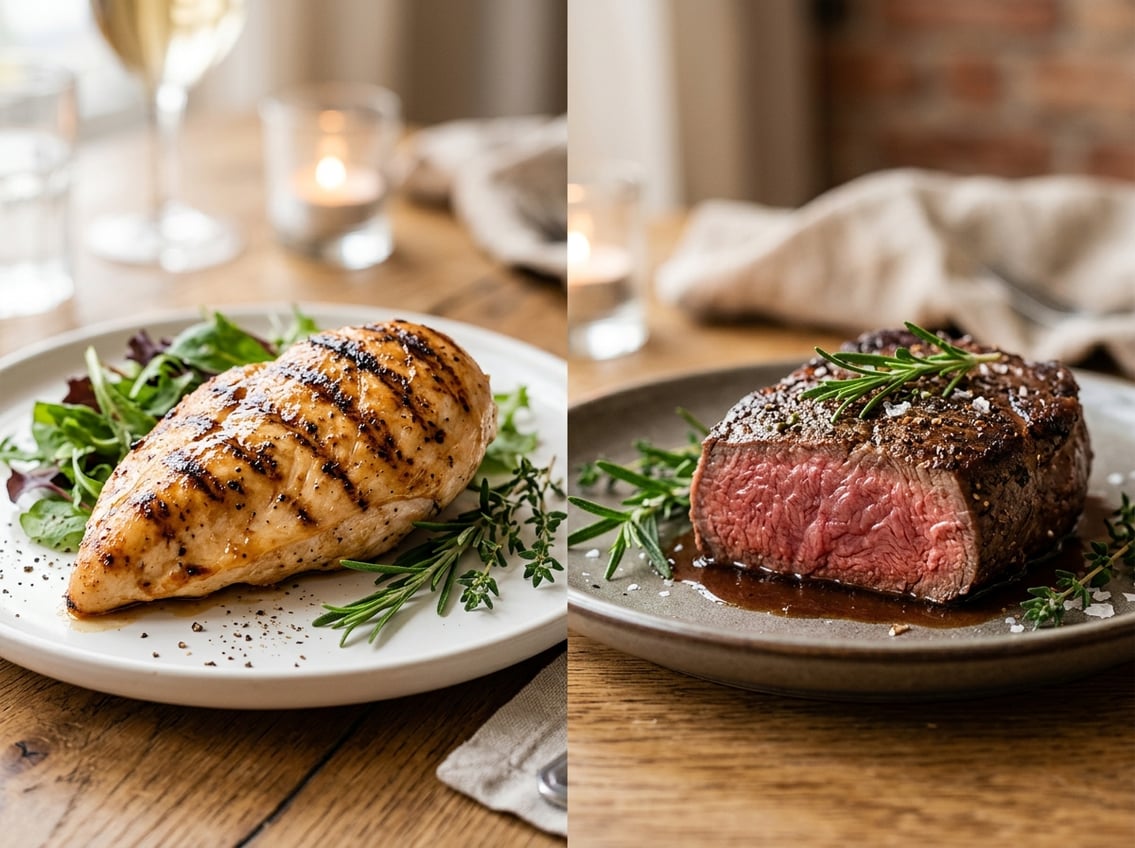
Your best choice depends on what you want from the meal, not just the protein total. Think about protein per meal, protein per calorie, and the vitamin and mineral profile you need most often.
Best Choice for Cutting and Weight Management
Skinless chicken breast is usually the better pick for cutting because it gives you strong protein per calorie with very little fat. That helps you stay full while keeping calories easier to manage.
If you are trying to lose weight, this is often the most reliable choice. It gives you a large protein return without taking much of your daily calorie budget.
Best Choice for Muscle Building and Higher-Calorie Diets
Steak can fit well into a muscle-building diet, especially if you need more calories and want a meal that feels more filling. Lean steak cuts also bring useful minerals that support training and recovery.
If you are already eating enough protein each day, steak can be a practical way to add variety. The extra fat can also make it easier to reach a calorie surplus.
Best Choice When You Want Micronutrient Support
If you want mineral support, steak protein offers a clear advantage. It gives you more heme iron, zinc, and vitamin B12 than chicken breast.
If you want a simple, lean meal with high protein density, skinless chicken breast is a strong option. Choose the one that fits your calorie needs, protein target, and nutrient gaps.


