
Can Chicken Breast Be Refrozen? Safety Rules
You can refreeze chicken breast if you thawed it the right way and kept it cold. In most home kitchens, you can refreeze raw chicken breast thawed in the refrigerator, but not chicken that warmed up too much or was thawed in unsafe conditions.
The safest rule is simple, you can refreeze chicken breast only when it has stayed at 40°F or below, has not been out for more than two hours, and is still completely raw. If you thawed the chicken in the microwave or in cold water, you should cook it first instead of putting it back in the freezer.
MedicineNet’s review of chicken refreezing safety explains that the main risk comes from bacterial growth, not from the freezer itself.
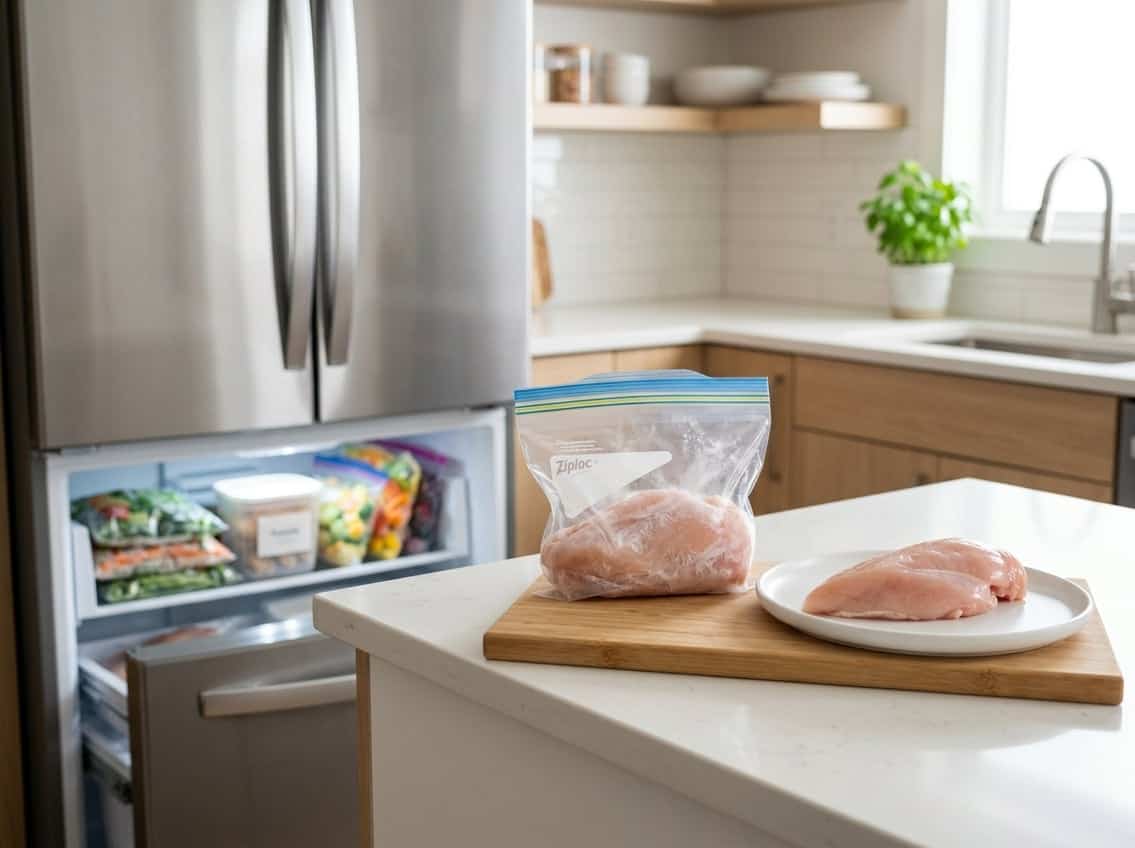
Food safety comes first with refreezing chicken breast, and quality comes second. If you handle thawed chicken correctly, you can often refreeze it safely, though the texture may change after another freeze-thaw cycle.
When Refreezing Is Safe and When It Is Not
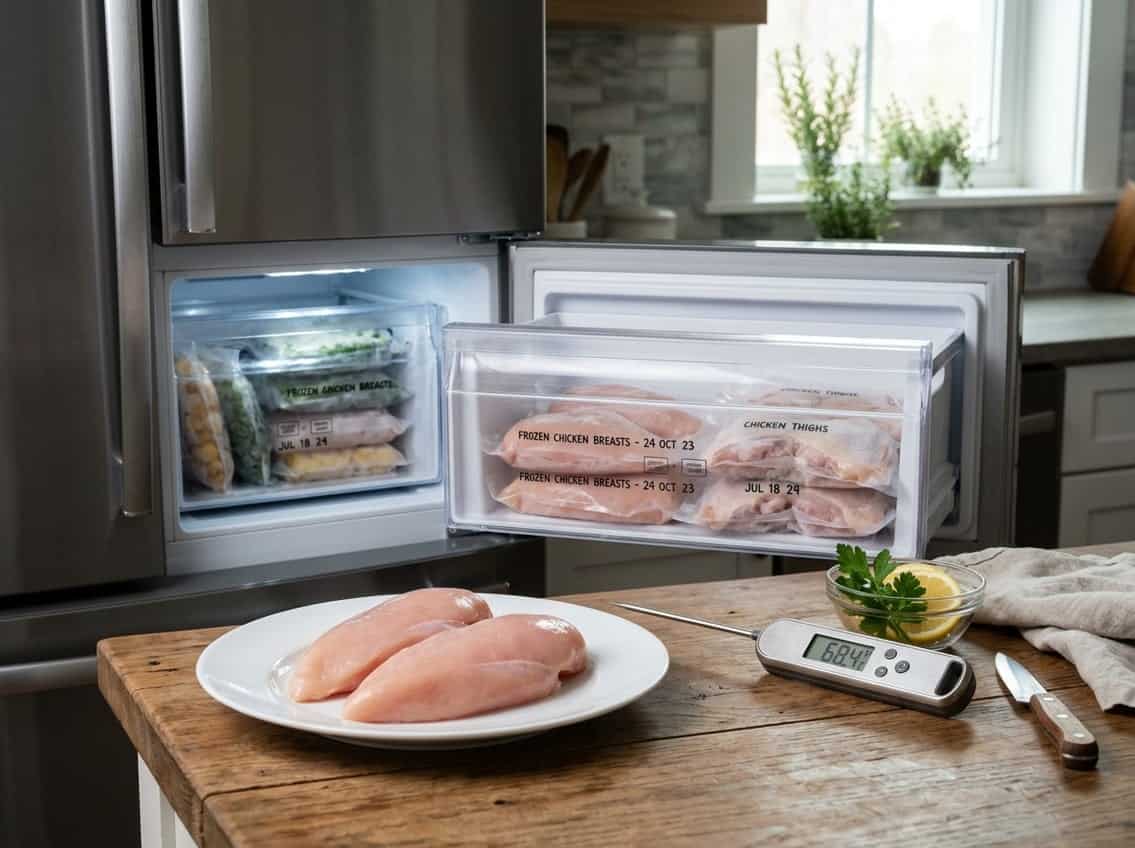
The main issue is how you thawed the chicken and how long it stayed warm. Safe thawing limits bacterial growth, while poor thawing methods can make refreezing risky.
Raw Chicken Breast Thawed in the Refrigerator
If you thawed raw chicken breast in the refrigerator, you can usually refreeze it while it is still raw. Keep it cold, keep it covered, and try to refreeze it within two days of thawing.
Refrigerator thawing keeps the meat below the temperature where bacteria grow quickly. That is why refreezing thawed chicken kept cold in the fridge is generally considered acceptable.
Chicken Breast Thawed in Cold Water or the Microwave
If you thawed chicken in cold water or the microwave, do not put it back into the freezer while raw. Those thawing methods can warm parts of the meat enough for bacteria to grow, so you should cook it first.
If you use cold water thawing, keep the water cold and change it every 30 minutes. If you use the microwave, cook the chicken right away.
Cooked Chicken Breast and Leftovers
You can freeze cooked chicken breast again if the leftovers stayed fresh and you handled them safely. Cooked chicken should go into the freezer within four days, as noted by MedicineNet.
This rule applies to fully cooked chicken, not chicken that is partly cooked. If the chicken is undercooked, cook it to a safe internal temperature before storing it again.
When to Discard Instead of Refreeze
Throw the chicken away if it sat at room temperature for more than two hours, smells bad, feels slimy, or has changed color in a way that looks off. Discard it if you are not sure how long it stayed warm.
If you have half-cooked chicken from microwave thawing or another unsafe method, do not refreeze it raw. Cook it right away if it still seems safe, or discard it if you have any doubt.
How to Handle Chicken Breast Before Putting It Back in the Freezer
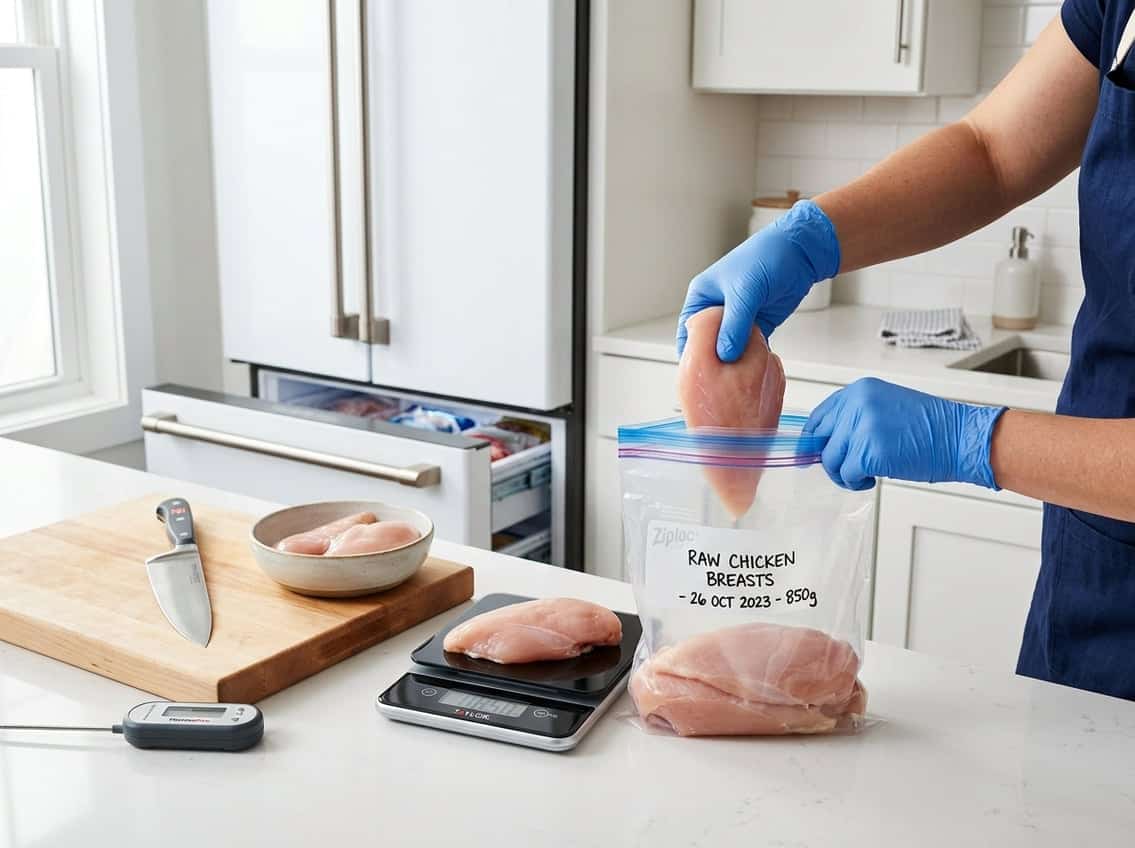
Good handling reduces both safety risks and quality loss. You want to keep thawed chicken cold, limit air exposure, and avoid mistakes that lead to freezer burn or spoilage.
Check Time, Temperature, and Signs of Spoilage
Start with the basics. Ask yourself how long the thawed chicken has been in the fridge, whether it ever warmed above 40°F, and whether it still looks and smells normal.
If the chicken has been in the refrigerator for less than two days and never sat out too long, you can usually refreeze it. If you are unsure, it is safer to cook it now.
Package It to Prevent Air Exposure
Use airtight containers, freezer bags, or tightly wrapped packaging to limit air contact. This helps prevent freezer burn and protects the chicken breast from drying out.
Push out extra air before sealing the bag. Smaller portions also freeze more evenly and are easier to use later.
Label Portions for Safer Reuse
Label each package with the date, whether it is raw or cooked, and the amount inside. Clear labels help you avoid keeping thawed chicken too long and reduce mistakes.
Split large packs into meal-sized portions before freezing if possible. That makes it easier to thaw only what you need.
What Refreezing Does to Quality, Texture, and Cooking Results
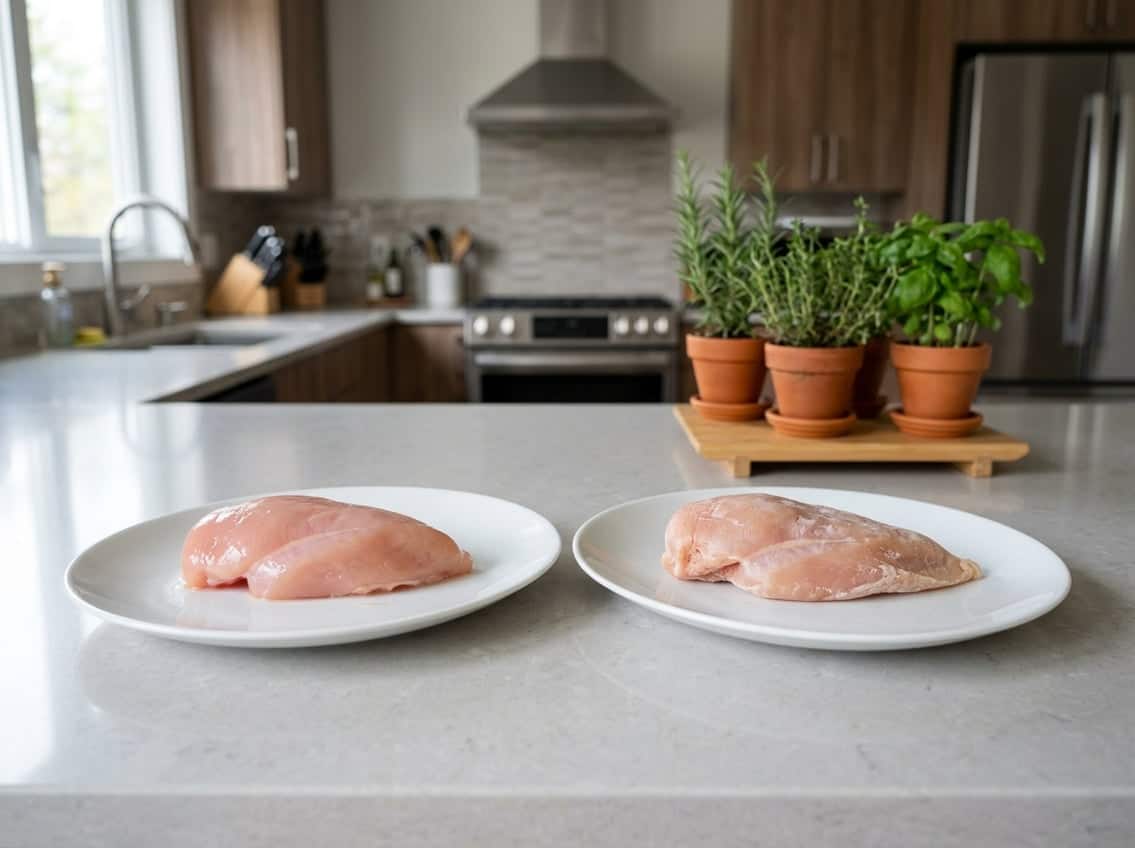
Refreezing usually affects texture more than safety, as long as you handled the chicken correctly. The biggest change comes from moisture loss during the freeze-thaw cycle.
Why Ice Crystal Formation Changes Texture
When chicken freezes, ice crystals form inside the meat. After thawing and refreezing, more moisture can escape from the cells, which can make the breast drier or less tender.
Refreezing chicken breast often leads to a firmer texture after cooking. It may still taste fine, especially in soups, casseroles, or shredded chicken dishes.
How Many Freeze-Thaw Cycles Are Too Many
You should avoid repeated freeze-thaw cycles whenever possible. One extra cycle is usually not a safety issue if the chicken stayed cold, but each round can lower quality.
If you know you will not use the chicken soon, freeze it in portions from the start. That limits waste and reduces texture loss.
Cooking Refrozen Chicken Breast Safely
Use a meat thermometer to check that chicken breast reaches an internal temperature of 165°F. Do not rely on color alone, as chicken can look done on the outside but still be undercooked.
Keep cooked chicken away from raw juices. Wash hands, cutting boards, and tools after handling raw meat.


