
When Are Chicken Breasts Cooked? Doneness Made Simple
When are chicken breasts cooked? Chicken breasts are cooked when the thickest part reaches a safe internal temperature of 165°F, and the meat is no longer pink or translucent in the center.
A reliable meat thermometer gives you the clearest answer, especially when you cook chicken breasts at different sizes and temperatures.
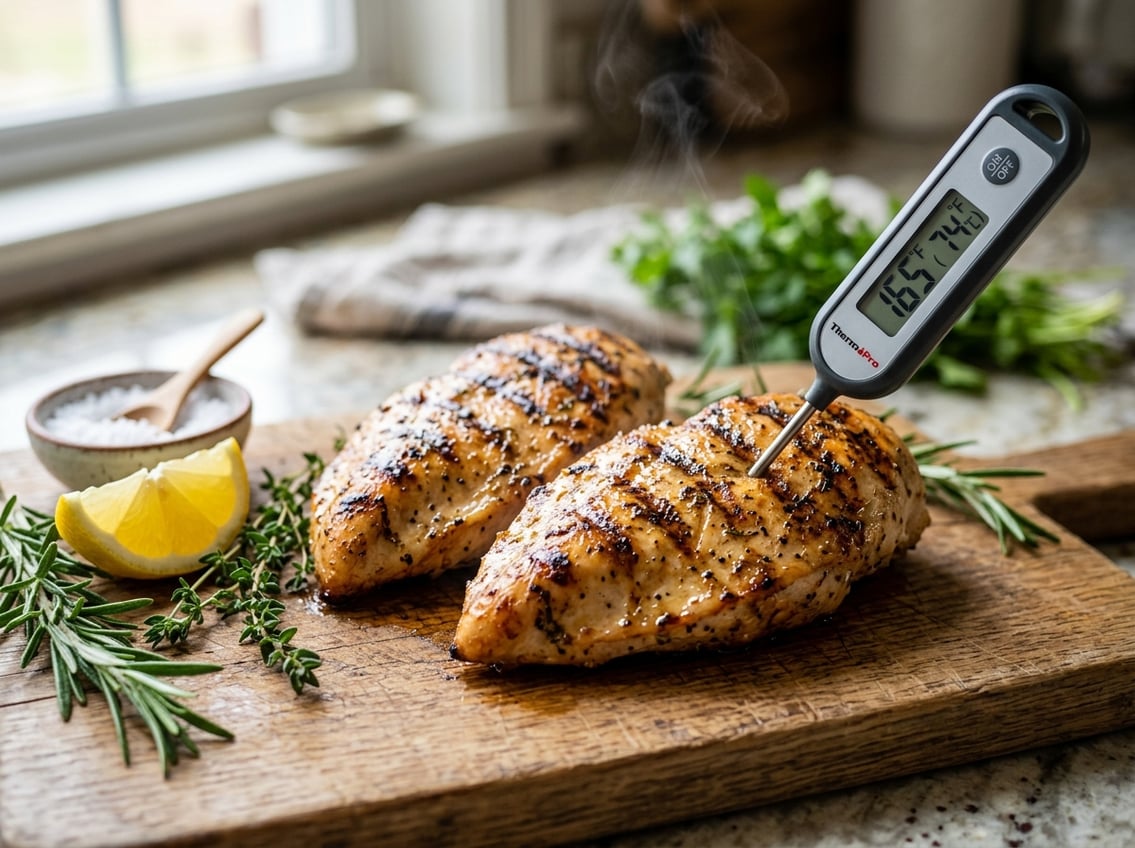
If you want juicy results, check temperature first, then use texture, color, and resting time as backup signs.
Chicken breasts are lean, so they can go from tender to dry fast.
If you use simple timing and temperature checks, you can serve safe chicken without guessing.
Safe Doneness and the Best Way to Check It
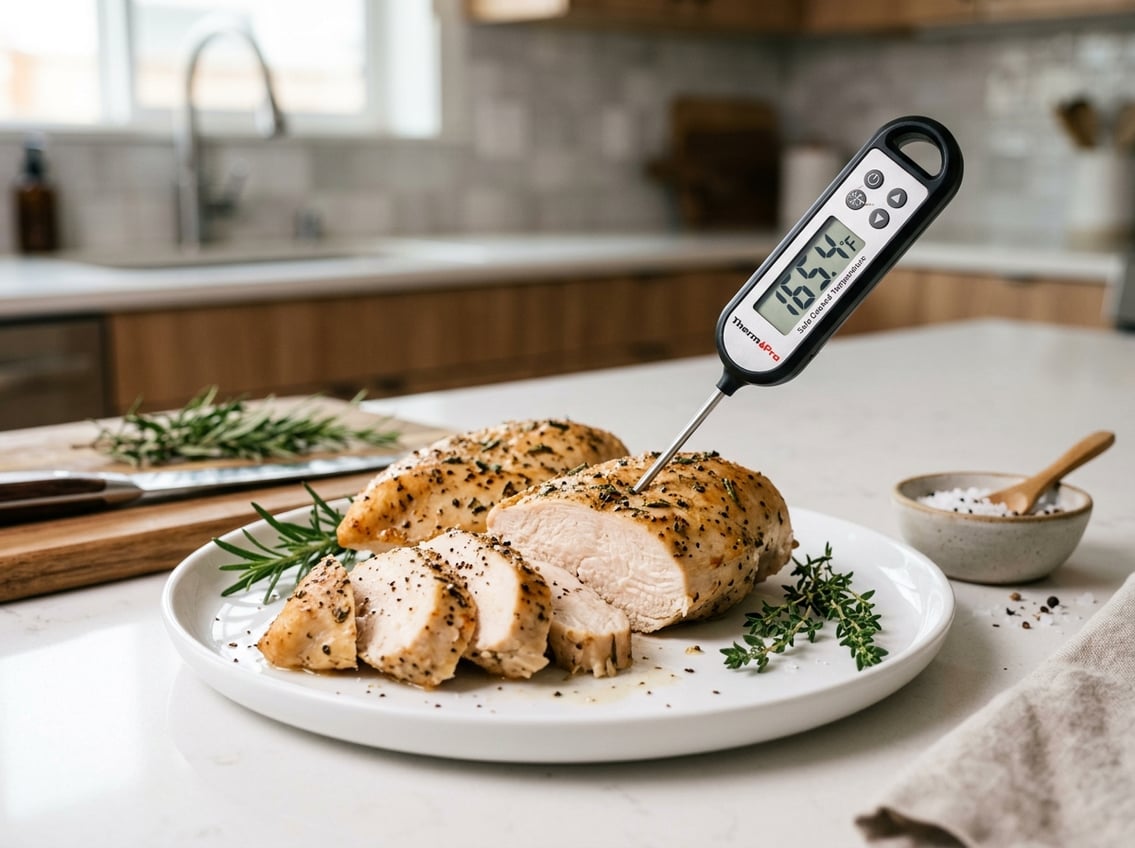
Temperature gives you the safest answer for doneness, not just color or cooking time.
A quick thermometer check takes the guesswork out of chicken and helps you avoid dry meat from overcooking.
Internal Temperature for Fully Cooked Chicken
Chicken breasts reach full doneness at 165°F in the thickest part.
That standard is the same whether you grill, bake, pan-sear, or poach.
A digital instant-read thermometer is the easiest tool for this job.
If you cook chicken breast to 165°F, you can eat it right away.
For thicker pieces, the center may still look slightly glossy at first, so trust the thermometer over the surface color.
Where to Insert a Thermometer
Insert the probe into the thickest part of the breast and avoid touching bone, fat, or the pan.
If you cook chicken breasts with uneven thickness, check the thickest area first.
If the piece is bone-in, move the tip so it sits in the meatiest center.
A bone can give a false reading and make you pull the chicken too early.
Why Resting Changes Final Temperature
After you take chicken off the heat, the temperature usually rises a few degrees.
That carryover heat helps finish the center and keeps the meat juicy.
Rest chicken for 5 to 10 minutes before slicing.
This short pause lets the juices settle, so less moisture runs out when you cut it.
Signs of Juicy Results Instead of Overcooked Meat
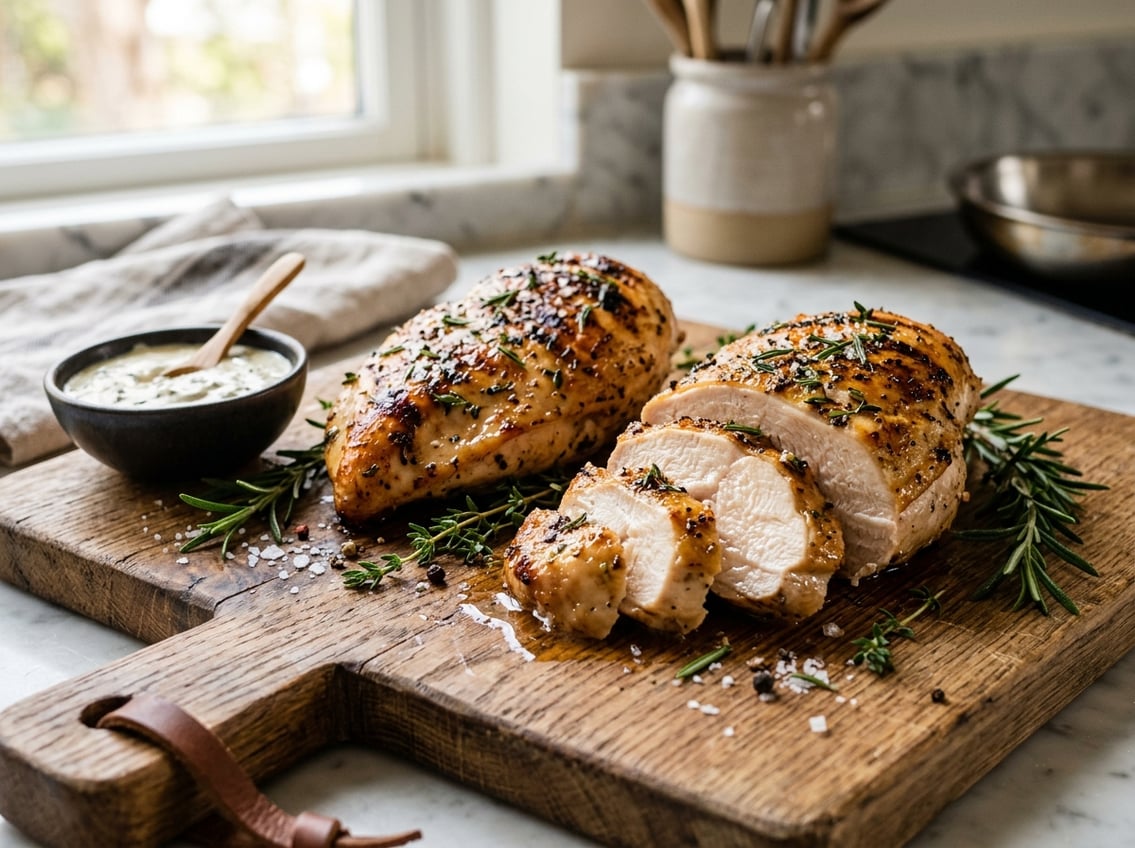
A juicy chicken breast gives you a few clear clues, even before you slice it.
Temperature is the best sign, yet texture and color help confirm that your chicken is ready without crossing into dry, tough meat.
Texture, Color, and Juices to Look For
A cooked chicken breast should feel firm with a little spring when pressed.
The center should be white or pale opaque, not raw-looking or jellylike.
Clear juices are a good sign too.
If you cut into a skinless chicken breast and the juices run clear, the meat is usually close to done, though you should still verify with a thermometer.
Why Thickness Matters More Than Time
Time alone can mislead you because chicken breasts vary in size.
A thin boneless chicken breast may finish quickly, while a large one can still be undercooked in the center after the outside looks ready.
Thickness matters more than the clock.
Two pieces in the same skillet can finish at different times, even if they start together.
Common Doneness Mistakes to Avoid
Do not cut into chicken too early just to check it.
That lets juices escape and can make a juicy chicken breast turn dry.
Do not rely on color alone, since lighting and marinades can hide the true center color.
Do not press so hard that you squeeze out moisture before resting.
Timing by Cooking Method
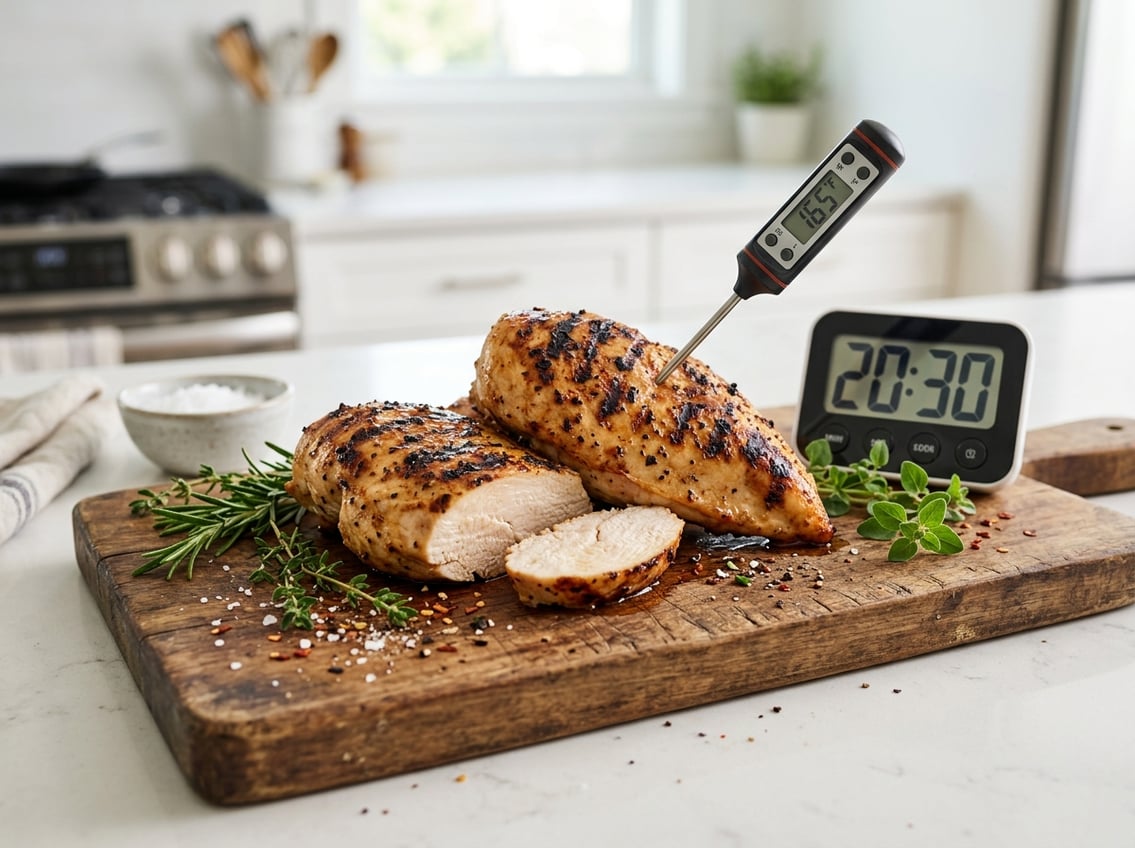
Cooking method changes timing a lot, so your plan should match the heat source you use.
These ranges are practical starting points, and thickness still decides the exact finish.
Oven-Roasted Breast Timing
Many cooks roast boneless, skinless chicken breasts at 425°F for about 20 to 25 minutes, depending on size, as noted by The Pioneer Woman.
Larger pieces may need a few more minutes.
Roasting works well because the heat surrounds the meat evenly.
Check the thickest part near the end of the estimate, then rest the chicken before slicing.
Pan-Seared and Stovetop Timing
A pan-seared chicken breast often needs about 5 to 7 minutes per side over medium to medium-high heat, depending on thickness.
Pan-seared chicken breasts may need a short finish in a low oven if they are thick.
A seared chicken breast should have a golden surface and a center that reaches 165°F.
Keep the heat steady so the outside does not darken before the middle cooks through.
Grill and Poaching Timing
On the grill, chicken breasts often take about 5 to 7 minutes per side, with lid use and thickness affecting the total time.
Turn them once for more even cooking.
Poached chicken breasts usually finish in about 10 to 15 minutes in gently simmering liquid.
Poaching uses mild heat and is useful when you want soft, even results and less surface browning.
How Cut and Skin Affect When It Is Ready
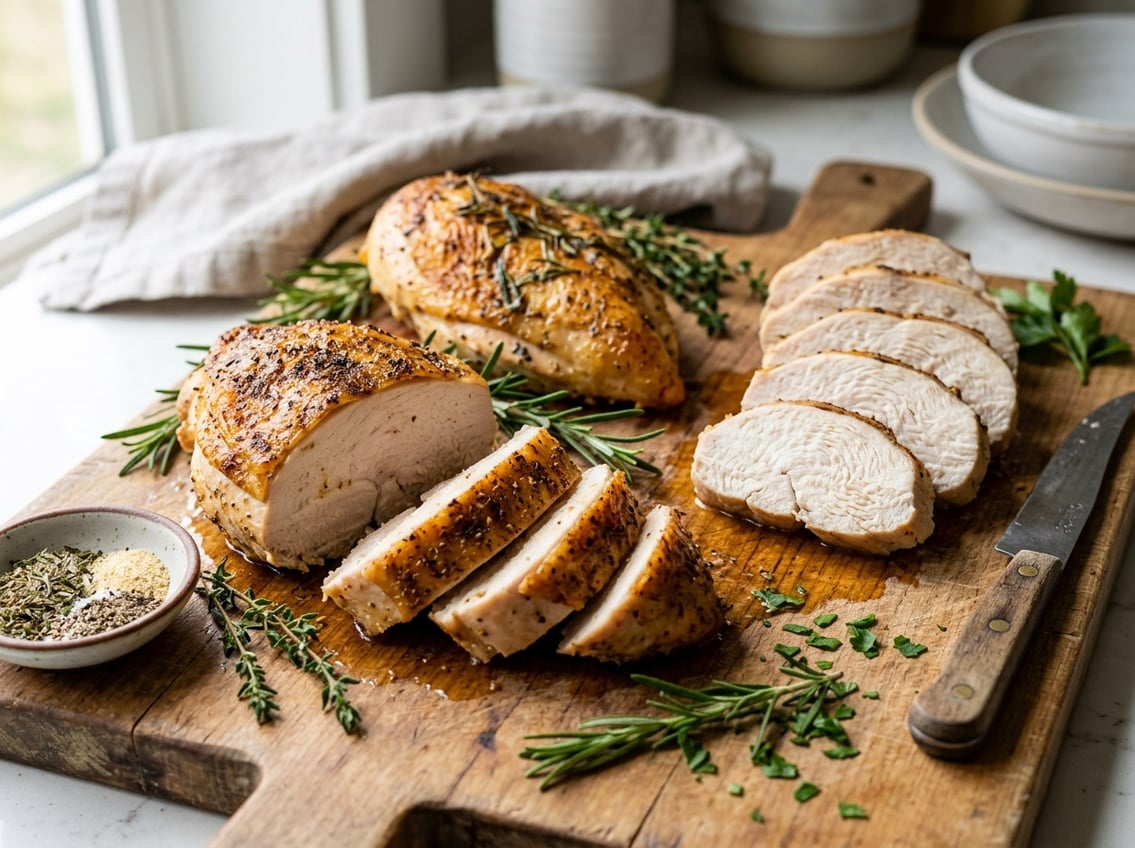
The cut you buy changes both timing and texture.
Bone, skin, and size all affect how fast chicken breasts cook and how you should check for doneness.
Boneless Versus Bone-In Cooking Differences
A boneless chicken breast usually cooks faster because heat moves through it more easily.
A bone-in chicken breast takes longer since the bone slows heat flow in the thickest area.
Bone-in pieces can also stay juicier near the bone, so check the center carefully before removing them from heat.
If you cook both types at the same time, pull the smaller boneless pieces first.
Skin-On Versus Skinless Cooking Differences
A skin-on chicken breast often browns better and can help protect the surface from drying out.
A skinless chicken breast cooks a little faster and dries out more quickly if you leave it on heat too long.
Skin adds another reason to watch the center, not the outside.
A well-browned top does not always mean the meat below is done.
When to Pull Larger Pieces From Heat
Remove large chicken breasts from the heat as soon as the center reaches 165°F, or a little earlier if you know they will rest long enough to finish.
Pulling them at the right moment keeps them tender.
If a piece is very thick, pound it to an even thickness before cooking.
This helps chicken breasts cook more evenly and reduces the risk of a dry edge with an underdone center.


