
What Does Chicken Breast Have? Nutrition and Benefits
Chicken breast is a common choice when you want a high-protein food that fits a healthy diet. It gives you lots of lean protein, few carbs, and several important vitamins and minerals.
The main draw of chicken breast is its high-quality protein with relatively little saturated fat. This makes it useful for meal planning, muscle support, and balanced eating.
Chicken breast nutrition varies a little depending on whether you choose skinless chicken breast, how you cook it, and the size of the serving.
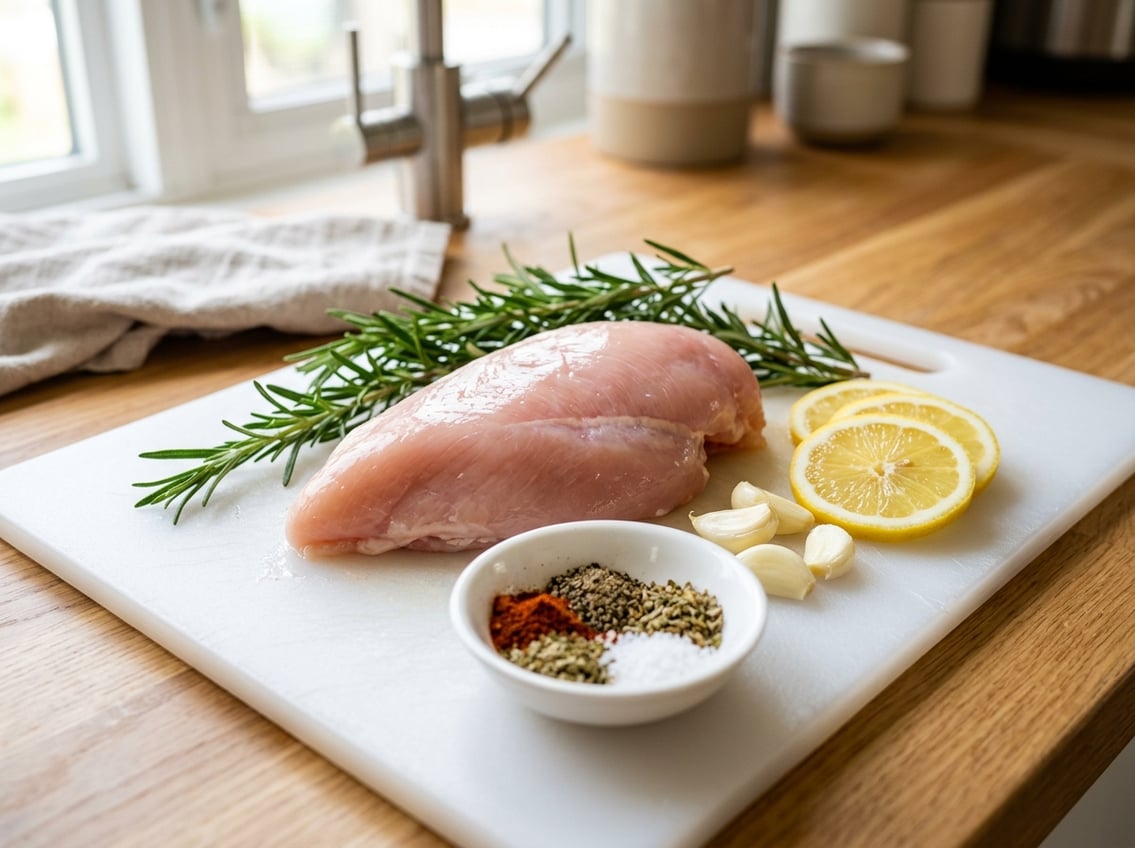
In the U.S., people usually pick chicken breast as a practical white meat option for quick dinners, lunches, and meal prep. It works well in salads, sandwiches, grain bowls, and simple cooked meals because it absorbs seasoning and sauces easily.
What Chicken Breast Contains

Chicken breast is dense in protein and low in fat. A typical cooked, skinless chicken breast gives you a strong nutrient return for the calories you eat.
Calories, Protein, and Fat Breakdown
A 3.5-ounce serving of cooked, skinless chicken breast has about 165 calories, 31 grams of protein, and about 3.6 grams of fat, according to Cook Answers.
Much of that fat is unsaturated, while the saturated fat content stays low. Chicken breast also has cholesterol, though the amount is moderate compared with many red meats.
Since chicken breast is white meat, it tends to be leaner than darker cuts of poultry.
Key Vitamins and Minerals
Chicken breast contains several helpful micronutrients, especially selenium and B vitamins. It is known for niacin and vitamin B6, and it also provides smaller amounts of iron, zinc, vitamin A, and vitamin B12.
These nutrients support energy use, red blood cell function, and immune health. A skinless chicken breast is valued in a healthy diet because it gives you these nutrients without much extra fat.
Essential Amino Acids and Protein Quality
Chicken breast is a complete protein, which means it provides all essential amino acids your body needs from food. Amino acids help build and repair tissue, including muscle.
Protein quality is one reason cooked chicken breast is common in sports meals and simple meal prep. It gives you a strong mix of protein and essential amino acids in a compact serving.
How It Supports Health Goals
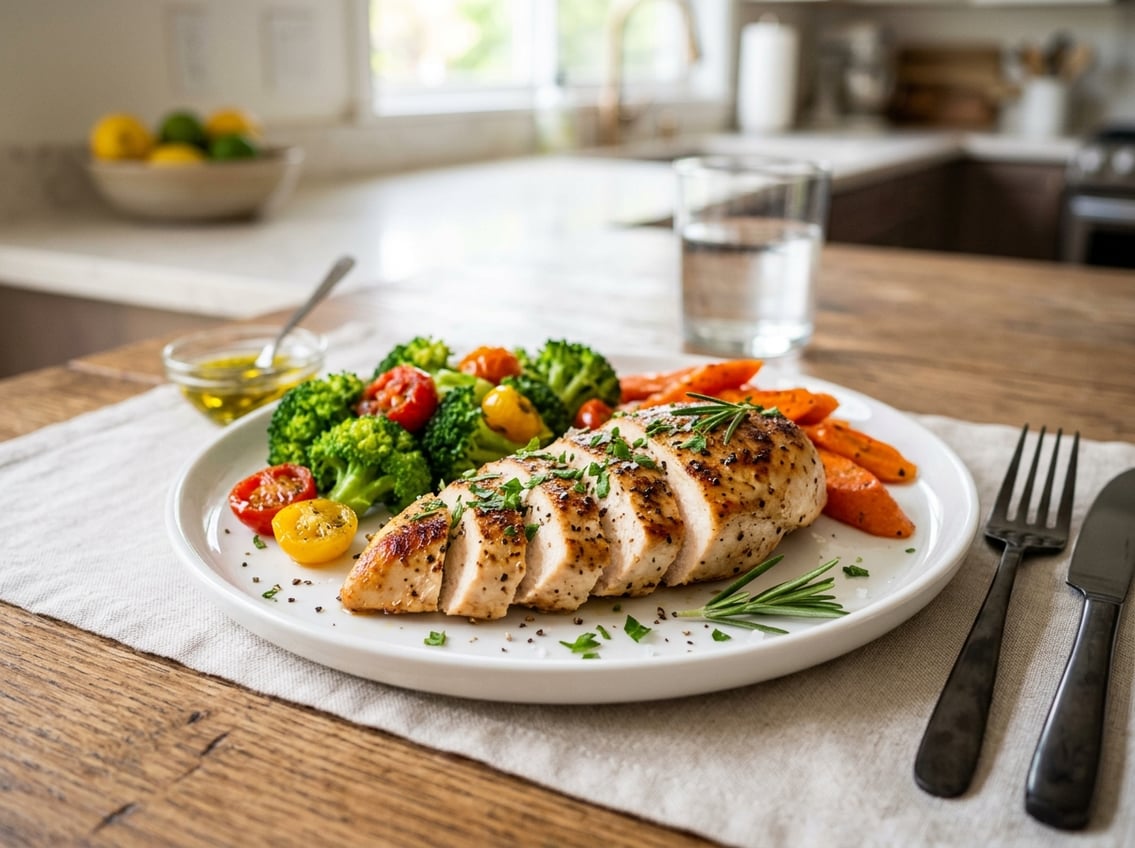
The benefits of chicken breast come from its strong protein content, low fat, and ease of use in everyday meals. These traits can support muscle maintenance, fullness after meals, and steady eating habits.
Muscle Maintenance and Lean Muscle Mass
Chicken breast is a reliable lean protein for building and keeping lean muscle mass. Protein gives your body the amino acids it needs to repair muscle after activity and daily wear.
If you lift weights, stay active, or want to keep muscle as you age, chicken breast nutrition can be useful.
Satiety, Weight Control, and Meal Planning
Protein tends to increase satiety, so meals with chicken breast often help you feel full longer. That can make it easier to manage portions and avoid frequent snacking.
Chicken breast fits meal planning well because it works in many flavors and portions. A lean protein like this can anchor lunches and dinners without adding much saturated fat.
Who Benefits Most Across Different Ages
Children, teens, adults, and older adults can all use chicken breast in a healthy diet. Younger people may need it for growth and activity, while older adults often benefit from the protein for muscle maintenance.
People with higher protein needs, such as athletes or very active adults, may also find it useful.
How Chicken Breast Compares to Other Cuts and Foods
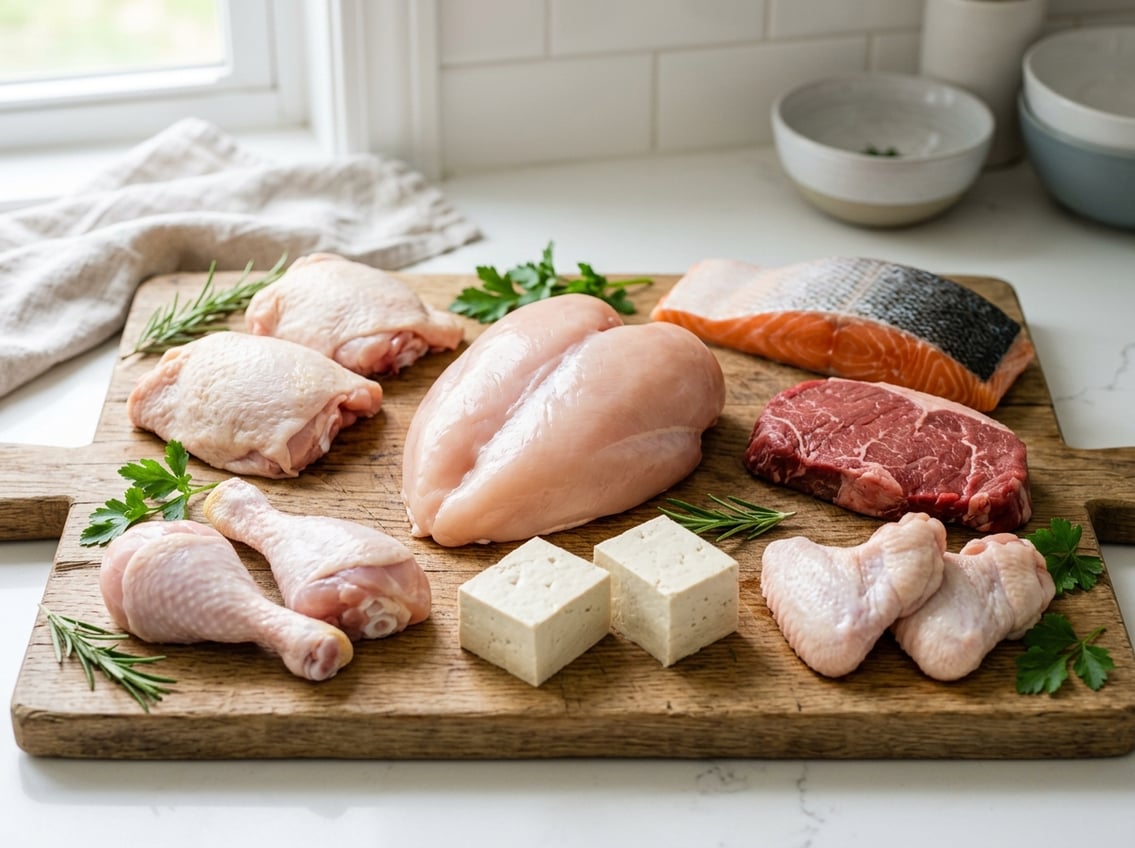
Chicken breast is not the only poultry cut you can eat. Your choice changes the fat, flavor, and texture.
Skin, cut type, and whether the meat is processed all affect how it fits into a healthy diet.
Skinless Breast vs. Skin-On Breast
Skinless chicken breast is leaner and lower in calories than breast meat with chicken skin. The skin adds more saturated fat and total fat, which raises the calorie count.
If your goal is to keep a meal lighter, skinless chicken breast is usually the better choice. Skin-on breast can taste richer, yet it is less lean.
Chicken Breast vs. Chicken Thighs and Dark Meat
Chicken thighs and other dark meat cuts usually contain more fat and a stronger flavor than white meat breast. That extra fat can make them juicier, though it also means more saturated fat and calories.
If you want the leanest poultry option, chicken breast usually wins. If you want a richer taste and do not mind extra fat, thighs can still fit into a balanced diet.
Chicken vs. Processed Meats in a Balanced Diet
Compared with many processed meats, chicken breast is usually a simpler choice with less sodium and fewer added ingredients. Processed meats often come with preservatives, higher salt, and more saturated fat.
Organic chicken may matter to you for farming preferences, yet the basic nutrition profile still depends more on the cut and cooking method than on the label alone.
How Cooking Changes Nutrition
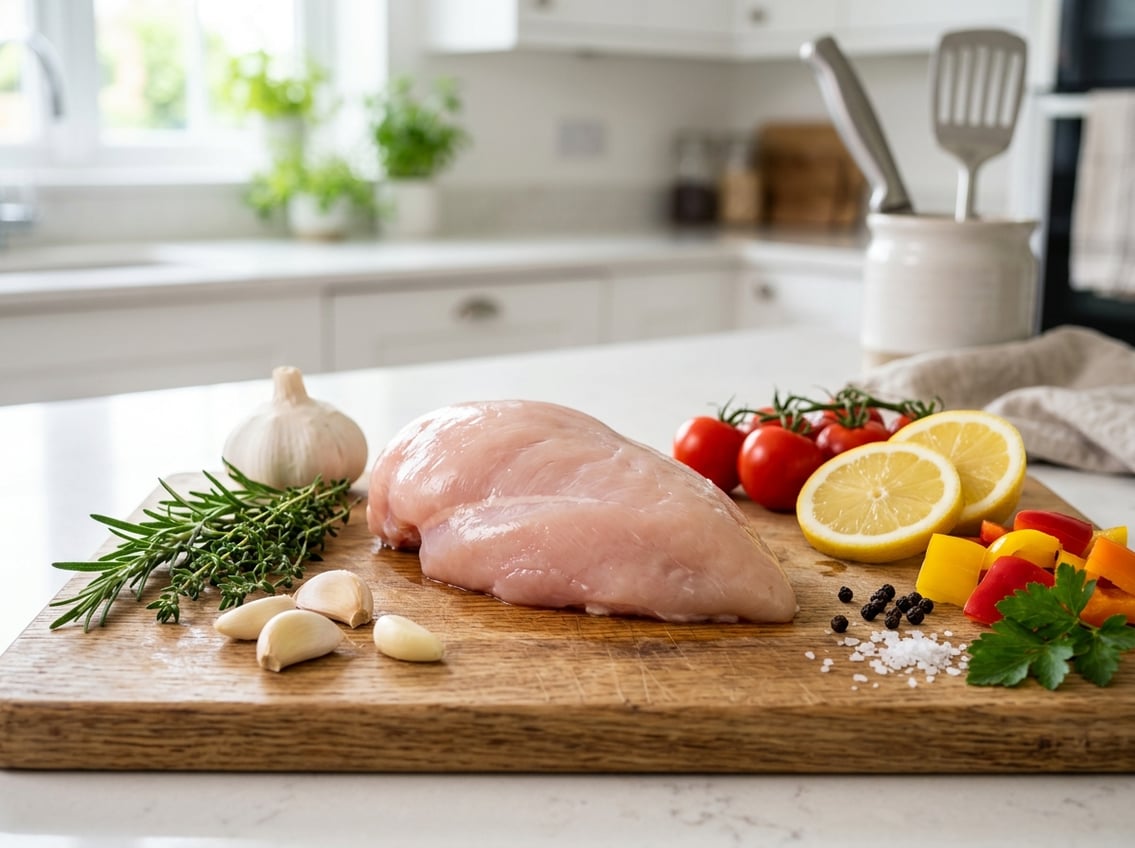
The way you cook chicken breast changes moisture, fat, and the final calorie count. Cooking methods, sauces, and added fat can shift the nutrition profile.
Best Cooking Methods for a Leaner Meal
If you want a leaner meal, cook chicken breast with methods like baking, grilling, roasting, or poaching. These cooking methods keep added fat low and help you preserve the lean profile of the meat.
Aim for a safe internal temperature without overcooking it. Overcooking makes it dry, especially because chicken breast has little fat to protect it.
Grilling, Frying, and Advanced Glycation End Products
Grilling chicken breast can keep the meal light, especially if you use minimal oil. Frying chicken adds more fat and calories, depending on the coating and oil used.
High-heat cooking can also increase advanced glycation end products, which form during browning and charring. Cooking without burning the meat lowers that risk and usually improves flavor and texture.
Seasonings, Salads, and Label Claims to Know
You can add flavor with little impact on calories by using herbs, spices, garlic, lemon, or pepper. Simple dry seasoning changes the nutrition less than creamy sauces and breading.
Chicken caesar salad can be a solid meal. The dressing, croutons, and cheese add extra fat and sodium.
When you shop, you often see claims like no hormones added and no antibiotics added on labels in the U.S. Organic chicken follows its own regulated standards.
Chicken contains collagen in smaller amounts, especially in pieces with more connective tissue. Breast meat is mainly valued for its lean protein.


