
Is There Any Fat in Chicken Breast? Nutrition Explained
Is there any fat in chicken breast? Yes, there is, but not much compared with many other animal proteins.
A skinless chicken breast is one of the leanest cuts you can buy, so most of its calories come from protein, not fat.
That does not mean chicken breast is fat-free.
The exact amount changes with the size of the breast, whether you eat the skin, and how you cook it.
If you track chicken breast nutrition facts for weight goals, muscle building, or macro balance, the details matter.
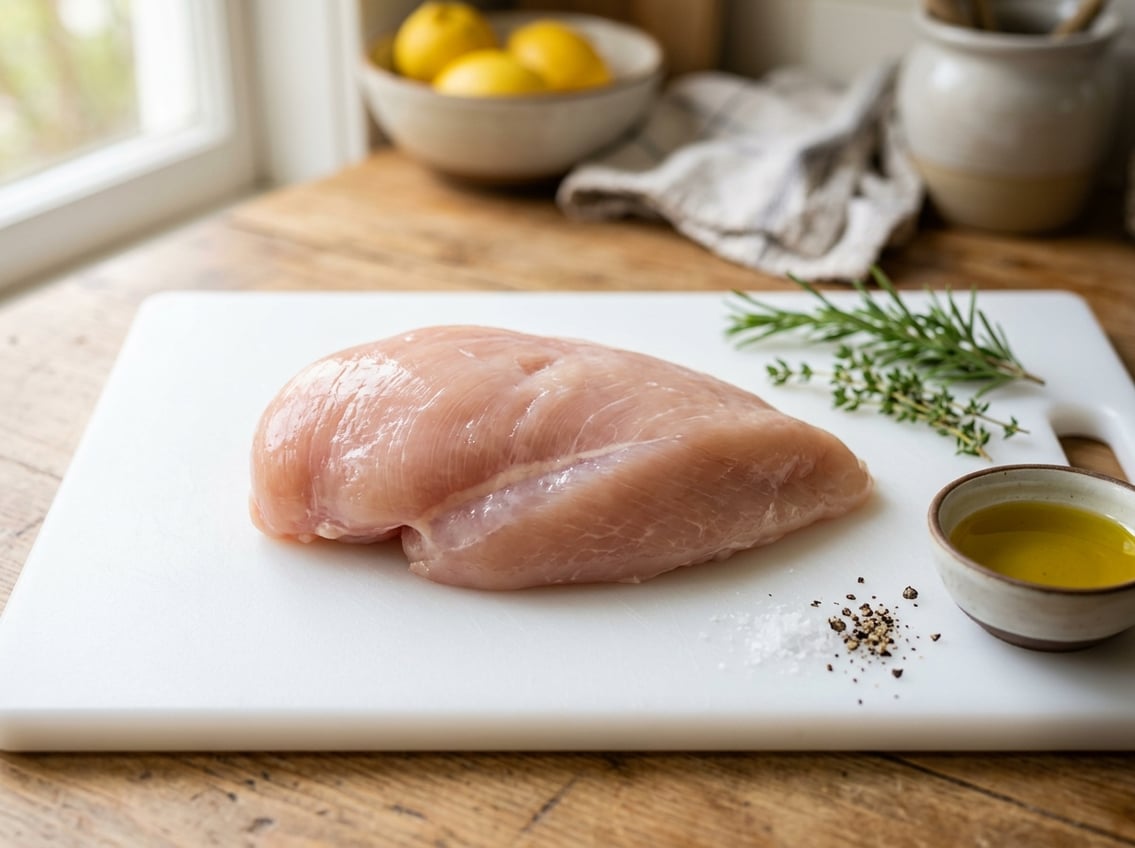
How Much Fat Chicken Breast Actually Has
Chicken breast nutrition is simple in one way and tricky in another.
It is a lean protein, yet it still contains some fat, and the number on your plate changes with serving size, raw weight, and cooking method.
A standard serving gives you a lot of protein for relatively few chicken breast calories.
If you are comparing calories in chicken across cuts, breast usually stays near the low end.
Typical Fat and Protein in a Standard Serving
A raw, skinless chicken breast from Eat This Much contains 3 grams of fat and 27 grams of protein in a 118 gram breast fillet.
That is a strong protein-to-fat ratio for anyone who wants lean protein.
The breast is naturally low in fat, while the protein content stays high and includes all essential amino acids.
Chicken Breast Calories and Macronutrients at a Glance
Chicken breast nutrition facts for a skinless serving usually look like this:
- Calories in chicken breast: about 130 to 140 calories for a small to medium serving, depending on size and brand
- Protein: about 26 to 27 grams
- Fat: about 3 grams
- Carbs: 0 grams
Chicken breast is a practical choice for high-protein eating.
It also fits well when you want to keep macronutrients simple and predictable.
Raw vs Cooked Weights and Why the Numbers Differ
Raw and cooked chicken do not weigh the same after heat removes water.
A 6-ounce raw breast can weigh much less after grilling or baking, so the nutrition labels may seem different even when the actual chicken piece is the same.
Cooking also changes density.
Per ounce, cooked chicken often looks higher in protein and fat because water is gone, not because the meat gained nutrients.
Skinless vs Skin-On Nutrition Differences
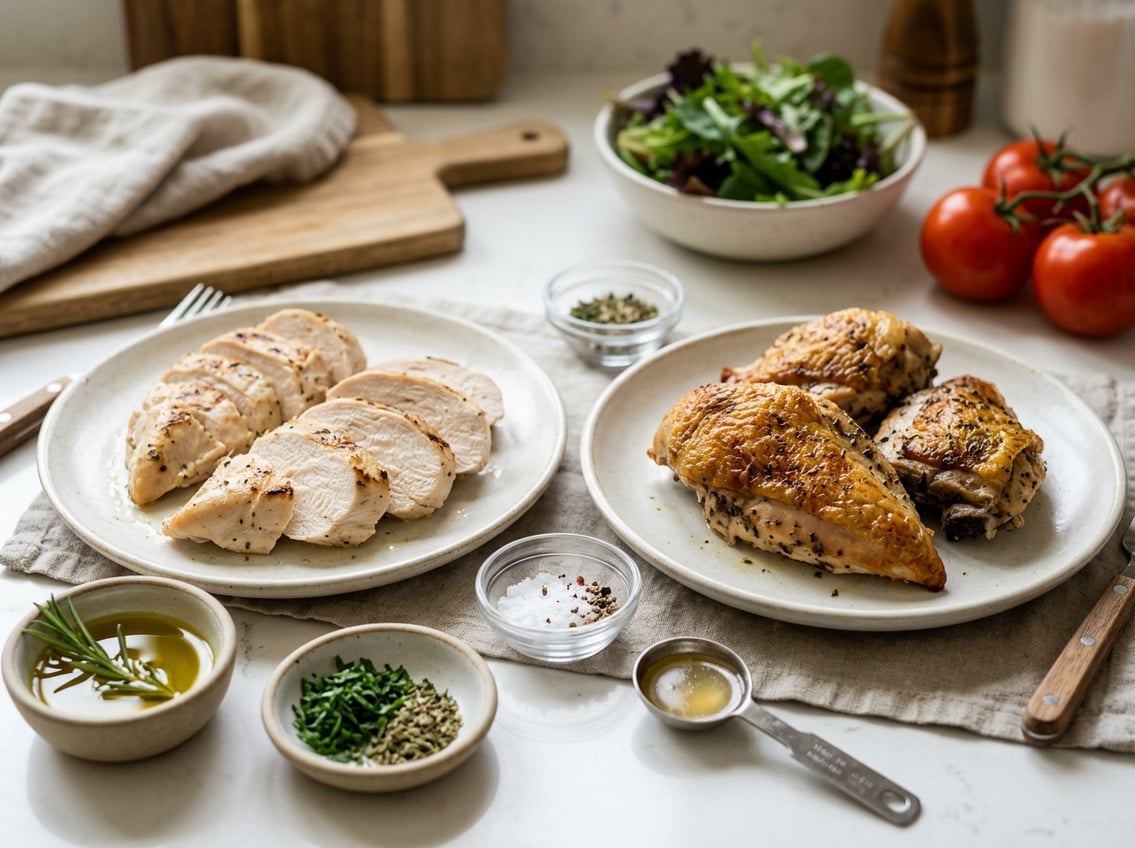
The skin makes the biggest difference in chicken breast fat.
Skinless chicken breast is the leaner choice, while chicken breast with skin brings more calories and more total fat.
The kind of fat also matters.
Chicken contains small amounts of monounsaturated fats and polyunsaturated fats, along with some saturated fat.
Why Skinless Chicken Breast Is the Leaner Choice
Skinless chicken breast stays lower in fat because the skin itself holds a lot of the extra calories.
If you want the leanest version of chicken breast nutrition facts, removing the skin is the easiest step.
How Chicken Breast With Skin Changes Fat and Calories
Chicken breast with skin can carry much more fat than skinless breast of the same size.
Some nutrition guides note that skin-on portions can have roughly three times the fat of skinless servings, depending on the cut and cooking method.
That extra fat raises chicken breast calories too.
If you are counting calories in chicken closely, the skin can shift your numbers more than you might expect.
What Types of Fat Are Present
The fat in chicken breast is not all the same.
A skinless serving contains a mix of saturated fat, monounsaturated fats, and polyunsaturated fats, with the biggest share often coming from unsaturated fats.
From a practical view, chicken breast is not fat-free, yet it is still a lean protein.
The fat amount remains modest unless the skin or added cooking fat changes it.
How Cooking Method Changes the Final Fat Content
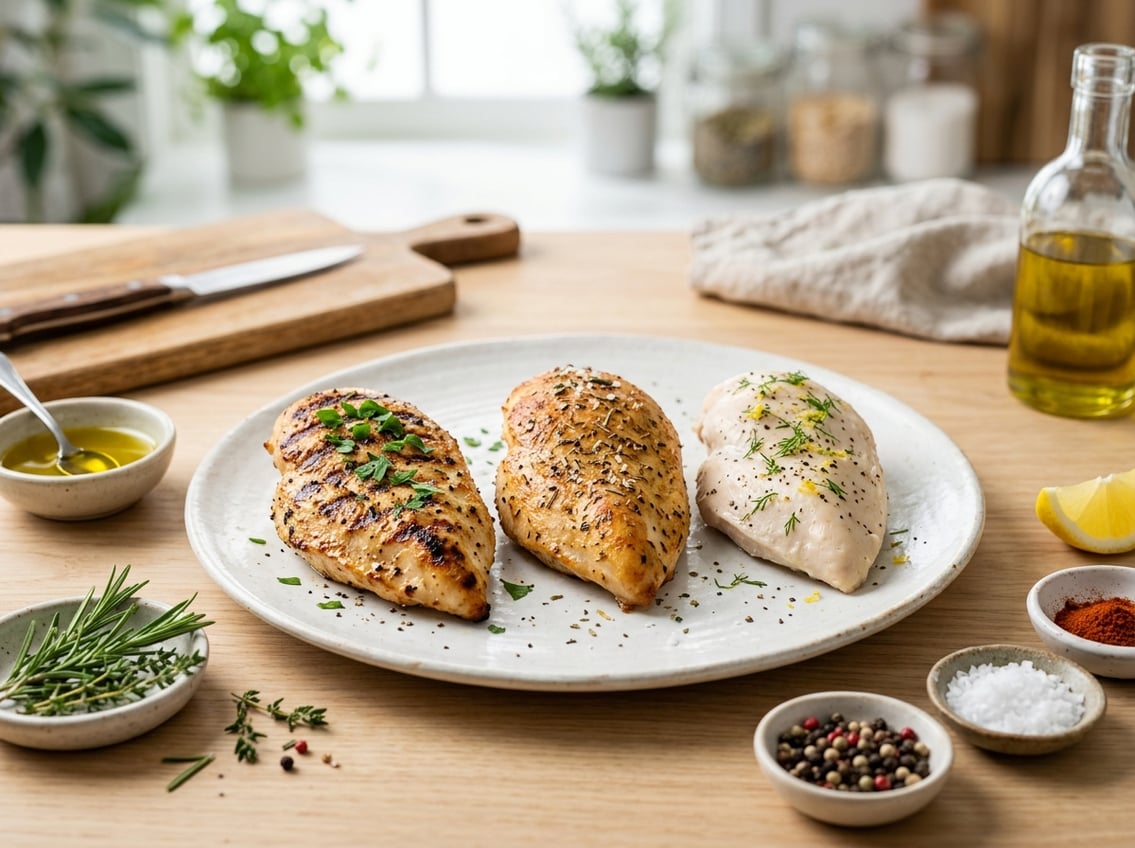
Cooking can change the final fat content, even when you start with the same chicken breast.
Dry heat methods usually keep the numbers lower, while breading, frying, and extra oil raise chicken breast calories fast.
Your cooking method matters as much as the cut itself.
The same breast can fit a lean meal or a much richer plate.
Grilled Chicken Breast
Grilling chicken breast lets fat drip away during cooking, and you usually do not need much added oil.
This makes grilled chicken breast a common choice when you want strong protein with fewer calories.
It is easy to pair with vegetables, rice, or potatoes without pushing fat too high.
Baked Chicken Breast
Baking chicken breast also keeps it relatively lean, especially when you use minimal oil.
If you bake it plain or with light seasoning, the fat change is small.
A baked breast may taste different from grilled meat, yet the nutrition stays close.
Fried Chicken Breast
Frying chicken breast adds more fat because the breading absorbs oil and the coating adds extra carbs and calories.
If you compare a fried breast with a plain grilled breast, the fried version usually has far more chicken breast calories and much more fat.
The difference can be large enough to change your whole meal plan.
Sauces, Oil, Breading, and Portion Size
Butter, oil, creamy sauces, and thick breading can add more fat than the breast meat contains on its own.
Portion size matters too.
A large breast has more calories and more fat than a small one, even if both are skinless and cooked the same way.
How Chicken Breast Fits Into a Balanced Meal
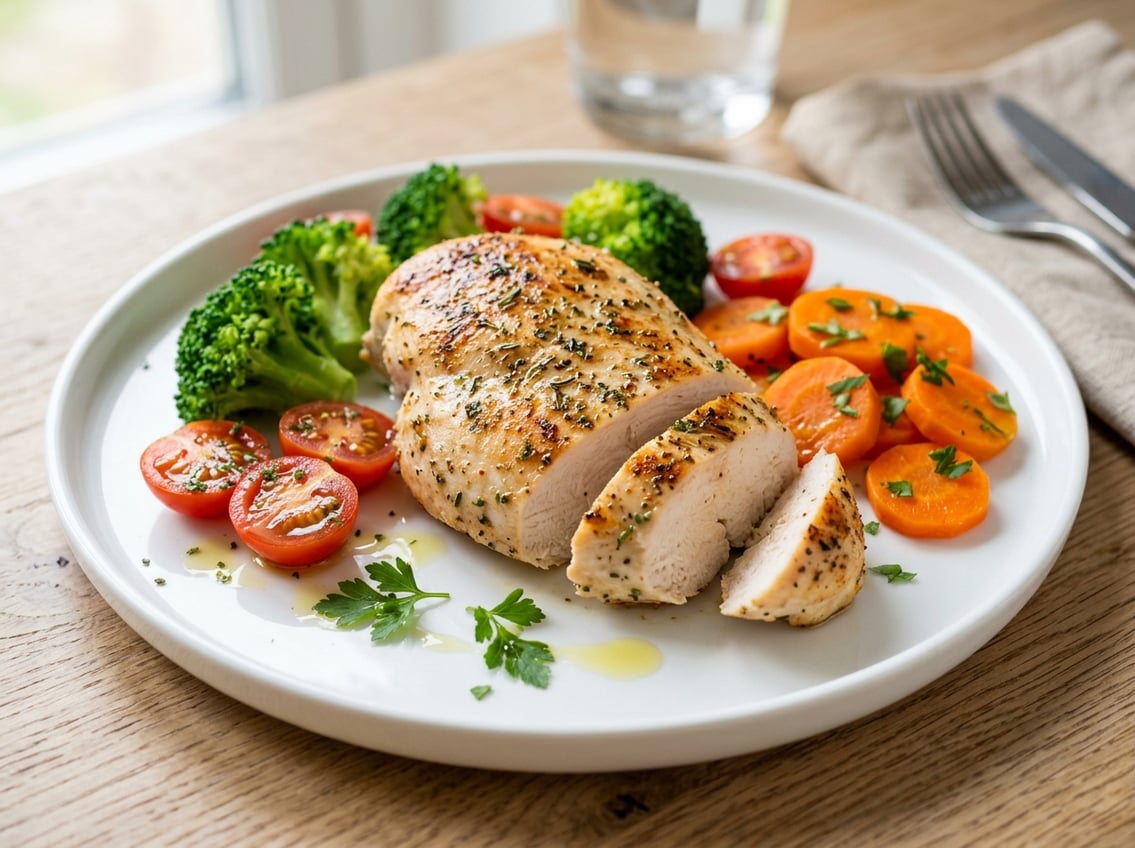
Chicken breast works well in a balanced meal because it brings lean protein with low carbs and moderate fat.
It also blends well with higher-fiber foods.
When you pair it with vegetables, grains, or salad, you can build a filling plate without making the meal heavy.
When It Works Well for Weight and Macro Goals
Chicken breast helps when you want a lot of protein without many extra calories.
That is why it shows up often in weight-loss diets and high-protein meal plans.
It can also help you hit daily protein goals without using up too much of your calorie budget.
A TODAY nutrition report notes that chicken breast is high in protein and low in calories and fat, which is why many people use it for muscle-building and weight maintenance.
Meal Examples Like Chicken Caesar Salad
A chicken Caesar salad can work well when portion sizes stay reasonable.
The chicken breast adds lean protein, while the dressing, cheese, and croutons add much of the fat and calories.
That means the meal can stay balanced, or it can become much richer depending on your choices.
Extra dressing or fried chicken will raise the calorie count fast.
What to Check on Labels and Tracking Apps
When you log chicken breast in an app, check whether the entry is raw or cooked. Make sure to note if it is skinless or skin-on, and plain or breaded.
These details can change your numbers a lot. Check the serving size in ounces or grams.
A small labeling mismatch can make your daily macros appear more accurate than they really are.


