
Why Should You Pound Chicken Breast Before Cooking
Pounding chicken breast before cooking helps you get more even thickness, faster cooking, and a better final texture.
If you have ever ended up with a dry edge and an underdone center, the reason is often simple: the breast was too uneven to cook at the same rate.
The main reason to pound chicken breast is to make it cook more evenly, so you get a juicier result with less risk of overcooking the thinner parts.
It also helps the meat absorb seasoning more evenly and makes it easier to use in fast-cooking recipes.
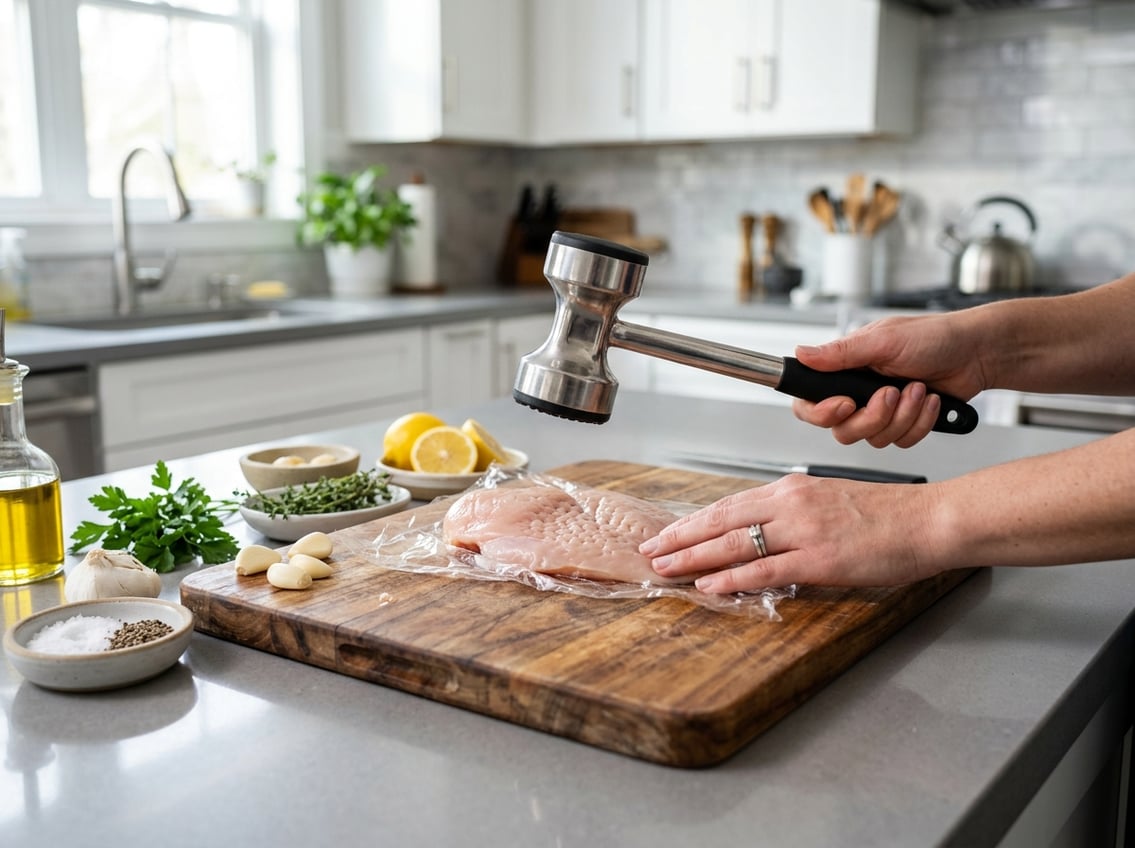
Many chicken breasts have one thick end and one thin end.
A few careful taps can turn that into a more even cut that cooks predictably.
What Pounding Fixes Right Away
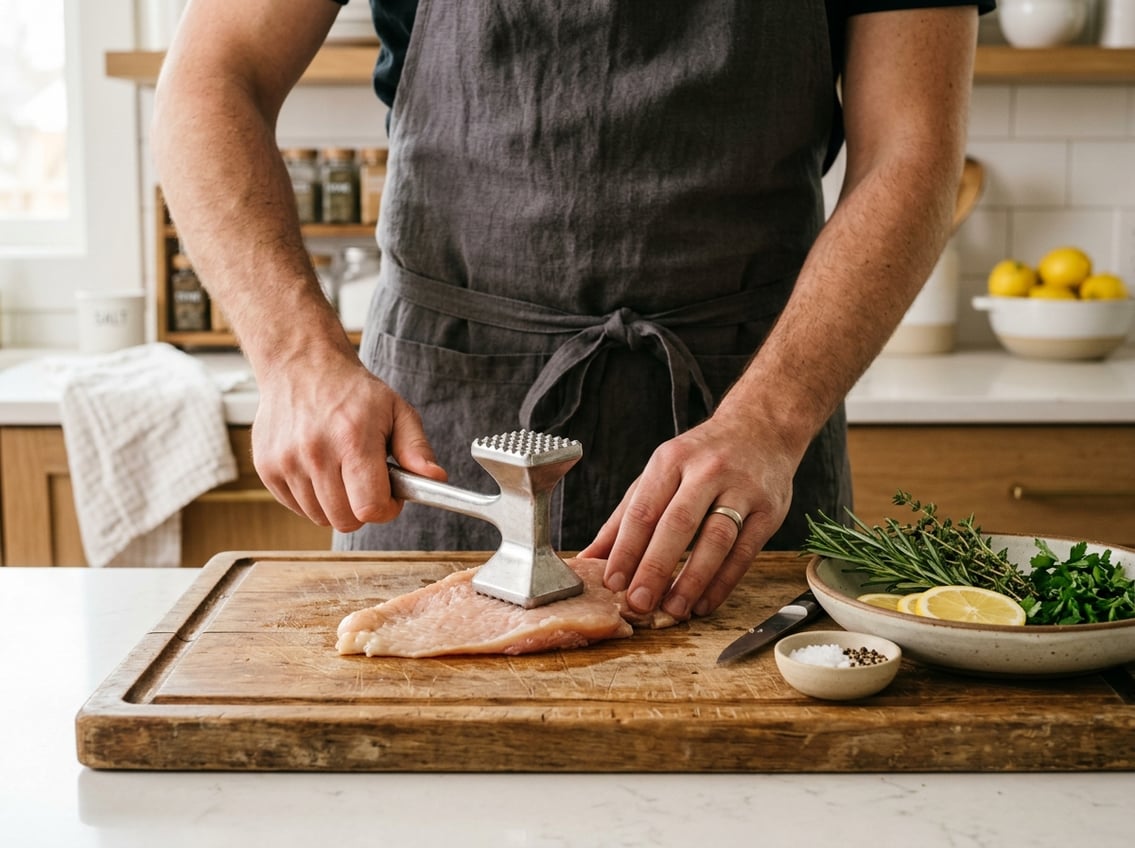
Pounding chicken gives you quick, practical fixes before the meat even hits the pan.
It improves shape, shortens cook time, and helps the meat stay tender when cooked properly.
Creates Even Thickness for More Even Cooking
Chicken breasts are often thick in one area and thin in another.
When you pound chicken breast to a more even thickness, the whole piece cooks at the same pace, making evenly cooked chicken much easier to achieve.
That matters because the thin section does not finish early while you wait for the thick section to catch up.
A pounded chicken breast is easier to season, sear, and serve with a consistent texture.
Helps Chicken Cook Faster Without Drying Out
Thin, pounded chicken cooks faster than a thick breast.
That shorter cook time helps reduce the chance of drying out the outer layers while the center finishes.
You get a quicker, more predictable result, especially when making skillet meals or cutlets.
Tenderizes Lean Meat Through Mechanical Action
Pounding does more than flatten the meat.
It also breaks up some muscle structure, making the texture feel less tough, especially in lean cuts.
Chicken breasts do not have much fat, so gentle mechanical tenderizing can help improve the bite without changing the flavor.
Improves Marinade Coverage and Flavor Absorption
A flatter surface gives seasoning and marinade more contact with the meat.
That can help flavor spread more evenly across the chicken.
It also makes breading stick more evenly in recipes that call for coating.
If you want to pound chicken breast for a sauce or pan-fried dish, the flatter shape helps every bite taste balanced.
How to Flatten Chicken Without Tearing It
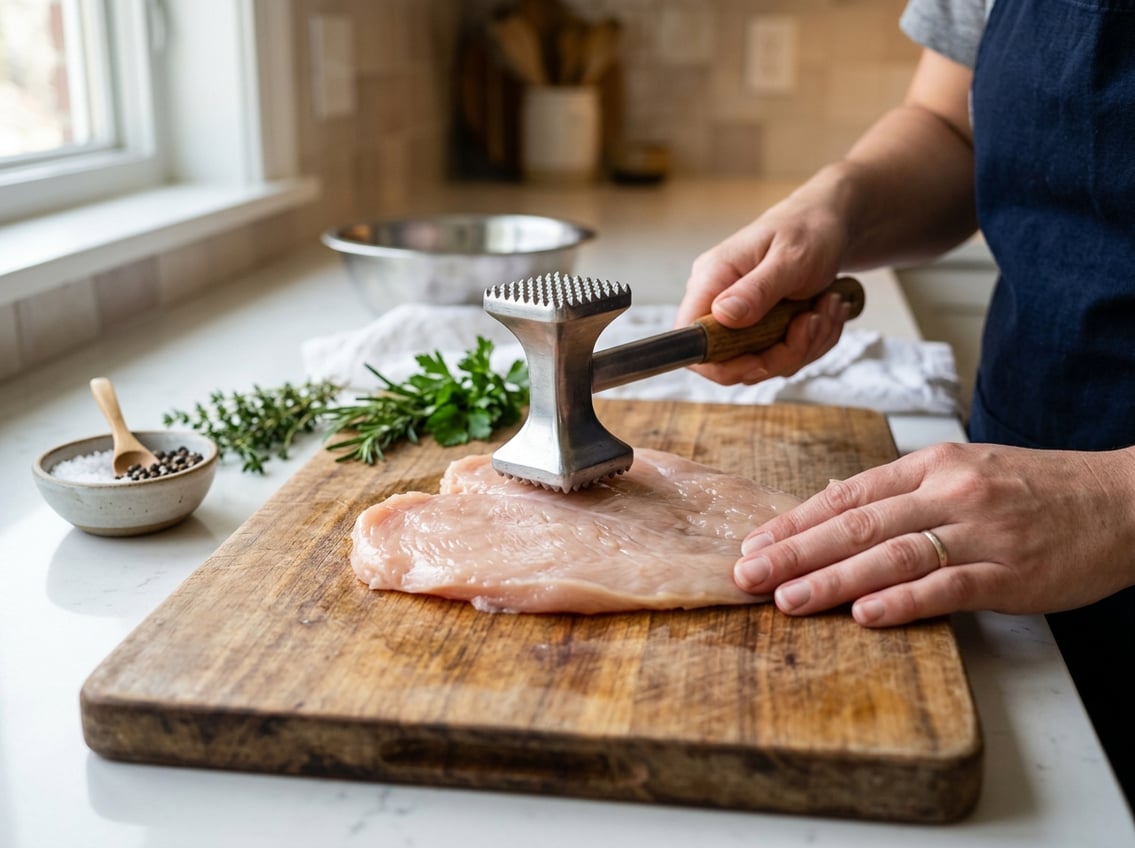
A good pounding technique uses steady pressure, not force.
The goal is to make the breast thinner and more even while keeping the surface intact.
Set Up a Stable Work Surface
Start with a sturdy cutting board that will not slide.
Place the chicken between sheets of parchment paper or inside a bag so juices do not splash and the surface stays cleaner.
This setup makes the process much easier to control.
A stable surface gives you better aim and lowers the chance of tearing the meat.
Choose the Best Tool for the Job
A meat mallet is the most common tool for pounding chicken breast.
A rolling pin also works well if you do not have a mallet.
The Mom 100 recommends using a sturdy, unbreakable tool and says the flat side of a mallet is better than the textured side for a smoother finish.
You can read more in this guide to how to pound chicken breasts.
Use a Gentle Pounding Technique
Start at the center and work outward with light, even taps.
Do not strike straight down with heavy force, since that can split the meat.
For pounding chicken breasts, steady pressure is better than speed.
If the breast starts to spread too fast, slow down and check the shape before continuing.
Aim for the Right Thickness for the Recipe
The best thickness depends on what you are cooking.
For cutlets and skillet dishes, about 1/2 inch is often useful, while thicker stuffed preparations may need more structure.
The goal is not to make every breast paper thin.
It is to make the piece fit the recipe so the cooking time and texture stay consistent.
Best Times to Use This Technique
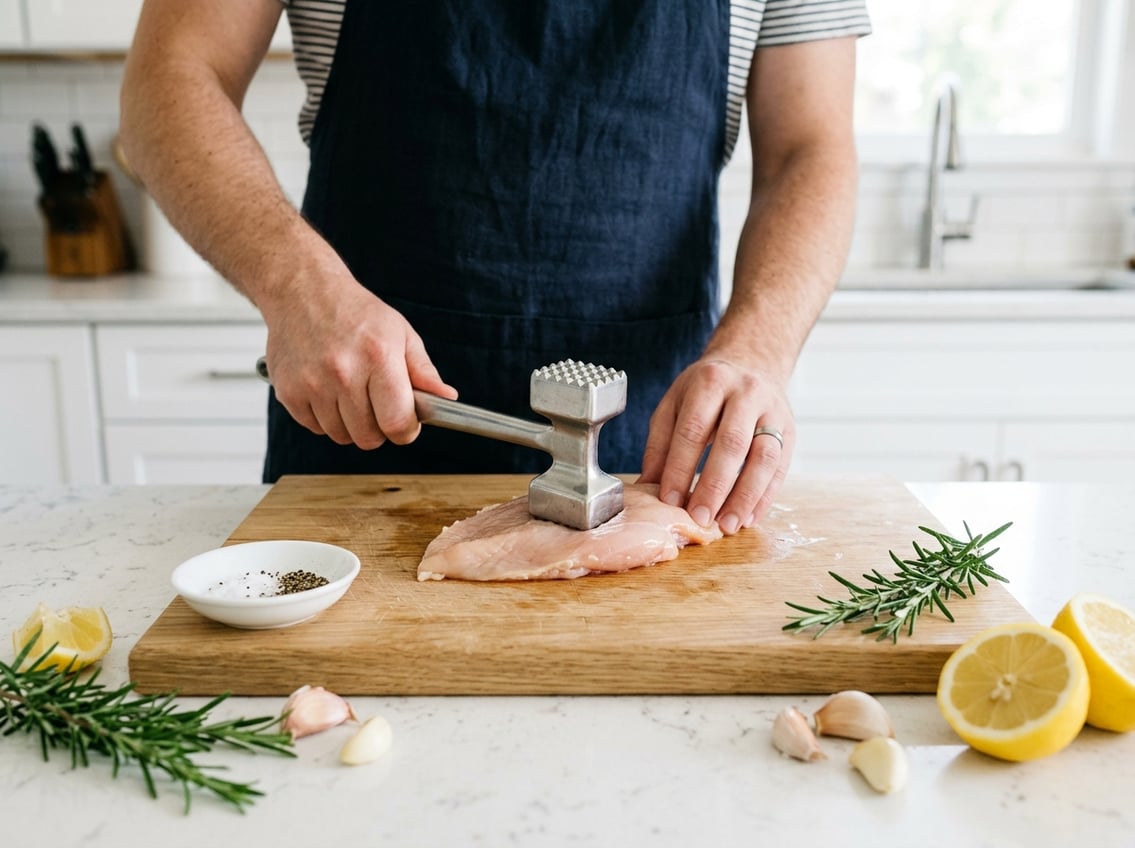
Pounding is most useful when your recipe depends on fast, even cooking.
It works especially well in dishes where the chicken is breaded, pan-fried, sauced, or stuffed.
Breaded and Pan-Fried Cutlets
Thin chicken cutlets cook quickly and stay tender when the thickness is even.
That is why pounding is common for chicken schnitzel and other breaded cutlets.
It also helps the coating brown at the same pace as the meat cooks.
For dishes like chicken parmesan, a flattened breast gives you a better chance of crisp breading and a moist center.
Quick Skillet and Sauce Dishes
Recipes like chicken piccata and chicken marsala benefit from even thickness because the chicken cooks fast in a pan.
A pounded chicken breast fits these dishes well because it browns quickly and finishes before it dries out.
For skillet meals, the flatter shape also lets the sauce coat more of the surface.
That gives you better flavor in each bite.
Rolled and Filled Chicken Preparations
Stuffed or rolled dishes need chicken that can fold without falling apart.
Stuffed chicken breasts often work better when you flatten the meat first.
A gentle pound helps make the breast flexible enough to roll while still keeping enough structure to hold the filling.
This helps you get clean slices and a neat shape.
When You Can Skip This Step
You do not need to pound every chicken breast.
If you are roasting, braising, or cooking bone-in pieces, leaving the meat as it is may be the better choice.
You can also skip it when the recipe calls for a natural thick piece of chicken.
Use the technique when even thickness matters, and leave it out when the cooking method already handles uneven cuts well.
Cooking and Safety Tips After Flattening
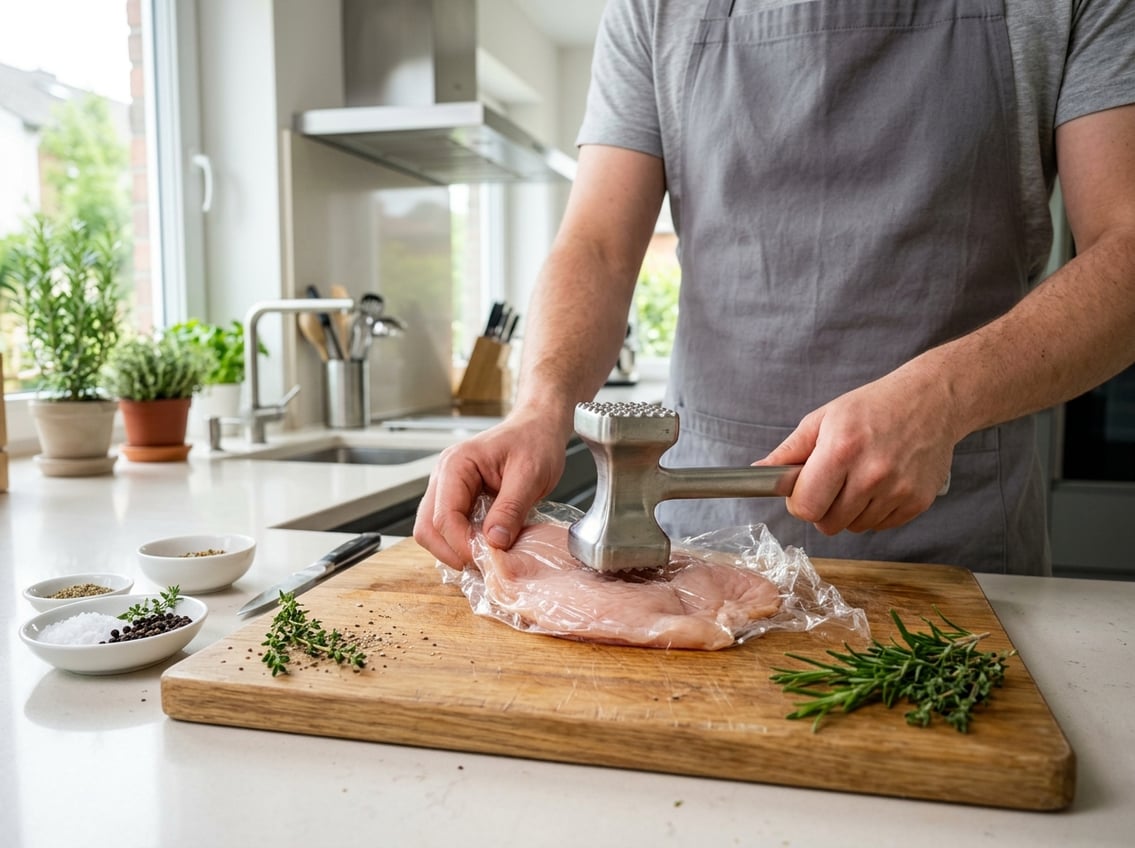
Flattened chicken changes how you season and cook the meat.
It also makes doneness easier to miss if you rely on timing alone, so a few small adjustments matter.
Seasoning and Marinating Adjustments
Because the surface area is larger, pounded chicken may need a little more seasoning than a thick breast.
Salt, pepper, dry spices, and marinades spread more evenly, so light, even coverage works best.
If you marinate, shorter times often work well because the meat is thinner.
Too much time can make delicate chicken texture feel soft instead of firm.
Watch Cook Time Closely
Flattened chicken cooks faster than thick chicken breasts, so your timing should be shorter than usual.
Keep an eye on color and texture, especially in a hot skillet.
Remove the meat as soon as it reaches the right temperature, not when the outside looks deeply browned.
A few extra minutes can turn a good result into dry meat.
Check Doneness With a Thermometer
A meat thermometer gives you the most reliable way to check chicken. Insert it into the thickest part of the breast and cook until the center reaches a safe temperature.
Flattened chicken needs even more attention because the thin edges can finish early. Using a thermometer each time helps you get the benefits of pounding chicken without guessing.


