
Can You Flatten Chicken Breast for Faster, Even Cooking
Flattening chicken breast helps it cook faster and more evenly. When you make the thick end closer to the thin end, the meat cooks at the same pace, which lowers the chance of dry edges and undercooked centers.
If you want evenly cooked chicken, flattening chicken breast is one of the simplest prep steps before pan frying, baking, or grilling. It also gives you thinner pieces that work well for cutlets, quick sautés, and stuffed dishes.
When Flattening Makes Sense
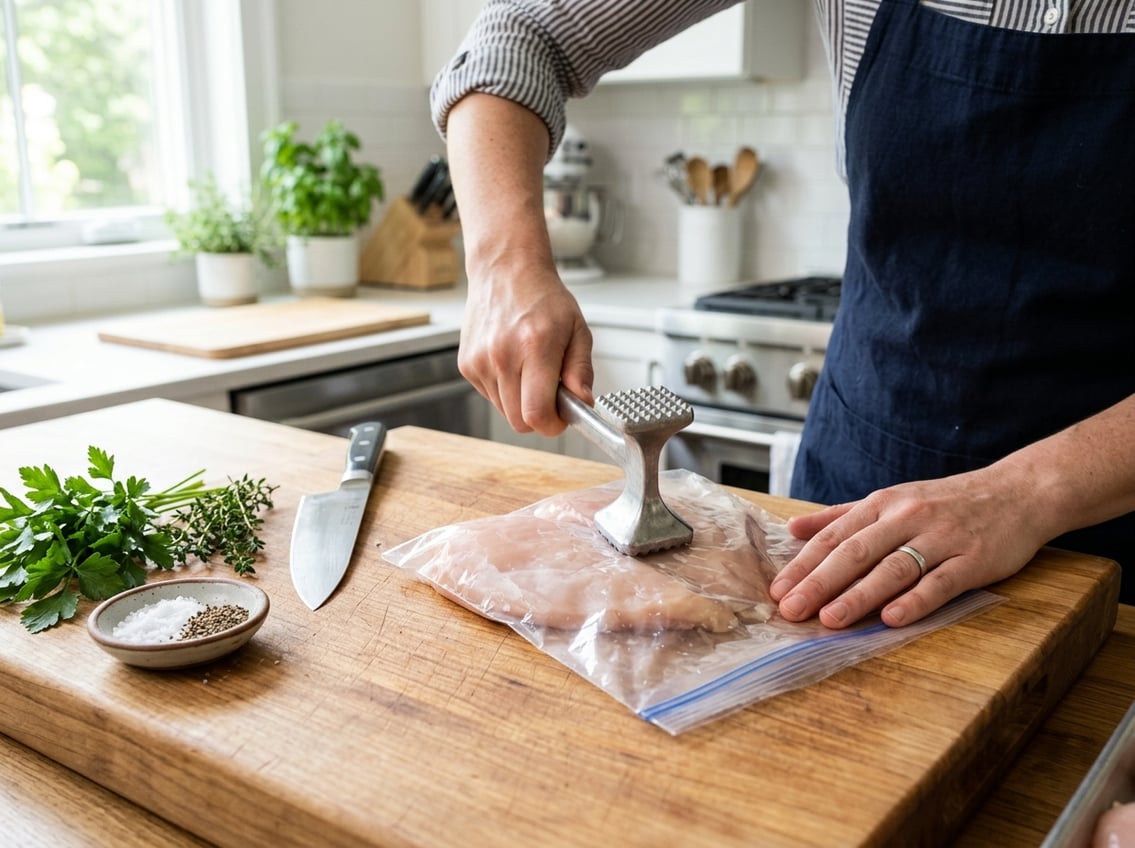
Flattening works best when you want evenly cooked chicken with a short cook time. It is especially useful when boneless chicken breasts are uneven, which is common with store-bought pieces.
If one end is thick and the other is thin, the thin side dries out before the thick side is done. Flattened chicken breasts solve that problem by bringing the thickness closer together.
Why It Helps Create Even Cooking
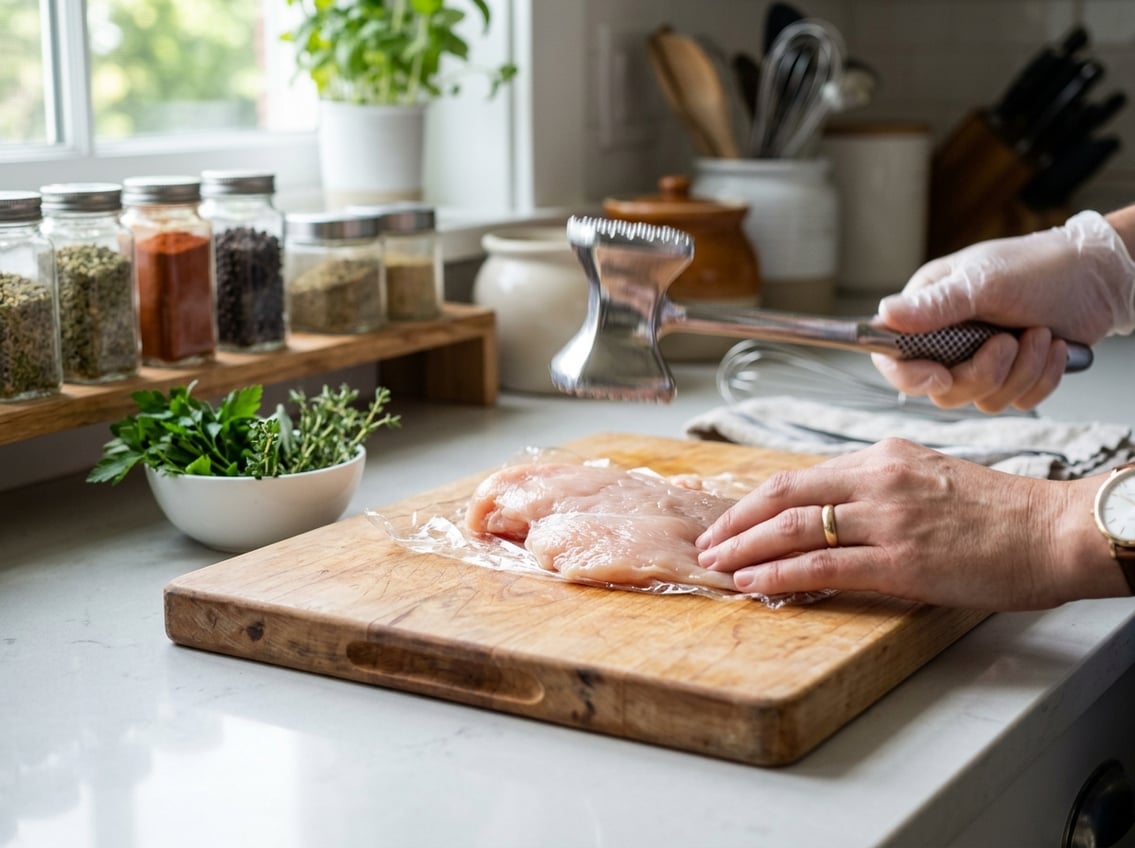
When you pound chicken, it cooks at a more even rate from edge to edge. That means less guessing when you make a skillet dinner, sandwich filling, or breaded chicken.
Pounding also helps seasoning and marinades spread more evenly across the surface. A flatter piece browns better in the pan and gives steadier results in the oven.
Best Uses for Thin Pieces and Chicken Cutlets
Flattened chicken breasts work well for chicken cutlets, chicken Parmesan, schnitzel, piccata, and quick grilled meals. Thin pieces cook fast and stay tender when you avoid overcooking.
They also help when you need uniform portions for a family meal. If every piece is the same thickness, your whole pan finishes at about the same time.
When to Butterfly Before Pounding
Butterflying makes sense when a breast is very thick. You slice it almost in half horizontally, leaving one side attached, then open it like a book before you pound it.
That method gives you a head start on even thickness. A guide from Taste of Home on how to flatten chicken breasts suggests butterflying first, then gently pounding to a thinner, more even shape.
How to Get an Even Thickness
You do not need special gear to flatten chicken breast well. A meat mallet is the most common tool, though a rolling pin or similar heavy object can work in a pinch.
The key is control. Use steady pressure so the meat stretches into an even shape instead of splitting apart.
Tools to Use
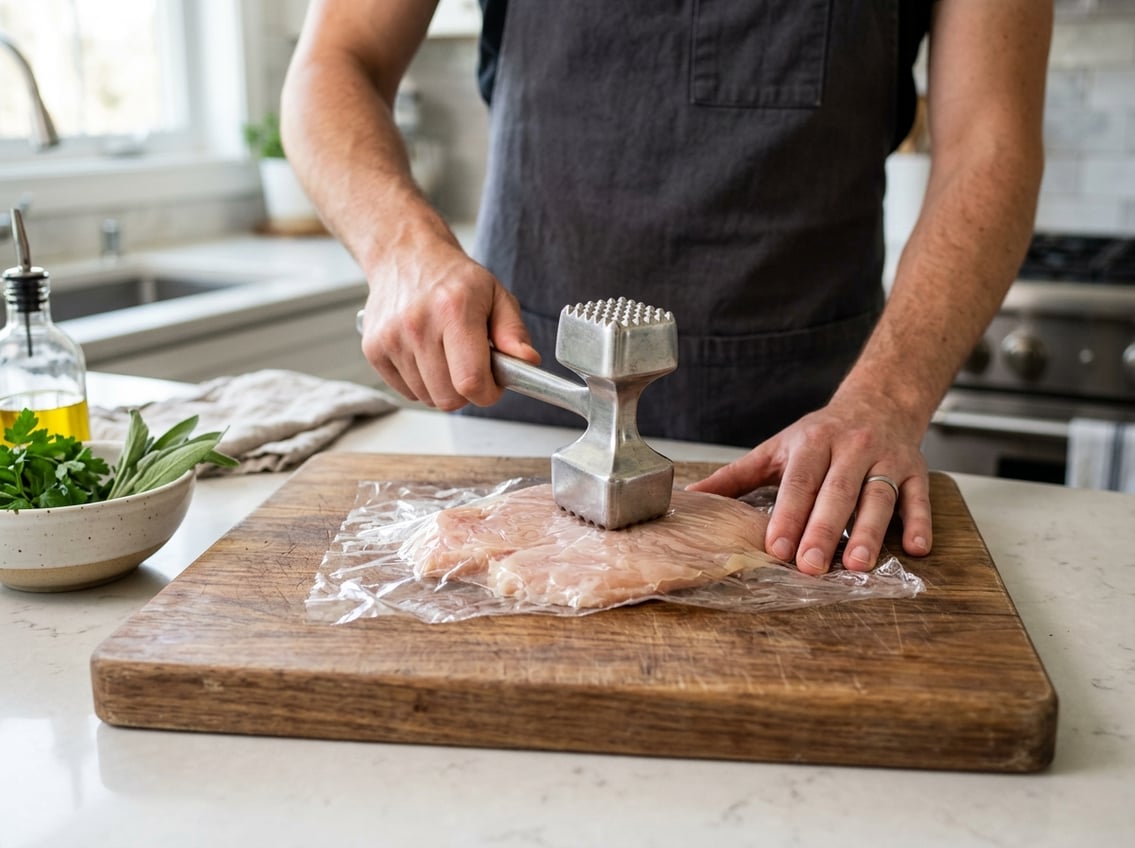
A meat mallet with a flat side gives you the best control for flattening chicken breasts. The flat side spreads pressure more evenly than the textured side.
You can also use a rolling pin, a small skillet, or the bottom of a heavy pan. These tools work best when you keep the pressure light and move slowly.
From a Meat Mallet to a Rolling Pin
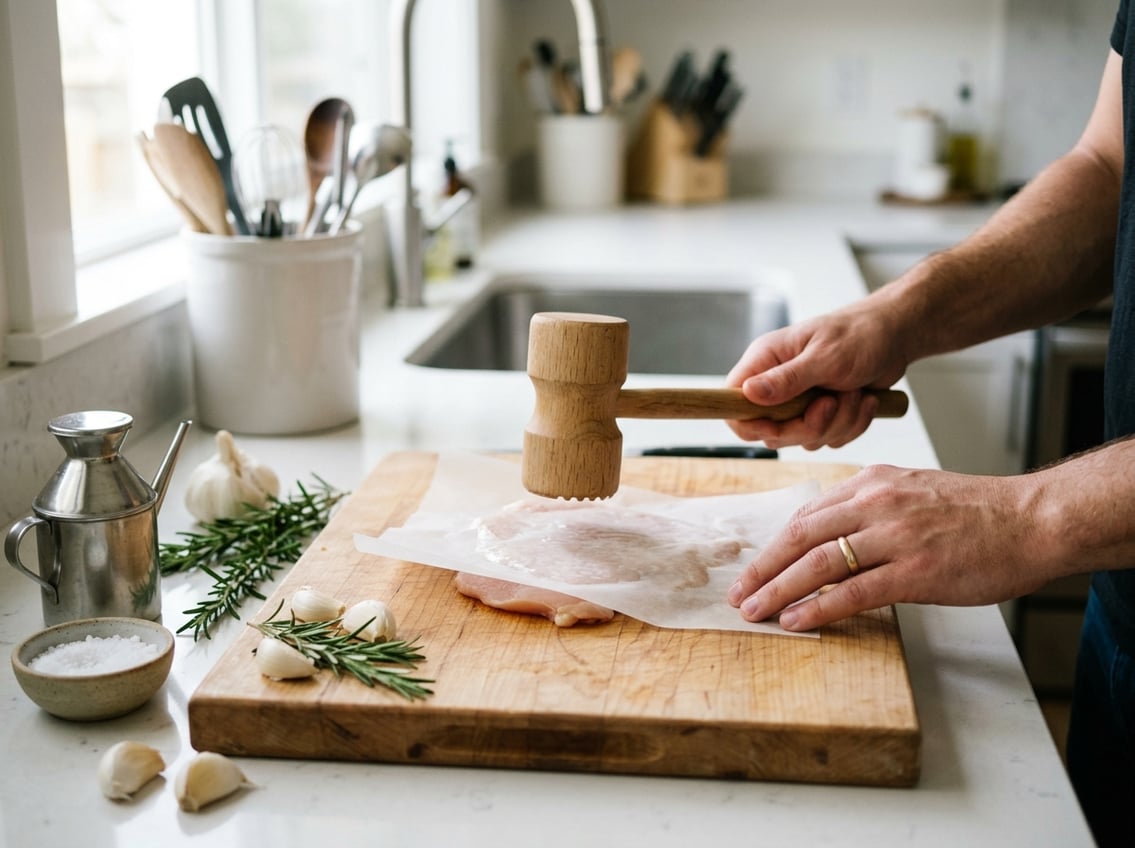
Place the chicken between two sheets of plastic wrap, waxed paper, or inside a resealable bag. This keeps the meat from sticking and helps contain splatter.
Start in the center and work outward toward the edges. According to Taste of Home’s method for flattening chicken breasts, gentle pounding from the center outward keeps the breast even instead of breaking apart.
Step-by-Step Method for Boneless Chicken Breasts
- Pat the boneless chicken breasts dry.
- Place one piece between plastic wrap, waxed paper, or in a bag.
- Pound lightly with the flat side of a meat mallet.
- Work from the center toward the thicker edges.
- Stop when the breast is the same thickness across most of the piece.
If a breast is very thick, butterfly it first. That gives you a flatter starting point and can make the rest of the job faster.
How Thin to Make It for Pan Frying, Baking, or Grilling
For quick pan frying, a thinner cut cooks fast and browns well. Many recipes use a thickness of about 1/4 inch for cutlet-style cooking.
For baking or grilling, you can leave the chicken a little thicker if you want more moisture and a softer bite. The main goal is still even thickness, not making every piece paper-thin.
Cooking It Without Drying It Out
Flattened chicken cooks faster, so your timing matters more. Season it well, handle it gently after pounding, and watch the heat so the meat stays juicy.
A meat thermometer gives you a clear target instead of depending on color alone.
Seasoning and Handling After Pounding
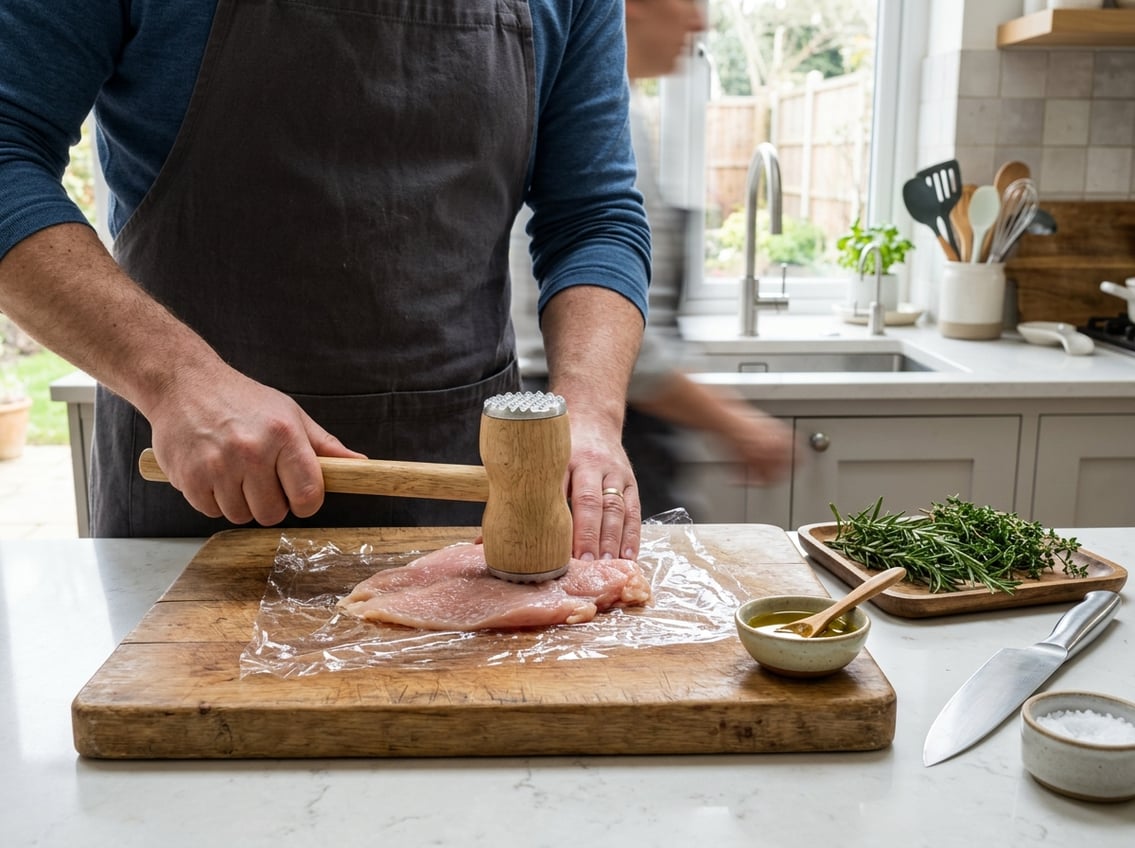
Season after flattening so the spices stick to the larger surface area. Salt, pepper, garlic powder, paprika, and simple herb mixes all work well.
Handle the meat gently once it is flattened. Thin chicken can tear more easily, so move it with a spatula or tongs instead of folding or squeezing it.
Cook Times by Method and Thickness
Thin flattened chicken breast cooks more quickly than a whole breast. In a hot skillet, it may finish in just a few minutes per side, while baking or grilling usually takes a little longer depending on thickness.
The exact time changes with your heat and the size of the piece. Use thickness as your guide, then confirm doneness with a thermometer.
Checking Doneness With a Meat Thermometer
Check chicken with a thermometer instead of guessing. Insert the thermometer into the thickest part of the breast for the most accurate reading.
Chicken is done when it reaches 165°F in the center. That helps you keep it juicy and safe to eat.
Common Mistakes to Avoid
Flattening chicken breast is simple, yet a few small mistakes can ruin the texture or create a mess. The biggest issues are too much force, poor setup, and uneven starting pieces.
A light touch and a stable work surface make the job much easier. Good prep helps you get cleaner, more useful results from each piece.
Pounding Too Hard and Tearing the Meat
Use a meat mallet to press, not smash. If you hit too hard, the chicken can split, turn ragged, or lose moisture faster during cooking.
Use short, light strokes and check your progress often. The goal is an even thickness, not a damaged surface.
Skipping the Cover Layer and Making a Mess
If you flatten chicken without plastic wrap, waxed paper, or a bag, juices can splatter across your counter. The cover layer also keeps the meat from sticking to the tool.
A fresh sheet for each piece is a smart habit when you are flattening several breasts. That keeps your workspace cleaner and more controlled, which matches advice from tips for flattening chicken without making a mess.
Starting With Frozen or Uneven Pieces
Do not try to flatten chicken that is still frozen. The meat will crack unevenly and become harder to shape.
Start with pieces that are close in size. If one breast is much thicker than the others, butterfly it first or separate it from the batch so the whole meal cooks at the same pace.


