
Can You Use Chicken Breast for Coq au Vin? Yes—Here’s How
You can use chicken breast for coq au vin, and it works best when you adjust the method to protect the meat from drying out. The dish changes a bit from the classic version, but you can still build deep wine sauce flavor and keep the result satisfying.
If you choose chicken breast, the main goal is simple: keep the cooking gentle, keep the sauce flavorful, and pull the meat off the heat as soon as it is done.
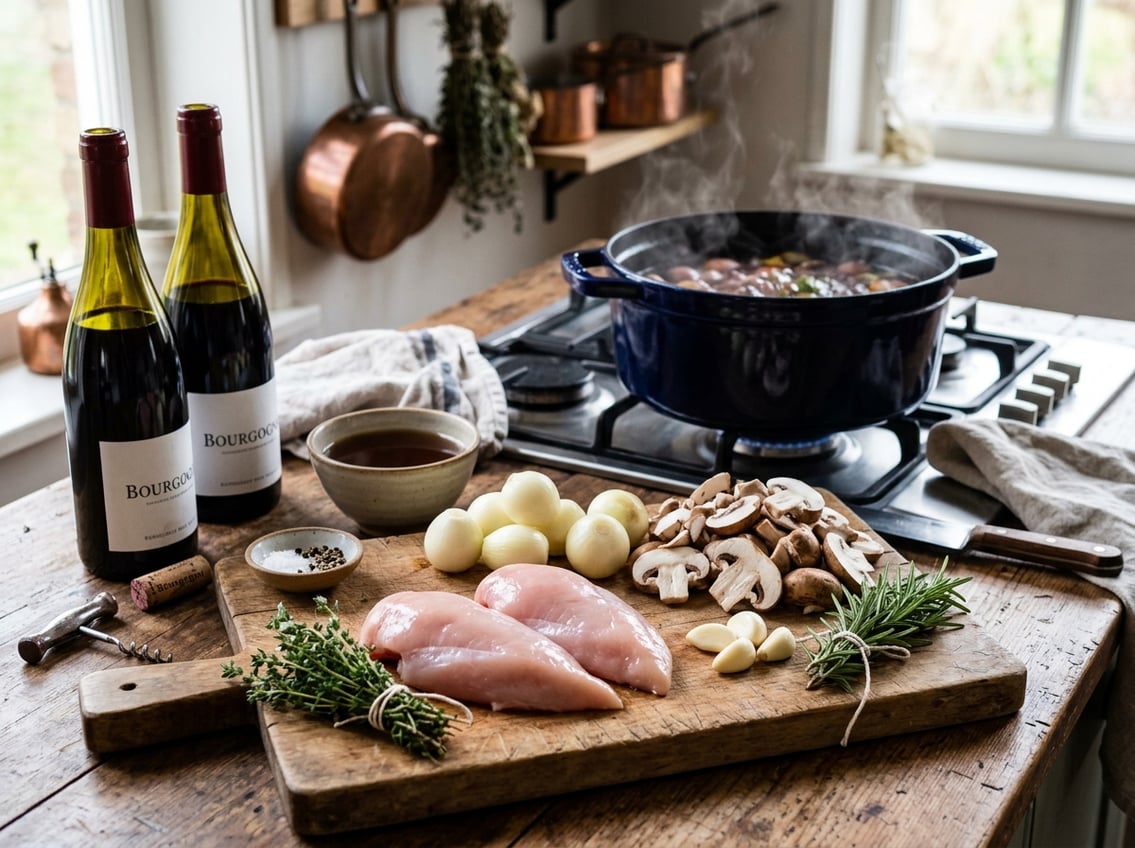
In French cooking, cooks traditionally make coq au vin with tougher chicken pieces that can handle a long braise. You can still create a classic feel by keeping mushrooms, onions, herbs, and wine sauce, even if you use chicken breast.
When Chicken Breast Works Best
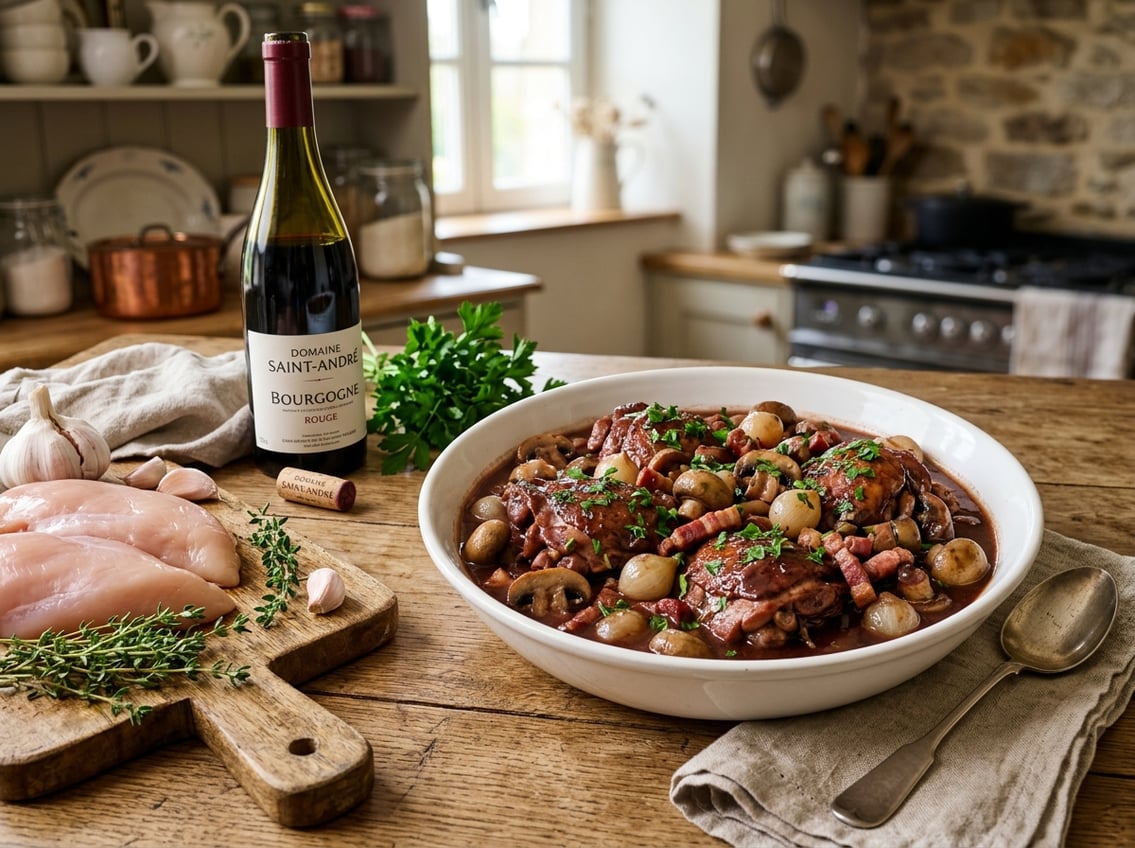
Chicken breast works well when you want a faster version of coq au vin and plan to cook it in a controlled way. It is a strong choice for boneless chicken breasts in a weeknight recipe or for a lighter take that still uses a rich sauce.
Treat it more like braised chicken with a short simmer, not a long stew. That keeps the meat tender while the wine, herbs, and vegetables add flavor.
Why Chicken Breast Changes the Dish
Chicken breast is lean, so it does not bring the same richness as dark meat. The sauce matters more, and the texture can turn dry if you simmer it too long.
With boneless skinless chicken, you get a cleaner taste and a shorter cook time, so the final dish feels lighter and less rustic.
Boneless Vs. Bone-In Results
Bone-in chicken pieces stay juicier during a long cook and give you more depth in the broth. Boneless chicken breasts cook faster and slice neatly, which makes them useful in recipes designed for speed.
If you want the most traditional result, bone-in pieces still win. For a quicker dinner, boneless chicken breast works well if you watch the timing.
How to Keep the Meat Tender
Pound thicker breasts to an even thickness so they cook at the same rate. Sear them lightly, then finish them in the sauce only until they reach doneness.
Use medium heat, not a hard boil. If the chicken cooks in the liquid for too long, the meat can turn dry.
How to Build Flavor Without Overcooking
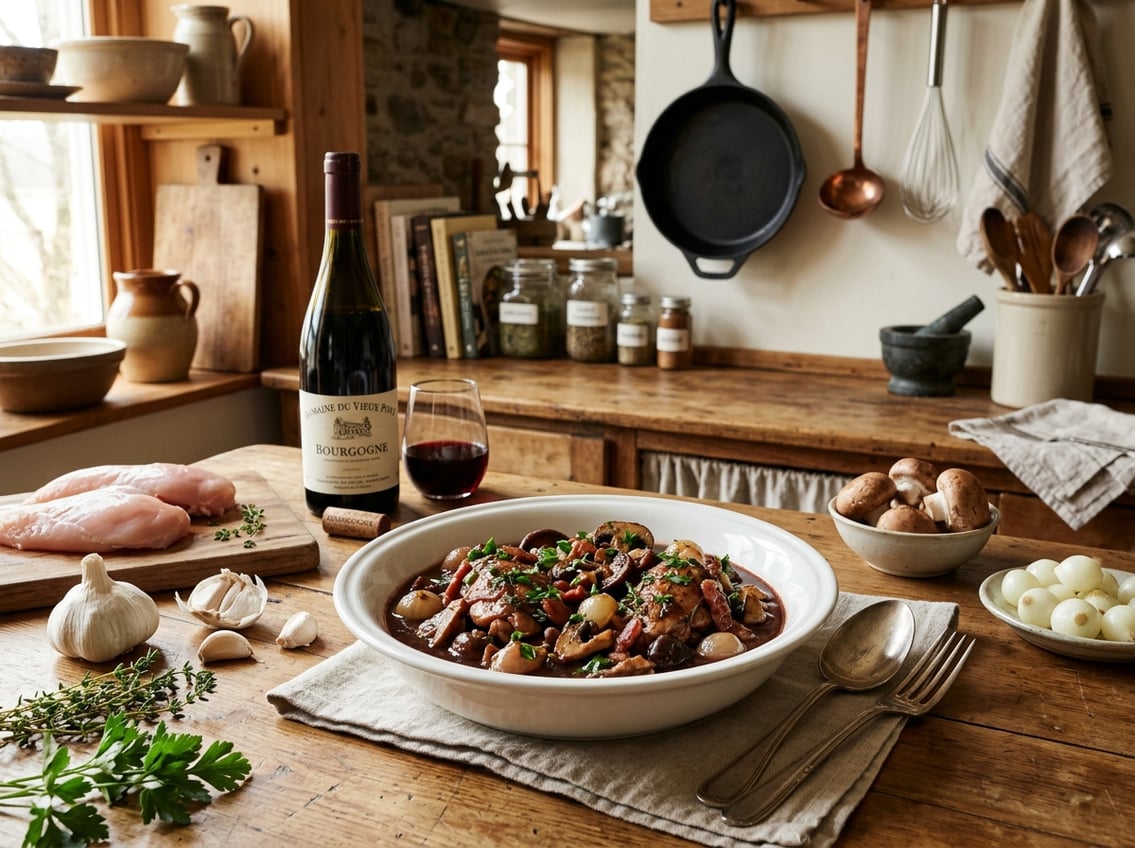
You can build flavor by browning the chicken and vegetables, reducing the liquid, and choosing a full-flavored broth. All of that is possible without giving the chicken extra time in the pot.
Keep the sauce layered and avoid overcooking the meat. That balance matters more here than in a longer braise.
Browning With Olive Oil and Flour
Use olive oil to brown the chicken lightly and start the base of the sauce. A dusting of all-purpose flour helps the surface color and gives the liquid a little body later.
A thin coating of flour is enough to help the pan develop flavor and thicken the sauce in the end.
Choosing Chicken Broth, Chicken Stock, or Homemade Chicken Stock
Chicken broth gives a lighter flavor, while chicken stock usually tastes fuller and richer. Low-sodium chicken broth gives you more control after the wine reduces.
If you have homemade chicken stock, use it. It can make coq au vin taste deeper and more balanced, especially when you use boneless chicken breasts.
Using Pearl Onions, Button Mushrooms, and Baby Carrots
Pearl onions add a classic sweet-savory note. Button mushrooms bring earthiness, and baby carrots add color and mild sweetness.
These vegetables help the dish feel complete when the chicken cooks faster than in a traditional braise. They give the sauce more body and make the plate look finished.
Best Cooking Method for a Chicken Breast Version
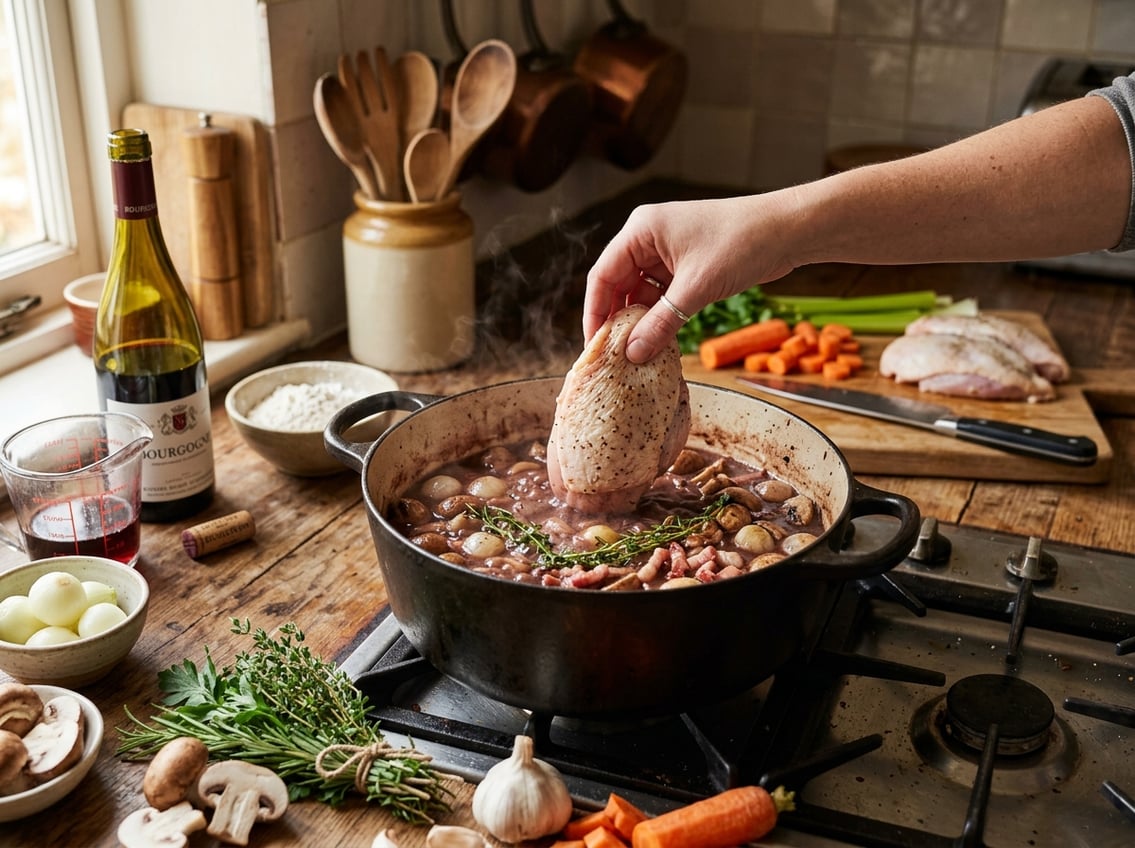
The best method is a stovetop braise with a short finish at the end. That keeps the chicken tender and lets the sauce reduce in one pan, which works well for boneless chicken breasts.
This approach gives you the feel of coq au vin without forcing the chicken to sit in simmering liquid for too long. It also makes it easier to control the texture.
Stovetop Timing for Juicy Chicken
Sear the chicken first, then set it aside while you build the sauce. Return it to the pan near the end and cook just until the center reaches doneness.
For boneless chicken breasts, the timing is much shorter than in classic braised chicken recipes. Check early and often, since a few extra minutes can make a big difference.
How to Thicken and Finish the Sauce
After the wine and broth reduce, let the sauce simmer until it lightly coats a spoon. If it still feels thin, add a small amount of flour-based thickener or a beurre manié if your recipe uses one.
Finish with a final taste for salt, pepper, and acidity. The sauce should taste balanced, not sharp, so the chicken breast does not get lost in the wine flavor.
Make-Ahead and Reheating Tips
You can make the sauce ahead and add the chicken later for the shortest finish. That is a good way to keep the meat tender and keep the vegetables from getting too soft.
When reheating, use low heat and stop as soon as the chicken is warm. Gentle reheating protects the texture better than a hard simmer.
Serving, Recipe Variations, and Nutrition Notes
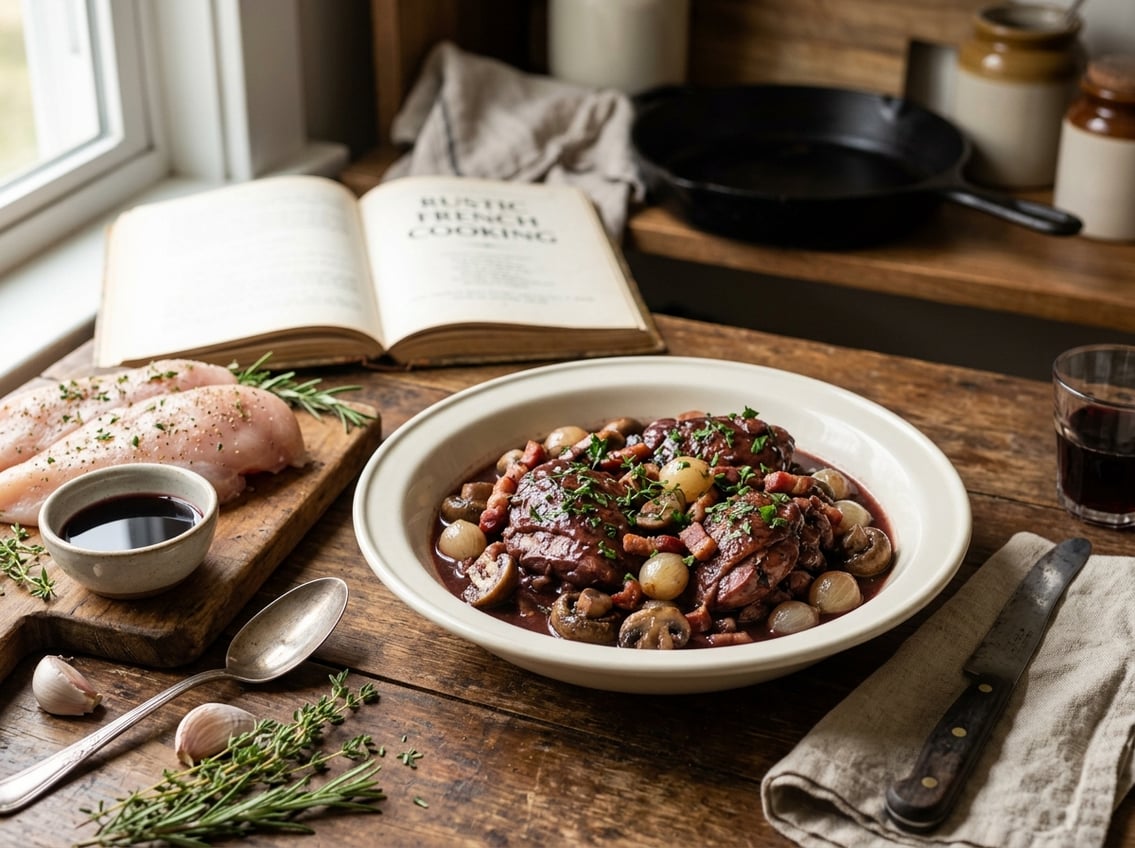
Coq au vin pairs well with simple sides that soak up sauce. Classic choices include mashed potatoes, noodles, rice, or crusty bread.
For a weeknight dinner, keep the plate simple and let the sauce do the work. A green salad or steamed vegetables also help balance the richness.
What to Serve With Coq au Vin
- Mashed potatoes
- Egg noodles
- Rice
- Crusty French bread
- Parsley potatoes
- Green salad
If you want a more traditional match, serve it with potatoes and bread. If you want something lighter, use rice or a simple salad.
Simple Variations for Weeknight Cooking
You can add more vegetables, like extra carrots or peas, to make the dish more filling. Some recipes use bacon for a smoky base, while others keep the flavor cleaner and focus on wine and herbs.
If you like quick French meals, a chicken breast version gives you flexibility without losing the spirit of coq au vin. For another take on the dish, this make-ahead Parisian coq au vin with boneless chicken breasts shows how a faster method can still stay tender.
Nutrition Facts to Keep in Mind
Chicken breast is naturally leaner than thighs or drumsticks. This can make the dish lower in fat than a classic version.
The sauce, bacon, and serving choice affect the total fat content. The full meal matters more than the chicken alone.
If you track nutrition facts, pay attention to sodium in broth and bacon. Also consider the starch you serve alongside the dish.
Choose a lighter broth and a simple side to keep the meal more balanced.
For more chicken-breast guidance, check out juicy chicken breast cooking methods. This can help you plan the right heat and timing.


