
How Long Does It Take to Defrost Chicken Breast? Fast Answers
How long does it take to defrost chicken breast? In most cases, a boneless chicken breast needs about 12 to 24 hours in the refrigerator.
Smaller pieces usually thaw in about 1 hour in cold water or a few minutes in the microwave. The exact time depends on the size, thickness, and whether the breasts are frozen together in one block.
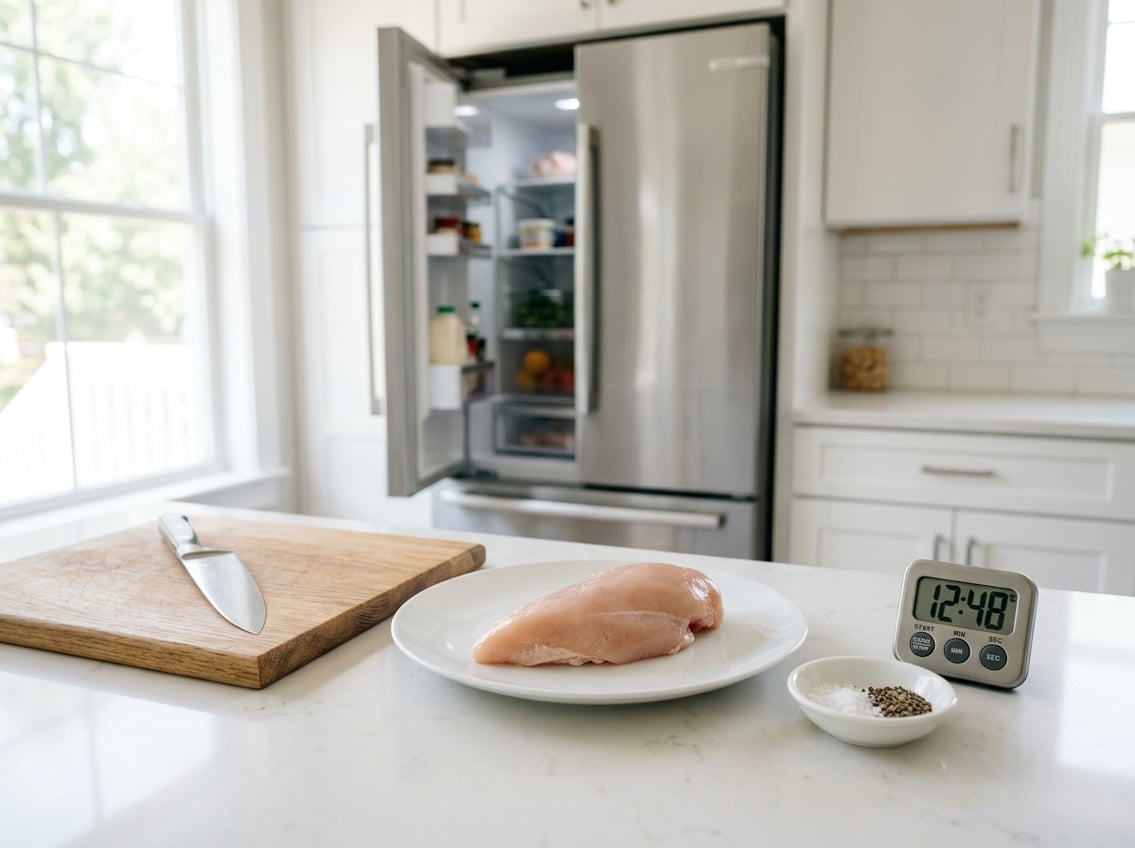
For the safest and most reliable method, thaw chicken breast in the refrigerator the day before you plan to cook it.
If you need it sooner, use cold water thawing for same-day cooking. The microwave works best when you are ready to cook right away.
Cooking chicken from frozen can leave the outside overcooked and the center still icy.
Proper defrosting gives you better texture and more even cooking.
Defrosting Times by Method
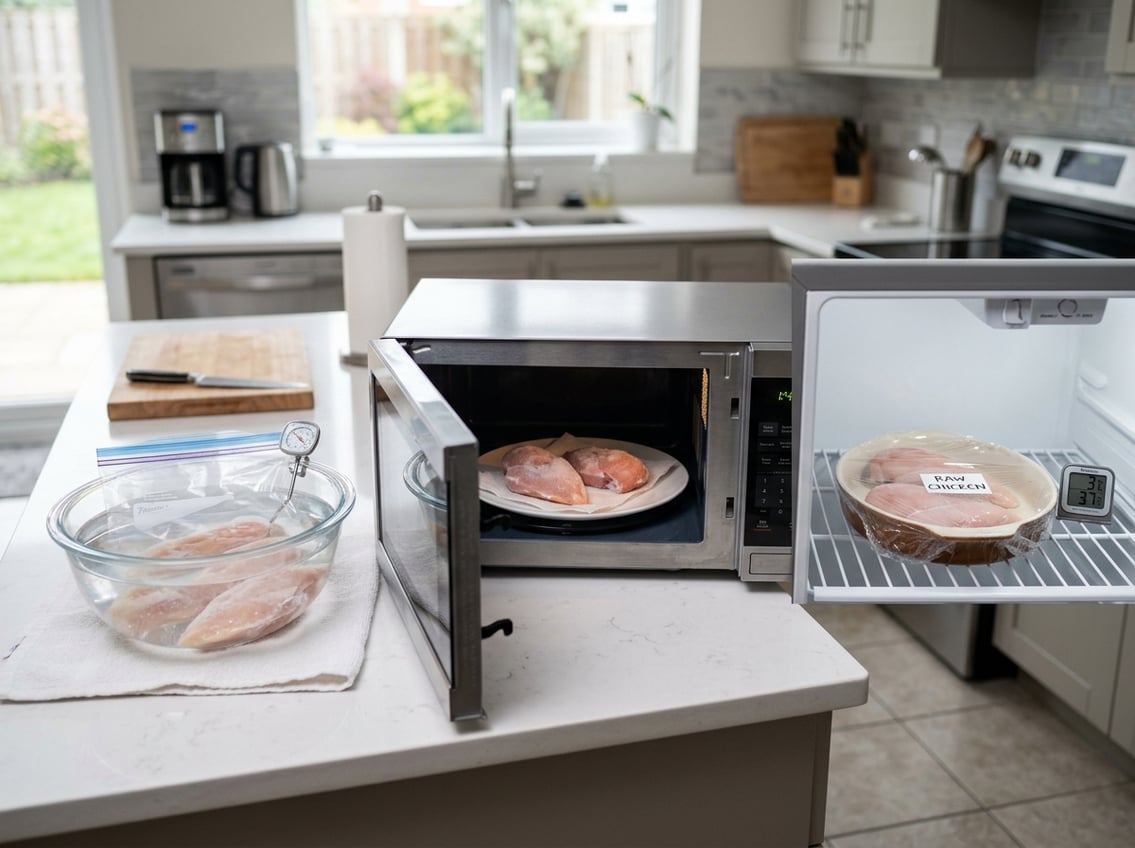
The time for thawing chicken changes a lot by method.
Refrigerator thawing is slow but steady. Cold water thawing works much faster. Microwave thawing is the quickest option when dinner is running late.
Refrigerator Timing for Single Breasts and Larger Packs
Thaw a single boneless breast overnight in the fridge, expecting about 12 to 24 hours.
A larger pack or breasts frozen together in one mass can take an extra day or more.
A good rule is about 5 hours per 1 pound for defrosting chicken breast in the refrigerator.
Once thawed in the fridge, the chicken can usually stay there for 1 to 2 days before cooking.
Cold Water Thawing Time for Same-Day Cooking
Use cold water thawing when you need chicken the same day and want decent texture.
Small chicken breasts may thaw in about 1 hour, while larger pieces can take longer.
Keep the chicken in a leak-proof bag and submerge it in cold water. Change the water every 30 minutes.
Cook it right after thawing.
USDA-based guidance from Food Network’s chicken thawing guide points to cold-water thawing as a safe shortcut when you cannot thaw overnight.
Microwave Timing for Last-Minute Meals
The microwave thaws chicken the fastest, often in just a few minutes depending on size and power level.
Use the defrost setting or low power, and turn the chicken often so parts do not start cooking.
This method works best for immediate cooking.
If the edges begin to cook, you may get a tougher texture, so keep the intervals short and watch closely.
Which Method to Choose
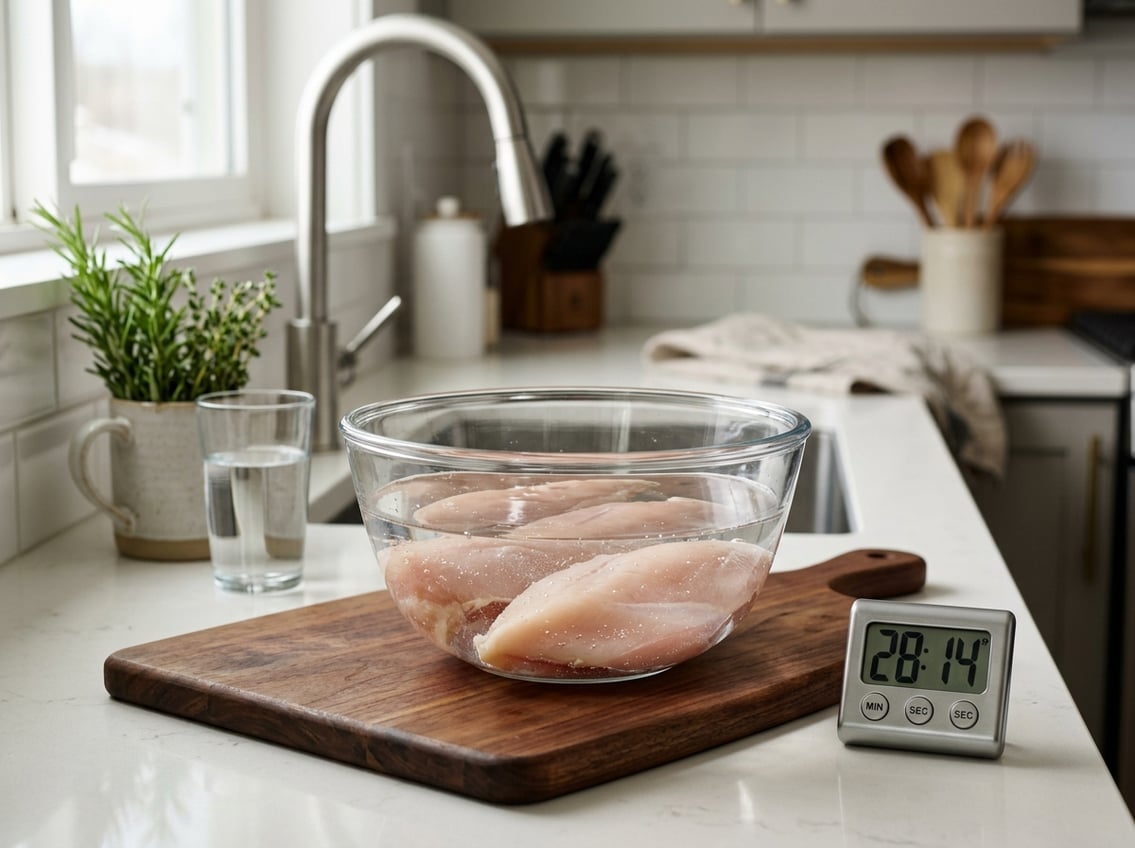
Choose a method based on your schedule, texture goals, and how closely you want to manage food safety.
Refrigerator thawing gives you the most control. Cold water thawing saves time. Microwave thawing is useful only when you need to cook now.
Best Option for Food Safety and Planning Ahead
Use refrigerator thawing for the safest way to defrost chicken breast.
It keeps the meat at a safe temperature while it slowly thaws.
This is the method to use when you can plan ahead.
Move the chicken from freezer to fridge and let it thaw overnight.
Fastest Safe Option Without Hurting Texture Too Much
Cold water thawing usually gives the best balance of speed and texture.
It is much faster than the refrigerator and gentler than the microwave.
Use it when you forgot to thaw chicken the night before but still want better results than cooking from frozen.
Keep the water cold and change it often to keep the chicken out of the temperature range where bacteria grow quickly.
When Microwave Thawing Makes Sense
Microwave thawing works when you need to cook chicken breast right away.
It is the quickest choice and can save dinner plans on a busy night.
Use it only for smaller portions or when you can watch the chicken closely.
If you are not ready to cook immediately, use the refrigerator or cold water instead.
Safe Handling Rules While Thawing
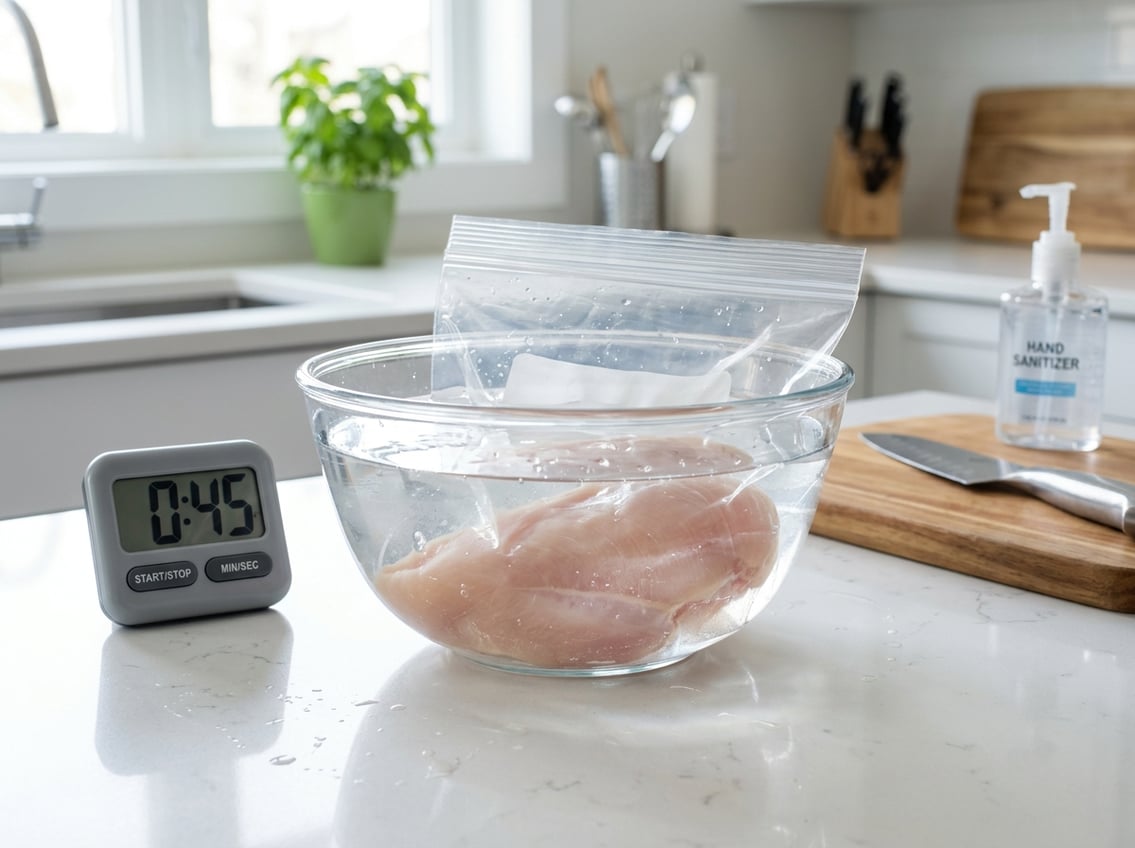
Safe handling matters as much as timing.
Chicken can carry salmonella, so keep it cold, keep it sealed, and keep juices away from ready-to-eat food.
Why Room Temperature and Hot Water Are Risky
Never thaw chicken at room temperature or in hot water.
Those methods let the outside warm up too fast while the inside is still frozen, which raises food safety risks.
The USDA-style advice used by many cooking guides, including Southern Living’s defrosting guide, keeps chicken out of the danger zone between 40°F and 140°F.
That is the temperature range where bacteria can multiply quickly.
How to Avoid Cross-Contamination in the Kitchen
Always thaw chicken in a sealed bag or container.
Set it on a plate or bowl so any leaks do not drip onto other food in the fridge or sink area.
Wash your hands after handling raw chicken.
Clean counters, cutting boards, knives, and sink surfaces with hot soapy water.
Keep the chicken separate from salad, fruit, bread, and other foods that will not be cooked.
When to Cook Immediately and When Refreezing Is Allowed
If you thaw chicken breast in the microwave or cold water, cook it immediately. These methods thaw the meat quickly, so waiting can create a safety problem.
If you thaw chicken breast in the refrigerator, you can usually refreeze it within 1 to 2 days if it stayed cold and clean. The texture may change slightly, but the chicken remains usable if it never warmed up too much.


