
Is It Normal for Chicken Breast to Be Slimy? What It Means
You may notice that chicken breast feels slimy at first touch, and your reaction is reasonable.
A slick or sticky surface can mean normal moisture, or it can point to spoilage, so the key is learning the difference.
If the chicken is fresh, properly refrigerated, and only feels lightly slippery from its own juices, that is usually normal. A thick sticky film, bad smell, or color change means you should throw it away.
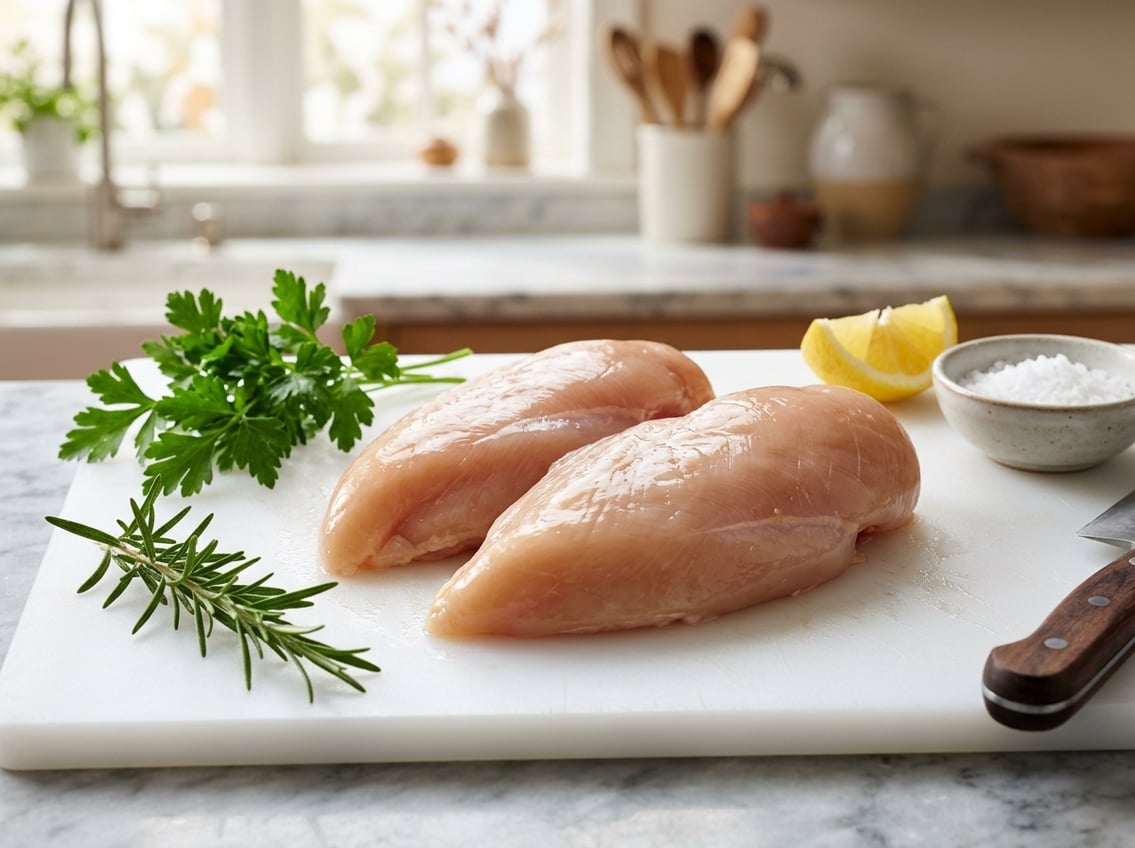
Raw chicken breast often has a smooth, damp surface because natural proteins and moisture leave the meat during packaging.
That texture can be normal.
Once chicken becomes tacky, ropy, or foul-smelling, you need to make a quick food safety decision.
When Sliminess Is Normal and When It Is Not
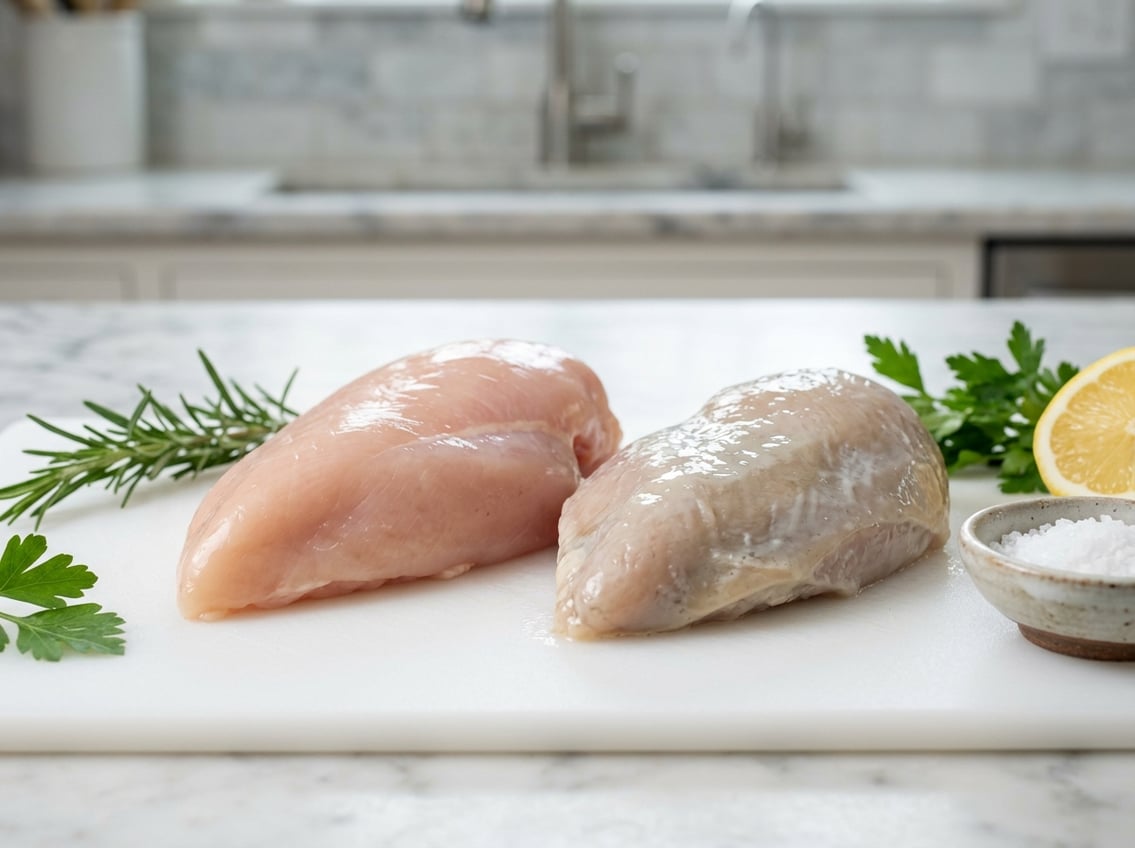
A little surface moisture on packaged chicken is common, especially after refrigeration.
Fresh chicken texture should feel firm and slightly springy, not mushy or sticky, and the surface should not carry a strong odor.
According to a breakdown of raw chicken sliminess, the coating is often just water and proteins from the meat itself.
What Fresh Chicken Breast Should Feel Like
Fresh chicken breast should feel moist, firm, and a little springy when you press it.
It may look glossy because of natural juices, especially in sealed packaging.
A truly fresh piece should not feel slimy in a thick way.
If it feels slippery only from surface moisture, that can still fit normal chicken texture.
How Natural Surface Moisture Differs From a Sticky Film
Normal moisture feels wet or lightly slick.
A spoiled piece often feels sticky, tacky, or coated with a film that clings to your fingers.
Natural moisture usually looks clear or slightly pale.
A bad slimy chicken breast may feel thicker and more residue-like.
Signs That Point to Spoiled Meat Instead
Look for sour, sulfur-like, or ammonia-like odor.
Also watch for gray, green, or dull discoloration, or any mold.
If the chicken is past its date and the surface feels heavy or gooey, treat it as spoiled chicken.
In that case, discard it for safety.
How to Check Chicken Before You Cook It
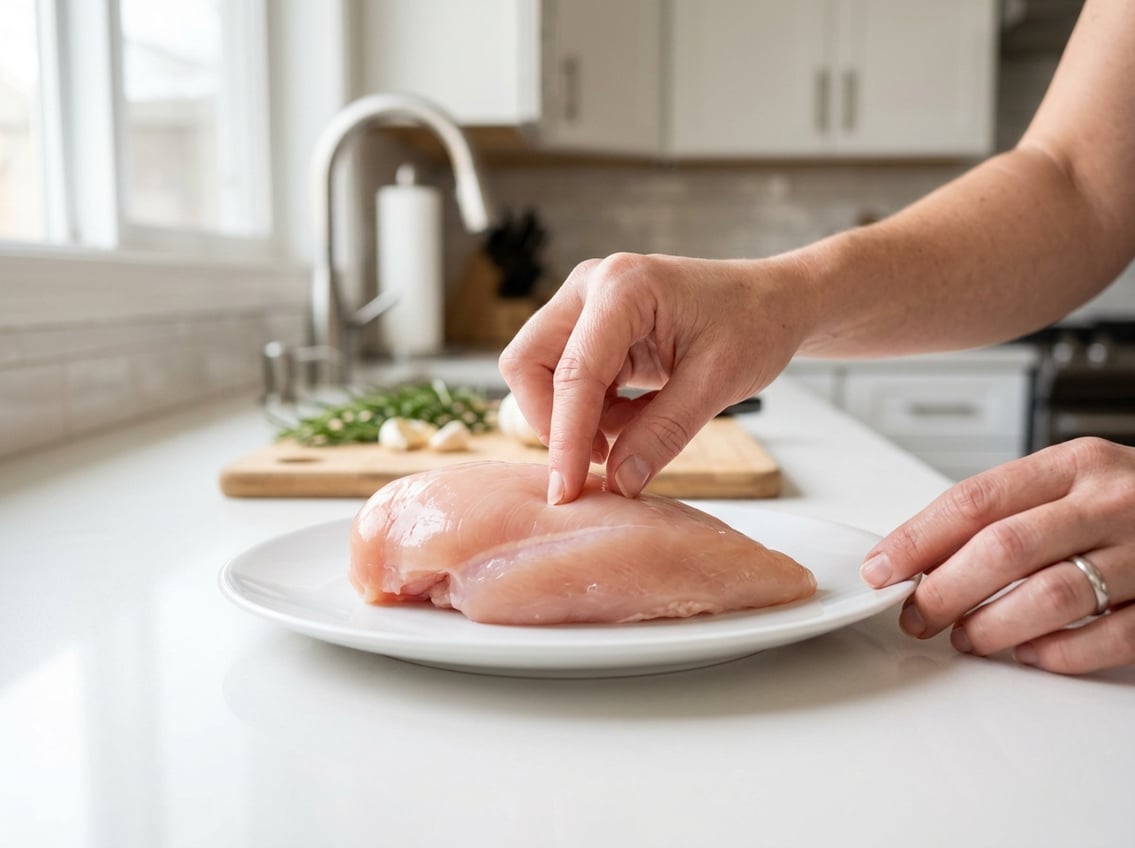
You can spot a lot before the pan ever heats up.
Check the texture, smell, color, and the package itself, since all of these can point to spoiled chicken or normal packaging moisture.
Texture, Smell, and Color Warning Signs
Press the chicken lightly with a clean hand or utensil.
Fresh packaged chicken should be moist but not slimy, and it should not leave a sticky film behind.
Smell it next.
A sour or unpleasant odor is a strong warning sign, even if the chicken still looks acceptable.
Color changes matter too, especially if the meat turns gray or develops dark patches.
What Excess Liquid in the Package Can Mean
Some liquid in packaged chicken is normal, since juice collects during storage.
A wet package does not automatically mean the meat is unsafe.
A large amount of cloudy liquid can raise concern if it comes with a bad smell or sticky surface.
Packaging that is swollen, leaking, or damaged is also a problem for food safety.
How Storage Time and Defrosting Affect the Surface
Raw chicken breast stays safe in the fridge for only 1 to 2 days, according to USDA-style storage guidance summarized here.
Longer storage gives bacteria more time to grow.
Defrosting can also change the surface.
Chicken thawed too slowly, or left in warm conditions, can become slimy faster and may develop spoiled chicken signs even before the date on the label.
Safety Risks and What to Do Next
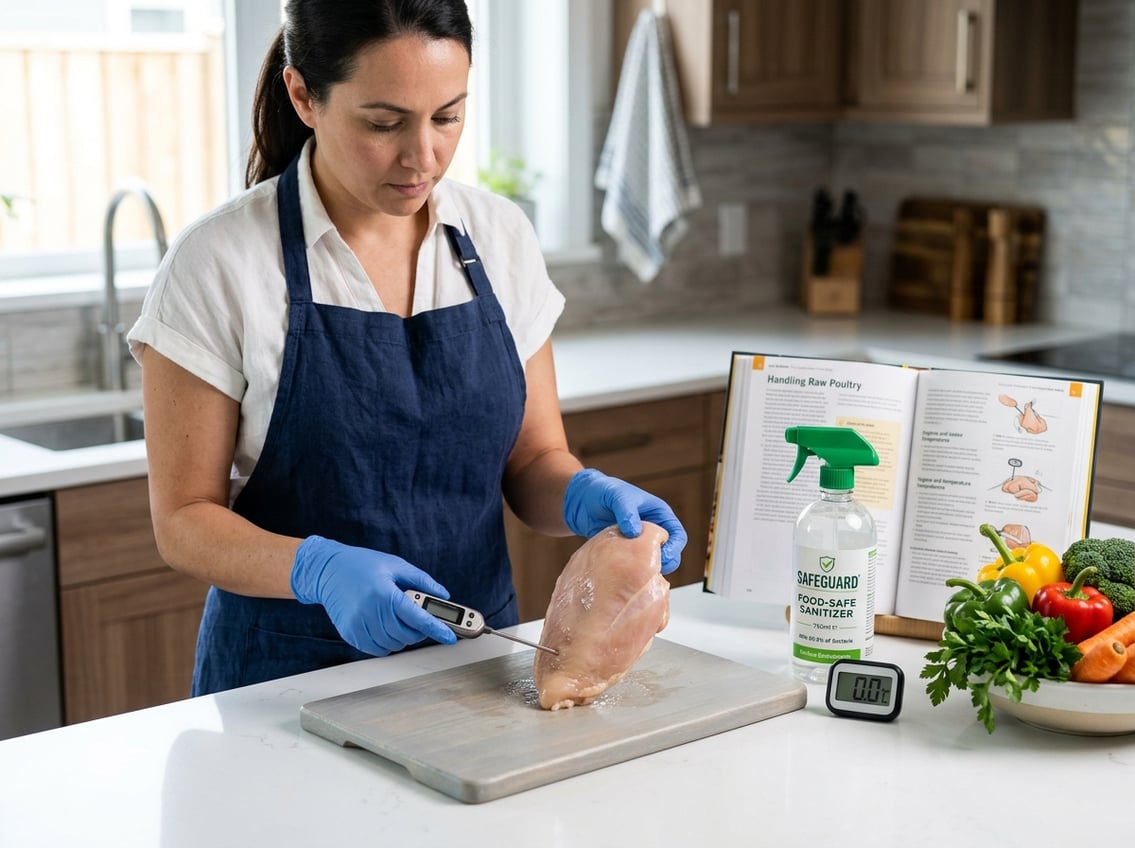
Slimy raw chicken is not just a texture issue.
When spoilage is present, bacteria can spread on the meat and to nearby surfaces, which raises the risk of salmonella, campylobacter, and cross-contamination.
Why Bacterial Growth Matters
Bacteria grow faster when chicken stays too warm or too long in the fridge.
A thin sheen is one thing, while a thick sticky film can point to active spoilage.
Once bacteria spread, your counters, knives, cutting boards, and hands can carry them into other foods.
When to Throw It Away Instead of Cooking It
Throw the chicken away if it smells bad, feels tacky or ropy, shows discoloration, or has been stored too long.
Cooking is not a fix for meat that is already clearly spoiled.
This is especially important if the package was damaged, leaked, or sat above 40°F for too long.
With spoiled chicken, caution is the safer choice.
Safe Handling to Prevent Cross-Contamination
If you decide the chicken is still usable, keep it separate from ready-to-eat foods.
Use a dedicated cutting board, wash your hands well, and clean tools and surfaces right away.
Do not rinse raw chicken in the sink.
As noted by food safety guidance on slimy chicken, washing can spread germs through splashing instead of removing risk.
Cooking and Storage Guidelines That Reduce Risk
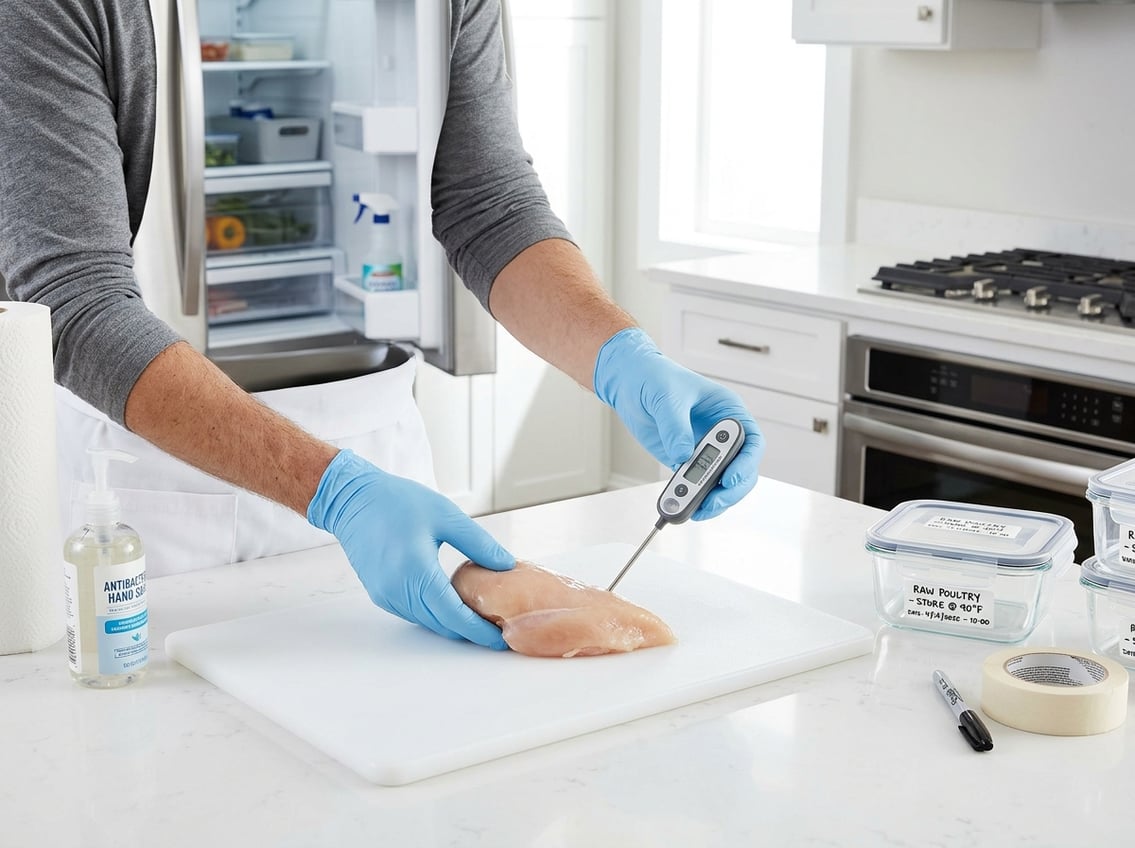
Safe cooking and storage do more than protect flavor.
They also reduce the chance that slimy chicken becomes a food safety problem in your kitchen.
Use a Meat Thermometer to Verify Doneness
A meat thermometer is the most reliable tool you have.
Texture and color can mislead you, especially with thicker chicken breasts.
Insert the thermometer into the thickest part of the meat.
The chicken is done when the internal temperature reaches 165°F.
Internal Temperature for Safe Chicken
For chicken, the safe internal temperature is 165°F, as also noted in guides to checking chicken doneness.
That number gives you a clear cutoff, even if the outside looks ready.
White meat can still look slightly pink near the bone or in dense areas, so temperature matters more than appearance.
Trust the thermometer, not guesswork.
How to Store Raw and Cooked Chicken Properly
Keep raw chicken cold at 40°F or below, and use it within 1 to 2 days or freeze it if you need more time.
Store it on the bottom shelf so drips do not reach other food.
Cooked chicken should go into shallow containers and into the fridge within 2 hours.
Tight storage helps limit moisture, odors, and bacterial growth.
Why Undercooked Chicken Is Never Worth the Risk
Harmful bacteria can remain in chicken even if the texture seems improved during cooking.
A slimy surface disappearing in the pan does not mean the meat reached a safe temperature.
If the center is undercooked, the risk remains.
It is safer to cook chicken fully the first time.


