
Can Chicken Breast Go Bad in the Freezer? Safety and Storage
You may wonder, can chicken breast go bad in the freezer? Yes, chicken breast can lose quality in the freezer, and in some cases it can also become unsafe after long storage, temperature swings, or poor packaging.
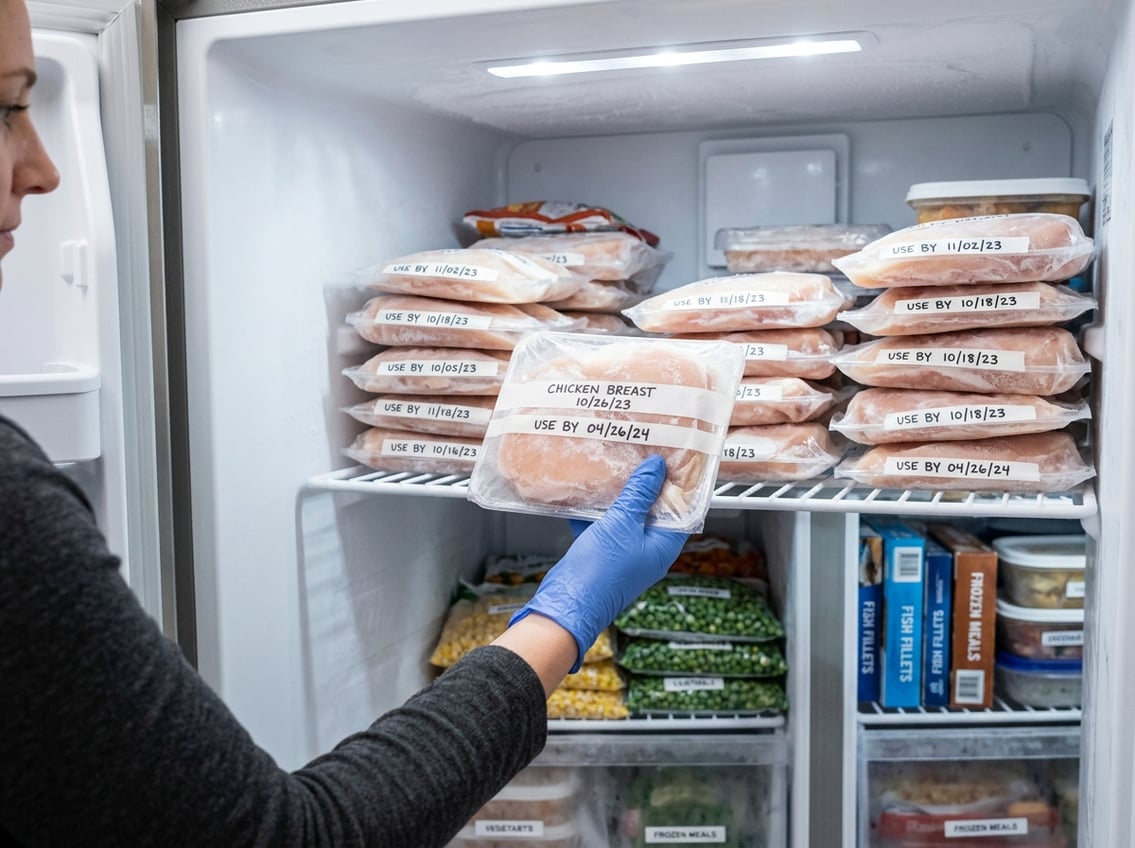
If you freeze chicken breast the right way, it can stay safe for a long time. The bigger issue is usually quality, since freezer burn, dry texture, and stale flavor build up over time.
The key is to know how long chicken lasts in the freezer, how to store it well, and when to toss it if the chicken looks or smells wrong after thawing.
The Short Answer on Safety and Quality
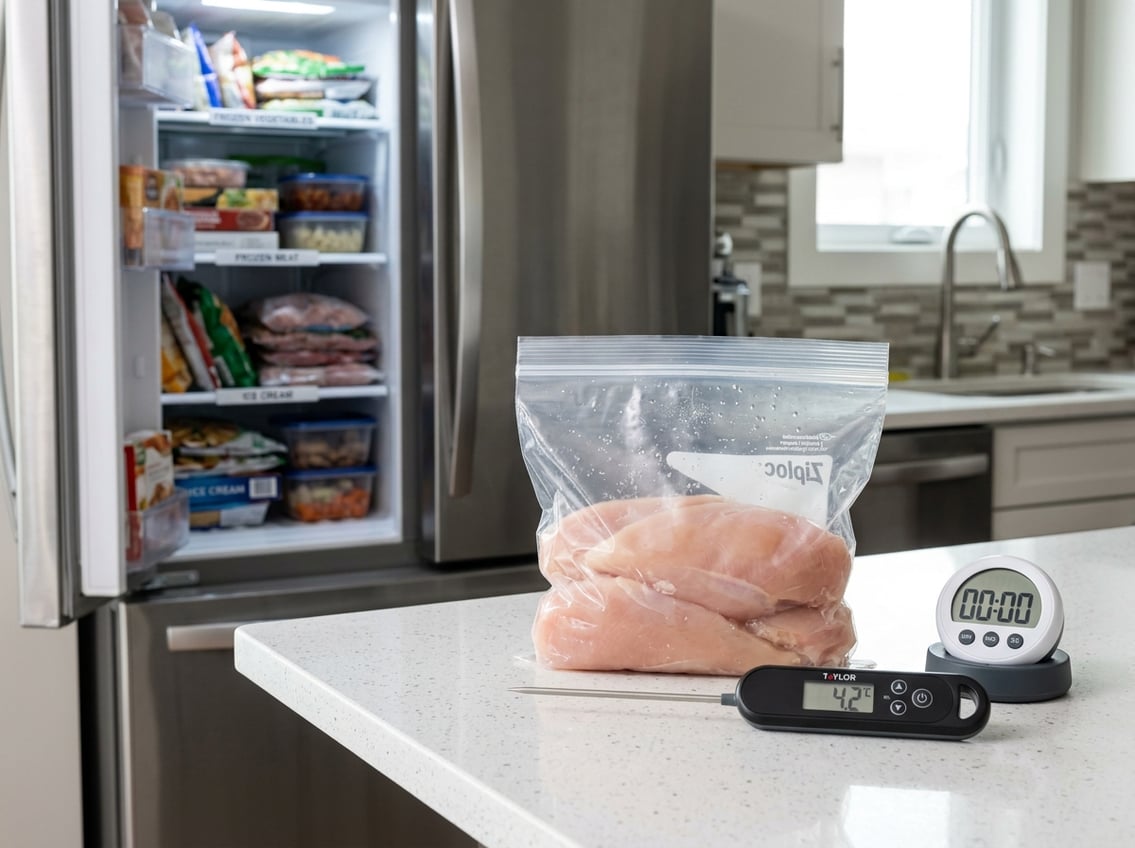
Frozen chicken breast stays safe much longer than refrigerated chicken because freezing slows bacterial growth. Keep chicken at 0°F or below in airtight packaging to protect both safety and texture.
Why Frozen Chicken Stays Safe Longer Than It Stays Good
Freezing pauses most bacterial activity, so properly stored chicken breast does not spoil quickly in the same way it does in the fridge.
The USDA-based guidance in this frozen chicken storage guide notes that chicken can stay safe for a long time when kept cold enough.
Quality changes more quickly than safety. Ice crystals, air exposure, and temperature changes slowly dry out the meat and lead to freezer burn.
How Long Chicken Breast Keeps Its Best Quality
For best quality, raw chicken breast is usually best within 3 to 6 months. Properly stored raw chicken can last up to about 9 months in the freezer.
Cooked chicken breast is best within about 3 months, according to the same guide and USDA-based storage advice.
After that, the chicken may still be safe if it has stayed frozen the whole time. The taste and texture often decline.
When Old Frozen Chicken Breast Should Be Tossed
Throw chicken breast away if it has been thawed for an unknown amount of time, has strong odor after thawing, or shows heavy freezer burn plus odd texture or color.
If the package was damaged, repeatedly thawed, or stored above 0°F for a long stretch, discard it.
How to Spot Problems After Freezing or Thawing
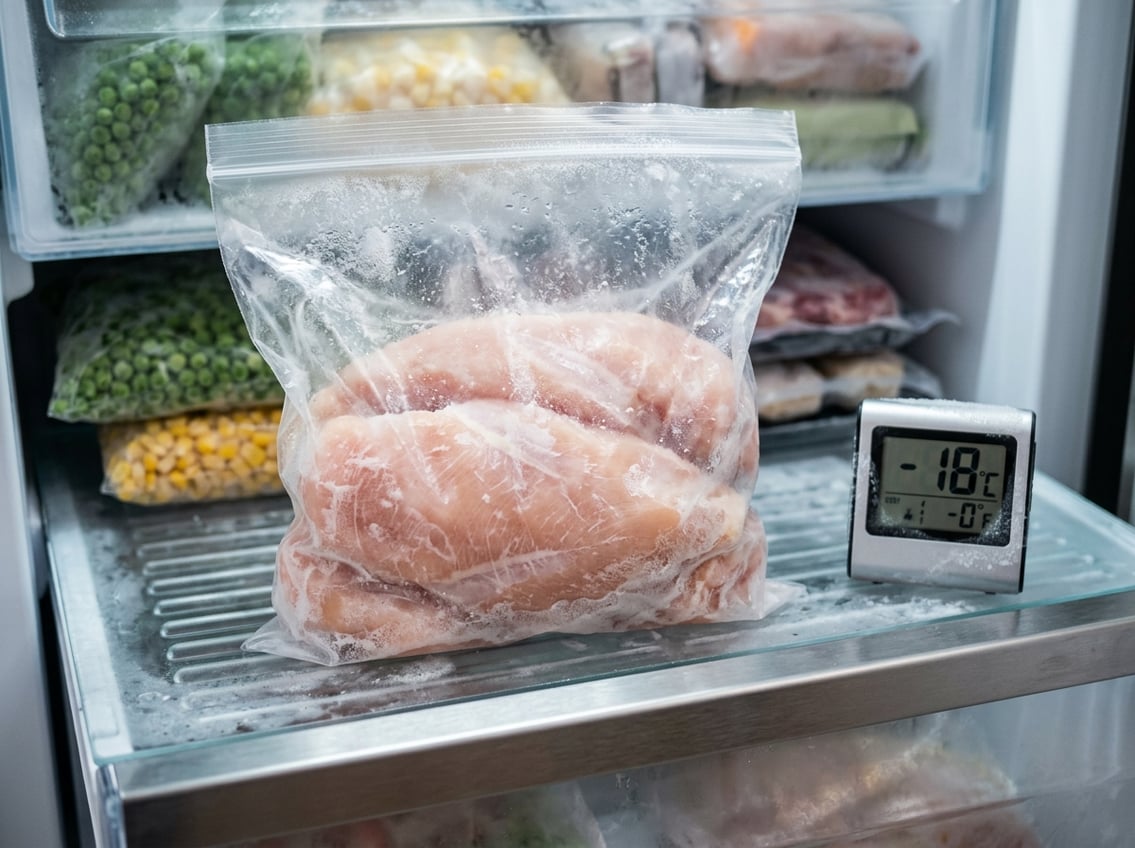
Freezer burn and true spoilage are not the same thing. Freezer burn mainly affects quality, while spoilage can make chicken unsafe to eat.
You can often spot the difference by checking smell, texture, color, and whether the chicken stayed fully frozen.
These checks also help you decide whether to prevent freezer burn next time or discard the meat now.
Signs of Freezer Burn Versus True Spoilage
Freezer burn usually looks like dry, white, gray, or brown patches on the surface. The chicken may look leathery in those spots and taste bland or dry after cooking.
True spoilage is more serious. Chef’s Resource notes that a foul odor, slimy texture, or unusual discoloration after thawing are strong warning signs.
Off Smells, Slimy Texture, and Color Changes
Fresh chicken should not smell sour, rotten, or sharp. If thawed chicken breast gives off a bad smell, do not cook it to “save” it.
A sticky or slimy surface is also a bad sign. Gray, green, or black areas are not normal and mean the chicken should be discarded.
What Power Outages and Partial Thawing Can Do
A short power outage may not ruin chicken if the freezer stayed closed and the meat remained frozen solid.
If the chicken partially thawed and then refroze, quality can drop fast and safety becomes harder to judge.
If the package has large ice crystals, soft spots, or signs of repeated thawing, use caution. If the chicken sat above safe freezing temperature for too long, toss it.
How to Freeze Chicken Breast the Right Way
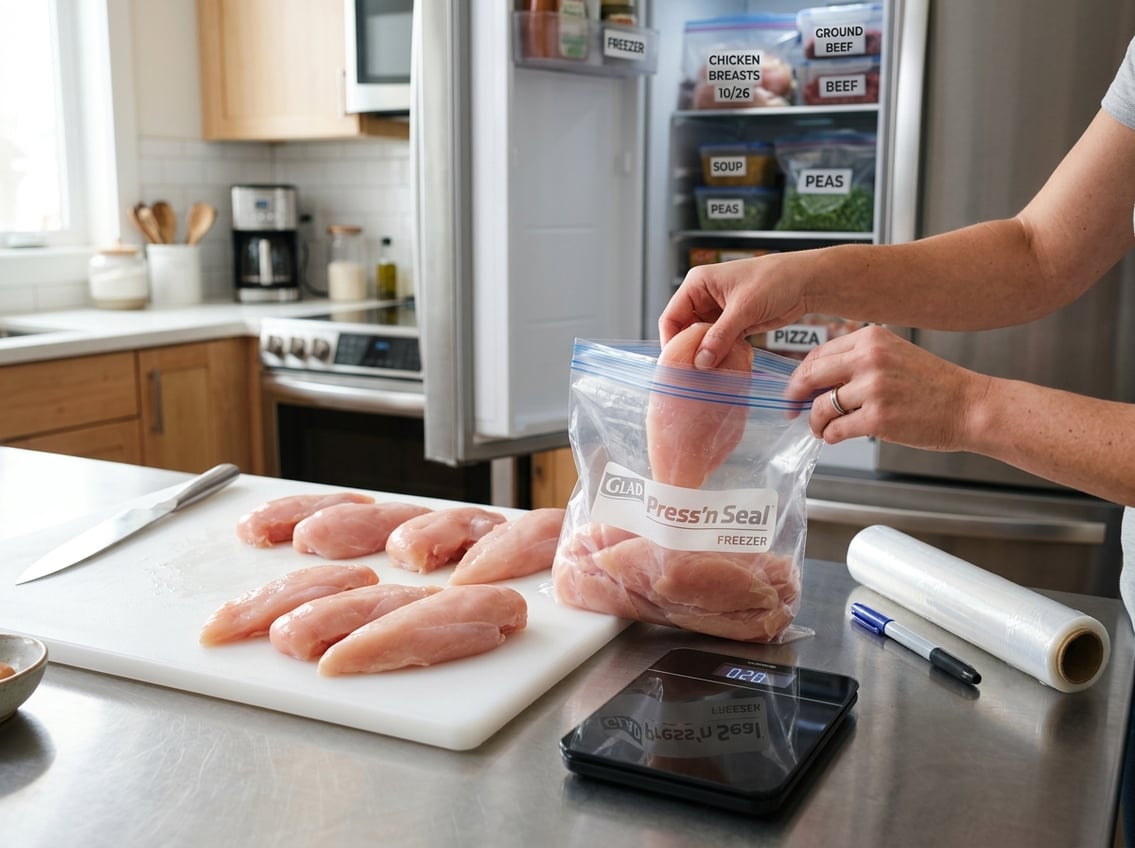
Good freezing habits protect flavor, texture, and safety. Limit air, keep moisture out, and store chicken in small portions so you can thaw only what you need.
Best Packaging Methods for Raw Chicken
If you plan to freeze raw chicken, use freezer bags, vacuum sealing, or tight freezer wrap plus an outer bag.
Press out as much air as possible before sealing to help prevent freezer burn.
If the chicken is still in airtight store packaging, you can freeze it that way for short storage. Extra overwrap adds protection.
Separate breasts with parchment if you want easy portioning later.
How to Freeze Cooked Chicken Breast Without Drying It Out
Cooked chicken breast dries out faster in the freezer than raw chicken. Let it cool first, then wrap it tightly and place it in a freezer-safe bag or container with little empty space.
For better results, freeze cooked chicken in sauce, broth, or with a little cooking juice. That extra moisture helps protect texture when you reheat it.
Labeling, Portions, and Placement in the Freezer
Label each package with the date and whether it is raw or cooked. That makes it easier to track how long chicken lasts in the freezer and use older packages first.
Store chicken in the coldest part of the freezer, not in the door. Keep portions small and flat so they freeze faster and thaw more evenly.
Safe Thawing and Refreezing Rules
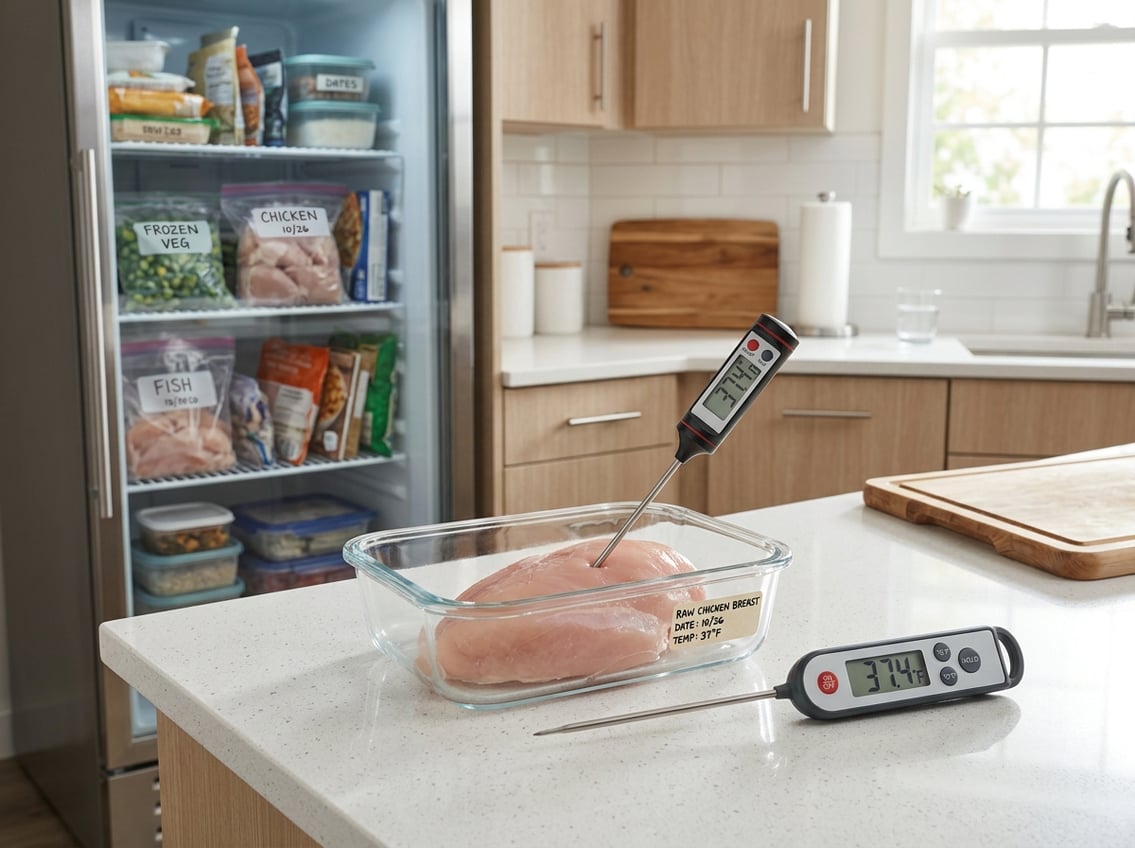
Safe thawing matters as much as safe freezing. The wrong thawing method can raise bacteria growth, and that can make even well-frozen chicken unsafe.
Refreezing also has limits, especially after chicken has sat warm or thawed in unsafe conditions. The safest approach depends on how you thawed it and how long it stayed out.
Best Ways to Thaw Chicken Breast Safely
The safest ways to thaw chicken breast are in the refrigerator, in cold water, or in the microwave. Refrigerator thawing is the easiest for planning.
Cold water and microwave thawing work better when you are short on time.
Do not thaw chicken at room temperature. The outside can warm up into the danger zone while the center is still frozen.
When You Can Refreeze Thawed Chicken
You can refreeze chicken breast if you thawed it in the refrigerator and kept it cold the whole time. Quality may drop a bit, yet the chicken stays safe if it never warmed too much.
If you thawed it in cold water or the microwave, cook it first before refreezing. If the chicken sat out on the counter or you are not sure how warm it got, do not refreeze it.
Cooking Temperature and Final Safety Checks
Use a food thermometer to measure the internal temperature of chicken breast in the thickest part. Make sure it reaches 165°F for safety.
Check for bad odor, odd slime, or heavy discoloration before cooking. If anything seems off, discard the chicken.


