
Is It Necessary to Tenderize Chicken Breast? What Matters Most
Is it necessary to tenderize chicken breast? Not always.
In many cases, you can get a tender chicken breast by using the right cut, the right cooking method, and careful timing.

What matters most is matching your prep to the thickness and cooking style of the chicken breast. That affects whether tenderizing helps or is just extra work.
A thin cut that cooks quickly may need little more than good seasoning. A thick or uneven piece often benefits from flattening, brining, or a short marinade.
The main goal is not just a softer texture. You also want a juicy chicken breast that cooks evenly and stays flavorful.
If you focus only on tenderizing and ignore heat, timing, and moisture, you can still end up with dry meat.
When Tenderizing Helps Most

Tenderizing chicken breast helps most when the pieces are thick, uneven, or likely to cook too slowly on the outside and too fast on the inside.
The right methods can help the meat cook more evenly and make a tender chicken breast easier to achieve.
Thick Breasts, Lean Cuts, and Uneven Pieces
Thick chicken breast pieces often cook unevenly. The outside can dry out before the center is done.
Lean cuts have little fat, which means they dry out faster if overcooked.
Tenderizing helps most when one end is much thicker than the other. Flattening those pieces gives you a more even shape and better control over cooking time.
When You Can Skip It
You can often skip tenderizing if the chicken breast is already thin and even.
Simple seasoning and careful cooking may be enough for a tender chicken breast.
If the piece is small, fresh, and uniform, extra prep often adds little value.
How Cooking Method Changes the Need
High-heat methods like grilling and pan-searing leave less room for error. Even thickness matters more.
A thicker breast may benefit from tenderizing before it hits the pan or grill.
Longer, gentler cooking methods reduce the need for heavy prep. In these cases, a brine or short marinade can be more useful than aggressive pounding.
Best Ways to Improve Texture Before Cooking
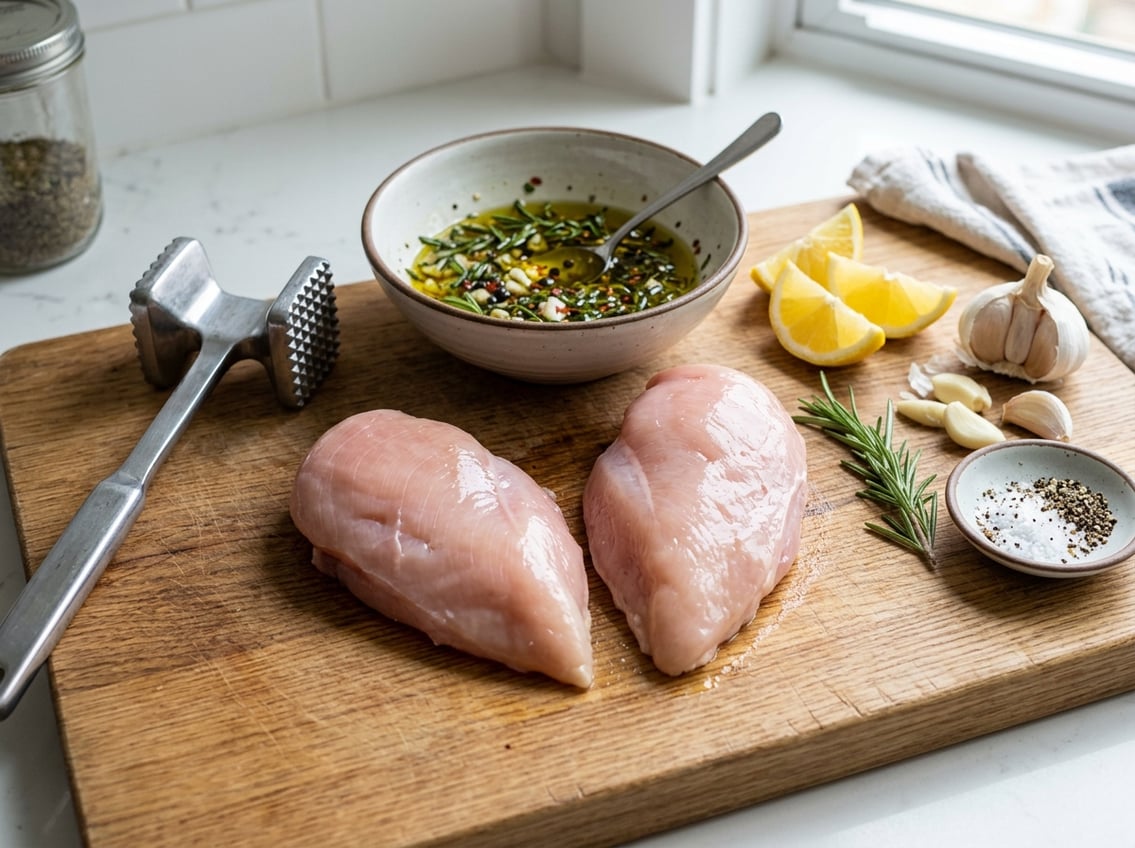
You do not need one perfect method to tenderize chicken breast. The best choice depends on the shape of the meat, the flavor you want, and how much time you have before cooking.
Mechanical Tenderizing With a Meat Mallet
You can break up the muscle fibers by using a meat mallet or tenderizer tool. This method works well when you want to flatten thick chicken breast pieces and make them cook evenly.
Place the chicken between sheets of plastic wrap or inside a bag. Pound it gently and evenly.
Aim for a more uniform thickness, not shredded meat. A light touch works better than hard blows.
Marinating Chicken Breast With Acids or Enzymes
Marinating chicken breast can help with both texture and flavor. Acidic marinades with lemon juice, vinegar, or yogurt can soften the surface.
Enzyme-based ingredients like papain from papaya and bromelain from pineapple can break down proteins more strongly.
These are forms of chemical tenderizing, and they work best when you keep the timing short. A short marinade can improve a chicken breast, while a long soak can make the texture mushy.
For a basic overview of marinade and tenderizing methods, Food Network’s guide to tenderizing chicken covers the main options clearly.
Brining Chicken Breast for Moisture Retention
Brining chicken breast is one of the most reliable ways to protect juiciness. A simple brine solution of water and salt helps the meat hold onto moisture as it cooks.
A brine is especially helpful when you plan to grill, roast, or pan-sear lean chicken breast. You do not need a long soak, and too much time in the brine can make the meat too salty.
For a quick reference on saltwater soaking and tenderness, this guide to brining for moisture and tenderness explains the idea well.
Common Mistakes That Make Chicken Worse
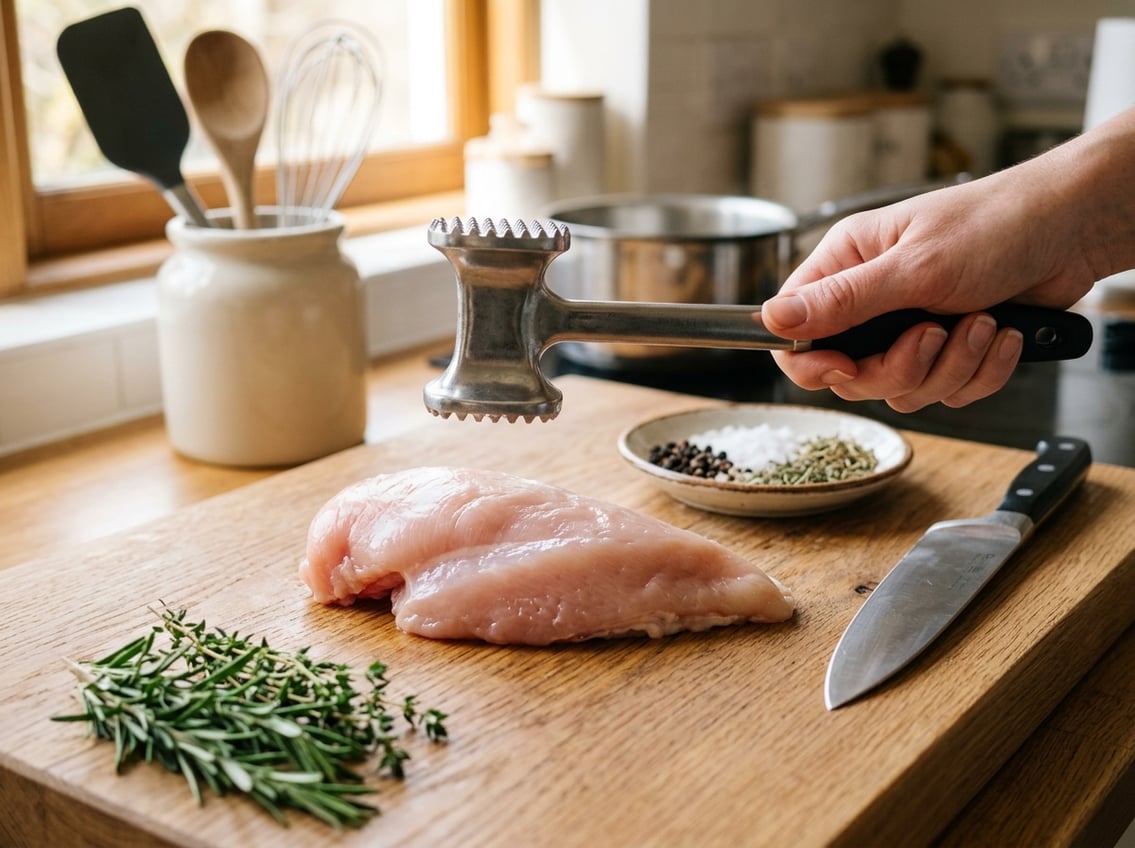
Good prep can help, yet a few mistakes can ruin the result. The main risks are too much tenderizing, too much acid, too much salt, and too much heat.
Avoid Over-Tenderizing and Mushy Texture
You should avoid over-tenderizing chicken breast, especially with pounding or strong enzyme-based ingredients. Too much mechanical force can tear the meat.
Too much papain or bromelain can make it soft in a bad way. Acidic marinades can also change texture fast.
A short soak is usually enough. Longer is not always better.
Marinade Timing and Brining Limits
Marinating chicken breast for a few hours is often enough for flavor and light tenderizing.
Very long marinating times can make the surface mealy or soft, especially with strong acids.
Brining chicken breast also has a limit. You should measure and time the brine carefully so the meat stays moist without turning overly salty.
Why Overcooking Cancels Out Good Prep
Even the best tenderizing chicken breast method cannot fix overcooking.
Once the breast goes past the right temperature, moisture leaves the meat and the texture turns dry.
Cooking control matters as much as prep.
A well-brined or marinated piece can still come out tough if you use too much heat or cook it too long.


