
What’s the Best Way to Fix Chicken Breast in the Oven
The best way to fix chicken breast in the oven is to use steady heat, enough seasoning, and careful timing so the meat stays moist.
A simple oven method works well when you choose the right pan, keep the pieces spaced out, and pull them before they overcook.
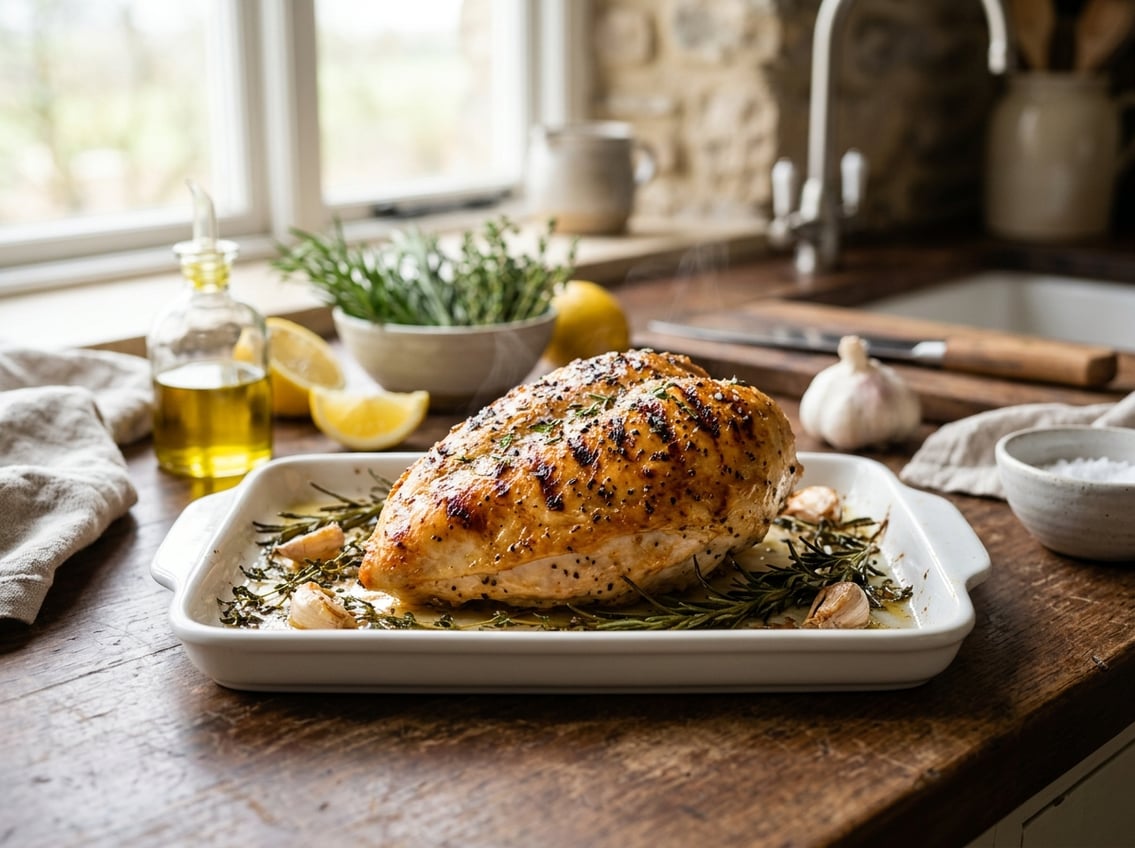
Bake boneless skinless chicken breast in a shallow dish at moderate heat, check it with a thermometer, and let it rest before you slice it.
That approach gives you a juicy baked chicken breast that works for dinner, meal prep, and almost any chicken recipe.
The Best Oven Method for Juicy Results
A good baked chicken breast recipe does not need much.
The goal is to protect the lean meat from drying out while giving it enough heat to cook through evenly.
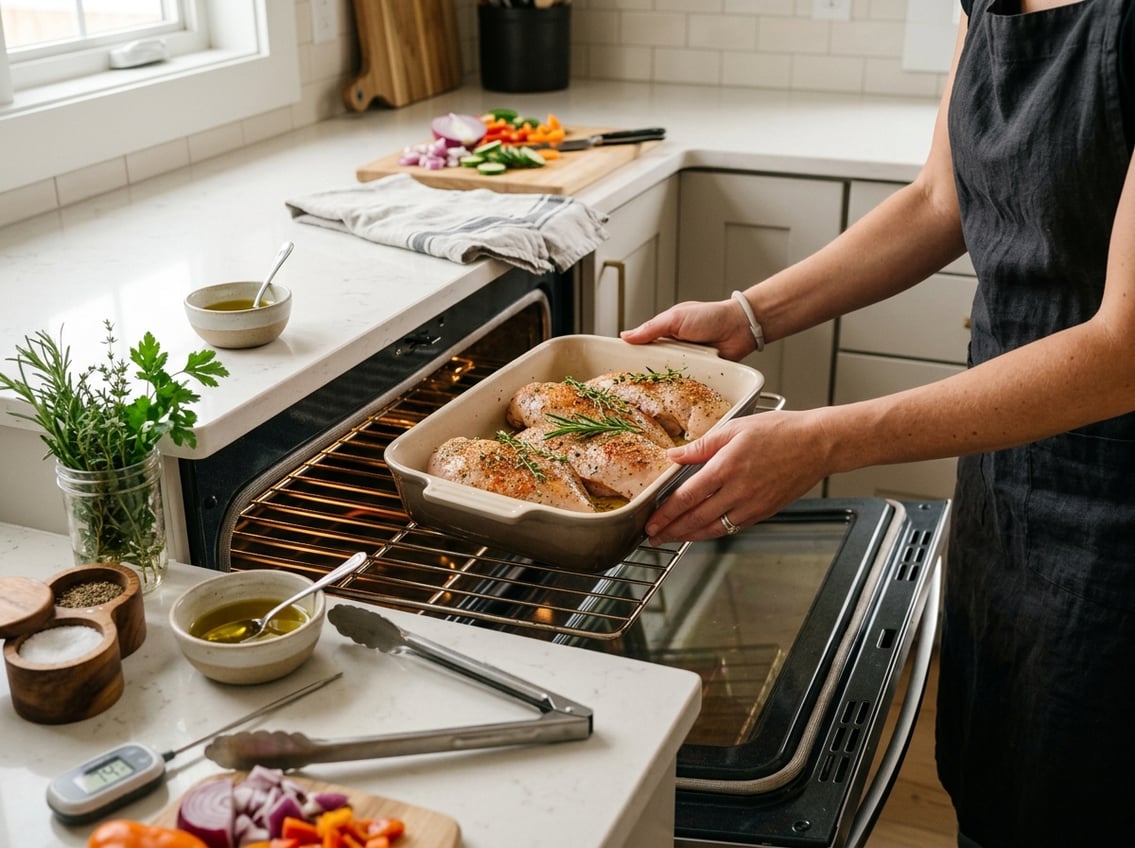
Use a covered baking dish with a little liquid or fat for added moisture.
Martha Stewart’s chicken breast baking method recommends a 9-by-13-inch dish, broth, butter, olive oil, and foil to help keep oven-baked chicken tender.
Choose the Right Temperature and Pan
For boneless chicken breast, set the oven at around 375°F.
This cooks the meat through without pushing it too fast, which helps reduce dryness.
Use a baking dish instead of a roasting pan for a juicier result.
A glass or ceramic dish holds moisture better than a wide sheet pan.
Season, Oil, and Arrange the Chicken Properly
Season both sides well with salt and pepper.
Add a little oil, butter, or broth so the surface does not dry out in the oven.
Place the chicken breasts at least 1 inch apart.
Spacing helps the chicken cook more evenly.
When to Pull Chicken From the Oven
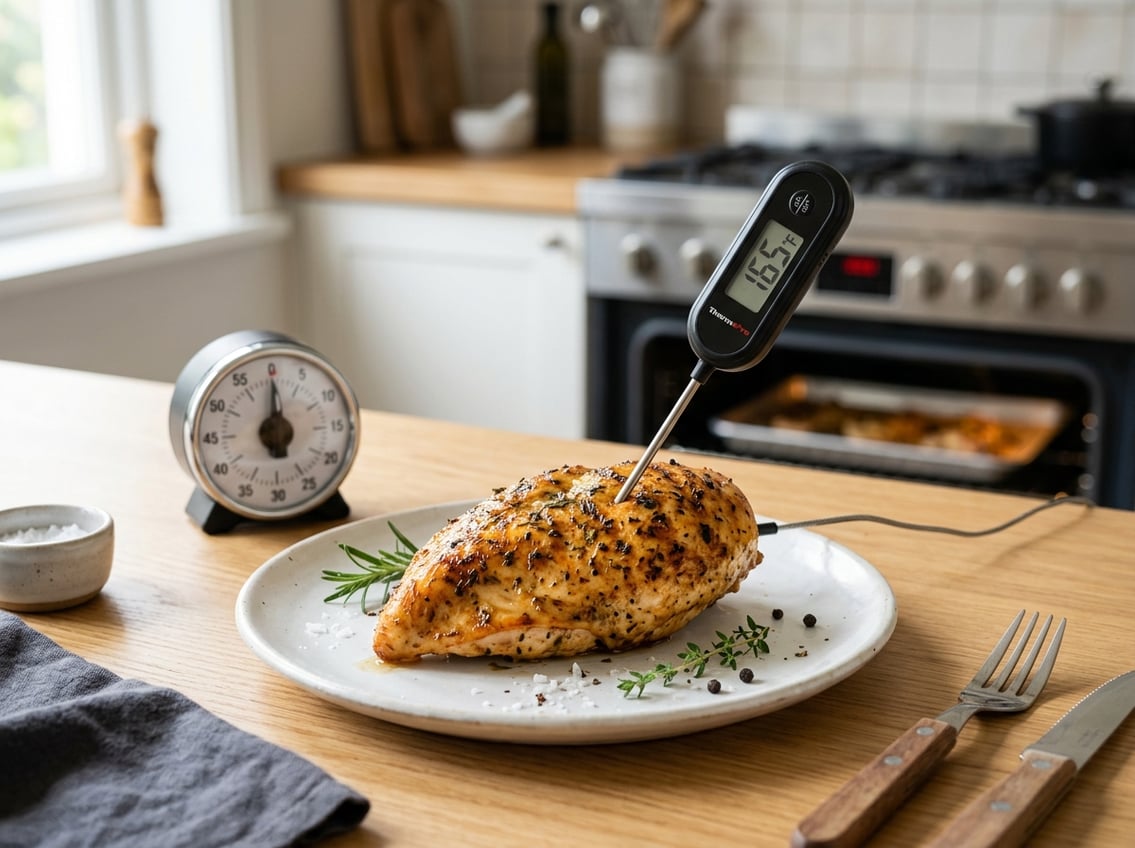
Pull the chicken when the thickest part reaches about 160°F, then let it rest.
The temperature rises a little as it sits, which helps avoid overcooking.
If you want extra flavor, uncover the dish partway through baking and spoon some of the pan juices over the top.
That step can improve both color and taste.
Temperature, Timing, and Doneness
How long you bake chicken breast matters, but thickness matters just as much.
Two pieces that weigh the same can cook at different speeds if one is much thicker.
A meat thermometer gives you the most reliable way to check doneness.
It helps you avoid guessing, which is the easiest way to end up with dry chicken breast.
How Long to Bake Chicken Breast by Thickness
Thin chicken breasts can be ready in less than 20 minutes.
Thicker ones need more time.
Many average boneless, skinless pieces finish in about 20 minutes at 375°F, though exact timing changes with size and oven type.
If you are baking larger pieces, start checking early.
Chicken is done when the center reaches a safe temperature and the juices run clear.
Why a Meat Thermometer Matters
A meat thermometer takes the guesswork out of oven baked chicken.
An instant read thermometer tells you the internal temperature fast, so you can pull the chicken at the right moment.
This is especially useful with baked chicken breasts, since they can go from juicy to dry quickly.
Food Network’s guide to chicken breast cook time notes that precise timing and resting both matter for a better result.
Resting Before Slicing
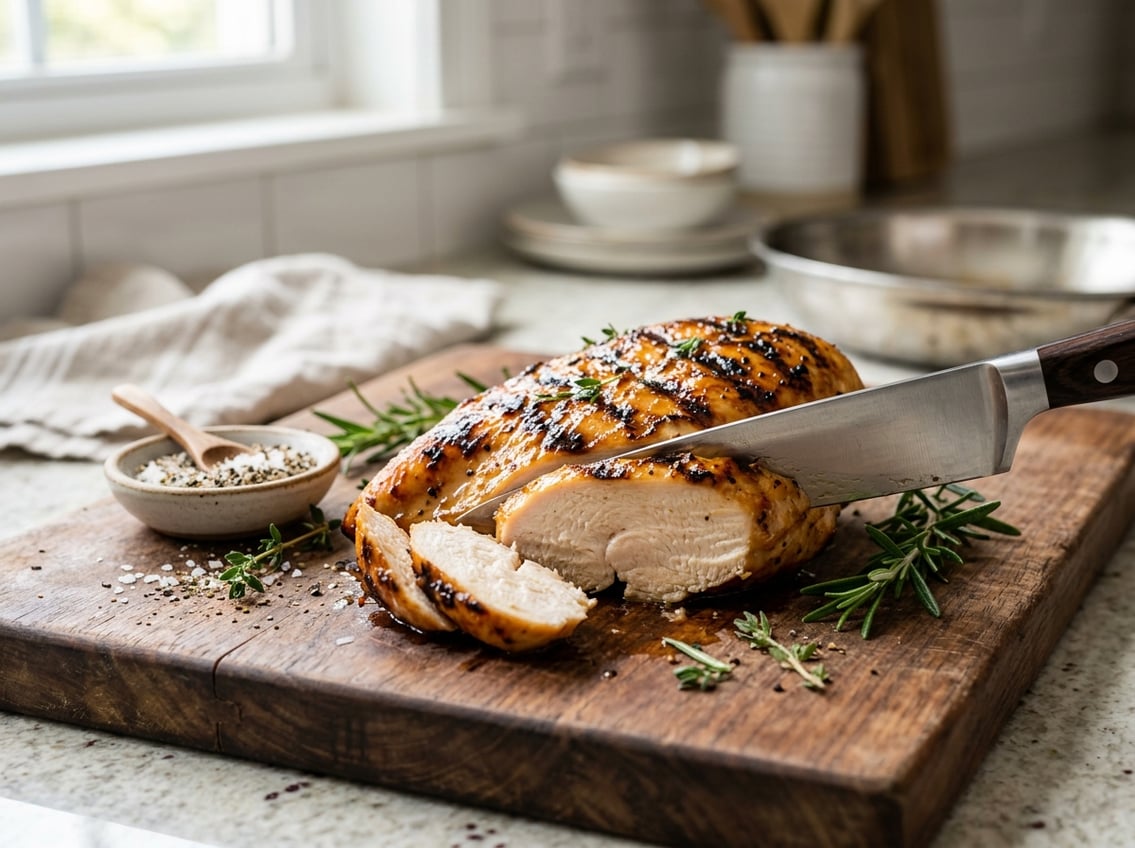
Let the chicken rest for about 5 to 10 minutes before slicing.
Resting gives the juices time to settle back into the meat instead of running out onto the cutting board.
If you cut too soon, even a well-cooked juicy chicken breast can seem dry.
How to Prevent Dry or Tough Chicken
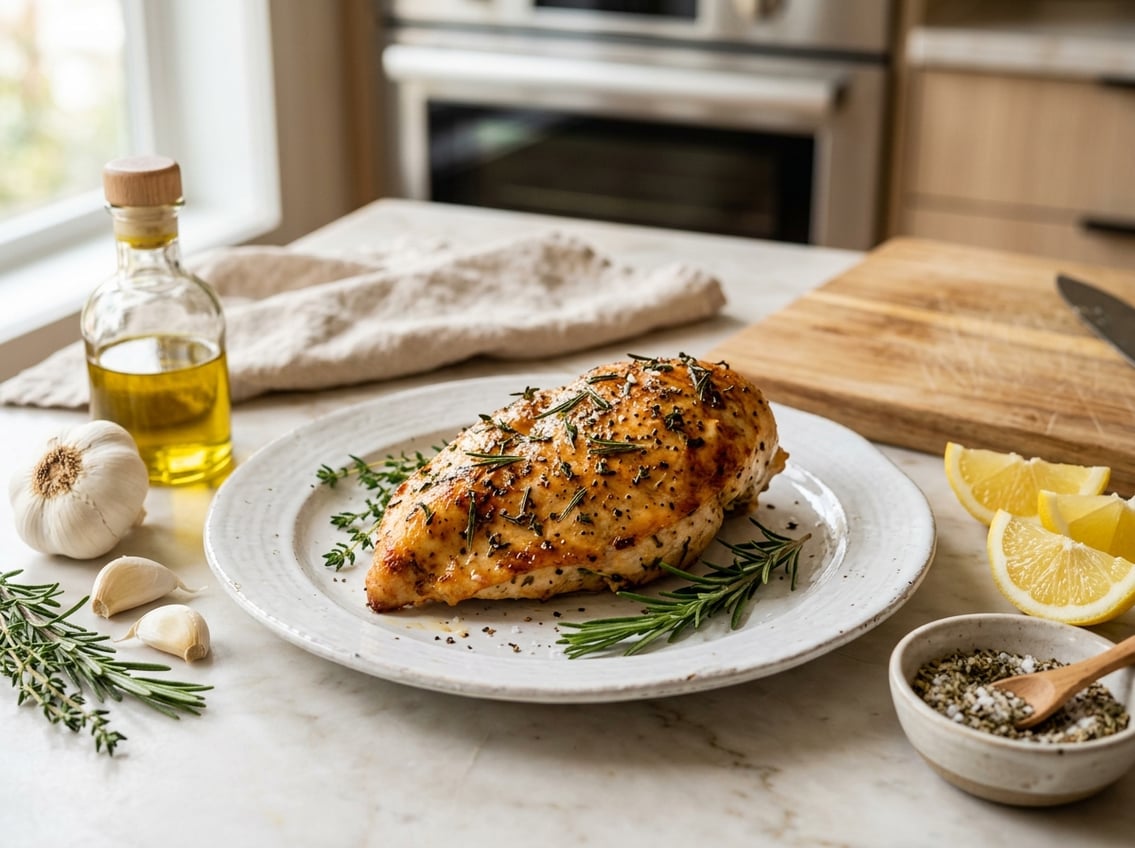
Dry or tough chicken usually comes from uneven thickness, too much heat, or cooking it too long.
A few simple prep steps make a big difference before the chicken ever goes into the oven.
These methods work well for boneless skinless chicken breasts.
They also help if you choose bone-in chicken breast for a different style of meal.
Use Dry Brine or Wet Brine for Better Moisture
Dry brine the chicken by salting it ahead of time and letting it sit in the fridge.
That helps the meat hold onto moisture and improves flavor.
A wet brine can also help, especially if you want a very juicy baked chicken breast.
Either method gives the chicken a better chance of staying tender during baking.
Flatten Thick Pieces for Even Cooking
If one end is much thicker than the other, pound it gently to an even thickness.
This helps the breast cook at the same rate from edge to center.
Even pieces are easier to manage when you are learning how to bake chicken breast.
They also reduce the risk of overdone edges and undercooked centers.
When Bone-In Chicken Breast Is the Better Choice
Bone-in chicken breast can stay juicier than boneless in some cases.
The bone slows cooking a little and helps protect the meat from drying out.
Choose boneless skinless chicken breast when you want speed and flexibility.
Choose bone-in pieces when you want a little more forgiveness and do not mind extra cooking time.
Ways to Rescue and Store Cooked Chicken
If your baked chicken breast turns out a little dry, you can still make it useful.
A sauce, broth, or smart slicing method can improve the texture right away.
You can also store cooked chicken safely and use it in another chicken recipe later.
That makes leftovers easier to handle and reduces waste.
Add Moisture Back With Broth, Butter, or Sauce
Warm sliced chicken in a skillet with a splash of broth, a pat of butter, or your favorite sauce.
The extra moisture helps soften the texture and makes the chicken easier to eat.
This works well with barbecue sauce, pan gravy, or a simple garlic butter sauce.
A dry chicken breast can taste much better once you coat and warm it gently.
Best Ways to Slice, Shred, or Repurpose It
Thin slicing helps a dry piece seem less chewy because each bite gets more sauce.
That tip is also useful for salads, sandwiches, and wraps.
If the chicken is very dry, shred it and mix it with dressing, salsa, or sauce.
Martha Stewart’s dry chicken advice suggests slicing thin or shredding with sauce as one of the easiest ways to save it.
How to Store Cooked Chicken Safely
Place cooked chicken in an airtight container after it cools. Refrigerate it promptly and use it within a few days for the best quality and safety.
If you want to keep it longer, freeze it in portions. When you reheat baked chicken breast, add a little moisture and warm it gently so it does not dry out.


