
What Is the Best Way to Keep Chicken Breast Moist? Key Methods
The best way to keep chicken breast moist is to use the right prep, gentle heat, and careful timing. Chicken breast is lean, so it dries out fast if you cook it like a tougher cut.
Salt, even thickness, controlled heat, and an instant-read thermometer give the best results. These steps help you cook chicken breast to a safe temperature without squeezing out too much moisture.
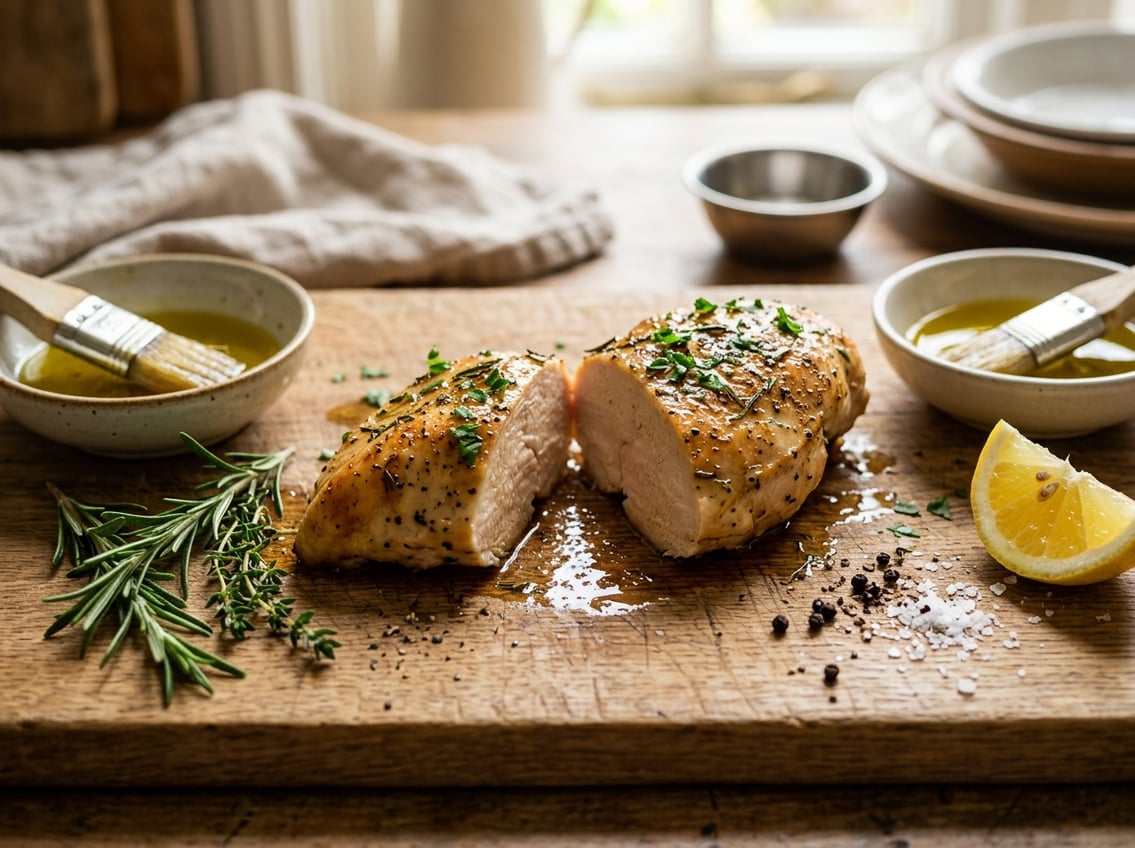
America’s Test Kitchen explains that salt changes how muscle proteins hold moisture, and cooking to the right internal temperature makes a major difference in texture. Moist chicken breast starts before it hits the pan or oven.
The Core Techniques That Prevent Dryness
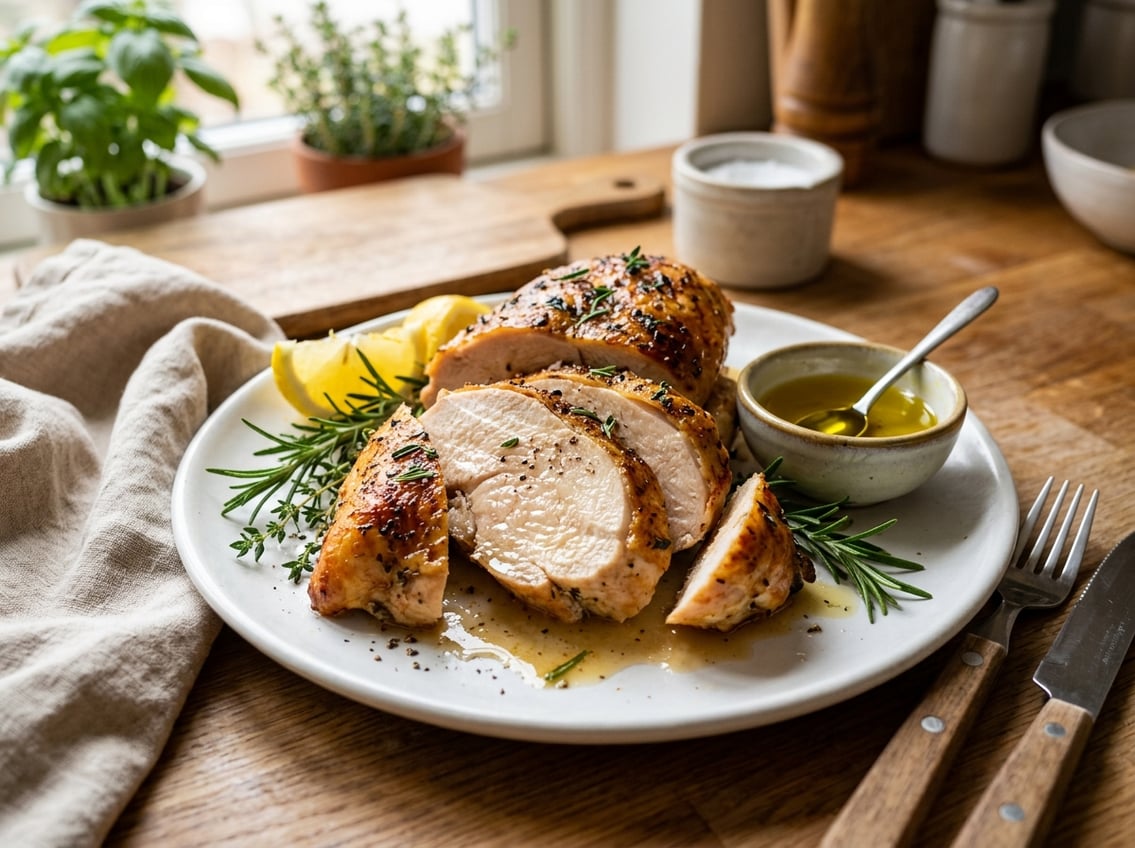
Start by reducing the chances of overcooking from the beginning. Small prep steps make chicken breast more tender and juicy.
Brine or Dry-Brine Before Cooking
Salt helps meat hold onto more water. A wet brine adds moisture and seasoning, while a dry brine is easier for weeknight cooking and still improves juiciness.
For a dry brine, sprinkle salt over the surface and let the chicken rest in the fridge. For a wet brine, let breasts sit in a salted solution for 30 minutes to an hour for a quick method, or longer for more effect.
Pound to Even Thickness
Chicken breast usually has a thick end and a thin end. When the pieces are uneven, the thin part dries out before the thick part finishes cooking.
Pound the breast to an even thickness so the whole piece cooks at the same pace. This gives you more control and makes tender chicken breasts much easier to achieve.
Season Early and Pat Dry
Season early to let salt work deeper into the meat. Pat the surface dry before cooking so the outside browns instead of steaming.
You want a moist chicken breast inside with a good exterior. Dry skinless chicken can turn pale and rubbery if too much surface moisture stays in the pan.
Use a Meat Thermometer
A thermometer removes guesswork. It is the most reliable way to know when to stop cooking and protect juicy chicken breasts from drying out.
Insert the thermometer in the thickest part of the breast for consistent results. Timing alone is not enough because chicken can stay juicy at lower safe temperatures when held correctly.
Choose the Right Cooking Method for Juicy Results
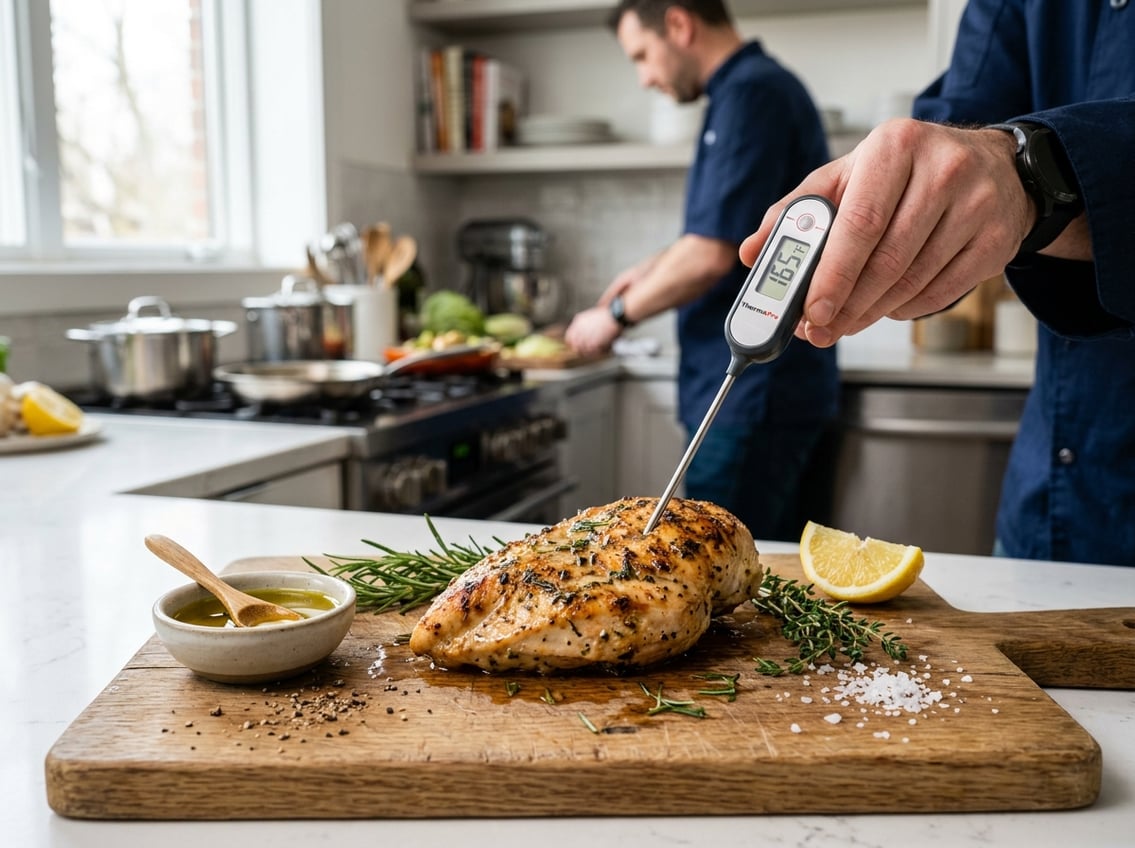
The best way to cook chicken breast depends on thickness, equipment, and your target texture. Gentle, controlled methods usually make the juiciest chicken breast because they limit moisture loss.
Covered Skillet Cooking for Boneless Breasts
A covered skillet traps steam and helps boneless breasts cook more evenly. This method works well when you want a fast meal and need to keep the center tender.
Use medium to medium-low heat, a little oil, and a lid after searing the surface. The covered finish cooks chicken breast through without drying the outside too fast.
Oven Baking With Gentle Heat
Oven baking works best when you use moderate heat. Low-to-moderate oven temperatures give the meat time to cook through without squeezing out as much liquid.
This method is a good choice when you want a hands-off approach for juicy chicken breast. Use a thermometer because oven size and breast thickness can change the final timing.
Pan-Sear and Oven Finish
Sear the outside in a hot pan, then move the chicken to the oven to finish gently. This gives you browning plus control.
This works well for flavor and a juicy center. It is also useful for thicker pieces that need more even heat.
Grilling Without Overcooking
Grill chicken breasts well by managing flare-ups and pulling them at the right time. High heat is useful for grill marks, but too much direct heat dries the surface fast.
Use medium heat, close the lid as needed, and check the center early with a thermometer. Remove the chicken before it feels fully firm throughout for a juicy result.
Timing, Temperature, and Resting
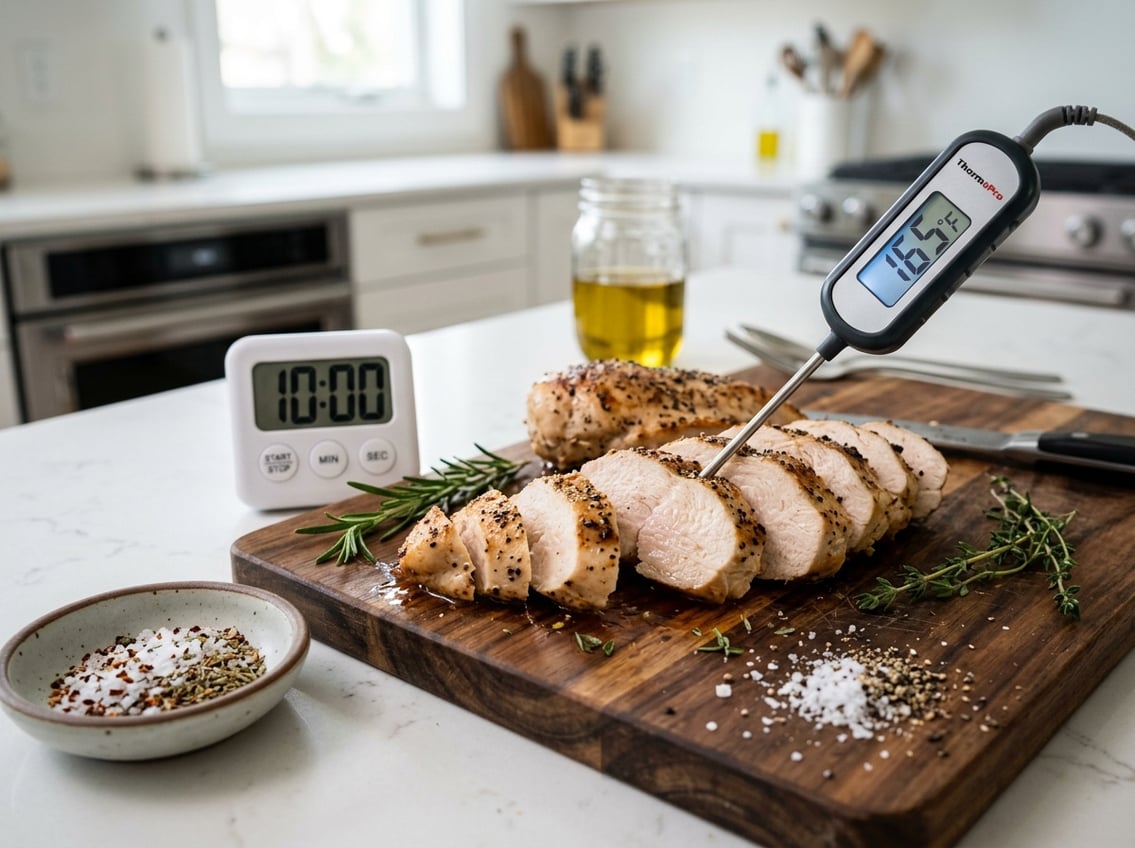
Moist chicken breast comes from stopping at the right temperature and letting the juices settle. These details matter as much as the cooking method.
Safe Internal Temperature and Carryover Cooking
Chicken needs to reach a safe internal temperature, and a thermometer is the clearest way to check. The USDA recommends 165°F for poultry safety, and carryover heat can raise the temperature a little after you remove it from the heat.
Pull the chicken slightly early if the cut is thick. A tender chicken breast stays juicier when you avoid waiting for it to feel completely firm in the pan.
How Long to Rest Before Slicing
Rest the chicken for several minutes before cutting. This pause gives the juices time to move back through the meat instead of running out onto the board.
If you slice too soon, even juicy chicken breasts lose moisture quickly. A short rest protects the texture.
Why Overcooking Happens So Easily
Chicken breast has very little fat and collagen, so it dries out faster than dark meat. Once the temperature climbs too high, the muscle fibers tighten and push moisture out.
Use a meat thermometer instead of guessing. A small timing mistake can turn a moist chicken breast into a dry one.
How Size and Thickness Change Cook Time
A thin breast cooks much faster than a thick one, and uneven pieces finish at different times. Large boneless breasts may need more gentle heat, while smaller pieces can go from done to dry in a short window.
Adjust your method to the cut you have, not just the clock. This gives you the best chance for juicy chicken breasts.
Common Mistakes That Make Chicken Tough
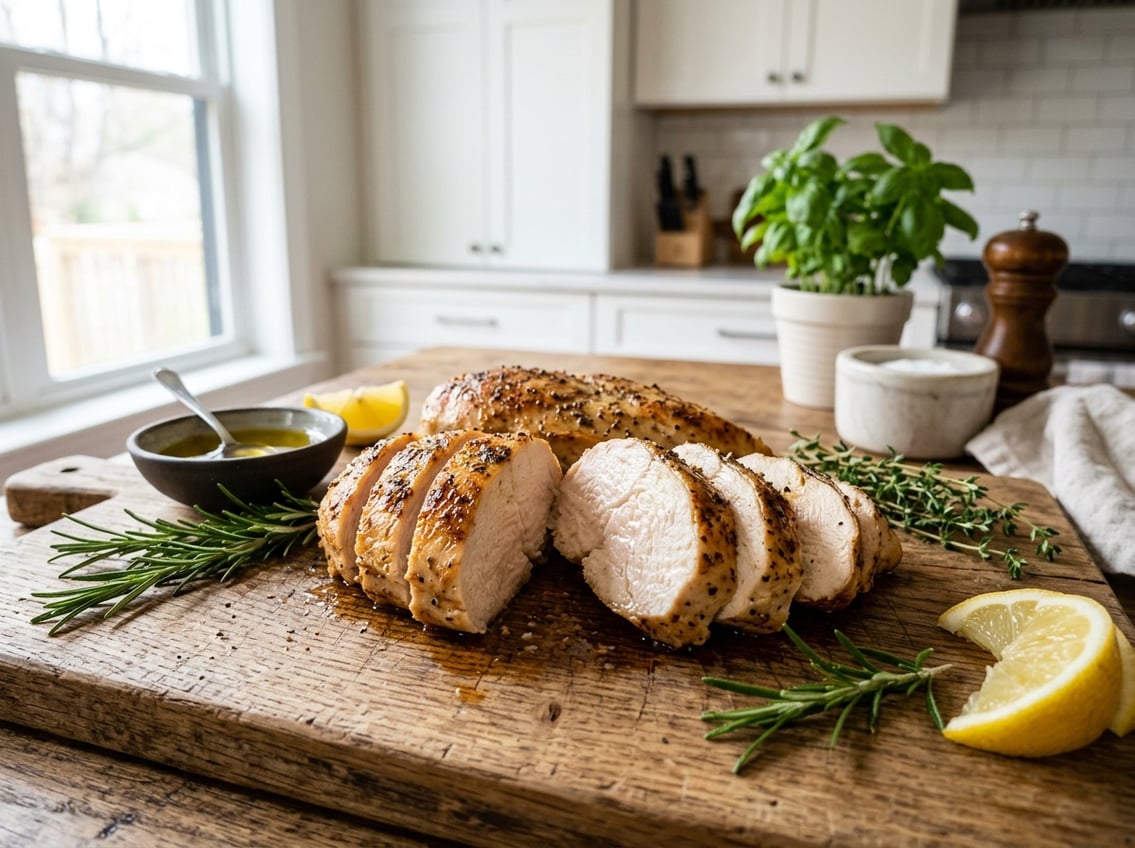
A few common errors cause most dry chicken breast problems. If you avoid these, your results improve fast.
Cooking Straight From Unevenly Thawed Meat
Unevenly thawed chicken cooks unevenly. One part may still be cold while another part is already close to done, which makes a moist chicken breast harder to achieve.
Thaw chicken fully in the fridge before cooking. This gives you a more even cook and a better final texture.
Using Heat That Is Too High for Too Long
High heat for too long quickly ruins tender chicken breasts. The outside can toughen before the inside is ready.
Use enough heat to cook efficiently, then reduce it or finish gently.
Cutting Too Soon and Losing Juices
If you cut right away, the juices spill onto the cutting board. The meat may still be safe to eat, but it will taste drier.
Resting before slicing helps keep chicken breasts moist. A sharp knife and clean slices also help the meat hold together.
Relying on Time Alone Instead of Temperature
Cooking times change with thickness, pan size, oven strength, and starting temperature.
A clock can guide you, but it cannot tell you the exact doneness of the center.
Use a meat thermometer every time you want reliable results.
That habit gives you a much better chance of cooking chicken breast that stays juicy and tender.


