
What’s the Best Way to Grill Chicken Breast? A Clear Method
What’s the best way to grill chicken breast? You get the most reliable result when you use even thickness, two-zone heat, and an instant-read thermometer instead of guessing by time alone.
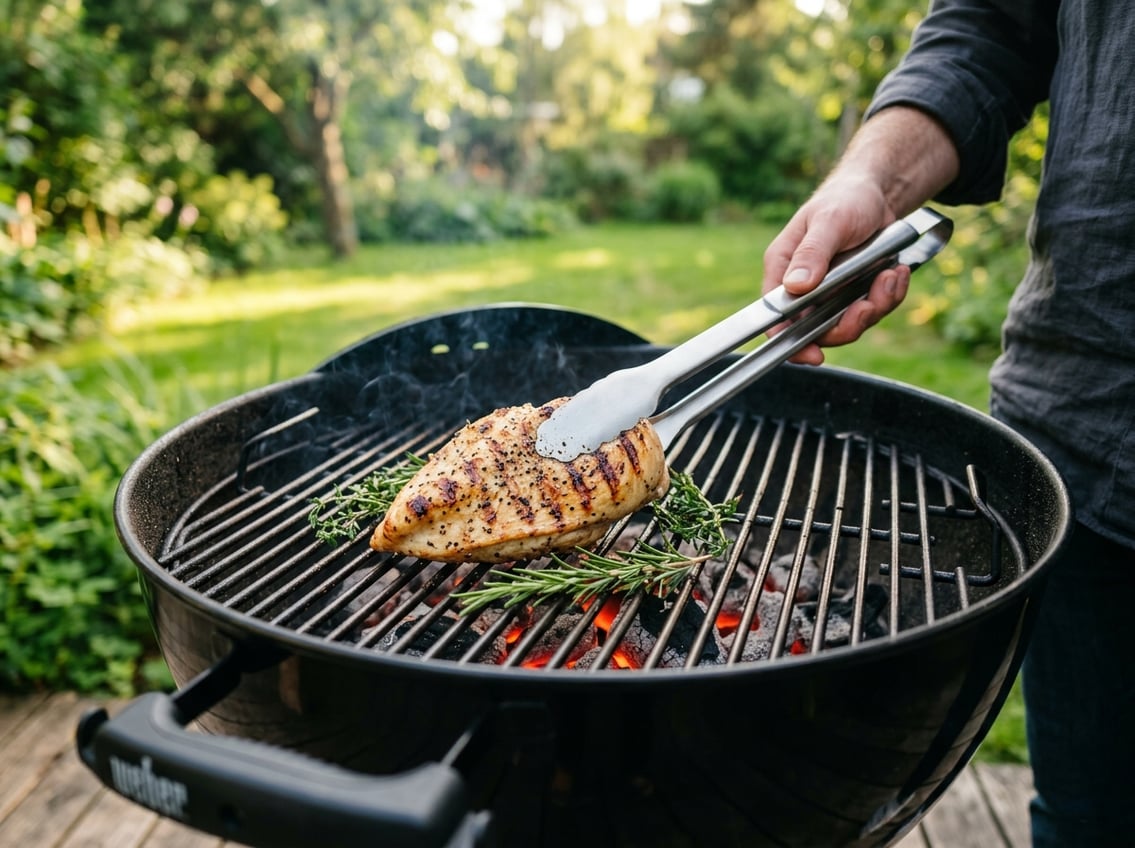
The basic answer is simple: pound the chicken breast to an even thickness, grill it over direct heat to get color, finish it over gentler heat if needed, and pull it at 165°F. That gives you juicy chicken breast with better texture and fewer dry edges.
This approach works for grilling chicken breast in small or large batches for a weeknight main course. It also fits a straightforward grilled chicken recipe because it keeps the process clear and repeatable.
The Core Method for Juicy Results
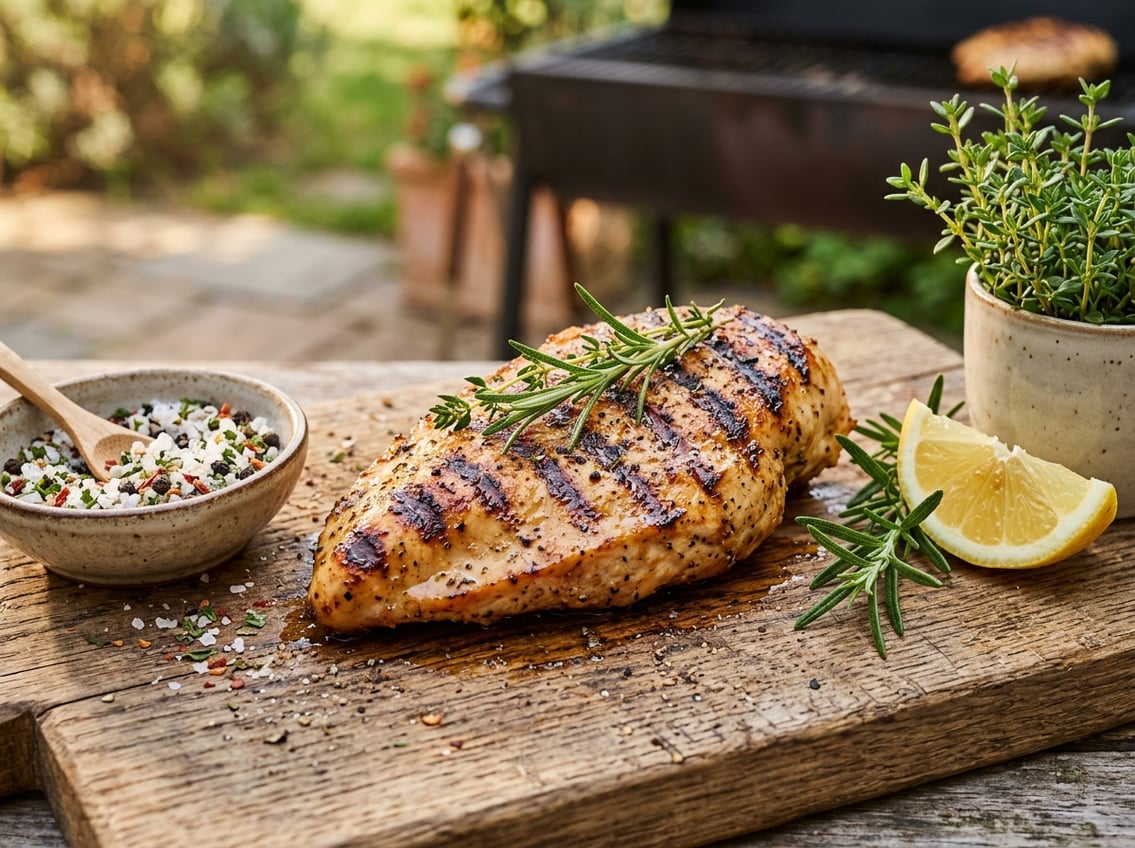
Start with even thickness, controlled heat, and a final temperature check, not a long cook based on guesswork.
Choose the Right Cut and Thickness
Boneless chicken breast is the easiest cut for this method, especially boneless skinless chicken breasts. If one side is much thicker, pound chicken to an even thickness so the thinner part does not dry out while the thick part finishes.
Bone-in chicken breasts need more time and a gentler finish. For juicy grilled chicken breasts, keep the shape uniform and trim stray bits that cook too fast.
Set Up Direct and Indirect Heat
Start over direct heat for color and grill marks, then move the chicken to indirect heat if the outside browns too fast. This two-zone setup gives you better control.
You avoid burning the outside while the center finishes. A hot first stage plus a slower finish helps you grill chicken more dependably.
Cook to Temperature, Not Just Time
Grilling time depends on thickness, grill heat, and whether you use bone-in or boneless chicken breast. Use an instant-read thermometer and pull the chicken when the thickest part reaches 165°F.
That matters more than exact grilling time, even when a recipe gives a general range.
Rest Before Slicing
Let the chicken rest for 5 to 10 minutes before cutting. This keeps the juices inside the meat instead of running onto the board.
If you slice too soon, even well-cooked juicy chicken breasts can seem dry.
Prep Choices That Improve Flavor and Moisture
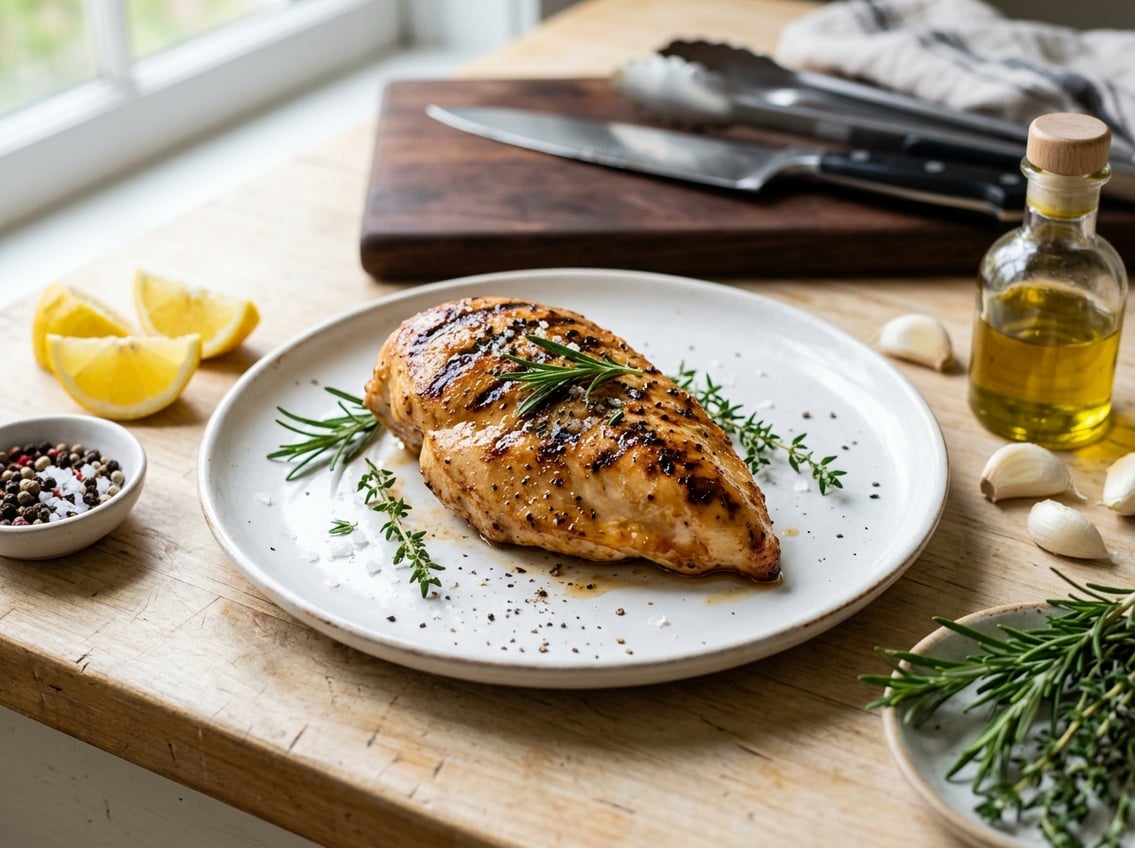
Good prep adds flavor and helps with moisture retention. You do not need a long ingredient list, only a smart choice between brining, marinating, or dry seasoning.
When to Brine Chicken Breasts
Brine chicken breasts when you want a simple moisture boost with a clean, savory taste. Salt helps the meat hold onto more water and seasons it all the way through, which is why many chefs use it for lean cuts, as noted by Simply Recipes.
A short brine works well when you have plain chicken and little time for extra flavor.
When to Use a Chicken Marinade
Use a chicken marinade when you want a stronger flavor layer. A balanced marinade usually includes oil, salt, acid, and aromatics, and Allrecipes highlights olive oil, soy sauce, lemon juice, garlic, and spices as a practical example.
Marinades work well for meal prep and for recipes with a clear flavor direction.
Simple Seasoning for Everyday Grilling
For an easy everyday version, use kosher salt, ground black pepper, garlic powder, onion powder, cumin, and chili powder. This blend gives you savory depth without needing a wet marinade.
Dry seasoning is a good choice when you want fast prep and a clean grilled chicken breast flavor.
How Olive Oil Helps on the Grill
Olive oil helps seasoning stick and reduces surface sticking on the grates. It also supports browning, which helps the chicken look and taste more like grilled chicken.
A light coating is enough. Too much oil can cause flare-ups and uneven charring.
Timing, Tools, and Common Grill Setups
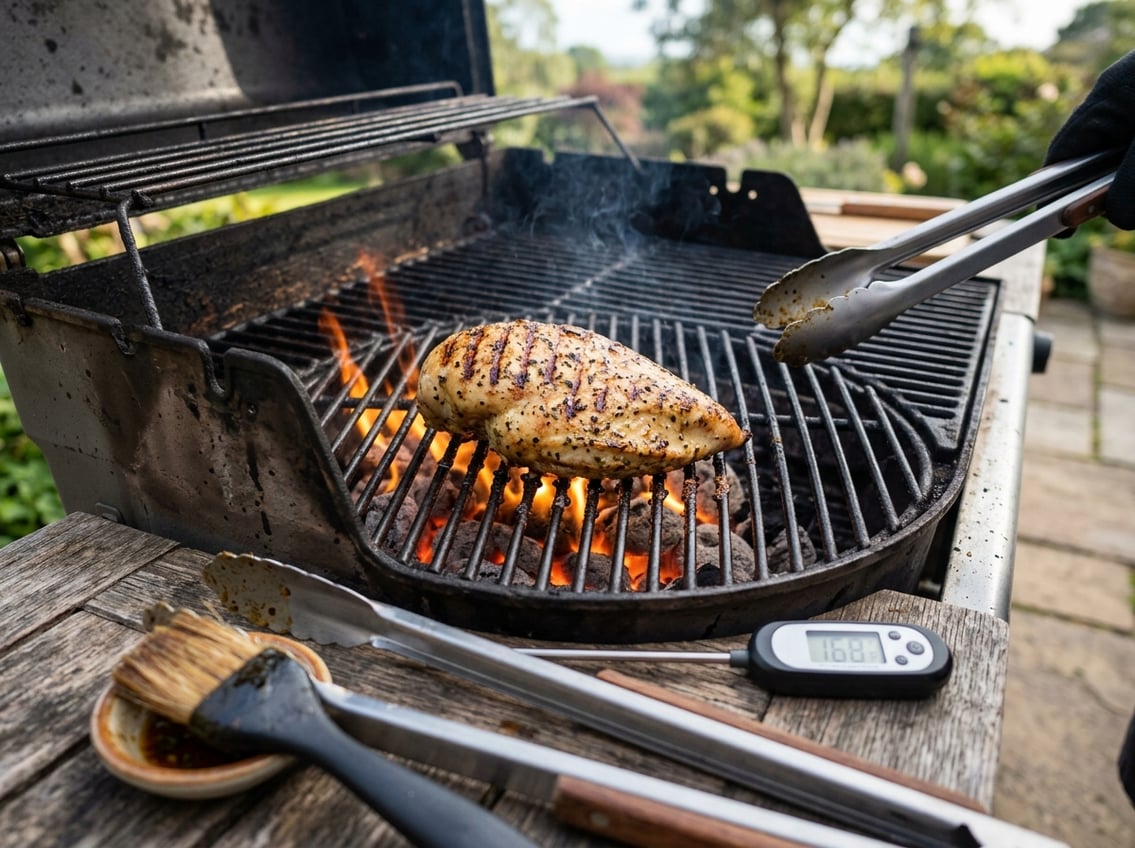
Your grill setup affects timing as much as thickness does. Heat level, equipment, and placement all change how long to grill chicken breast and how consistent the result will be.
Best Temperature Range for Chicken Breast
Medium-high heat is a strong starting point for most boneless chicken breast cooks. It gives you enough heat for color without racing past the center before the outside looks done.
If the grill runs very hot, use a two-zone setup more often.
How to Grill on a Gas or Charcoal Grill
On a gas grill, preheat with the lid closed and create one hot side and one cooler side. On charcoal, bank the coals to one side for direct and indirect zones.
Place the chicken over direct heat first to build grill marks, then move it if needed.
Using a Grill Pan Indoors
A grill pan is a useful backup when you cannot cook outside. Preheat it well, oil it lightly, and avoid crowding the pan so the chicken sears instead of steaming.
You can still get grill marks and solid flavor, though the result will be a little different from an outdoor grill.
Mistakes That Dry Out Chicken
Common mistakes include skipping the pound step, using only time, and slicing right away. Another mistake is cooking cold chicken straight from the fridge without giving it a few minutes to lose the chill.
Overcooking is the biggest issue. Once the chicken passes 165°F and sits too long on heat, it dries out quickly.
Serving Ideas and Easy Flavor Variations
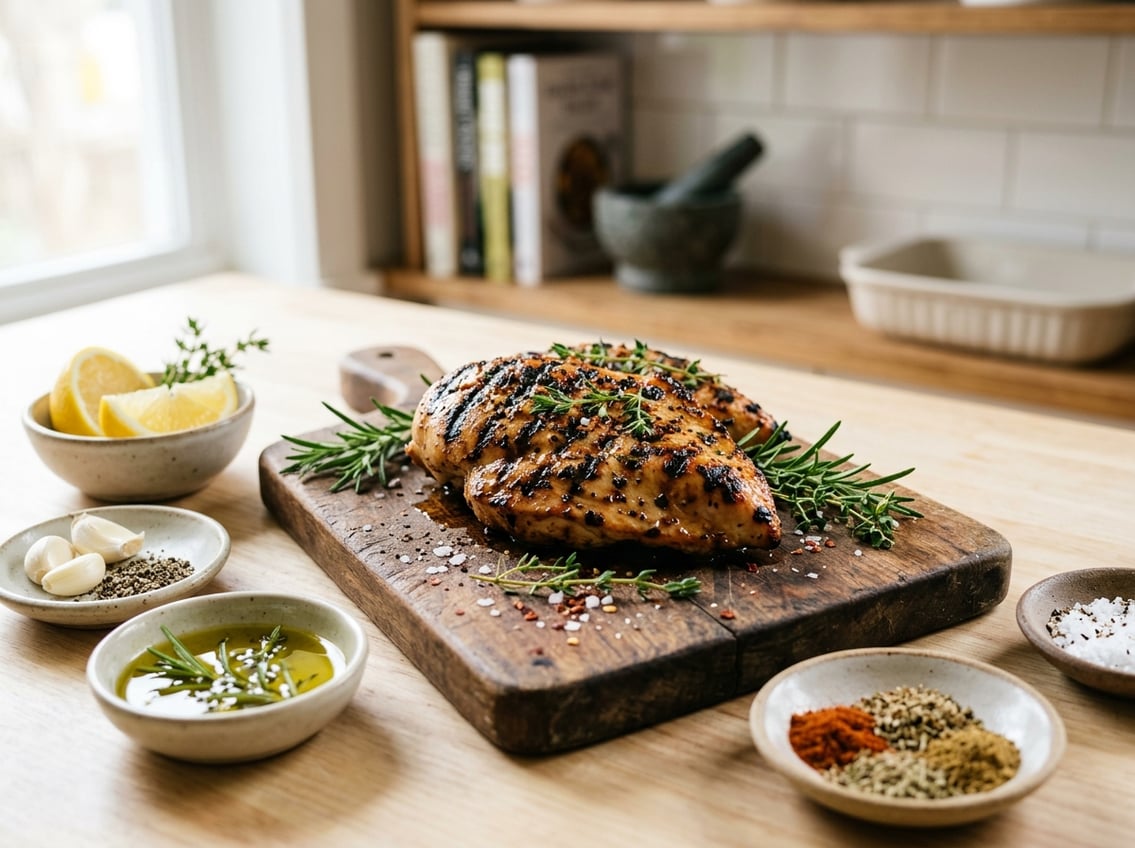
A well-cooked grilled chicken breast works in many meals, from salads to sandwiches. You can keep it simple or change the flavor with one easy variation.
Cilantro Lime Chicken Variation
For cilantro lime chicken, add lime juice, chopped cilantro, garlic, olive oil, and a little salt to your seasoning or marinade. This gives the chicken a bright, fresh flavor that works well with rice and vegetables.
This is one of the easiest grilled chicken recipes to rotate into your weekly plan.
How to Serve It as a Main Course
Serve grilled chicken breasts with roasted vegetables, corn, potatoes, or a simple salad. A sauce like salsa verde, yogurt sauce, or a light pan sauce can add moisture without hiding the chicken.
Slice the chicken across the grain and serve it warm. That keeps each piece tender and easy to eat.
Best Uses for Leftover Grilled Chicken
You can use leftover grilled chicken for wraps, grain bowls, pasta, and sandwiches.
It also works well in chopped salads and quesadillas.
For the best results, store the chicken whole when possible.
Slice it only when you are ready to serve to help it stay juicier the next day.


