
Where Is Chicken Breast Cheapest Near Me? Price Guide
If you want to know where chicken breast is cheapest near you, look for the store with the lowest price per pound on the cut you want.
Local flyers, store apps, and pickup prices can change quickly, so the cheapest option this week may differ by neighborhood and brand.
Compare price per pound across nearby stores, then choose the cut and package size that fit your meals.
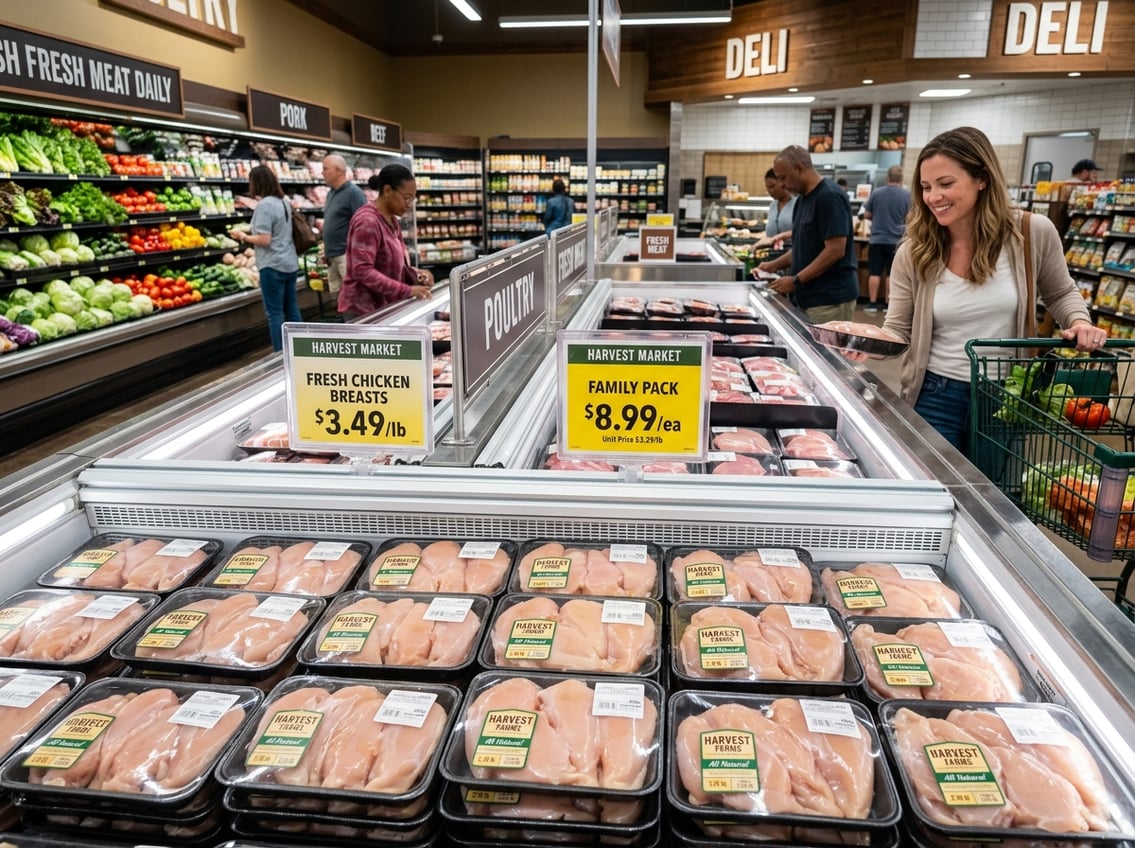
For example, a current flyer lists chicken breasts starting at $1.99 at Hy-Vee, with the promotion valid from 05/01/2026 to 05/03/2026.
Weekly deals like this often point you to the cheapest chicken breast near you right now.
How To Find the Lowest Local Price Fast

Check sales first, then compare the same item across stores to narrow down the lowest local price in minutes.
Compare fresh chicken breasts, boneless chicken breast packs, and delivery fees in the same search.
Check Weekly Ads and Store Apps First
Weekly ads usually show the clearest short-term deals, especially for chicken breasts and family packs.
Store apps can add digital coupons, pickup-only discounts, or member pricing that don’t appear on the shelf tag.
If you shop at chains like Kroger or ALDI, check both the app and the weekly ad before you leave home.
That step can turn a regular price into a deal.
Compare Pickup, Delivery, and In-Store Pricing
Pickup may match in-store pricing, while delivery apps can add service fees, item markups, and tips.
Delivery marketplaces such as Instacart and DoorDash provide speed, but they often cost more than buying in person.
Compare the total at checkout, not just the item tag, to find the lowest chicken breast price near you.
Use Price per Pound Instead of Pack Price
Pack price can hide the real cost.
A larger tray may look expensive, but it can be cheaper per pound than a smaller package.
Look at the shelf label for price per pound on fresh chicken breasts and boneless skinless cuts.
That number gives you the cleanest comparison across stores, brands, and package sizes.
Which Chicken Breast Options Usually Cost Less
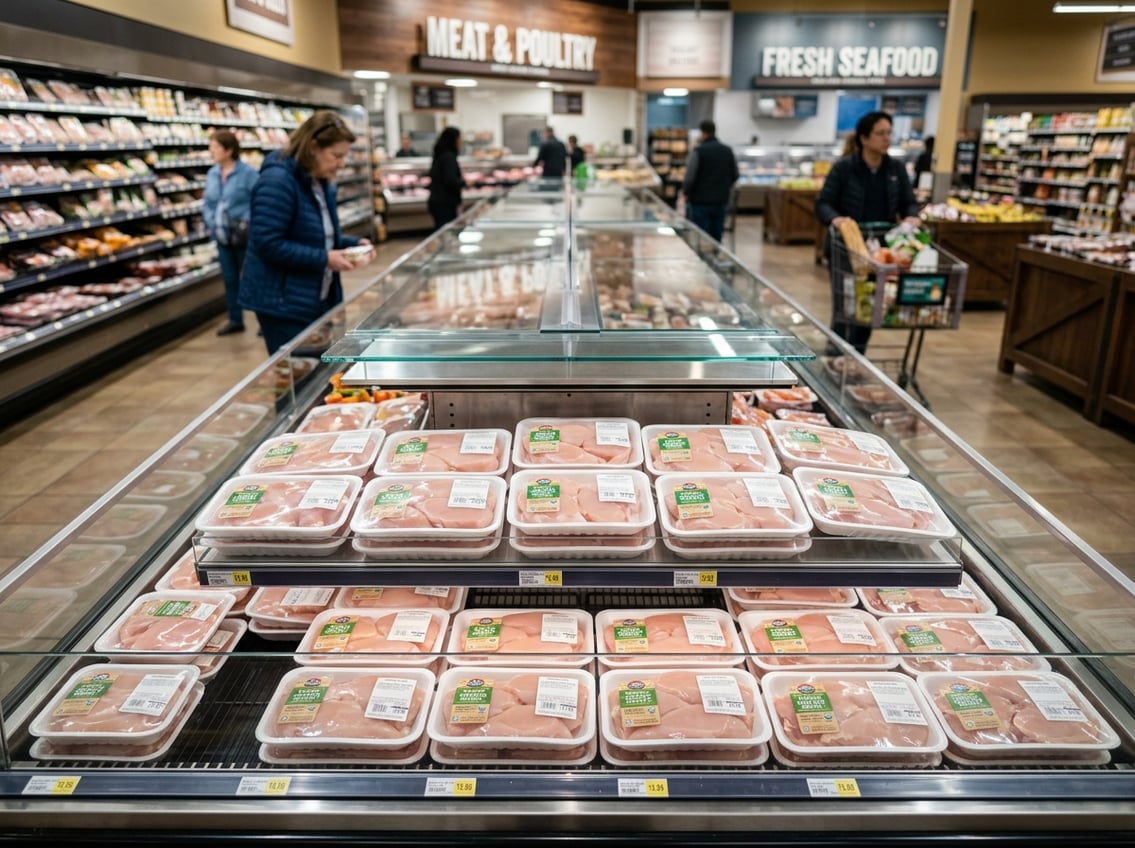
The cheapest chicken breast option is often the one with the least processing and the biggest package size.
You usually pay more for extra trimming, thin slicing, or convenience packaging.
Boneless Skinless Packs vs Thin-Sliced Cuts
Boneless skinless chicken breasts usually cost less than thin-sliced or pre-cut pieces because they need less labor.
A plain boneless skinless chicken breast pack gives you more control over how you slice and cook it.
Thin-sliced cuts save prep time, but that convenience often raises the price.
If you want the lowest cost, start with a regular boneless skinless chicken breast pack and slice it yourself.
Fresh vs Frozen Value Differences
Fresh chicken breasts can be a good buy when they are on sale, especially in short flyer promotions.
Frozen chicken breasts often deliver steadier value because stores can price them more consistently.
A recent price breakdown showed frozen chicken breasts around $2.77 to $4.21 per pound, and a Walmart value tray at about $2.67 per pound in one example listing.
Frozen can be a strong option when fresh prices rise, especially for meals you plan ahead.
Family Packs and Chicken Breast Tenderloins
Family packs usually lower the price per pound because stores move more product at once.
If you can portion and freeze the extras, that bulk size can beat smaller trays.
Chicken breast tenderloins may feel convenient, but they often cost more than standard boneless chicken breast packs.
If you want to save money, regular boneless skinless chicken breasts usually give you better value than specialty cuts.
Where Prices Tend To Be Best
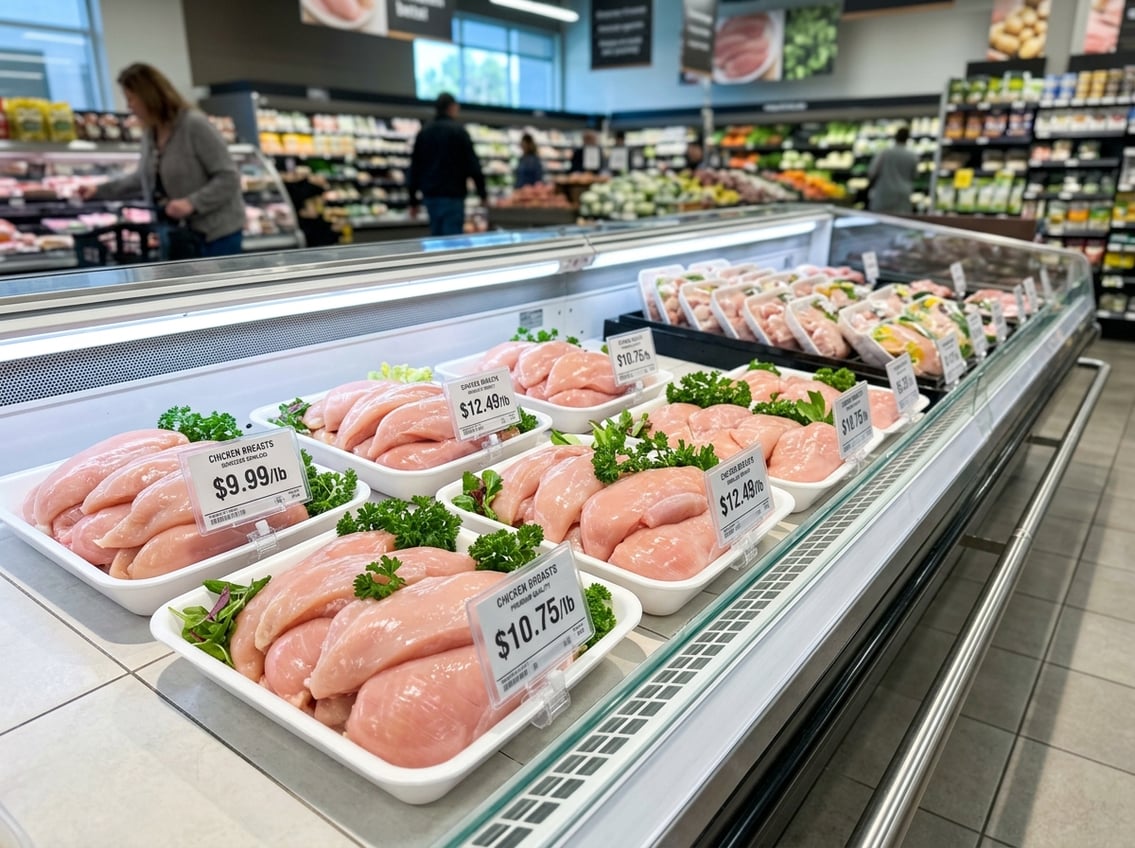
Stores that compete on volume usually offer the best prices for chicken breast.
Big-box retailers, warehouse clubs, and store-brand lines often beat smaller stores on the same cut.
Big-Box Stores and Supermarkets
Big-box stores and large supermarkets often run the widest mix of deals on chicken breast.
Walmart and Target both offer broad selections, including fresh, frozen, boneless, and skinless options.
This gives you more room to compare prices across brands and pack sizes.
Store brands can also keep costs down.
If you see a store-brand tray next to a national brand, compare the price per pound before you choose.
Membership Clubs and Bulk Buying
Membership clubs can be a good choice if you cook chicken often.
Bulk packs may have a lower per-pound price, and you can freeze portions for later use.
This works best when you know you will use the meat within a few weeks.
If not, a bulk deal can turn into waste.
Delivery Marketplaces and Convenience Tradeoffs
Delivery marketplaces help when you need chicken breast fast, especially for same-day meals.
ALDI and grocery apps can offer pickup or delivery, but the convenience may come with higher final costs.
If you want the lowest local price, use delivery as your backup plan.
In-store shopping usually gives you the best chance at a true deal.
How To Buy Cheap Without Sacrificing Quality
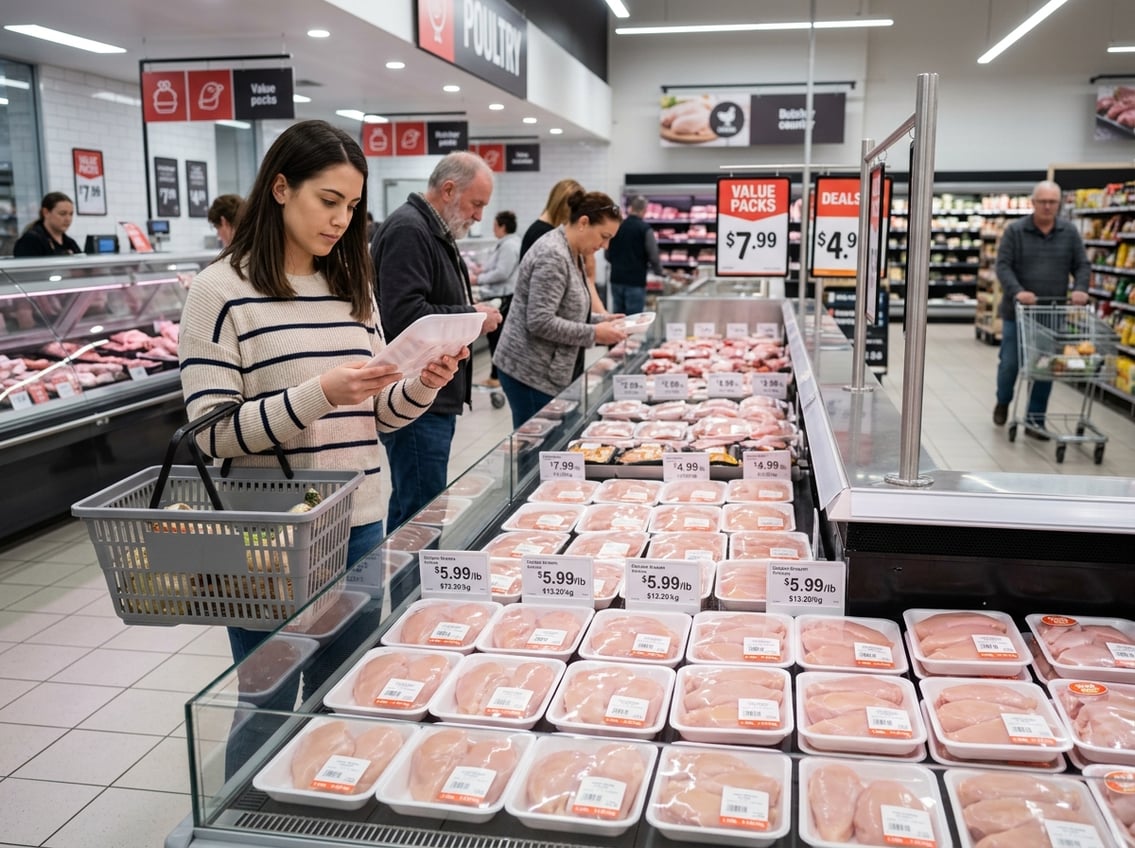
You can save money and still get good results by checking the pack carefully and matching the cut to your cooking plan.
What To Look for in Fresh Packs
Choose fresh chicken breasts with a clean smell, firm texture, and a cold pack.
The meat should look moist, not slimy, and the packaging should be sealed without excess liquid.
Check the sell-by date and the number of pieces in the tray when comparing fresh chicken breasts.
A lower price only helps if you can use or freeze the meat on time.
When Frozen Is the Better Buy
Frozen chicken breasts often make more sense when fresh prices jump or when you shop less often.
Frozen meat also gives you a longer storage window, which reduces waste.
For many households, frozen is the better value when you need flexibility.
It lets you buy the lowest price you find, then thaw only what you need.
Best Uses Based on How You Cook Chicken Breast
Choose the cut that fits the way you cook chicken breast.
Thinner pieces work well for quick pan cooking.
Thicker boneless skinless chicken breast packs suit baking, grilling, or meal prep.
If you often make stir-fries, salads, or sandwiches, plain chicken breasts are usually the best buy.
Pay a little more for fast prep only when the time saved is worth it to you.


