
What Is the Nutrition of Chicken Breast? Key Facts
Chicken breast gives you a lot of protein for relatively few calories, with very little carbohydrate. It is a lean, nutrient-dense food that fits many meal plans.

A plain chicken breast also brings useful vitamins and minerals, especially B vitamins, selenium, and phosphorus.
If you want the numbers, the exact chicken breast nutrition facts change with serving size, whether the meat has skin, and how you cook it.
A raw, skinless breast from Eat This Much shows how much the values can vary by portion.
Calories, Protein, and Macros at a Glance
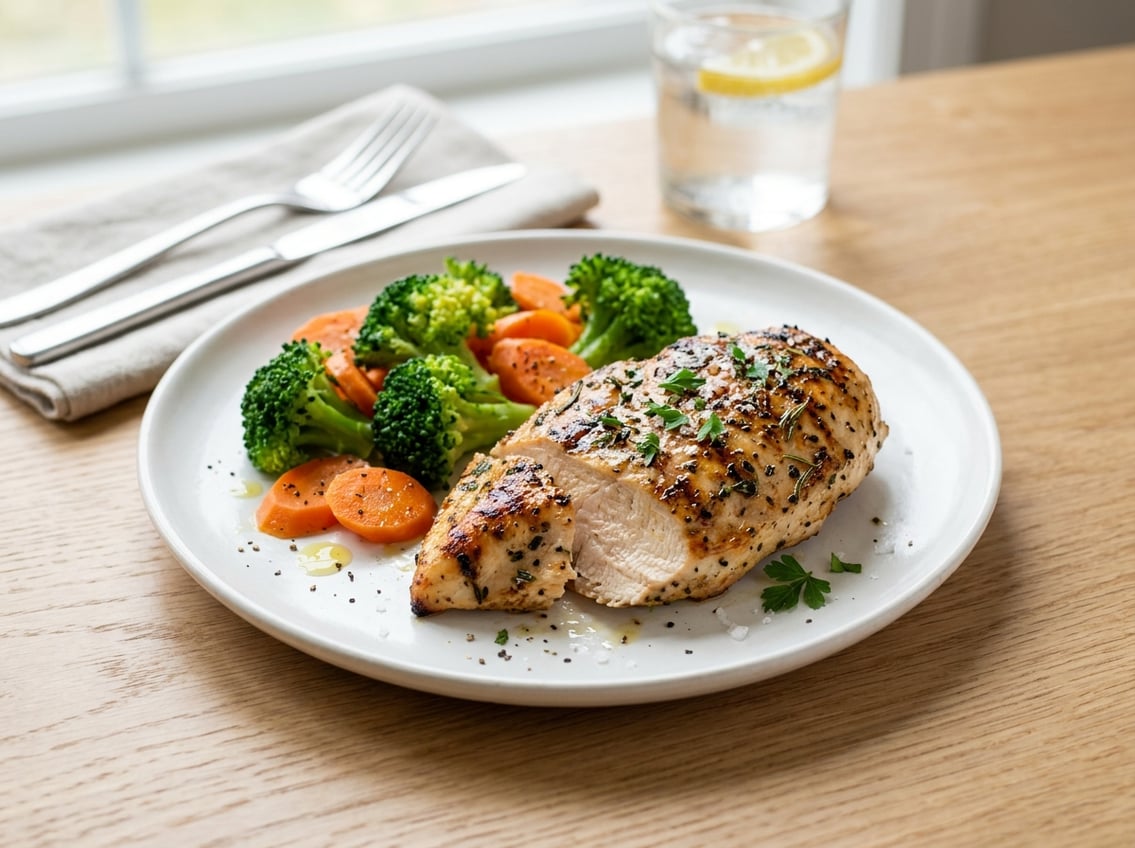
Chicken breast has a strong protein-to-calorie ratio. A plain serving gives you high protein with little carb and modest fat.
Typical Calories Per 3 Ounces, 100 Grams, and One Breast
A common cooked serving of 3 ounces has about 128 calories in chicken breast, along with roughly 26 grams of protein, according to the nutrition summary from One Good Food Blog.
That makes it easy to fit into calorie-controlled meals.
Per 100 grams, many nutrition databases place chicken in a similar range, though the exact number depends on raw or cooked weight.
A larger breast fillet from Eat This Much lists 142 calories for 118 grams raw, skinless, with 27 grams of protein.
Protein Content, Fat, and Zero-Carb Profile
Chicken breast delivers a strong protein content with very little carbohydrate. In the Eat This Much data, the breast fillet has 0 grams of carbs, 3 grams of fat, and 27 grams of protein.
That protein includes all essential amino acids, making chicken breast a complete protein. The fat stays low in a skinless cut, and the carb count stays at zero unless you add breading or sauce.
Why Chicken Breast Counts as Lean Protein
Chicken breast counts as lean protein because it has a low amount of fat compared with its protein content. The same serving gives you a lot of usable protein without much extra energy from fat.
That is useful if you want meals that support fullness without pushing calories too high.
It is also one reason chicken breast appears so often in fitness and weight-management meal plans.
Vitamins and Minerals in Chicken Breast

Chicken breast is not only about protein. It also provides several key micronutrients that support energy use, tissue repair, and normal body function.
B Vitamins Such as Niacin and Vitamin B6
Chicken breast is a strong source of B vitamins, especially niacin and vitamin B6. In the Eat This Much nutrition facts, one breast fillet supplies 11 mg niacin and 1 mg vitamin B6, both of which help your body use food for energy.
These B vitamins also support the nervous system and red blood cell function.
Selenium, Phosphorus, Zinc, Iron, and Calcium
Chicken breast contains several important minerals, including selenium, phosphorus, zinc, iron, and calcium. The same nutrition data lists 27 mcg selenium, 251 mg phosphorus, 1 mg zinc, 0.4 mg iron, and 6 mg calcium.
Selenium supports antioxidant defenses, while phosphorus helps with bones and energy storage. Zinc and iron play roles in immune function and oxygen transport.
What to Know About Vitamin D and Other Lower-Amount Nutrients
Chicken breast is not a major source of vitamin D. The Eat This Much listing shows 0 mcg vitamin D, so you should not rely on chicken breast for that nutrient.
It also gives small amounts of other nutrients, such as choline and vitamin E. These are useful, yet they are better viewed as a bonus rather than the main reason to eat chicken breast.
How Chicken Breast Supports Health Goals
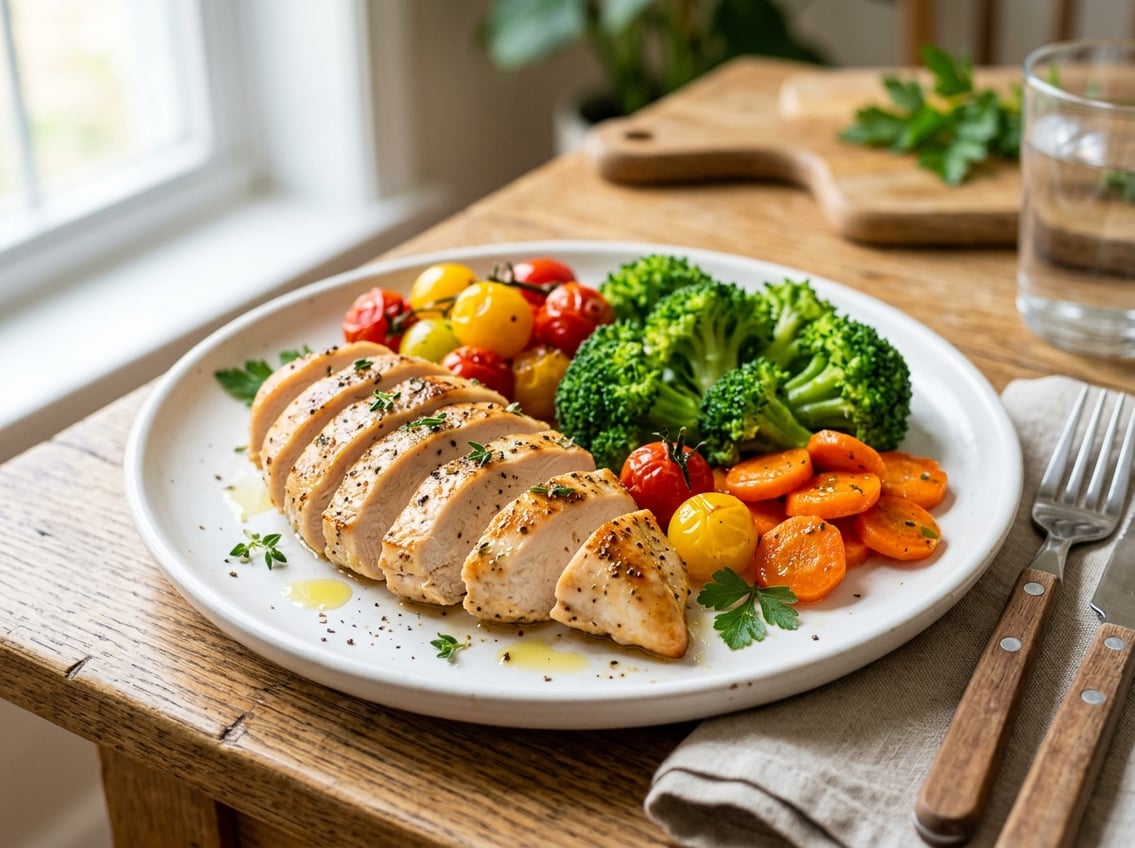
Chicken breast works well in many health plans because it is filling, high in protein, and easy to pair with vegetables, grains, and healthy fats. It supports both daily nutrition and more specific goals like muscle recovery and weight control.
Satiety and Weight Management Benefits
Protein helps with satiety, so chicken breast can help you feel full after a meal. That can support weight loss or weight management when you build balanced portions and keep added fats under control.
Because chicken breast is high in protein and low in calories, it often fits well in calorie-aware eating plans.
Muscle Maintenance and Recovery
Chicken breast provides the essential amino acids your body needs for muscle repair and maintenance. That makes it useful after exercise and during periods when you want to preserve lean tissue.
It is also easy to portion, which helps you keep protein intake steady across the day.
Heart Health, Blood Pressure, and Bone Support
Skinless chicken breast can fit heart health goals because it is naturally low in saturated fat. A lean protein choice may help you build meals that support cardiovascular health and blood pressure management when the rest of the diet is also balanced.
Its phosphorus, selenium, and other minerals also support bone health and general cell function.
Tryptophan, Serotonin, and Mood-Related Effects
Chicken breast contains tryptophan, an amino acid your body uses to make serotonin. Serotonin is linked to mood, sleep, and appetite regulation.
The amounts in a normal serving are not dramatic, yet they still add to the food’s nutritional value.
What Changes the Nutrition Numbers

The nutrition of chicken breast can change. Skin, cooking method, portion size, and added ingredients can change the calorie count and the protein content.
Skinless vs Skin-On Chicken Breast
Skinless chicken breast is usually the leanest choice. Keeping the skin on adds fat and calories, which changes the calorie balance even if the protein stays fairly similar.
If you want the most calorie-efficient option, skinless is the better fit. If you prefer skin-on for flavor, it helps to account for the extra fat in your meal plan.
Raw vs Cooked Nutrition Differences
Raw and cooked chicken do not weigh the same, because cooking removes water. The same piece of chicken can look smaller after cooking while the protein becomes more concentrated by weight.
Food labels and nutrition databases show different values for the same cut for this reason. A raw breast from Eat This Much lists 142 calories for 118 grams, while cooked entries often show higher calories per 100 grams because of water loss.
How Grilling, Baking, Frying, and Sauces Affect Calories
Grilling and baking usually keep chicken breast close to its natural nutrition facts if you do not add much oil.
Frying adds more fat and calories, especially when you include breading.
Sauces can quickly change the calorie count.
Creamy, sugary, or oil-heavy sauces can add more calories than the chicken itself.


