
Is It Necessary to Pound Chicken Breast Before Cooking?
You may wonder if you need to pound chicken breast before cooking when your recipe already calls for seasoning, marinating, or careful heat control.
In many cases, pounding is not necessary, but it can make a clear difference when you want faster, more even cooking and a more uniform texture.
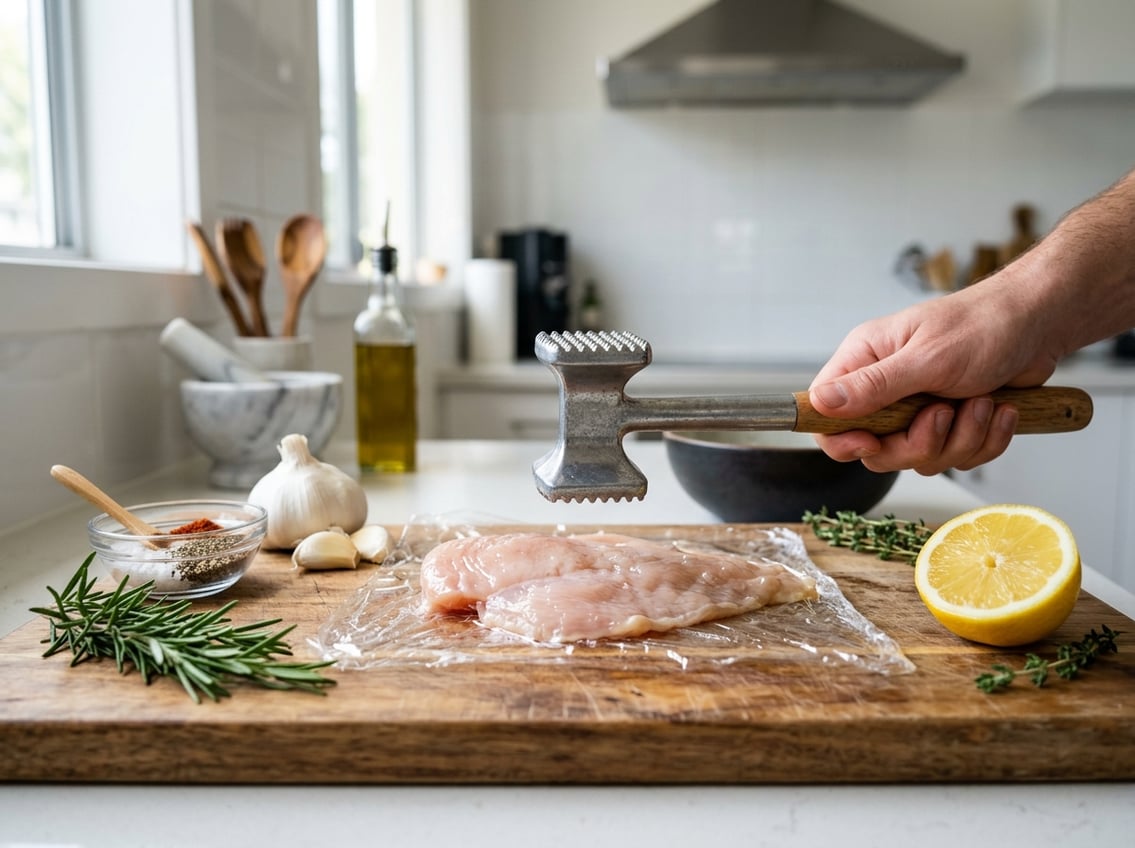
Ask yourself if pounding helps your specific meal.
If your chicken breast is thick on one end and thin on the other, flattening it can reduce the risk of one part drying out before the other finishes cooking.
Many cooks use this step before grilling, pan-searing, or making cutlets for this reason.
The best choice depends on the cut, the cooking method, and the texture you want on the plate.
When Pounding Helps Most
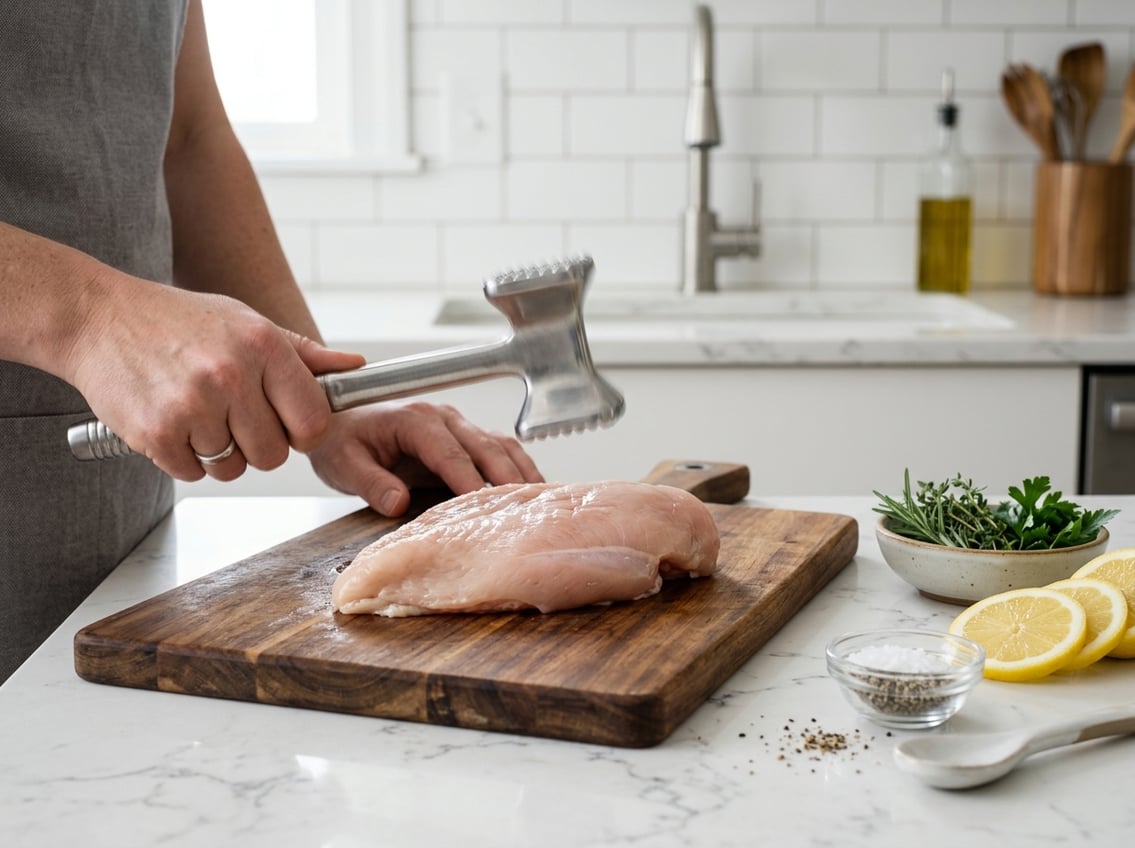
Pounding chicken works best when you want even thickness and steady cooking.
It can also help you turn a thick breast into a thinner piece that cooks faster and works well in dishes like chicken parmesan, chicken marsala, and chicken piccata.
Even Thickness for Faster, More Even Cooking
Chicken breast often has a thick end and a thin end.
When you pound chicken breast to a more even thickness, the whole piece cooks at a similar rate.
This matters most for high heat methods like grilling and pan-searing.
A flattened breast also gives you more control when you need chicken breasts ready at the same time for breading or topping.
Why It Can Tenderize Lean Chicken Breast
Pounding breaks up some of the muscle structure in lean chicken breast, which can make the cooked meat feel softer.
The effect is usually modest, but it helps when the breast is very thick or slightly tough.
For chicken cutlets, the texture often feels lighter and easier to bite through.
Best Uses for Grilling, Pan-Searing, and Cutlets
Pounded chicken works well for recipes that cook quickly.
Thin, even pieces are less likely to dry out on the grill.
They also work well for pan-searing, where steady contact with the pan helps build color.
For breaded dishes like chicken parmesan, pounded chicken breasts create a flatter shape that cooks evenly under sauce and cheese.
When to Skip This Step
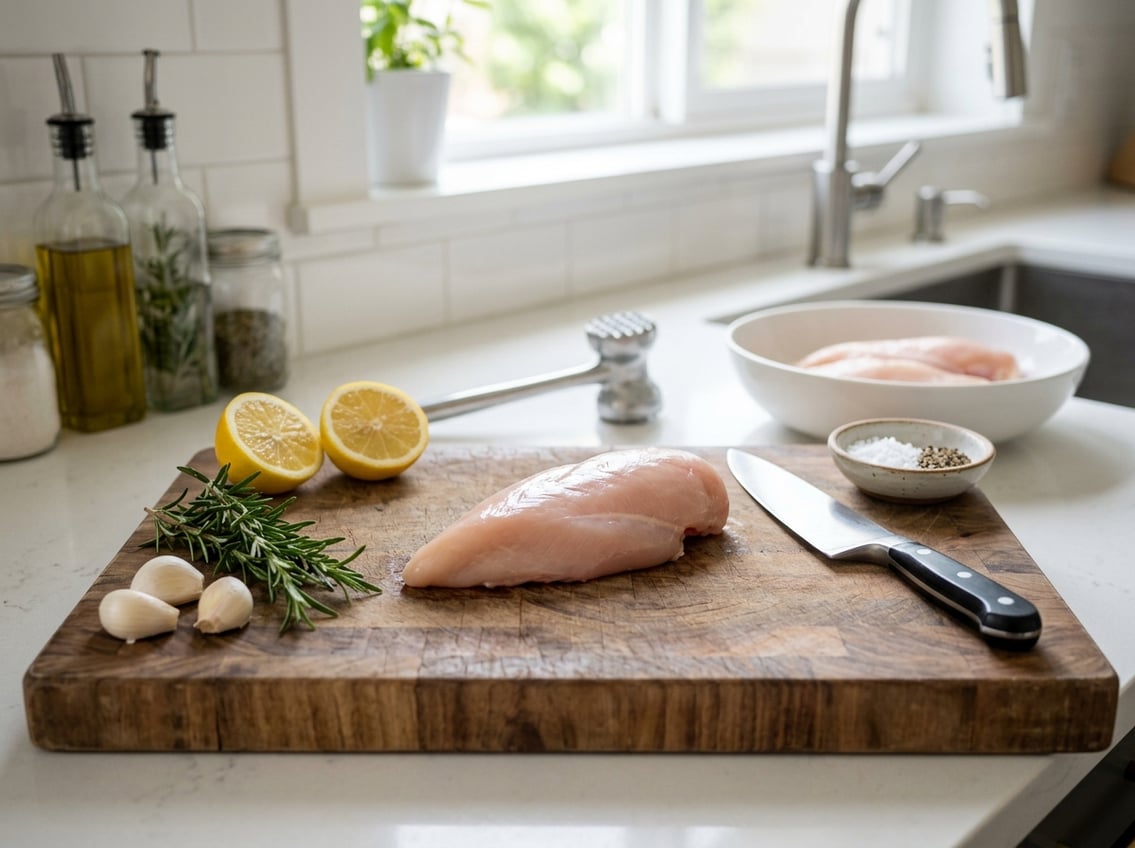
Sometimes flattening is not the best choice.
If the recipe depends on shape, thickness, or a gentle interior texture, use the breast as it is.
Recipes That Need a Fuller, Natural Shape
Some dishes need the natural curve of the breast to stay intact.
Stuffed chicken breasts are one example, since the shape helps hold the filling in place.
If you cook a recipe that depends on a thicker center, such as a roasted breast with a moist interior, leave the meat whole.
Texture Risks From Over-Pounding
Too much pounding can tear the meat, make it too thin, or create an uneven surface.
That can lead to dry spots and a rough bite.
Avoid pounding frozen chicken, since it can split instead of flatten.
For chicken thighs, a light pound can help, but they usually do not need the same treatment as breasts.
Alternatives to Flattening the Meat
If you want more even cooking without pounding, trim very thick areas or butterfly the breast.
You can also use lower heat and cook it a little longer.
Other alternatives include cutting the breast into thinner pieces for stir-fries or slicing it after cooking for salads and sandwiches.
Those options work well when you want to keep the meat intact.
How Pounding Affects Marinades
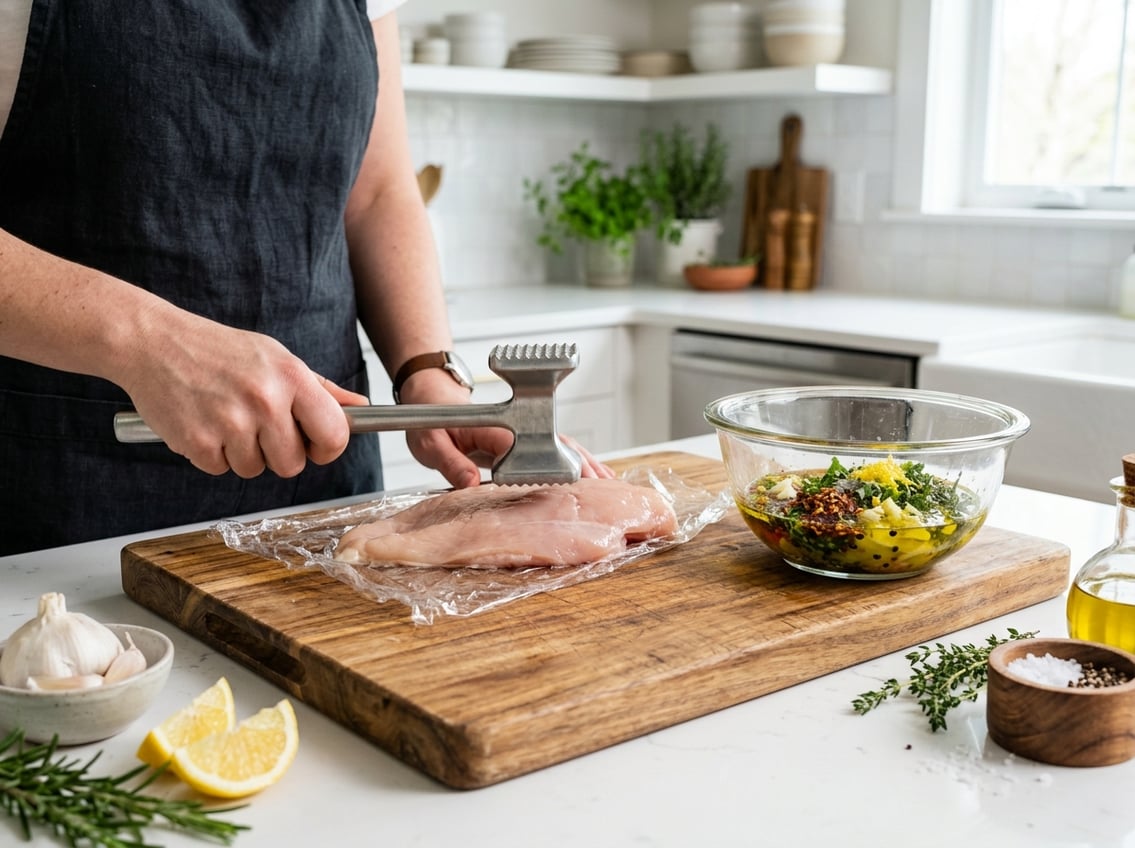
Pounding changes how the surface of the meat behaves, so it can affect both flavor and timing.
It often helps with marinating chicken by giving the marinade more contact with the meat and more places to cling.
Marinade Penetration and Surface Area
A flattened breast has more exposed surface area than a thick one.
That gives your marinade more room to coat the meat.
Pounding also creates small breaks in the surface that can help with marinade penetration.
It does not make flavor sink deeply through the whole breast, but it does improve surface seasoning and short-term absorption.
Pounding Chicken Before Marinating
If you wonder whether you should pound chicken breast before marinating, the answer is often yes when you want faster flavoring and more even cooking.
According to Tatnuck Meat & Sea, pounding helps with tenderness, surface area, and flavor absorption.
This is useful when you want a quick marinade to work in a short time.
It is less important if you use a long, slow marinade or a recipe that relies on a thick, intact breast.
Timing Tips for Quick Marinades and Prep Ahead
For a quick marinade, pounded chicken breast can pick up flavor faster than an unpounded piece.
You can also pound chicken ahead of time and keep it chilled until cooking day.
If you do this, store it safely in the refrigerator and keep your prep simple so the meat stays cold and clean.
How to Do It Properly
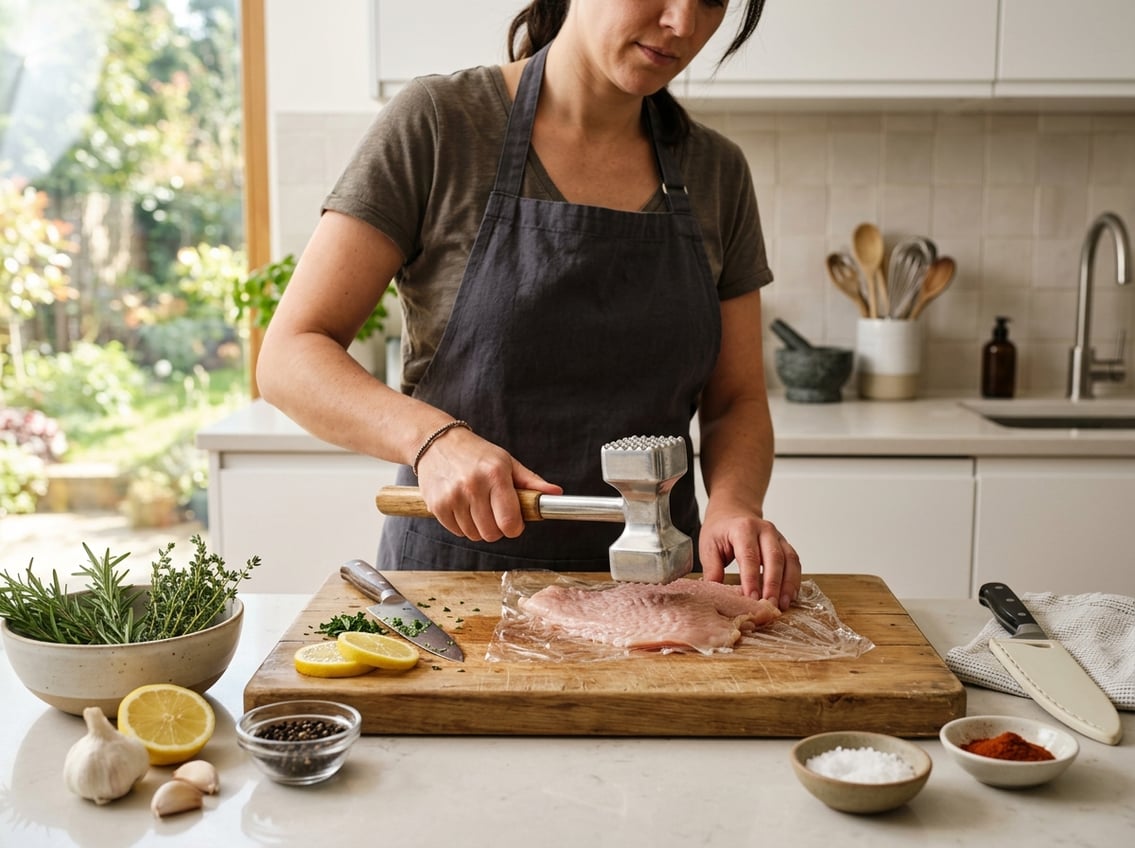
If you pound chicken breast, use steady pressure and aim for even thickness.
The goal is to improve cooking, not damage the meat.
Tools to Use, Including a Meat Mallet
A meat mallet is the easiest tool for the job.
A flat side works best because it spreads pressure more evenly.
You can also use a rolling pin or a heavy skillet if you do not have a mallet.
A good guide on how to pound chicken breasts suggests using sturdy, unbreakable tools carefully.
How to Properly Pound Chicken Breast Without Tearing It
Place the breast between plastic wrap or in a resealable bag.
Start in the center and work outward with controlled taps.
Do not strike hard in one spot.
Light, even hits help you get a smoother shape and reduce tearing.
For a broader technique guide, Chef’s Resource on how to pound chicken breasts recommends even thickness, shorter cook time, and tenderness.
Target Thickness by Cooking Method
Your target thickness depends on how you plan to cook the chicken.
- Grilling or pan-searing: Aim for about 1/2 to 3/4 inch.
- Cutlets and breaded dishes: Go thinner for fast, even cooking.
- Roasting or stuffed recipes: Skip pounding or flatten only slightly.
When the piece looks even from end to end, you have probably pounded it enough. This shows you used the technique well.


