
What Is the Best Way to Cook Chicken Breast to Keep It Moist?
What is the best way to cook chicken breast to keep it moist? You get the best results when you treat chicken breast as lean white meat, use salt or a brine before cooking, and stop cooking as soon as the center reaches a safe temperature.
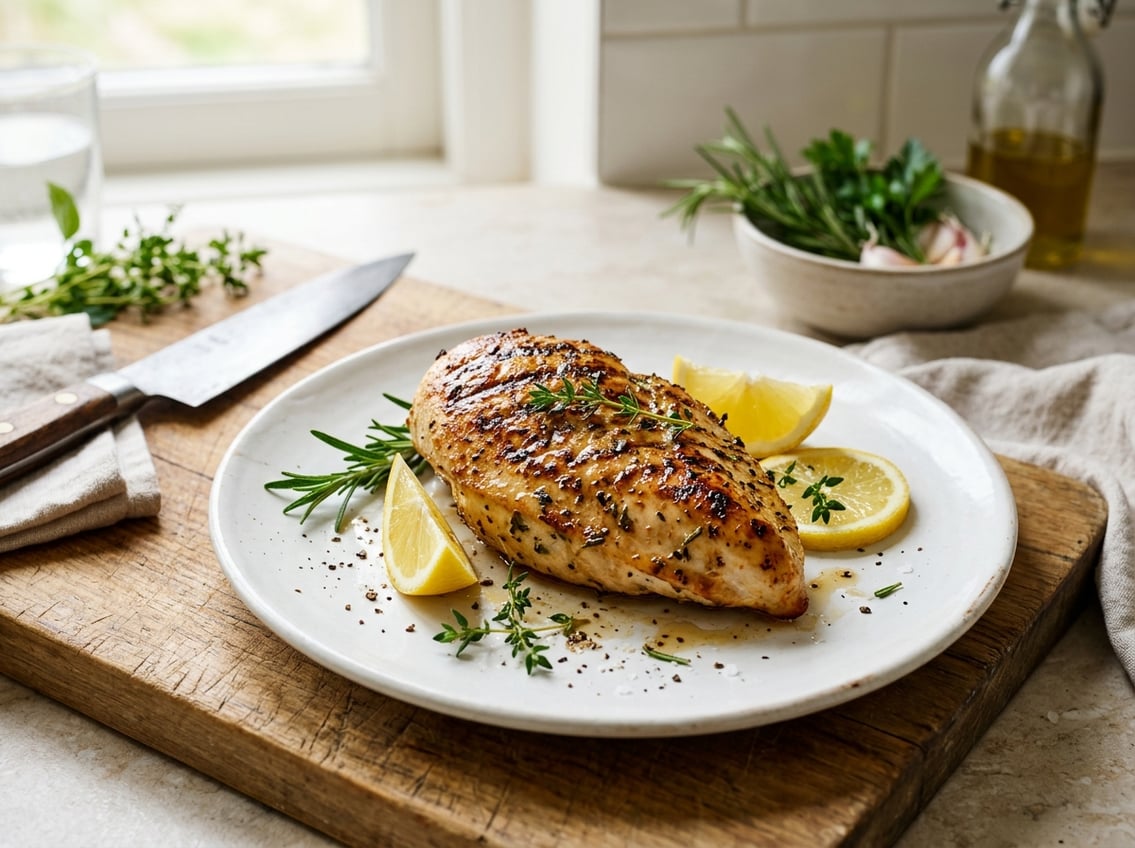
Season early, control heat closely, and use an instant-read thermometer so you avoid overcooking. This approach gives you far more control than guessing by time alone.
Chicken breast dries out fast because it has little fat and very little connective tissue. Protect it from high heat for too long and let carryover cooking finish the job.
The Most Reliable Moisture Strategy
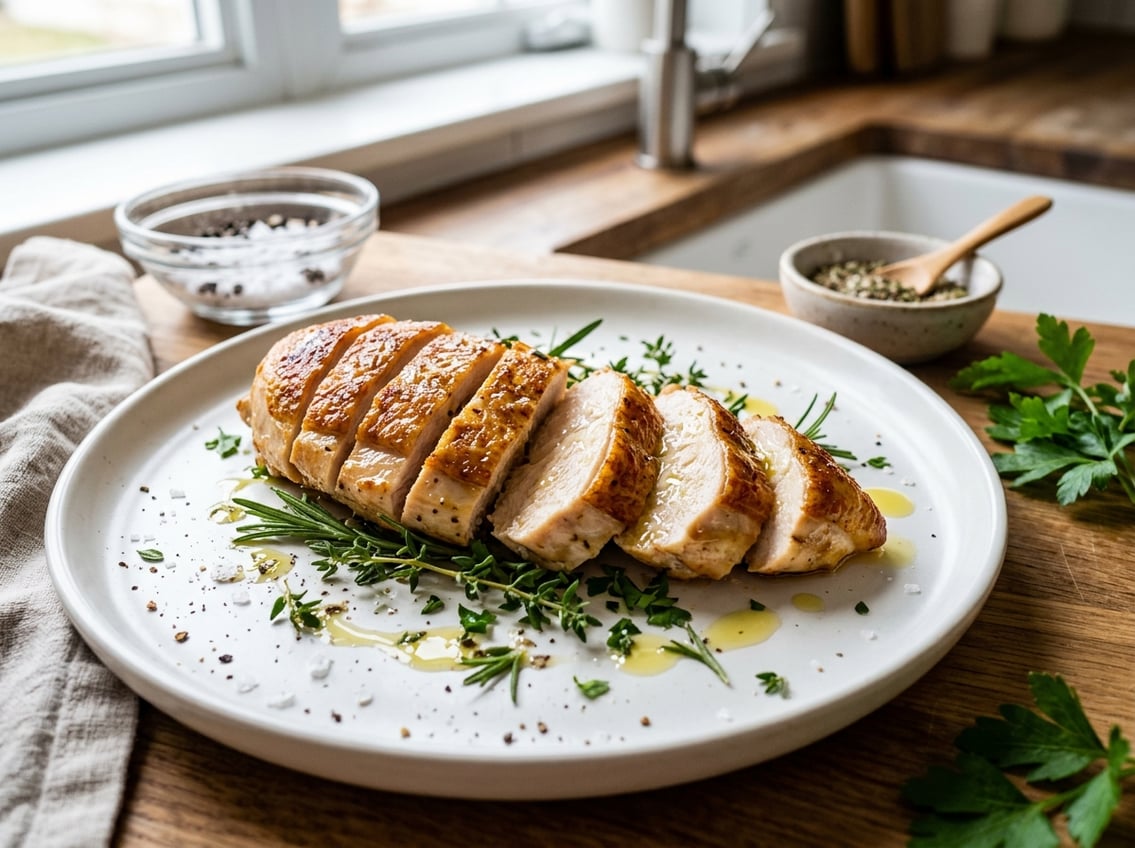
Combine good seasoning with exact temperature control for juicy chicken and better moisture retention. This is the fastest path to a moist result.
Why White Meat Dries Out So Fast
Chicken breast behaves differently from thighs because it is white meat. According to America’s Test Kitchen on how to keep chicken breast moist, breast meat has less myoglobin, less fat, and less collagen than dark meat.
It does not benefit from long cooking the way a thigh can. If you push it too far, the muscle fibers tighten and squeeze out moisture.
The Role of Salt in Moisture Retention
Salt helps you cook chicken breast well by changing muscle proteins so they hold on to more water. This helps you create juicy chicken instead of dry slices.
Salt early for the best effect. Even 45 minutes helps, and several hours is better if you have the time.
Why Temperature Control Matters More Than Time
Cooking time gives you a rough guide, not a guarantee. Thickness, starting temperature, and pan heat all affect how fast chicken breast cooks.
Use an instant-read thermometer or meat thermometer to remove the guesswork. Stop cooking as soon as the center reaches the right temperature to avoid overcooking.
How Carryover Cooking Helps Avoid Dryness
Chicken continues to cook after you remove it from the heat because of carryover cooking. Pull the breast a little early so it can finish gently while resting.
This protects the center from going past the point where it turns dry.
Prep Steps That Make Chicken Breast Juicier
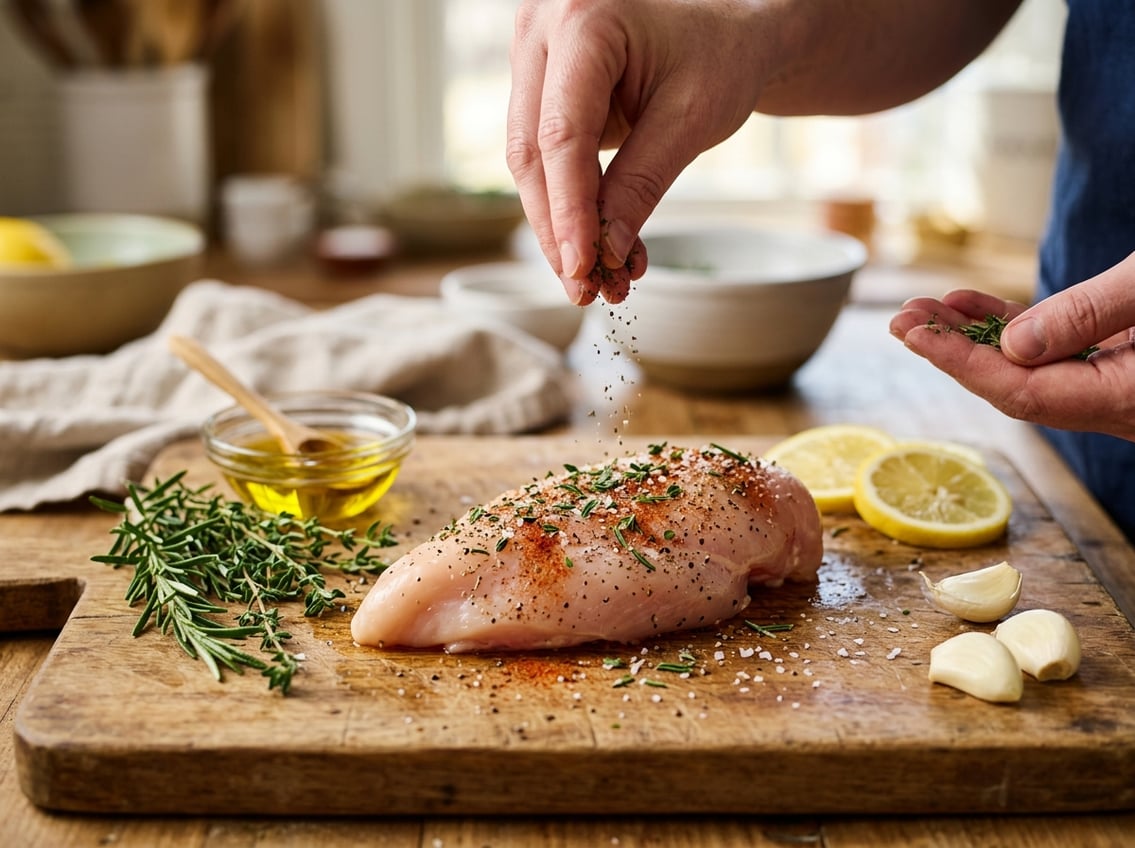
Good prep gives you a better chance at a seasoned chicken breast that stays moist. Brining, marinating, and simple shape adjustments all improve the final texture.
When to Use Brining
Brining makes sense when you have plain boneless skinless chicken breasts and want the most protection against dryness. A saltwater brine seasons the meat and helps it hold more water.
According to America’s Test Kitchen, brining can make lean cuts juicier because it adds moisture while changing the protein structure.
When Marinating Makes More Sense
Marinating works best when you also want more flavor. A good marinade can include salt plus ingredients like olive oil, lemon zest, garlic powder, onion powder, italian seasoning, and dried thyme.
This is especially useful when you want a seasoned chicken breast that tastes complete without needing a heavy sauce.
How to Flatten and Season for Even Cooking
Uneven chicken breasts cook unevenly. If one end is much thicker, the thin side can dry out before the center is done.
Pound the thickest part gently so the breast has a more even shape. This helps boneless skinless chicken breasts cook at the same rate and lowers the risk of dry edges.
Bone-in chicken breasts can also stay juicier because the bone helps shield the meat from heat. You still need careful timing, since the meat around the bone can take longer to cook.
Best Seasoning and Marinade Building Blocks
Keep your base simple and balanced. These ingredients work well in many chicken breast recipes:
- Kosher salt
- Olive oil
- Lemon zest
- Garlic powder
- Onion powder
- Italian seasoning
- Dried thyme
- Black pepper
If you use a marinade, include enough salt to help the meat season properly. You do not need a long ingredient list to get a juicy chicken breast.
Best Cooking Methods for Tender Results
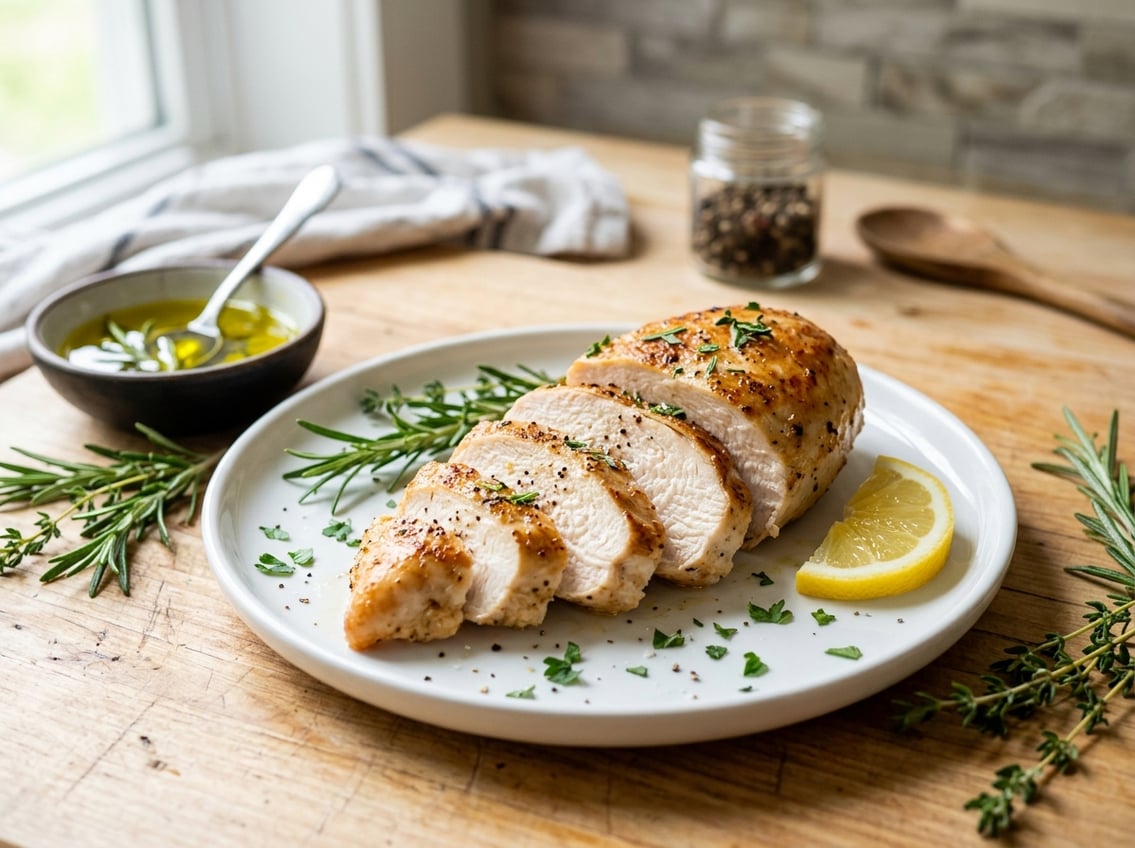
The best method depends on your schedule and equipment. A cast iron skillet, oven, or grill can all work well when you keep the heat controlled and stop at the right temperature.
Covered Skillet Cooking for Everyday Reliability
Use a covered skillet when you want fast results. A cast iron skillet gives you good browning, and the lid helps trap moisture.
This works well for boneless skinless chicken breasts because the trapped steam helps the meat cook through without drying the surface too fast.
Sear and Finish in the Oven
Sear first for color, then let the oven finish the center gently. Start in a hot pan, then move the skillet to the oven once the surface is set.
A lower oven temperature reduces the chance of overcooking the outside before the middle is done.
How to Make Baked Chicken Breast Stay Moist
Bake chicken breasts at a moderate temperature to avoid cooking the outside too fast. Even thickness matters more than a long bake.
Cover the dish for part of the cooking time to reduce surface drying. This simple step helps baked chicken breast stay moist without extra fat.
Tips for Grilled Chicken Without Drying It Out
Grill chicken breast with controlled heat. Keep one side of the grill cooler so you can move the meat if it browns too fast.
Use medium heat for the whole cook. This gives you better control over the center and helps grilled chicken breasts stay juicy.
Checking Doneness, Resting, and Reheating
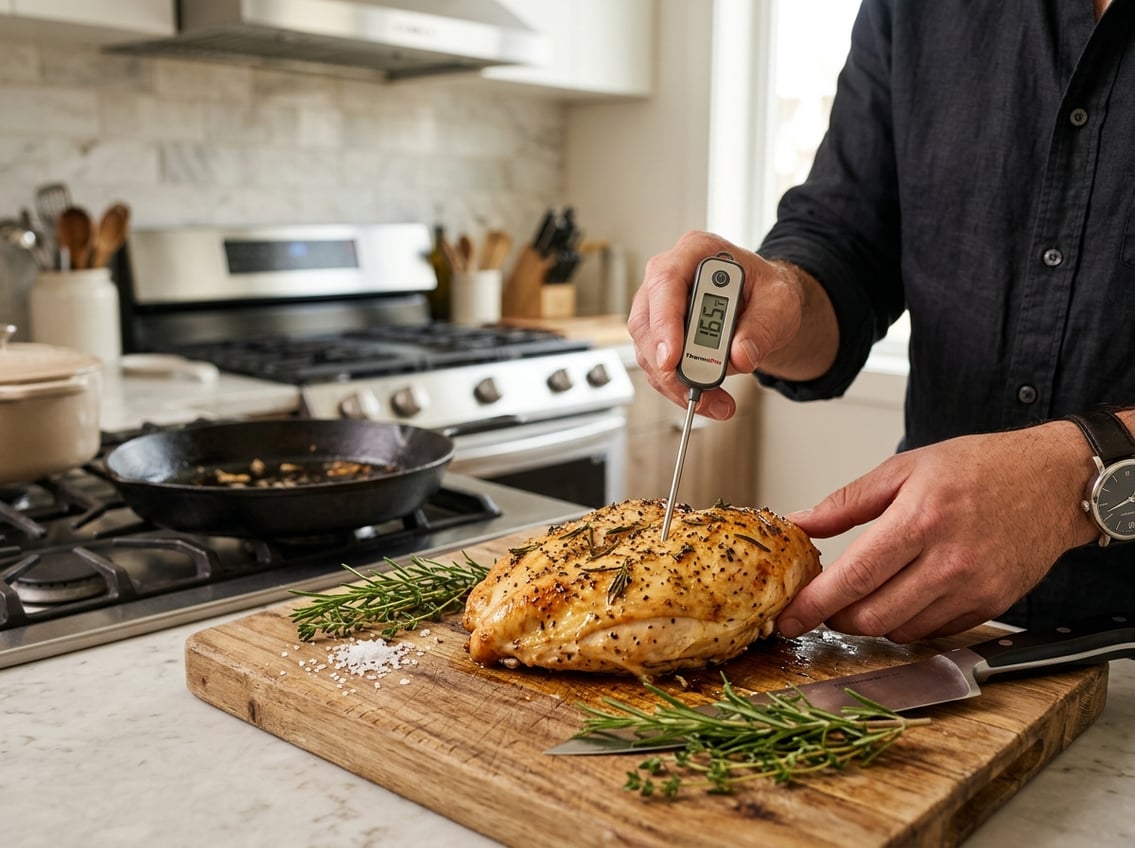
The last few minutes matter as much as the start of cooking. A meat thermometer, a short rest, and careful reheating all help you keep chicken breast from turning dry.
What Internal Temperature to Aim For
Check the thickest part of the meat with an instant-read thermometer. Chicken is safe at 165°F, and that is the standard target for home cooking.
Some cooks pull chicken a little earlier and let carryover cooking finish it. The key is to know the temperature before the meat goes too far.
How Long to Rest Before Slicing
Rest the chicken for several minutes after cooking. This gives the juices time to settle back into the meat instead of running out on the cutting board.
If you slice too soon, even juicy chicken breasts can seem dry. A short rest makes a noticeable difference.
Signs You Have Overcooked the Meat
Overcooked chicken breast usually looks pale, feels tight, and releases less juice when cut. The texture can turn stringy or chalky.
If you need a sauce to make the meat easy to swallow, it likely went too far. Next time, take the chicken off the heat sooner.
How to Reheat Chicken Breast Without Losing Moisture
Use gentle heat when you reheat chicken breast. Add a little moisture if needed.
Cover the chicken to trap steam and slow drying. Warm it only until heated through.


