
What Do I Grill Chicken Breast At? Best Grill Temp
You may wonder, what do I grill chicken breast at if you want chicken that is cooked through without turning dry.
Use medium-high heat, about 425°F to 450°F, and cook until the thickest part reaches 165°F.
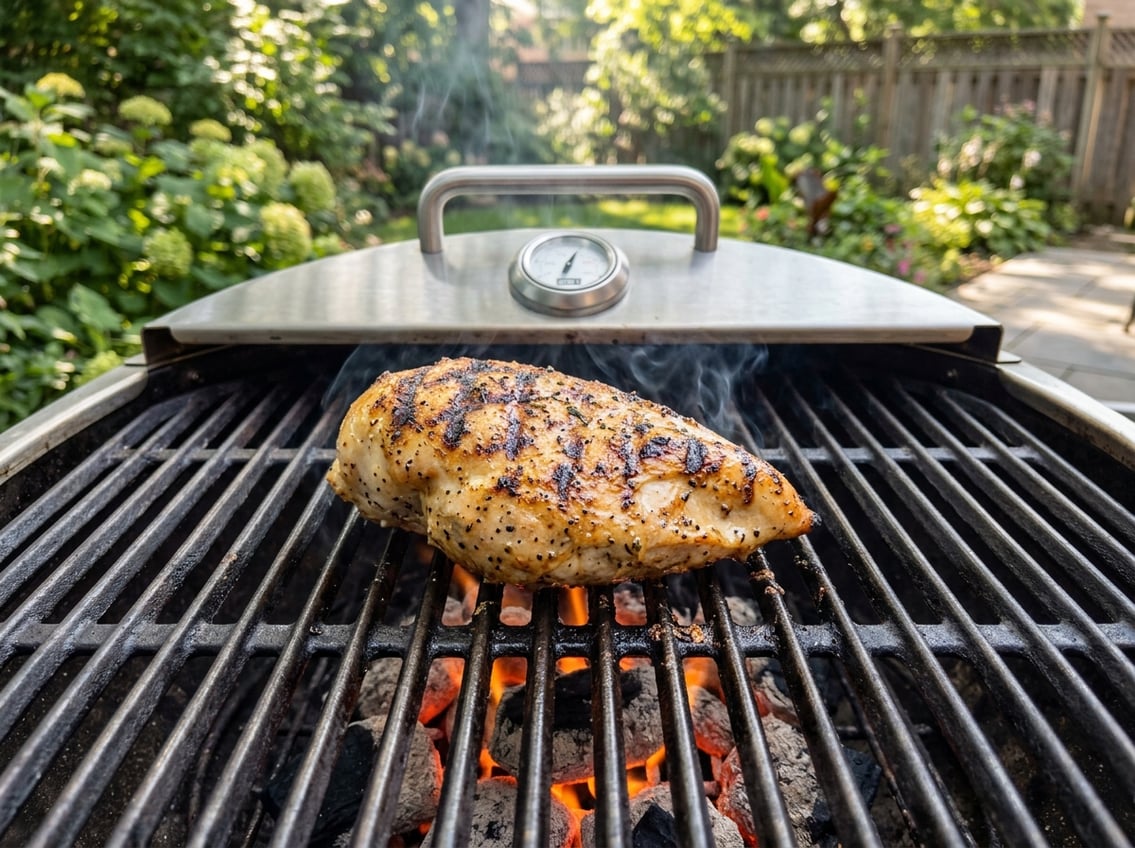
That temperature range gives you good browning on the outside while keeping the inside juicy.
It works whether you are grilling chicken breast for dinner, meal prep, or a cookout.
For perfectly grilled chicken, focus on grill temperature, even thickness, and a meat thermometer.
Those three steps matter more than any single recipe.
Best Grill Temperature and Cook Time
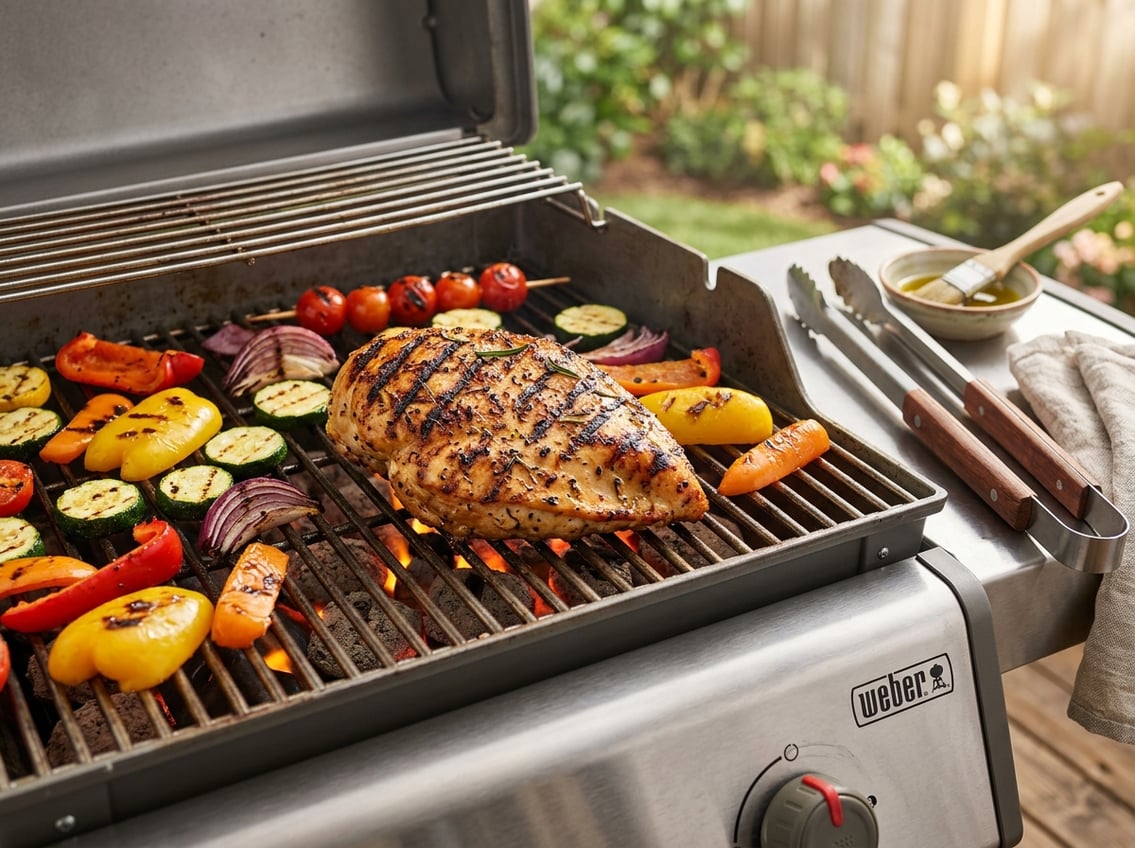
For boneless chicken breast, use medium-high heat.
Weber recommends preheating the grill and cooking marinated chicken breasts over direct medium heat at 425°F to 450°F, with an internal temperature of 165°F before you pull them off the grill (Weber Grills).
The exact time depends on thickness, heat stability, and whether your chicken breast is skinless or boneless skinless.
Use time as a guide, but rely on a meat thermometer for the real answer.
The Ideal Heat Range for Boneless Chicken Breast
Aim for 425°F to 450°F for most boneless chicken breast pieces.
That range gives you enough heat to cook quickly and build color without scorching the outside.
If your grill runs hot, stay on the lower end of the range.
If you are cooking thicker pieces, steady medium-high heat helps you get grilled chicken without overcooking the edges.
How Long Each Side Usually Takes
Most boneless skinless chicken breasts need about 4 to 6 minutes per side over medium-high heat.
Weber’s guide suggests about 9 to 10 minutes total for average-sized breasts, with a flip at the halfway point (Weber Grills).
Thin pieces may finish faster.
Thicker pieces can take longer, so use the clock as a starting point, not the finish line.
Why Thickness Changes the Timing
Thickness changes how fast heat reaches the center of the meat.
A thin boneless chicken breast can cook through before the outside gets too dark, while a thick one needs more time and sometimes gentler heat.
For even results, pound chicken breast to a more even thickness before grilling.
That helps the whole piece finish at the same time and gives you juicier grilled chicken breasts.
When to Pull It Off the Grill
Pull the chicken when the thickest part reaches 165°F on a meat thermometer.
That temperature is the safe target for chicken and helps you avoid guessing.
Remove chicken as soon as it hits temp, then let it rest so carryover heat can finish the job as the juices settle.
Prep That Prevents Dry Chicken
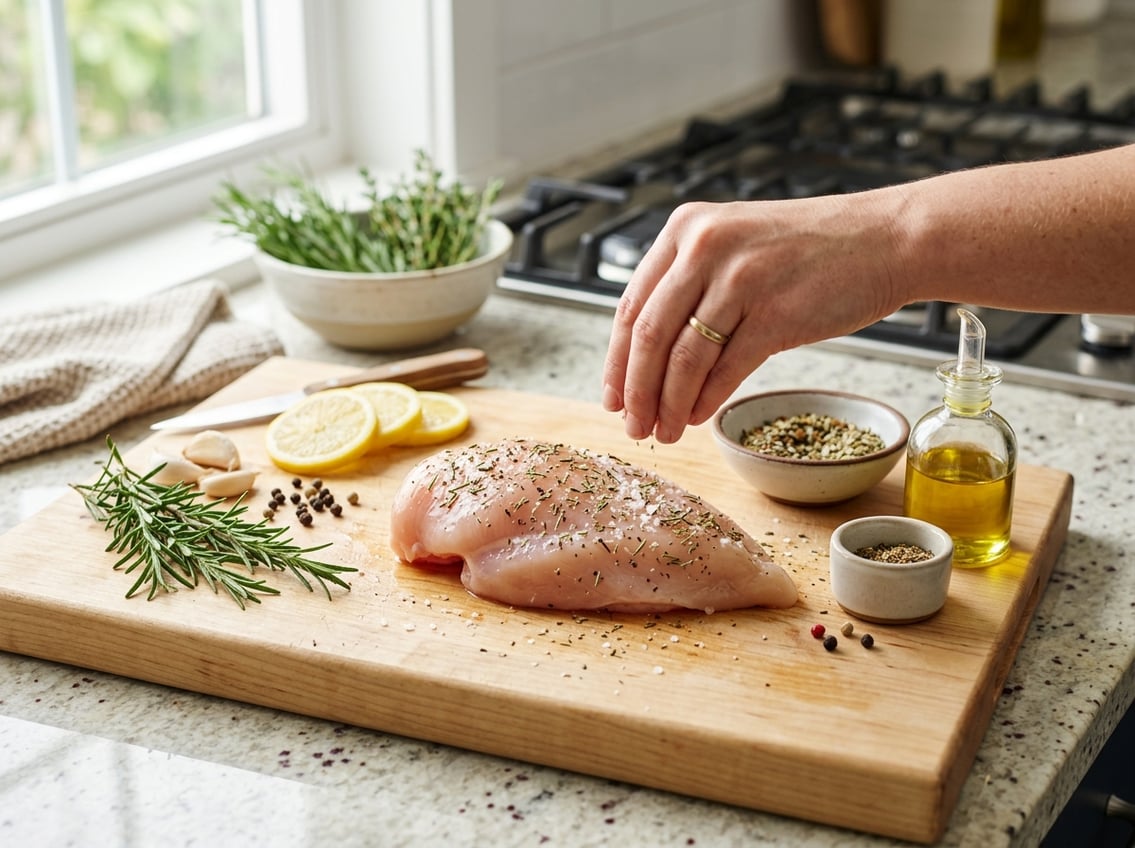
Dry chicken often starts before the meat hits the grill.
Good prep helps a juicy chicken breast stay tender, especially if you are cooking lean boneless skinless chicken breasts.
A simple marinade, a short brine, or both can improve texture and flavor.
The key is matching your prep method to how much time you have.
Pound Chicken Breast for Even Cooking
Place the chicken between two sheets of plastic wrap or in a bag, then pound chicken breast to a more even thickness.
You do not need to flatten it a lot, just enough to remove the very thick center.
This makes grilling chicken easier because the thin ends do not overcook while the middle finishes.
It also helps you get more consistent juicy chicken breasts.
Brine vs. Chicken Marinade
A brine helps the meat hold moisture, while a chicken marinade adds flavor and can also improve juiciness.
For a basic approach, brining chicken breasts works well when you want a simple salt solution and a clean flavor.
A marinade is the better choice when you want a stronger taste, such as garlic, lemon, herbs, or barbecue seasoning.
Weber recommends a simple marinade and at least 30 minutes of rest time before cooking (Weber Grills).
How Long to Marinate Without Ruining Texture
For most chicken marinade recipes, 30 minutes to 4 hours is enough.
You can marinate chicken breasts overnight if the marinade is mild and not very acidic.
Very acidic marinades can change the texture if left on too long.
If you want a marinated chicken breast that stays tender, keep an eye on the ingredient list and do not overdo the acid.
Seasoning Options for Everyday Grilling
For everyday grilling, salt, pepper, garlic powder, onion powder, paprika, and dried herbs work well.
Olive oil helps seasoning stick and promotes browning.
If you want more flavor, use a store-bought marinade or make a simple chicken marinade with oil, lemon juice, garlic, and herbs.
These options give you juicy chicken without making the prep complicated.
Grilling Method for Juicy Results
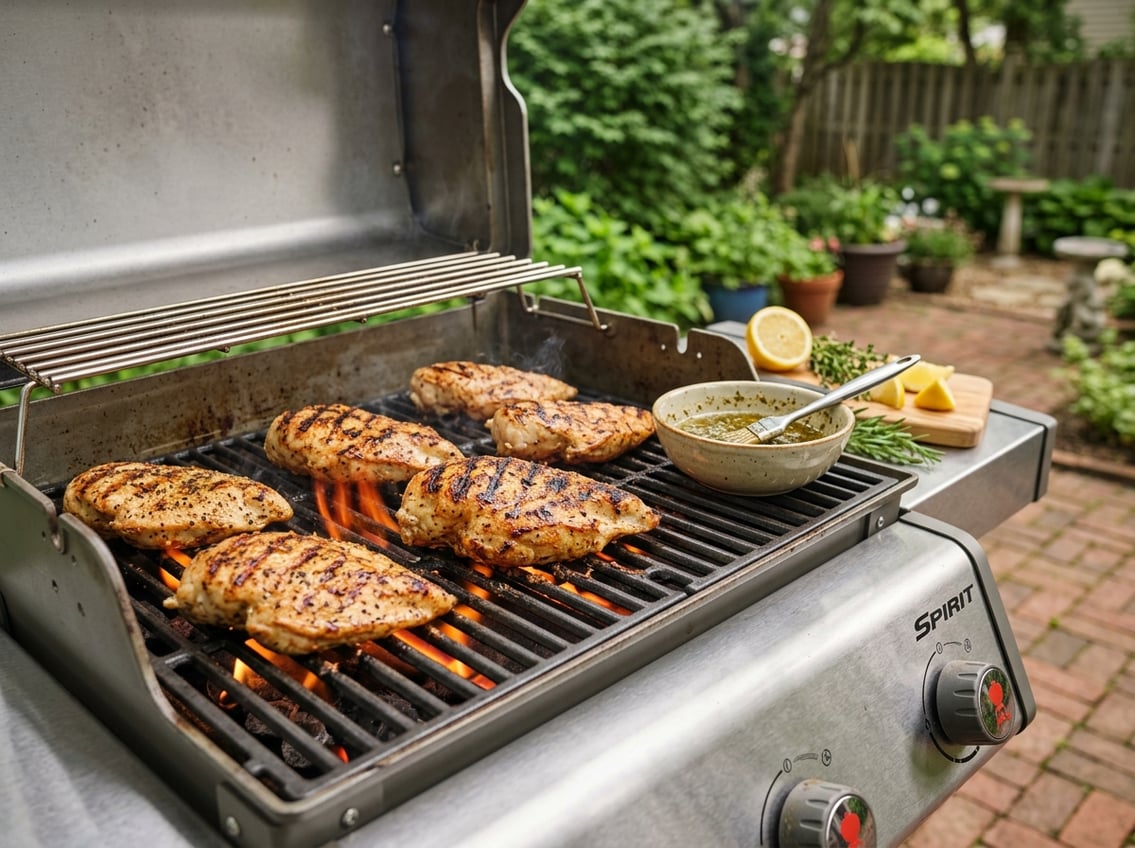
Good heat control matters as much as seasoning.
When you grill chicken, a clean grill, steady heat, and a thermometer give you better results than guessing by color alone.
Set up the grill so the outside browns while the inside reaches safe temperature at the same time.
That is the most reliable way to make bbq chicken or plain grilled chicken breasts.
Preheating the Grill the Right Way
Preheating the grill gives you even heat and better sear marks.
Weber recommends preheating for 10 to 15 minutes before cooking chicken breasts (Weber Grills).
Do not rush this step.
A fully heated grill helps you start cooking right away instead of steaming the chicken on a weak surface.
Cleaning and Oiling the Grates
Use a grill brush to clean the grates after preheating, then oil them lightly.
That reduces sticking and makes it easier to flip the chicken cleanly.
A clean surface also helps your grilled chicken breasts look better.
It supports even browning and makes the process less messy.
Direct Heat vs. Two-Zone Cooking
Direct heat works well for average boneless chicken breast pieces, especially when they are pounded to even thickness.
Two-zone cooking gives you more control if the chicken is thick or if flare-ups start.
If one side of the grill is hotter, sear over direct heat first, then move the chicken to cooler heat to finish.
That method helps you avoid burnt exteriors and dry centers.
Resting Before Slicing and Serving
Let the chicken rest for a few minutes after you take it off the grill.
This gives the juices time to settle, which helps keep the meat moist when you slice it.
Use a meat thermometer before resting, not after.
Once the chicken reaches 165°F, let it sit and then serve it hot.
Flavor Variations and Serving Ideas
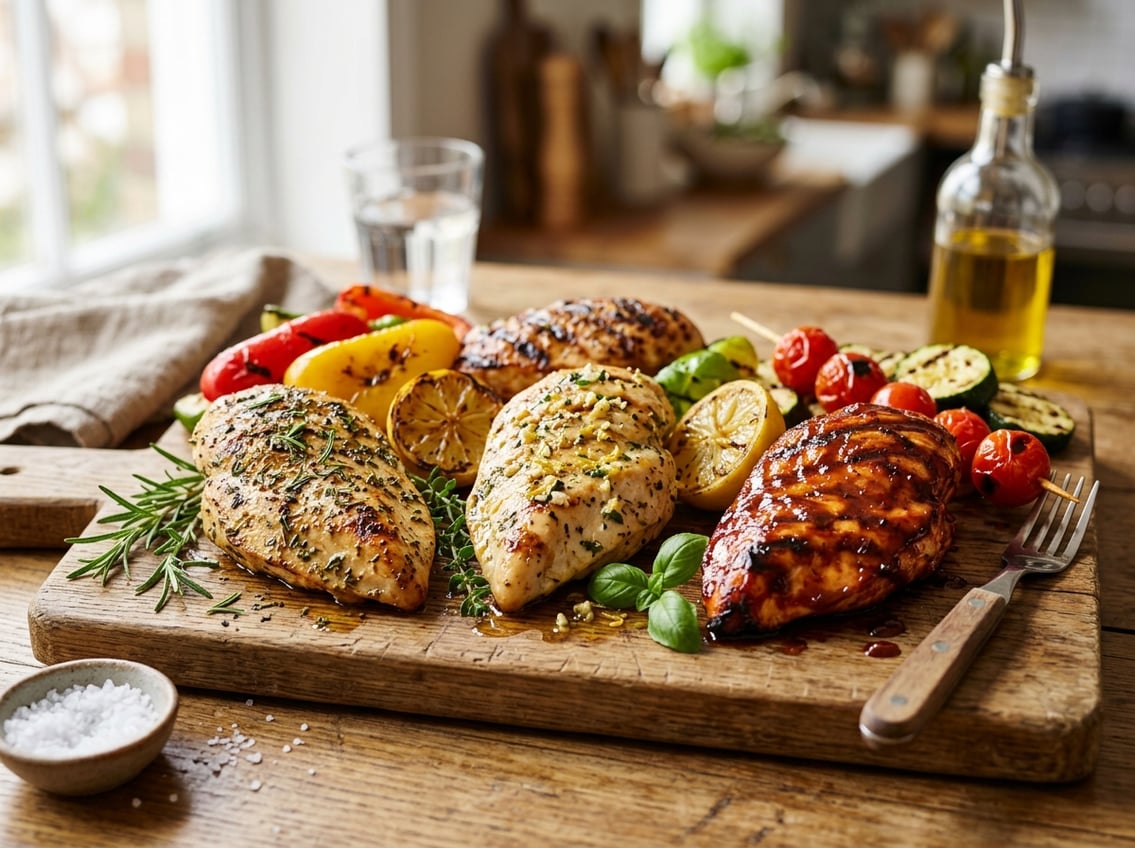
Once you know how to grill chicken breasts well, you can change the flavor in many easy ways.
A basic method works for plain grilled chicken breast, bbq chicken, or bright citrus flavors.
Keep the cooking method steady, then switch up the seasoning, sauce, or sides.
That gives you more variety without changing your grill setup.
Cilantro Lime Chicken on the Grill
Cilantro lime chicken works well with lime juice, chopped cilantro, garlic, oil, and salt.
Use the marinade for a few hours so the flavor can soak in without making the meat mushy.
This style fits well with rice, corn, or a simple salad.
It is a good choice when you want grilled chicken breasts with a fresh, clean taste.
Simple BBQ-Style Glazes and Sauces
For bbq chicken, brush on sauce near the end of cooking so the sugars do not burn early.
Start with seasoned chicken, grill it until nearly done, then glaze it for the last few minutes.
You can also use a dry rub first, then add sauce after grilling.
That gives you a stronger barbecue flavor without losing the grilled surface.
What to Serve With It
Serve grilled chicken with grilled vegetables, corn, potatoes, rice, pasta salad, or greens. These sides balance the lean meat and make the meal feel complete.
Use sliced grilled chicken breast in wraps, salads, and sandwiches. Cook extra grilled chicken breasts to use for lunches through the week.


