
What to Do if Chicken Breast Is Too Thick for Even Cooking
If you wonder what to do if chicken breast is too thick, you usually need to thin it before cooking or use a gentler cooking method. A thick chicken breast can cook unevenly, leaving the outside dry before the center reaches a safe temperature.
Make the chicken more even in thickness, then cook it with controlled heat and check the internal temperature early. This approach helps you get meat that is both safe and juicy.
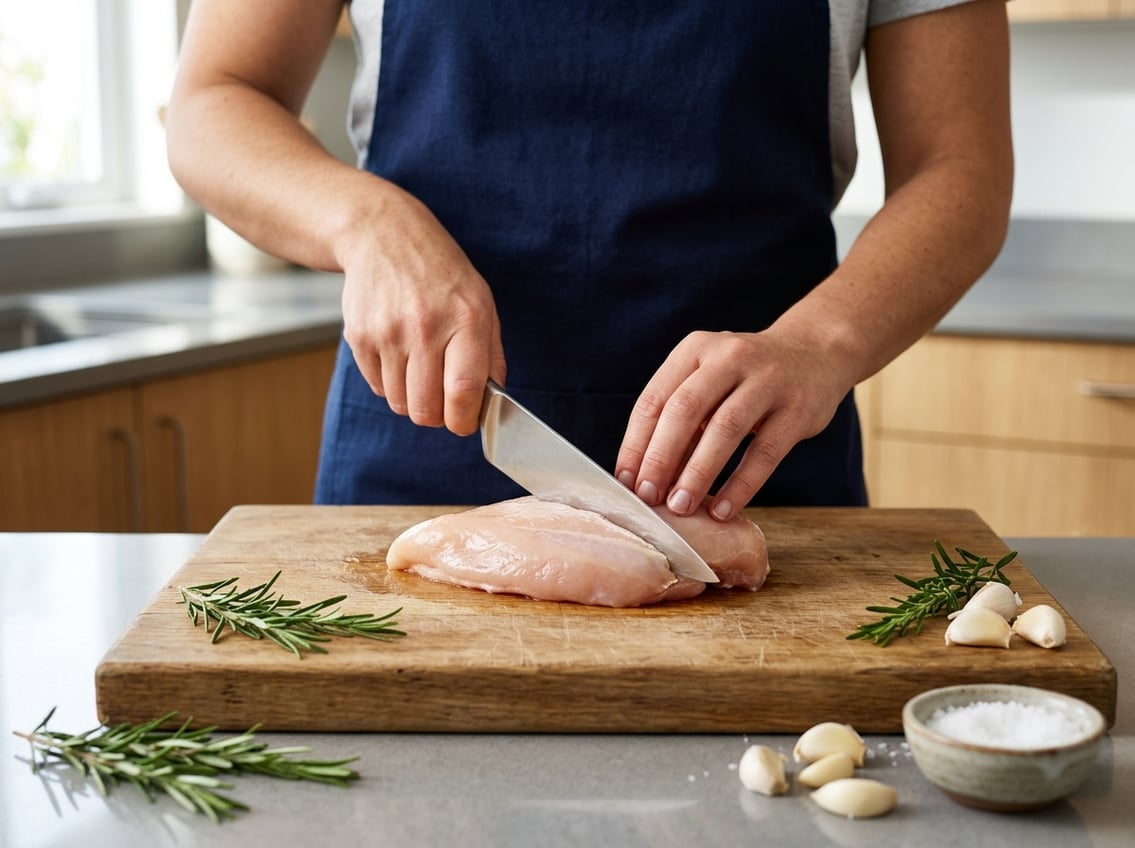
A standard boneless chicken breast often has a thick end and a thinner end. Cooking it as-is usually leads to uneven results.
The thick portion needs more time, while the thin portion dries out fast. That is why prep matters before you start cooking.
Best Ways to Reduce Thickness Before Cooking
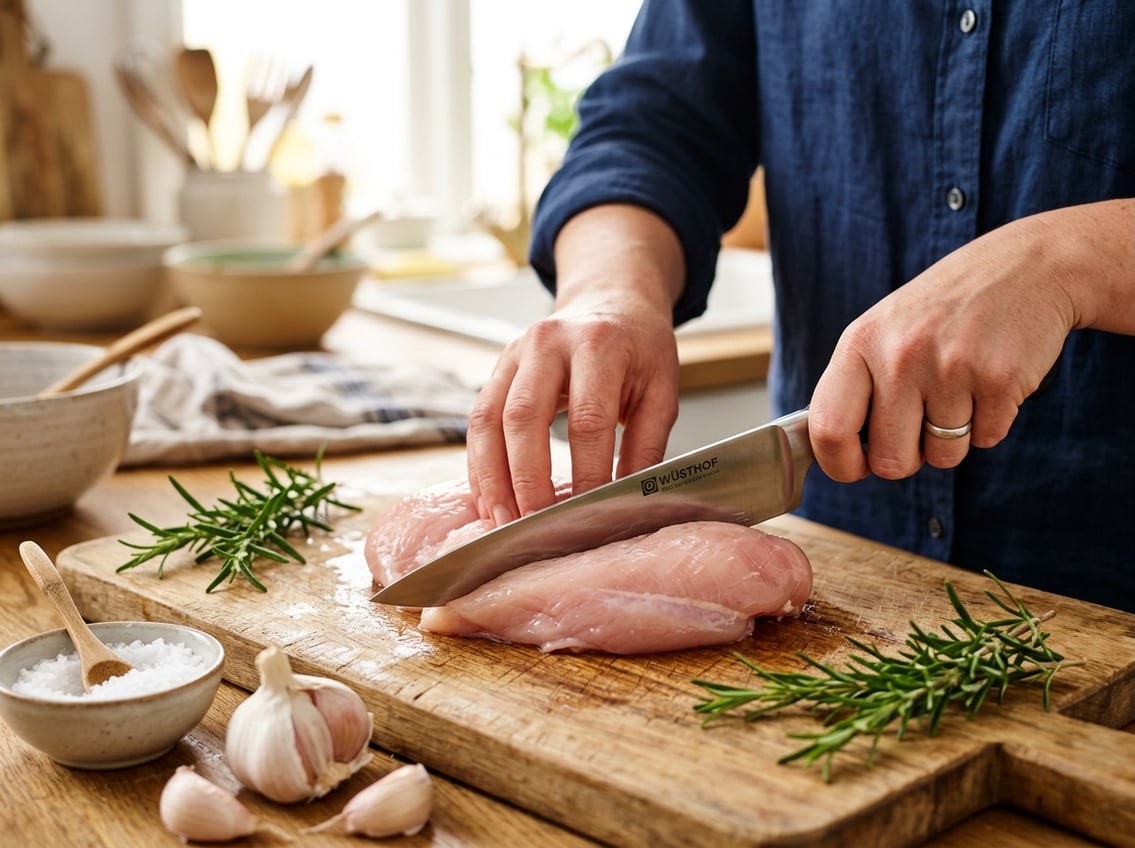
Reducing thickness helps the chicken cook at a similar rate from edge to center. It also lets the meat absorb seasoning more evenly and makes it easier to use in quick meals like chicken fajitas.
Pound the Meat to an Even Thickness
Place the chicken between plastic wrap or parchment paper. Gently pound it with a meat mallet or rolling pin.
Start at the thickest part and work outward so you do not tear the meat. Aim for a uniform thickness, not a paper-thin cut.
This works well for fast, even cooking in pan meals or cutlets.
Butterfly the Breast for Faster, More Even Cooking
Butterflying means slicing the breast horizontally almost all the way through, then opening it like a book. This works when the breast is too thick to flatten well with a mallet.
It creates a wider, thinner piece that cooks faster and stays more even. You also get a good base for stuffing, breading, or grilling.
Slice It Into Cutlets for Quick Meals
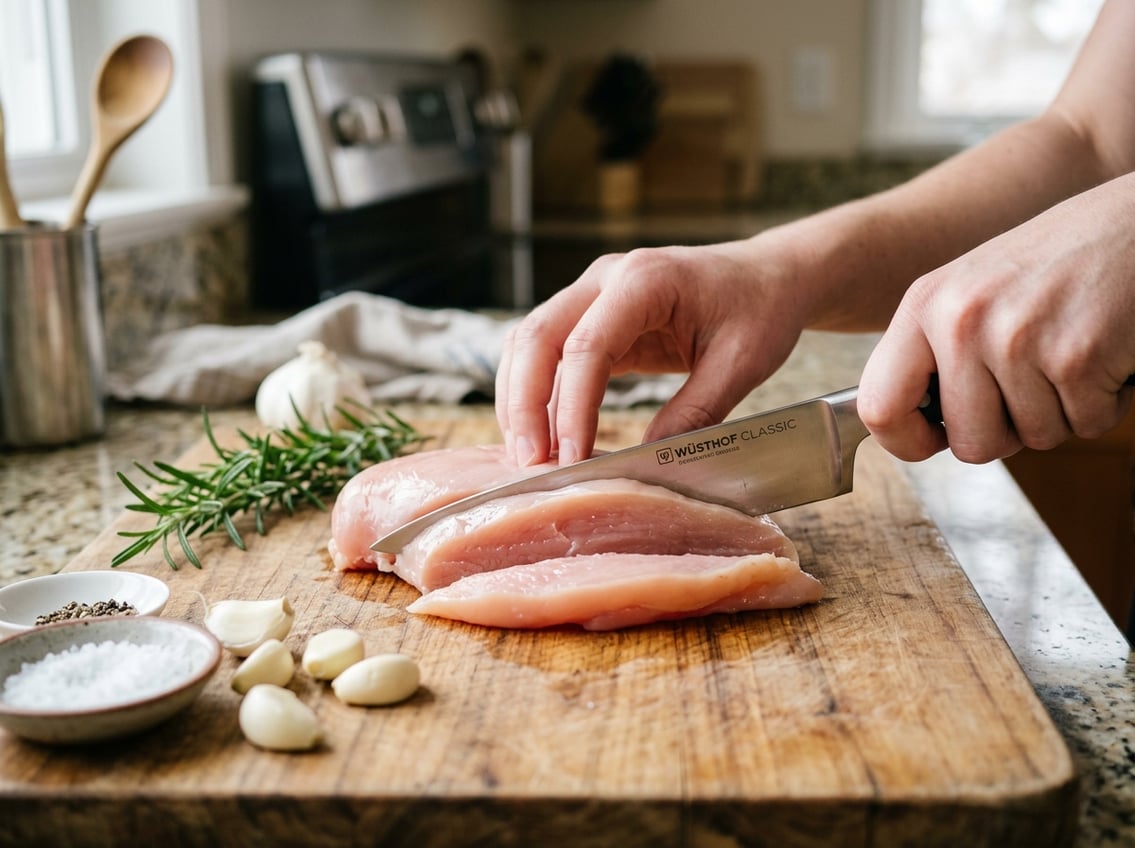
You can split one thick breast into two thinner cutlets by slicing it lengthwise. This gives you smaller portions that cook fast and fit weeknight meals better.
Cutlets work well for sautéing, breading, or cutting into strips for salads and sandwiches. They also make portion control easier.
How to Cook It Without Drying It Out
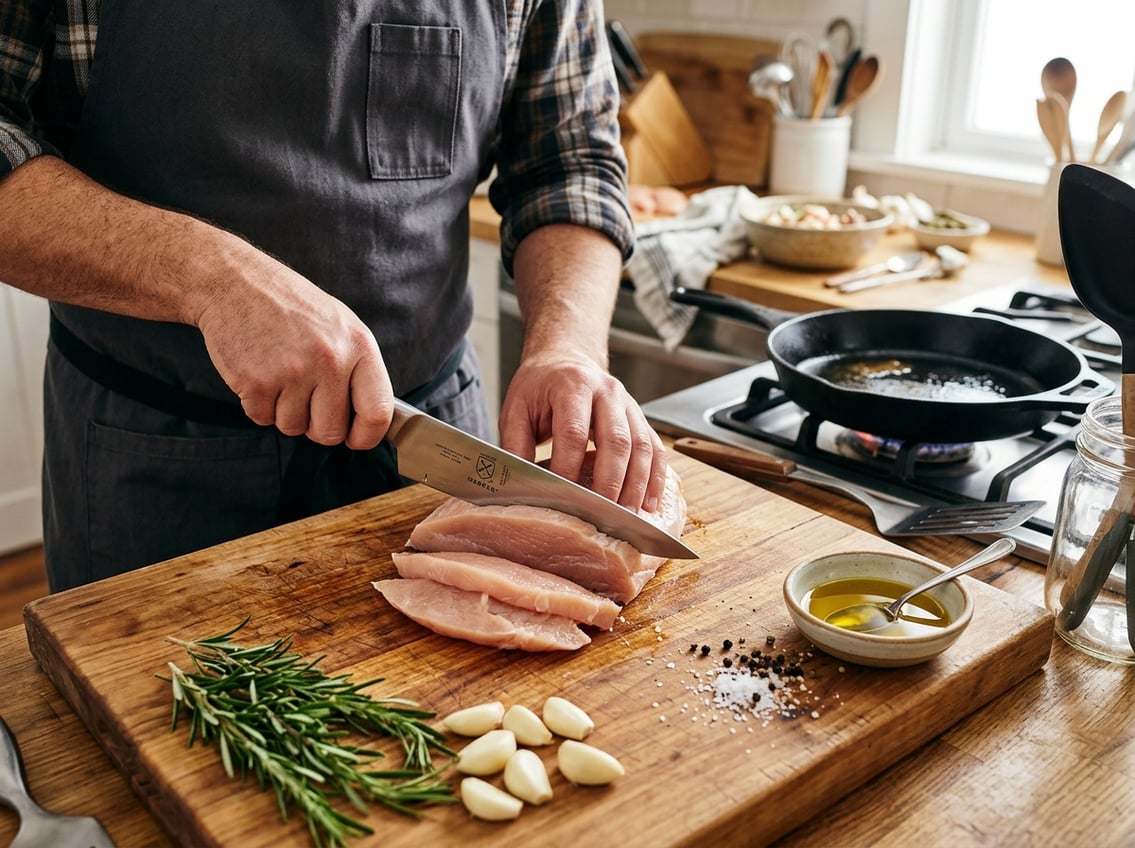
When you leave a thick chicken breast whole, heat control matters more than usual. Lower heat, closer temperature checks, and a finish method can help the center cook through without turning the outside tough.
Bake Gently and Check Temperature Early
Bake thick breasts at moderate heat instead of using a very hot oven. A gentler oven gives the center time to catch up before the outside dries out.
Start checking the temperature a few minutes before the recipe says it should be done. If you wait until the end, you may overshoot the safe point and lose moisture.
Use Pan-Sear and Finish Methods for Thick Pieces
Sear thick chicken breast briefly in a hot skillet to build color, then move the pan to the oven to finish cooking. This gives you control over the outside and helps the center cook through.
You get a good crust without overcooking the meat.
Grill Over Controlled Heat to Prevent Burning
Grill thick chicken breast over medium heat, not high heat. High flames can burn the outside before the middle is ready.
Use a cooler zone on the grill if possible, and move the chicken as needed. A lid helps trap heat and finish the center more evenly.
How to Keep the Meat Juicy and Safe
Juiciness depends on both prep and food safety. Lean chicken breast dries out fast, so you need moisture help and a reliable way to tell when it is cooked through.
The USDA recommends cooking chicken to 165°F, and a thermometer is the safest way to confirm that.
Brine or Marinate for Better Moisture
A short brine can help thick chicken breast hold onto moisture while it cooks. A marinade can also add flavor and reduce surface dryness.
Keep the liquid simple and do not overdo the time. Long soaking is not needed for a basic weeknight meal.
Use a Thermometer Instead of Visual Cues
Color does not tell you if chicken is safe. The center can look done before it actually reaches the right temperature.
Insert a thermometer into the thickest part of the breast. If it reads 165°F, you can pull it from the heat with more confidence.
Rest Before Slicing to Hold in Juices
Let the chicken rest for a few minutes after cooking. This helps the juices settle back into the meat instead of running onto the cutting board.
If you slice too soon, the meat often seems drier than it really is. A short rest makes a clear difference in texture.
When to Repurpose It Into Another Dish
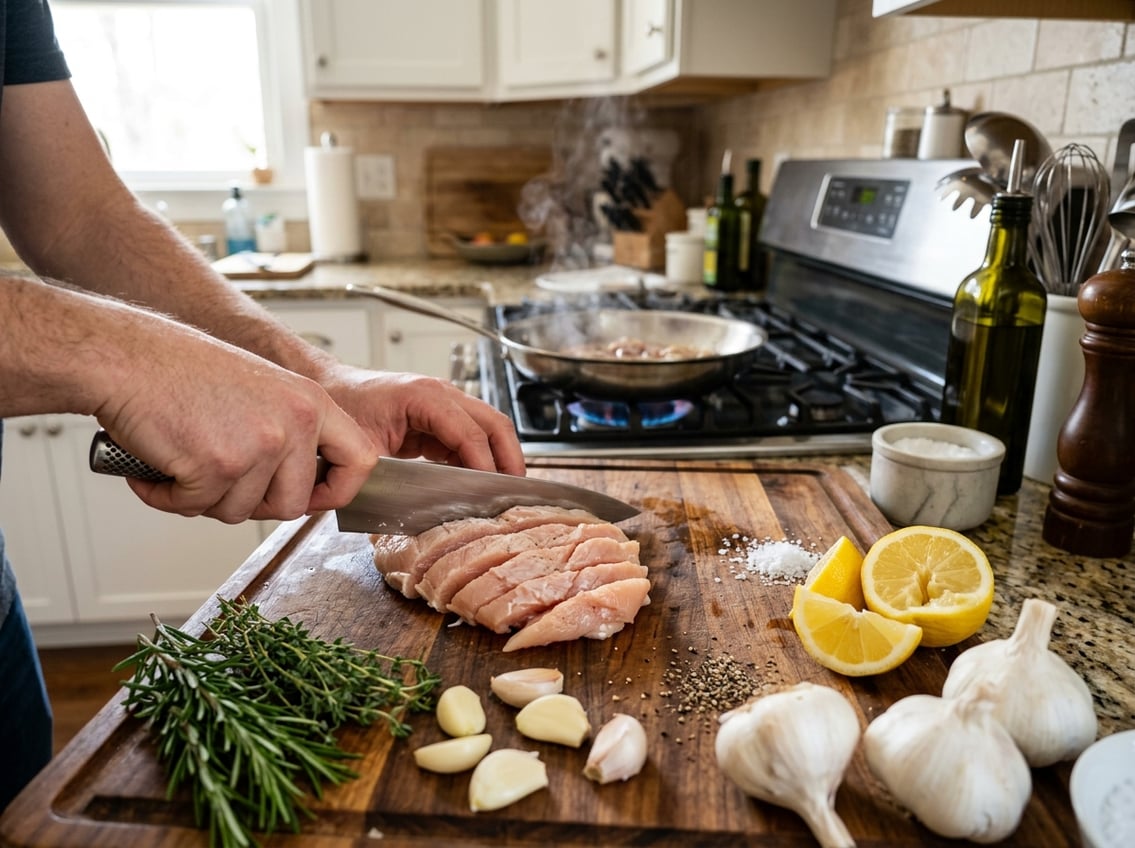
Sometimes the easiest answer is to turn the chicken into a different meal. A very thick chicken breast often works better when you cut it into smaller pieces, especially in dishes that cook quickly.
Turn Oversized Pieces Into Strips or Cubes
Slice cooked or raw chicken breast into strips or cubes if the shape is hard to manage whole. Smaller pieces cook faster and fit many recipes better.
This helps with stir-fries, soups, pasta, and grain bowls. It also makes it easier to use pieces that would be awkward to serve as a whole breast.
Choose Recipes That Benefit From Smaller Cuts
Recipes with sauce, vegetables, or fast cooking times work well for thick breast meat cut down. The extra surface area picks up more seasoning and cooks more evenly.
This makes the texture more reliable in dishes that do not need a whole intact breast. You also get more flexibility when the shape is uneven.
Use Thin Pieces in Skillets, Wraps, and Fajita-Style Meals
Thin slices work well for skillet meals, wraps, and chicken fajitas.
These dishes let the meat cook quickly with peppers, onions, or other fast-cooking ingredients.
If you find the breast too thick for even cooking, you can repurpose it to save time and reduce waste.
This gives you a more usable shape and better texture.


