
Is It Safe to Eat Chicken Breast at 150? What to Know
If you ask whether it is safe to eat chicken breast at 150, the answer is yes, but only if the chicken stays at that temperature long enough to destroy harmful bacteria.
The key is the combination of temperature and time, not just the number on the thermometer.
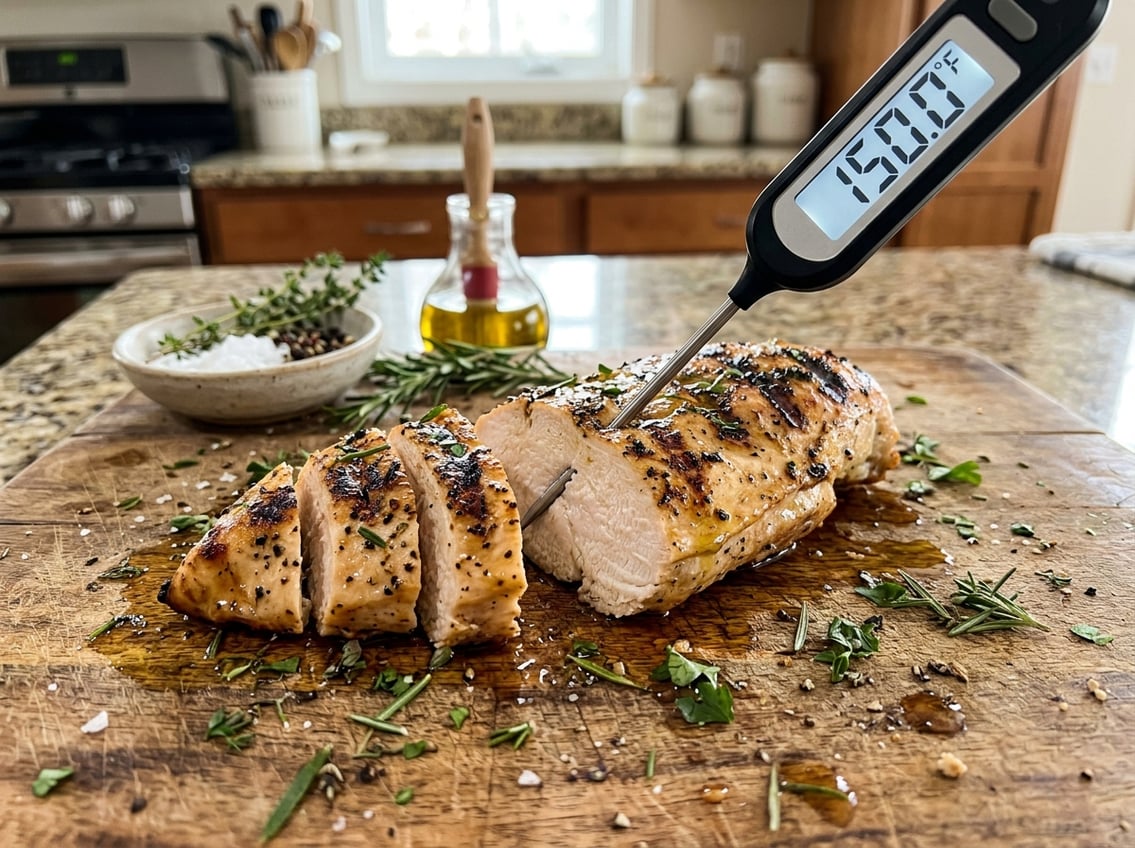
Most home cooks in the U.S. use 165°F as the simplest and safest benchmark because it is easy to remember and helps avoid mistakes.
A lower temperature can work for whole chicken breast, but the USDA’s safe minimum internal temperature for chicken depends on both time and temperature.
Chicken breast is a whole cut, not ground poultry.
That difference matters because whole cuts have less surface area exposed to contamination than ground chicken, so the cooking target can be less strict.
The Direct Safety Answer
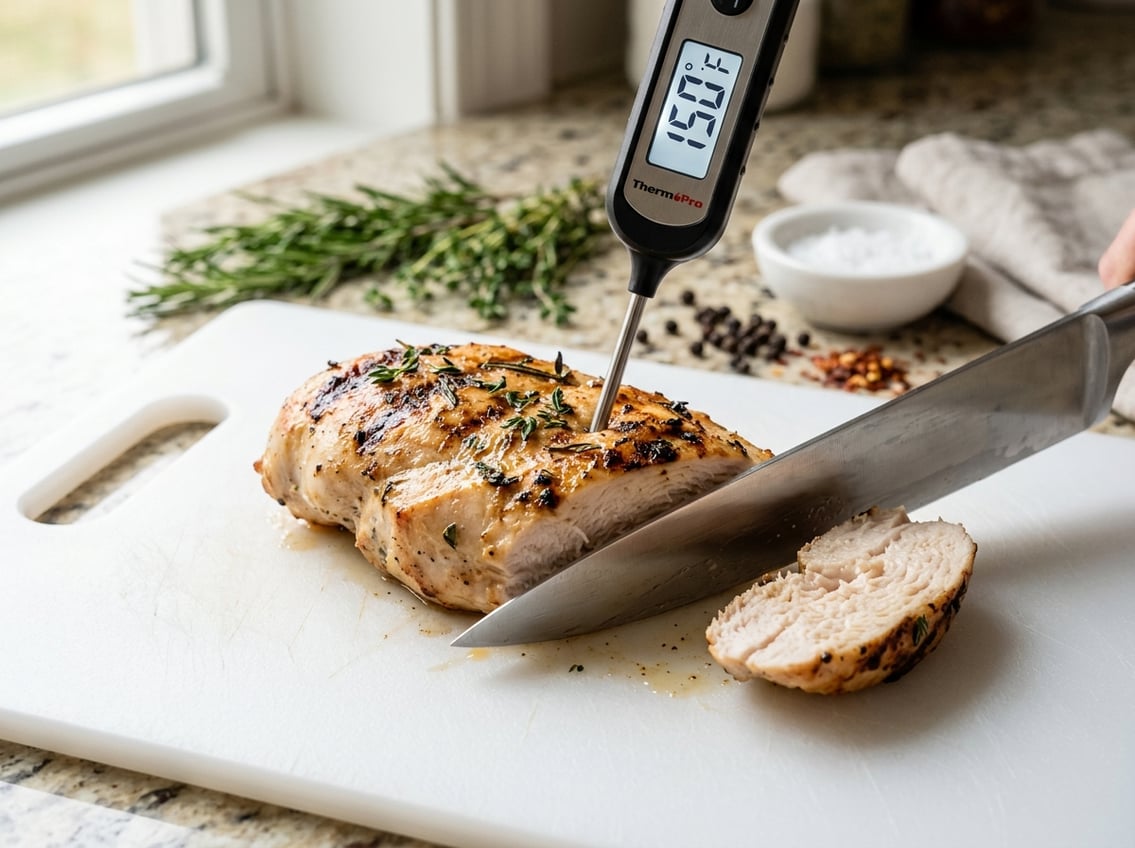
You can safely eat chicken breast at 150°F if you cook it as a whole cut and hold it at that temperature long enough.
Lower-temperature cooking can destroy harmful bacteria if the time at temperature is sufficient.
When 150°F Can Be Safe for Chicken Breast
You can use 150°F for a boneless chicken breast if you control the heat and keep the meat at that temperature long enough to pasteurize.
Sous vide cooking and careful low-and-slow oven methods often use this approach.
The method works only when your thermometer is accurate and the thickest part of the breast reaches the target temperature throughout.
Why 165°F Is Still the Simplest Benchmark
165°F gives you a wide safety margin and a clear finish line.
You do not need to track holding time or worry about exact timing, which makes it easier for most cooks.
Why Chicken Breast Differs From Ground Poultry
Whole chicken breast is one solid piece of meat, so bacteria are mostly on the surface.
Ground poultry mixes surface bacteria throughout the meat, which is why it needs a stricter approach.
A lower-temperature method can be reasonable for chicken breast, while ground chicken should stay at 165°F.
How Time and Temperature Work Together
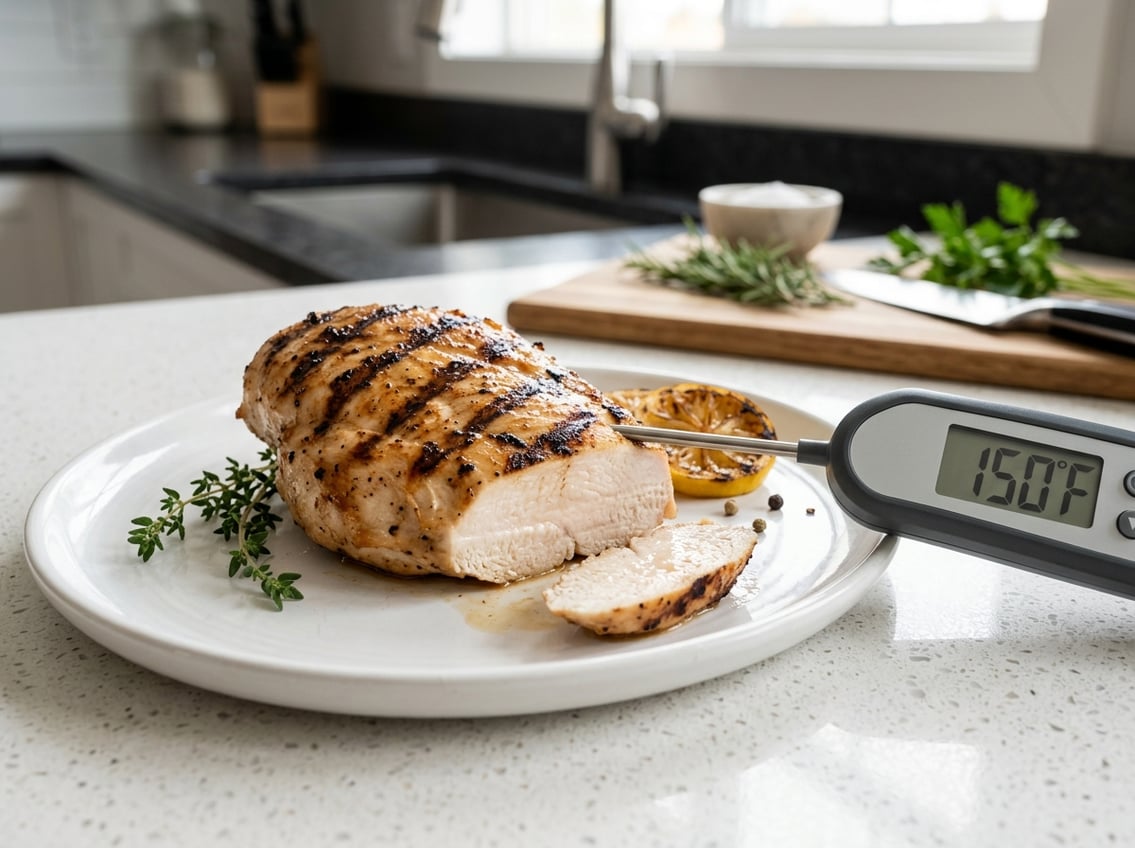
You can make chicken breast safe at a lower temperature by holding the meat at that temperature long enough.
The heat does not need to be as high when the exposure time is longer.
What Pasteurization Means in Practice
Pasteurization reduces harmful bacteria to a safe level through controlled heat over time.
Chicken does not need to hit 165°F if it stays at a lower safe temperature long enough.
This is why sous vide chicken can be safe at 150°F with careful timing.
Typical Hold Times Around 150°F
At 150°F, chicken breast usually needs to stay at temperature for several minutes to become safe.
Exact hold times depend on thickness and whether the whole piece has reached the target temperature.
Use a trusted time-and-temperature guide from a reliable food safety chart or a recipe developed for sous vide cooking.
Why Lower Temperatures Require More Precision
Lower temperatures leave less room for mistakes.
If your thermometer is inaccurate, your pan is too hot, or the center of the breast never fully reaches the target, safety can drop fast.
A lower-temperature method works best when you control every step closely.
How to Measure Doneness Correctly
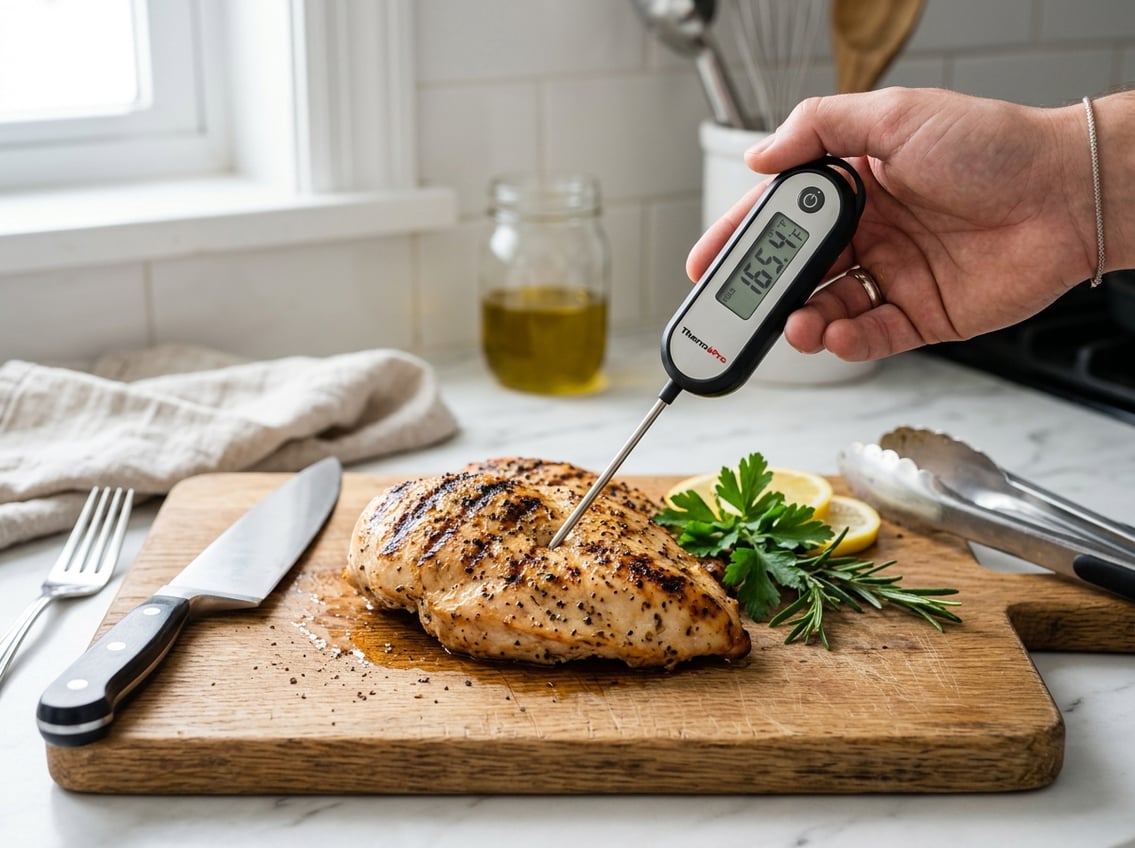
A good thermometer reading is the only reliable way to know whether your chicken is done.
Surface color, texture, and juices can be misleading, especially with thicker breasts or mixed cooking methods.
Where to Insert the Thermometer in a Breast
Insert the thermometer into the thickest part of the breast, away from bone and away from the pan.
Bone heats differently from meat and can give a false reading.
If the breast is uneven, check more than one spot to make sure the center is fully cooked.
Why Color and Juices Are Not Reliable Signs
Chicken can look white and still be undercooked in the center.
Juices can also run clear before the thickest part reaches a safe temperature.
A thermometer removes the guesswork, which is especially important if you are cooking at 150°F.
How Carryover Cooking Affects the Final Temperature
Chicken keeps cooking after you take it off the heat.
The temperature can rise a few degrees while the meat rests.
If you want a final eating temperature near 150°F, remove the chicken a little early and let the resting time finish the job.
For a basic thermometer guide, see how to tell when chicken is done with a meat thermometer.
When to Use the Lower-Temperature Method
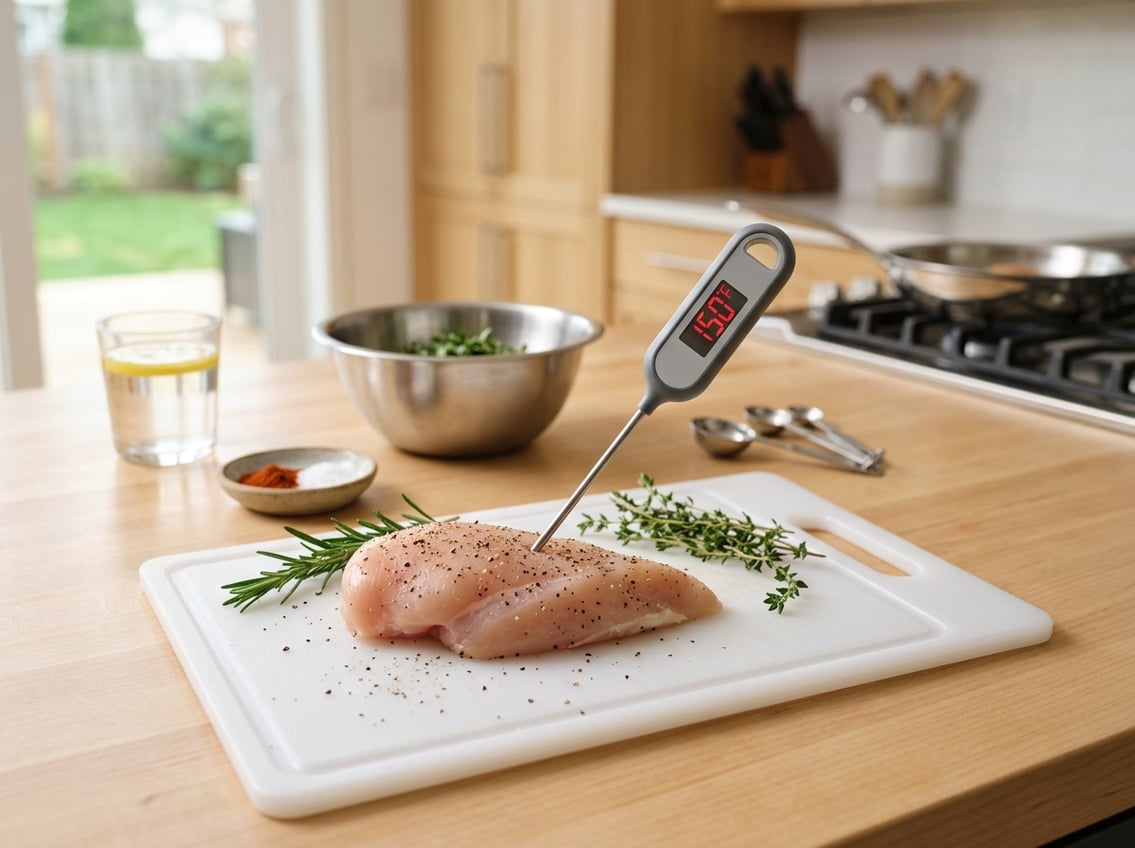
Lower-temperature cooking works best when you want better texture and can control time, heat, and temperature closely.
It is less forgiving than standard oven cooking, so it fits some situations better than others.
Best Cases for Sous Vide and Gentle Oven Cooking
Sous vide holds food at a precise temperature for a set time.
Gentle oven cooking can also work if you monitor the internal temperature carefully and avoid hot spots.
These methods work best for boneless chicken breasts of even thickness, where the heat can move through the meat predictably.
Situations Where 165°F Is the Better Choice
Use 165°F when you want the safest and easiest route, especially for busy home cooking.
It is also the better choice for stuffed chicken, uneven cuts, or meals where you cannot monitor temperature closely.
If you are cooking for young children, older adults, pregnant people, or anyone with a weaker immune system, the simpler standard is the safer pick.
Safe Handling and Cross-Contamination Basics
Keep raw chicken separate from ready-to-eat foods, cutting boards, and utensils. Wash your hands after handling it.
Clean any surface that touched raw poultry. Refrigerate chicken promptly.
Avoid leaving chicken at room temperature for too long. Careful handling matters as much as cooking temperature when you want to cook chicken thoroughly.


